
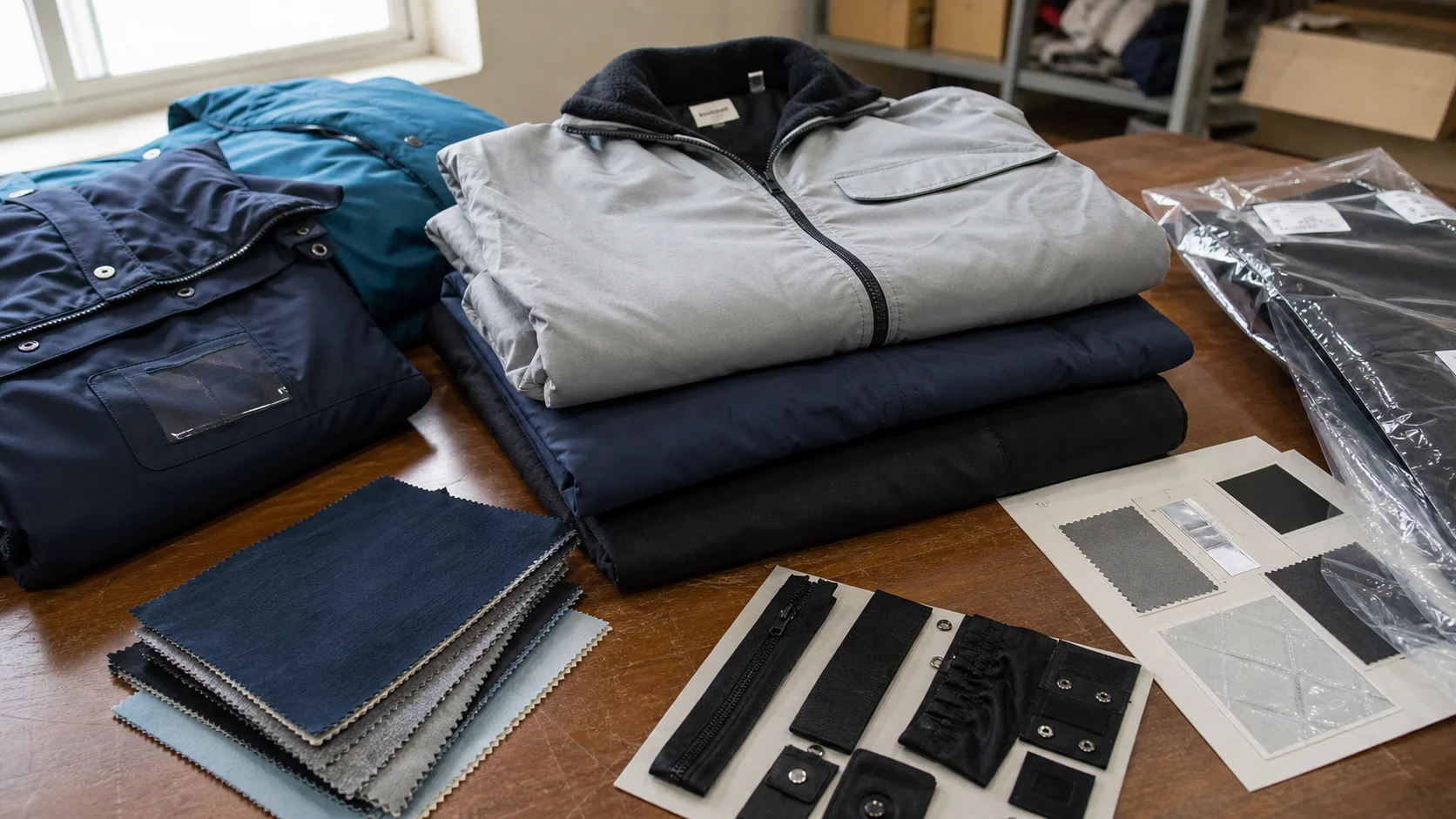
A product-specific SEO outline for clinic purchasing teams evaluating freezer coat reorder risks, from insulation specs and lot consistency to lead times,...
Freezer Coat Reorder Risk Review for Clinics - Outerwear & Jackets manufacturing guide
Freezer coat reorders look simple on paper. A clinic purchasing team has already bought the garment, staff are using it, and the next order should be a repeat. In practice, freezer coat reorders carry several risks that can affect staff comfort, cold-room safety, budget control, and delivery reliability.
For clinic purchasing teams, the key issue is not only finding a freezer coat manufacturer. The more important task is reviewing whether that manufacturer can repeat the same product at the same level of quality, within a realistic lead time, and with enough control over fabric, insulation, trims, sizing, branding, and documentation.
Freezer coats are usually purchased for environments such as vaccine storage rooms, laboratory cold rooms, pharmacy storage areas, specimen handling zones, frozen inventory spaces, and general clinical support facilities. These are not fashion outerwear purchases. The coat must protect staff during short or repeated exposure to low temperatures while remaining practical for cleaning, labeling, movement, and departmental control.
A reorder risk review should answer a direct question: if the clinic places the same freezer coat order again, what could change, and how badly would that change affect the operation?
The most common problems are avoidable. Fabric substitutions, insulation weight changes, missing trim details, inconsistent sizing, discontinued colors, unclear minimum order quantities, and weak pre-shipment inspection all create preventable friction. A clinic may not notice the issue until the garments arrive and staff compare the new order with the old one.
This article outlines a practical reorder risk review for clinic purchasing teams working with a freezer coat manufacturer. It covers specifications, MOQ planning, sampling, lead times, inspection risks, and supplier review points. For teams reviewing custom outerwear programs, Fabrikn’s broader apparel production capabilities can be explored through its manufacturing services, while teams ready to discuss specifications can use the contact page to start a sourcing conversation.
Clinic purchasing teams usually manage freezer coats alongside many other supply categories. That creates a risk: garments may be treated like a standard consumable, even though they depend on textile production variables. Unlike simple office supplies, freezer coats are built from multiple components that can shift between production runs.
A small change in shell fabric can affect water resistance, abrasion resistance, weight, and perceived warmth. A change in insulation can affect bulk, flexibility, and thermal performance. A zipper substitution can affect durability, glove usability, and repair frequency. Even a change in pocket placement can frustrate staff who use badges, pens, small tools, or access cards during cold-room work.
Reorder risk also matters because clinics rarely want to hold excessive outerwear inventory. Too much stock ties up budget and creates sizing imbalances. Too little stock leads to shared garments, delayed staff onboarding, and inconsistent departmental compliance. The safest reorder program usually balances predictable inventory coverage with realistic production timing.
A good freezer coat reorder is not just a repeat purchase. It is a controlled repeat of fabric, insulation, construction, sizing, labeling, packaging, and delivery expectations.
The purchasing judgment is straightforward: if the coat is used daily, near sensitive clinical materials, or across multiple departments, the clinic should treat the reorder as a controlled production event. If the coat is used occasionally in a low-risk storage area, a lighter review may be acceptable. The higher the operational dependency, the tighter the reorder controls should be.
Freezer coat reorder risk generally falls into five areas: specification drift, supply continuity, sizing inconsistency, delivery timing, and quality escape. Each one should be checked before a purchase order is released.
Specification drift occurs when the new production run is not identical to the approved version. This can happen because the manufacturer changes suppliers, a fabric mill discontinues a material, trims are unavailable, or the original technical pack was too vague.
For clinic buyers, the risk is that “same as last order” may not be enough. A freezer coat manufacturer needs the exact shell fabric, lining, insulation, zipper type, snap type, cuff construction, hood design, pocket layout, embroidery or logo method, label placement, and packaging format. If these details are not documented, the reorder becomes dependent on memory or interpretation.
Supply continuity risk appears when the manufacturer cannot source the same materials for the reorder. This is common when coats use niche fabrics, special colors, uncommon insulation weights, or branded trims. Clinics that require consistent color coding by department should pay special attention to fabric continuity.
A manufacturer may offer a substitute that looks acceptable in photos but performs differently in use. Purchasing teams should ask whether the shell fabric, insulation, lining, rib cuffs, zipper, snaps, reflective tape, and labels are still available before approving a reorder schedule.
Freezer coats often have a wider fit than standard jackets because they must accommodate uniforms, scrubs, or labwear underneath. If a reorder runs smaller, staff may reject the coats. If it runs larger, the coat may feel bulky and interfere with movement.
Clinics should keep a size spec with garment measurements, not only size labels. Chest width, body length, sleeve length, shoulder width, cuff opening, hood depth, and sweep measurement are useful checkpoints. A size tolerance should also be agreed. For many outerwear programs, a tolerance of around 1 cm to 2 cm on key measurements is common, but the acceptable range depends on garment construction and buyer expectations.
Reorder timing can fail when buyers assume production will be faster than the first order. Sometimes it is. If materials are in stock and the manufacturer has an open production window, reorders can move efficiently. If fabric needs to be dyed, trims are backordered, or the production line is full, the reorder may take nearly as long as a new program.
Clinic teams should not rely only on a quoted ship date. They should ask what the lead time depends on, which materials are already reserved, and when the manufacturer will provide pre-production confirmation.
Quality escape means defective or inconsistent goods reach the clinic. For freezer coats, common issues include weak seams, zipper failures, uneven insulation, skipped stitches, poor logo placement, incorrect labels, color variation, sleeve length differences, and packaging errors by size.
These problems are easier to prevent before shipment than to correct after delivery. Rework on insulated outerwear can be slow and expensive. Replacement production may not fit the clinic’s staffing or seasonal needs.
A clinic reorder review should start with the product specification. The stronger the specification, the lower the chance of disagreement between buyer and manufacturer.
The shell fabric determines much of the coat’s durability and daily usability. Common freezer coat shells may include polyester, nylon, polyester-cotton blends, coated woven fabric, or water-resistant synthetic fabric. For clinic environments, the shell should be reviewed for abrasion resistance, cleanability, colorfastness, and resistance to light moisture.
Purchasing teams should request the fabric composition, construction, weight, finish, and color reference. “Navy polyester shell” is not a full specification. A better specification includes fiber content, approximate GSM or fabric weight, coating or finish, color standard, and any performance requirement.
Insulation is one of the most important reorder variables. A coat may look the same while feeling colder if the insulation weight changes. Typical synthetic insulation weights for cold-weather workwear vary widely, often from around 120 gsm to 300 gsm or more depending on the intended temperature range, garment length, and layering assumptions.
Clinic purchasing teams should avoid accepting a substitute insulation without checking warmth, bulk, hand feel, and wash or care behavior. If staff work in walk-in freezers or very low-temperature storage, insulation consistency becomes more important than small unit price savings.
The lining affects comfort, ease of wearing over scrubs, and durability. Polyester taffeta, quilted lining, fleece lining, and brushed synthetic linings are common options. A slick lining may be easier to put on and remove. A fleece lining may feel warmer but can add bulk and collect lint.
The practical tradeoff is simple: slick linings are efficient for frequent wear cycles, while heavier comfort linings may be preferred for longer exposure. Clinics should match lining selection to actual staff behavior, not only the cold-room temperature rating claimed by the supplier.
Zippers, snaps, hook-and-loop closures, drawcords, cuffs, and badges can create reorder problems. Zipper gauge and brand may vary unless specified. Snap finish may change. Hook-and-loop quality can affect noise, durability, and lint collection. Elastic or rib cuffs can stretch differently between lots.
For freezer coats used with gloves, zipper pull size matters. A small pull may be hard to operate. For clinical settings, dangling drawcords may not be suitable in some work areas. A purchasing team should confirm whether the coat design creates any snagging or hygiene concerns.
Freezer coats may include fixed hoods, detachable hoods, stand collars, storm flaps, rib storm cuffs, adjustable cuffs, or elastic cuffs. Each feature has a cost and usability tradeoff.
A detachable hood adds flexibility but introduces extra snaps, zippers, or buttons that can fail or be lost. A fixed hood is simpler but may be unnecessary for short exposure. Rib storm cuffs improve warmth but may wear faster if staff pull sleeves over gloves repeatedly. Adjustable cuffs improve fit but may rely on hook-and-loop material that degrades over time.
Clinic coats often need practical pockets for badges, small tools, pens, keys, or handheld devices. Pockets should be reviewed for placement, closure type, and interference with movement. A chest pocket may be useful for identification. Lower patch pockets may be convenient but can catch on equipment if oversized.
Branding and identification must also be controlled. Embroidery, woven labels, heat transfers, name patches, or department color coding should be documented in the tech pack. Logo size, thread color, placement, and backing should be checked in every reorder sample.
Specification Area Reorder Risk Purchasing Check Shell fabric Different weight, color, finish, or durability Confirm composition, GSM, color standard, and finish Insulation Reduced warmth or changed bulk Confirm insulation type, weight, and quilting method Zippers and snaps Failure, poor glove usability, or mismatched appearance Confirm zipper gauge, pull type, snap finish, and supplier Sizing Staff rejection due to fit changes Use garment measurement specs and agreed tolerances Branding Incorrect logo placement or department labeling Approve artwork, placement, thread, and label detailsMinimum order quantity is one of the most important commercial points in a freezer coat reorder. MOQ depends on the manufacturer, fabric availability, customization level, color requirements, trim sourcing, and whether the order uses stock materials or custom production.
For many custom outerwear programs, typical MOQ ranges may start around 100 to 300 pieces for simpler repeat styles using available materials. More customized freezer coats, special colors, private-label trims, or fabric dyeing may require 300 to 500 pieces or more. Smaller trial or replenishment orders may be possible with some manufacturers, but the unit cost is usually higher.
Clinic purchasing teams should separate three quantities: the true operational need, the manufacturer’s MOQ, and the price-break quantity. These are not always the same. A clinic may need 120 coats, the manufacturer may quote an MOQ of 200 pieces, and the best price may start at 500 pieces. Buying to the price break can look attractive, but it may create excess stock, size imbalance, and future obsolescence if the clinic changes branding or department structure.
The right purchasing judgment depends on usage rate. If turnover, new hires, contamination replacement, wear-out, and seasonal demand support the higher quantity, a larger reorder can reduce unit cost. If demand is uncertain, a smaller order at a higher unit price may be safer.
Size curve planning is often more important than total quantity. A clinic may reorder the right number of coats but the wrong size distribution. Freezer coats are worn over other garments, so staff may size up. Past issue records are useful. If previous orders ran out of medium and large quickly while extra small and 3XL remained in storage, the reorder should correct the size curve.
Purchasing teams should also consider whether unisex sizing is appropriate. Unisex coats simplify inventory but may not fit all staff well. Separate men’s and women’s fits improve comfort but increase SKU complexity and MOQ pressure.
Some clinics use different coat colors by department or function. This helps control garment movement, but it raises MOQ complexity. A manufacturer may apply MOQ by color, not only by total order. Ordering 300 coats across three colors may not satisfy a 300-piece-per-color requirement.
A cautious buyer should ask whether MOQ applies per style, per color, per size, or per logo version. This detail should be confirmed before internal budget approval.
Order Scenario Typical MOQ Consideration Buying Tradeoff Repeat style, standard color Often lower, around 100 to 300 pieces depending on supplier Lower risk if materials are available Custom color or dyed fabric Often higher, sometimes 300 to 500 pieces or more Better brand consistency but more inventory exposure Multiple department logos May be split by logo version Improves control but complicates production and packing Extended sizing May require minimums for uncommon sizes Supports staff fit but can create slow-moving stockClinic purchasing teams sometimes skip samples on a reorder to save time. That can be reasonable if the same manufacturer, same materials, same pattern, and same trims are confirmed. It is risky when any component has changed or when the original order was not fully documented.
A practical reorder sample process does not need to be excessive. It should be targeted. The goal is to confirm that the manufacturer can repeat the approved coat before bulk production starts.
Start with the previous purchase order, tech pack, approved sample photos, measurement chart, logo artwork, color standard, packaging instructions, and inspection notes. If documents are incomplete, treat the reorder as a controlled refresh rather than a simple repeat.
Ask the manufacturer to confirm the availability of shell fabric, lining, insulation, trims, labels, and packaging. If substitutions are proposed, request swatches or trim cards. A substitute should be approved before a salesman sample or pre-production sample is made.
For a low-risk reorder, one pre-production sample in a middle size may be enough. For a higher-risk reorder, a size-set sample across key sizes is safer. Size-set sampling is particularly useful when staff previously reported fit issues or when the manufacturer is changing production lines.
Logo placement should be checked on the actual garment panel, not only in artwork. Embroidery can pucker insulated panels if backing, thread density, or placement is not controlled. Heat transfers must be reviewed for adhesion and appearance on the selected fabric.
The pre-production sample should represent the final approved materials and construction. Clinic teams should sign off only after checking measurements, color, trim function, pocket layout, warmth feel, label accuracy, and packaging format.
Keep one approved sample as the clinic reference and ask the manufacturer to keep one as the factory reference. This reduces disputes during inspection. If a clinic cannot keep a physical sample, detailed photos and measurement records are better than relying on the purchase order alone.
Skipping a reorder sample saves days at the beginning. It can cost weeks if the bulk order arrives with the wrong insulation, logo placement, or fit.
Freezer coat lead times depend on more than sewing capacity. A realistic reorder schedule should account for material sourcing, sample approval, production queue, quality inspection, packing, shipping, customs, and receiving time.
For repeat freezer coat production using available materials, a typical production lead time may fall around 30 to 60 days after final approval, depending on order size and factory loading. Orders requiring fabric dyeing, special trims, new branding, or extended size development may take 60 to 90 days or longer. Shipping method also matters. Air freight is faster but expensive for bulky insulated garments. Sea freight is cheaper but slower and requires stronger planning.
The most common clinic purchasing mistake is counting only factory sewing time. A manufacturer may quote 45 days for production, but that may not include sample approval, material booking, final inspection, export handling, or domestic distribution.
Material booking should be confirmed early. If shell fabric is in stock, the schedule is easier. If fabric must be woven, dyed, coated, or quilted, the reorder becomes dependent on mill capacity. Insulation availability should also be checked because changes can affect both warmth and cost.
A repeat order is not automatically first in line. Manufacturers schedule production based on capacity, order confirmation, deposit or payment terms, material arrival, and line suitability. A clinic that waits until stock is nearly depleted may have limited negotiating power on timing.
Clinic purchasing teams often need internal approval from procurement, department heads, infection control, branding, finance, or facilities. Each approval step adds time. The manufacturer cannot responsibly start bulk production if key details remain open.
Insulated freezer coats are bulky. Carton dimensions, freight method, and warehouse receiving capacity should be planned. If coats need to be sorted by department, size, or location, the packing list must be clear. Poor carton marking can turn a successful production run into a receiving problem.
Lead-Time Stage Typical Risk Control Point Sample approval Internal sign-off delays Assign one purchasing owner and approval deadline Material sourcing Fabric, insulation, or trims unavailable Confirm material reservation before PO release Bulk production Factory queue or line changes Request a production schedule with checkpoints Inspection Defects found too late Plan mid-line or final inspection before shipment Freight Bulky cartons increase cost and transit time Confirm carton dimensions and shipping method earlyInspection is where a freezer coat reorder becomes measurable. The clinic should not rely only on the manufacturer’s statement that goods are complete. A clear inspection checklist protects both sides by defining what must be checked.
Inspectors should compare bulk fabric color to the approved standard or sample. Slight shade variation can occur between fabric lots, but it should remain within an agreed acceptable range. For department-coded coats, color inconsistency can create confusion.
Fabric defects such as stains, holes, shade bands, coating marks, and uneven surface texture should be checked. Shell fabric should also be reviewed for obvious weakness at high-stress points such as pockets, cuffs, and zipper areas.
Insulation should feel even across the body, sleeves, and collar. Cold spots can occur when insulation shifts, quilting is uneven, or seam construction compresses the fill too aggressively. Bulk inspection should include hand-feel comparison against the approved sample.
If the coat uses quilted lining, stitch consistency matters. Broken quilting stitches can allow insulation movement after use or laundering. Clinics should also confirm whether the garment care instructions match the actual insulation and shell fabric.
Seam failure is a common outerwear defect. Inspect shoulder seams, side seams, armholes, pocket attachment, zipper attachment, hood seams, and cuff attachment. Bar tacks or reinforcement should be present where specified, especially at pocket corners and stress points.
Loose threads may look minor, but they can signal rushed sewing. A few loose threads can be trimmed. Repeated skipped stitches, open seams, or weak tension require corrective action before shipment.
Every inspected garment should be checked for zipper function. The zipper should run smoothly without catching the shell fabric or lining. Snaps should attach securely and release without tearing the fabric. Hook-and-loop closures should align properly.
For freezer environments, closure reliability matters because staff may open and close coats frequently during short exposure periods. A low-cost zipper can become an expensive problem if it fails across a department.
Inspection should include a measurement check across several sizes. Key measurements should be compared to the approved spec and tolerance. Chest, sleeve length, body length, shoulder, sweep, and hood measurements are common points.
A freezer coat can pass visual inspection and still fail in use if the fit is wrong. Clinics should pay extra attention to sleeve length and chest width because staff often layer garments underneath.
Incorrect branding is a frequent reorder issue. Logo position, spelling, thread color, heat-transfer adhesion, woven label placement, size label accuracy, care label content, and department identification should be checked.
Packaging should be practical for clinic receiving teams. Size stickers, carton marks, department allocation, and packing lists should match the purchase order. If garments are distributed across multiple clinic sites, carton-level accuracy becomes more important.
Inspection Point Common Defect Clinic Impact Measurement Chest or sleeve outside tolerance Poor fit and staff complaints Insulation Uneven fill or reduced weight Reduced warmth and comfort Zipper Catching, weak slider, broken pull Early garment failure Logo Wrong placement or thread color Branding rejection or department confusion Packing Mixed sizes or wrong carton marks Receiving delays and allocation errorsA freezer coat manufacturer should be reviewed on capability, repeatability, communication, material control, and commercial fit. A low unit price is not enough if the manufacturer cannot repeat the approved garment reliably.
Not every jacket manufacturer is well suited for freezer coats. Insulated outerwear requires material handling, quilting knowledge, bulk management, trim durability, and pattern control. The manufacturer should understand how insulation affects fit and seam construction.
Clinic purchasing teams should ask whether the manufacturer can produce the required shell, lining, insulation, closures, branding, and packaging under one controlled program. If the coat requires special labeling or private-brand packaging, those details should be reviewed before pricing is finalized.
A reliable manufacturer should be comfortable working from a technical package and approved samples. Strong documentation reduces ambiguity. The manufacturer should confirm changes in writing, especially material substitutions, measurement adjustments, and packaging revisions.
If the supplier responds to technical questions only with broad assurances, reorder risk increases. Clinic buyers should expect clear answers about material availability, MOQ, lead time, sample timing, and inspection process.
Reorders move faster when communication is structured. The purchasing team should know who confirms materials, who handles sampling, who manages production updates, and who coordinates shipment. Slow responses during sampling often predict slow responses during production problems.
For teams comparing apparel partners, reviewing a supplier’s broader production scope and business background can help. Information about Fabrikn’s company approach is available on the about page, and buyers can compare that with the specific outerwear needs of their clinic program.
Commercial fit includes MOQ, pricing, payment terms, reorder flexibility, sample fees, and freight options. Clinics should ask whether the manufacturer can support planned replenishment, not only one large order. A supplier that is excellent for 5,000-piece outerwear runs may not be the best match for a clinic needing 150 to 300 freezer coats annually.
The best manufacturer is not always the cheapest or the largest. The best fit is the supplier that can control the coat specification, meet the realistic quantity, communicate clearly, and support repeat purchasing without excessive disruption.
Clinic purchasing teams can use a structured reorder review before releasing the purchase order. This does not need to be complicated. A short checklist can prevent most common failures.
Review current inventory by size, department, and location. Check usage history, staff growth, replacements, damaged garments, and upcoming seasonal needs. Avoid building the reorder only from the previous purchase quantity.
Collect staff feedback before reordering. Ask whether the coat is warm enough, too bulky, too short, difficult to zip, poorly sized, or lacking useful pockets. A reorder is the best time to fix minor issues. Changing too much can create a new approval burden, so prioritize functional corrections over cosmetic preferences.
Prepare or update the tech pack. Include shell fabric, lining, insulation, trims, colors, measurements, labels, logo details, care instructions, packaging, carton marks, and acceptable tolerances. If the previous order performed well, the priority is repeatability.
Ask the manufacturer whether MOQ applies by style, color, size, or logo. Build the size curve from actual usage where possible. Include extended sizes where needed, but avoid over-ordering slow-moving sizes without a clear reason.
Request fabric and trim confirmation. Approve a pre-production sample if any materials, trims, measurements, or branding details have changed. For higher-risk programs, approve a size set before bulk production.
Agree on dates for material readiness, production start, mid-line review if needed, final inspection, packing, and shipment. Production checkpoints are useful because they reveal delays early enough to manage them.
Use an inspection checklist based on the approved sample and tech pack. Check measurements, workmanship, insulation, trims, branding, labels, and packing. For larger orders, a formal AQL inspection may be appropriate. For smaller orders, a focused final inspection can still catch major issues.
After receiving the goods, record what worked and what did not. Keep photos, inspection results, size usage notes, complaints, and leftover inventory data. This makes the next reorder easier and reduces dependence on individual staff memory.
The best clinic reorder systems are boring by design: clear spec, known quantity, confirmed materials, approved sample, checked production, and clean receiving.
Not every freezer coat reorder should be handled the same way. Clinic teams should decide whether to reorder the existing coat, refresh the specification, or rebid the program.
A straight reorder makes sense when staff feedback is positive, materials are available, sizing worked, defects were low, and the manufacturer performed well. This is the fastest and lowest-disruption path.
A specification refresh makes sense when the coat generally worked but had correctable issues. Examples include improving zipper pulls, adjusting sleeve length, changing pocket placement, increasing insulation weight, adding department labels, or improving carton packing. A refresh requires sample approval because the coat is no longer an exact repeat.
A rebid makes sense when the previous manufacturer failed on quality, communication, delivery, or repeatability. It may also be necessary if the clinic’s needs changed significantly. Rebid projects take longer because new suppliers need samples, specs, pricing, and approvals. The tradeoff is worthwhile when the current reorder risk is higher than the switching cost.
Decision Best Used When Main Risk Straight reorder Previous coat performed well and materials are unchanged Hidden material substitutions if not confirmed Specification refresh Minor functional improvements are needed Approval delays and new fit or trim issues Rebid Supplier performance or product quality is unacceptable Longer sourcing timeline and sample development costA freezer coat reorder should be treated as a controlled purchasing event, not a casual repeat order. Clinics depend on these garments for staff comfort and practical cold-room access. The cost of a weak reorder is not only the unit price of the coat. It includes staff complaints, replacement orders, delayed distribution, receiving errors, and time spent resolving preventable issues.
The strongest reorder process starts with accurate inventory data and ends with inspected goods that match an approved sample. Between those points, the clinic should control the specification, confirm material availability, review MOQ and size curves, approve samples where needed, and monitor lead-time dependencies.
For a freezer coat manufacturer reorder risk review, the central purchasing question is direct: can the supplier repeat the same garment, in the right sizes, with the right warmth and trims, by the date the clinic actually needs it? If the answer is supported by documents, samples, and production controls, the reorder risk is manageable. If the answer is based only on assumptions, the clinic should slow down and tighten the review before placing the order.
Get a free quote from Fabrikn — your trusted B2B clothing manufacturer with 10+ years of experience. MOQ as low as 200 pieces.
Get a Free Quote →A freezer coat reorder risk review is a purchasing check used before placing a repeat order. It reviews whether the manufacturer can reproduce the same coat specification, sizing, warmth, trims, branding, packaging, and delivery schedule without creating quality or inventory problems.
Typical MOQ ranges vary by manufacturer and specification. Repeat styles using available materials may start around 100 to 300 pieces. Custom colors, special insulation, private-label trims, or multiple logo versions may require 300 to 500 pieces or more. Buyers should confirm whether MOQ applies by style, color, size, or logo.
A sample is strongly recommended when any fabric, insulation, trim, sizing, branding, or packaging detail has changed. If the order is a true repeat with confirmed materials and a strong production record, a clinic may choose a lighter approval process. The risk is higher when the original specification was incomplete.
A freezer coat tech pack should include shell fabric, lining, insulation type and weight, zipper and snap details, cuff construction, hood design, pocket layout, measurements, tolerances, logo placement, labels, care instructions, packaging, carton marks, and approved sample references.
Repeat production using available materials may take around 30 to 60 days after final approval. Orders requiring fabric dyeing, special trims, sample revisions, or higher customization may take 60 to 90 days or longer. Freight method, inspection timing, and internal clinic approvals can add more time.
Common failures include inconsistent sizing, uneven insulation, zipper problems, weak seams, wrong logo placement, incorrect labels, shade variation, loose threads, poor snap function, and carton packing errors. These should be checked before shipment whenever possible.
A clinic should consider rebidding when the current manufacturer has repeated quality failures, poor communication, late delivery, unresolved material substitutions, or MOQ terms that no longer fit the clinic’s needs. A rebid takes longer but may reduce long-term reorder risk.
Clinics can reduce excess inventory by reviewing actual size usage, staff growth, replacement rates, department allocation, and leftover stock before ordering. Buying only for a price break can be risky if it creates slow-moving sizes or obsolete branded garments.