
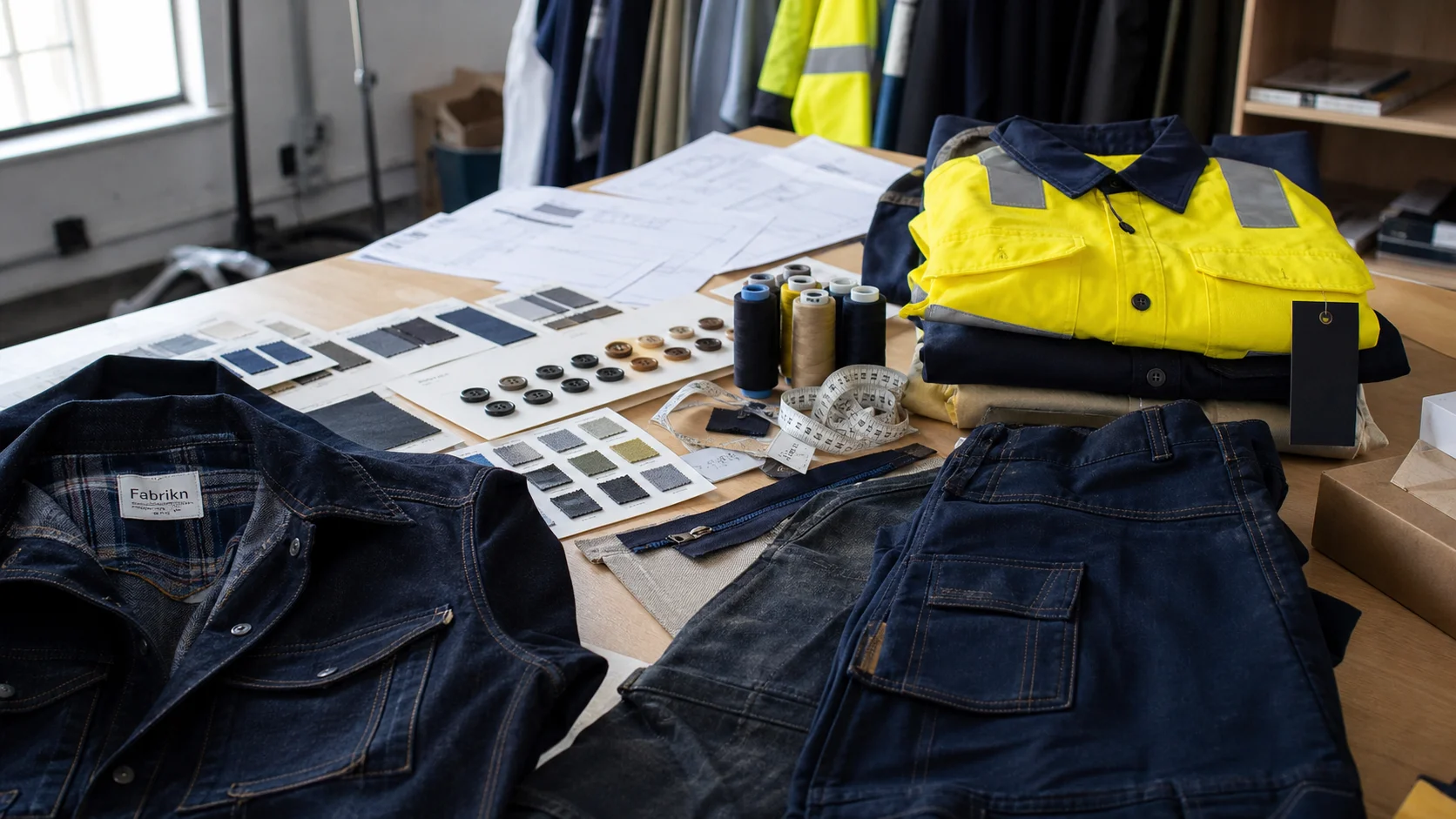
Garment Factory Lead Time Management for Wholesale Buyers with checks for samples, fit, MOQ, QC evidence, pricing terms, and delivery risk.
Fast answer: Garment Factory Lead Time Management for Wholesale Buyers should be judged by production evidence, not by a generic sourcing promise. The buyer needs sample proof, cost breakdowns, QC checkpoints, and delivery buffers in writing.
Ask for recent sample photos, measurement tolerances, fabric or print test assumptions, decoration test notes, packing examples, and a named inspection checkpoint. These details show whether the team can repeat an approved sample at bulk volume.
Separate garment cost, decoration, labels, packaging, sampling, testing, freight, and rush charges. When every cost line is visible, it becomes easier to reduce colorways, adjust size depth, or reserve more time for sampling.
For wholesale buyers, lead time matters. It shapes sourcing, production, and planning in ways that can make or break a season.
Whether you are ordering private label t-shirts, activewear, uniforms, fashion basics, or seasonal collections, the time it takes a garment factory to move from sample approval to finished shipment can directly affect your sales, cash flow, inventory levels, and customer satisfaction. A basic cotton jersey tee from a stock-supported program may be ready in 18-22 business days, while a more complex order with custom dyeing, embroidery, and branded packaging may take 35-50 business days.
Garment factory lead time management is not just about asking, “How long will production take?” It is about understanding every stage of the process, anticipating delays, building realistic schedules, and partnering with a factory that can meet your business needs consistently. In wholesale apparel, a late shipment can mean missed retail windows, lost promotional opportunities, or stockouts that damage long-term buyer relationships. For example, a retailer planning a back-to-school rollout in August may need purchase orders finalized by May if the goods are being produced in Guangzhou, Dhaka, Ho Chi Minh City, or Istanbul and shipped by ocean freight.
This guide explains how garment factory lead time works, what affects it, and how wholesale buyers can manage it more effectively to reduce risk and improve supply chain performance.
Need a reliable manufacturing partner?
If you are looking for one, you can also explore our services or learn more about our team on the about us page. Depending on the product, a private label style might land at $2.50-4.00 per unit at 500 MOQ for a basic combed cotton T-shirt, or $6.80-11.50 per unit for a 300 gsm brushed fleece hoodie with screen print and woven neck label.
Lead time in garment manufacturing refers to the total time required from order confirmation to final delivery. In most cases, it includes sourcing materials, sampling, bulk production, quality control, packaging, and shipping. For wholesale buyers, lead time is often measured from the moment a purchase order is approved until the goods arrive at the warehouse or distribution center. Typical milestones may include 3-5 business days for fabric booking, 5-7 business days for pre-production sample approval, 8-15 business days for bulk cutting and sewing, and 2-4 business days for finishing, packing, and carton labeling.
A typical garment factory lead time may vary widely depending on the product type, order quantity, material availability, customization level, and factory capacity. Simple blank garments may be completed faster than complex fashion pieces that require special trims, embroidery, printing, washing, or garment dyeing. For example, 180 gsm cotton single jersey T-shirts made on 24-gauge circular knitting machines can move faster than heavyweight French terry sweatshirts that require flatlock stitching, coverstitching, and enzyme washing.
Lead time is usually divided into several stages:
Each stage has its own timeline, and any delay in one part of the process can push back the entire order. That is why lead time management is essential for wholesale buyers who depend on accurate delivery dates. Certified factories with GOTS, OEKO-TEX Standard 100, WRAP, BSCI, or GRS systems often have more structured documentation for material traceability, chemical management, and social compliance, which can improve predictability.
Wholesale buyers operate in a competitive environment where timing is everything. Retailers, distributors, and brand owners need products to arrive when demand is highest. If production runs late, the business may lose a season, miss a campaign launch, or face unnecessary costs from expedited shipping and emergency inventory replenishment. In many cases, air freight from South Asia to Europe or North America can add $1.20-3.50 per unit to landed cost, turning a profitable order into a marginal one.
Good lead time management helps wholesale buyers:
For buyers handling large-volume apparel orders, even a small delay can have a major impact. A 7-day production delay may be manageable in some situations, but when combined with shipping delays, customs issues, or fabric shortages, it can become a serious business problem. At a factory in Guangzhou or Ho Chi Minh City running a 16-line production floor, a single missed fabric arrival can shift an entire cut-and-sew schedule by several days.
Why treat lead time as an afterthought?
It should be treated as a strategic sourcing metric, not just a production detail.
Understanding what drives lead time is the first step toward controlling it. Several factors can affect how long a garment factory needs to complete an order. A factory in Dhaka that keeps 100% polyester interlock, 20s/1 combed cotton jersey, and 2x2 rib in stock may quote 18-22 business days for repeat programs, while a made-to-order woven shirt with custom yarn-dyed fabric can extend to 30-45 business days.
If fabrics, trims, zippers, labels, buttons, or packaging materials are not readily available, production cannot begin on time. Sourcing custom or imported materials usually increases lead time. Buyers who choose stock-supported fabrics or standard trims often benefit from faster turnaround. A 95% cotton/5% elastane 190 gsm jersey with OEKO-TEX Standard 100 certification may be faster to source than a specialty organic cotton fabric that must be milled to GOTS requirements and lab-tested before cutting.
Simple styles generally move through the factory more quickly than highly detailed garments. Features such as multiple panels, complex stitching, embroidery, screen printing, washed effects, or special finishing can all add time to production. A basic 4-thread overlock and 2-needle coverstitch garment can be produced faster than a style requiring flat embroidery heads, heat-transfer labels, garment washing, and silicone printing on the same piece.
Larger orders can require more production time, especially if the factory has limited machines or labor capacity. At the same time, very small orders may also face delays if the factory prioritizes larger volume runs. Buyers should confirm whether the factory is optimized for their typical order size. A 500 MOQ order may be priced at $2.50-4.00 per unit for a basic tee, but the same style at 5,000 units can reduce the unit price while increasing the need for synchronized cutting, sewing, and packing schedules.
Sampling is one of the most overlooked causes of delay. If buyers take too long to approve samples, request too many revisions, or provide unclear feedback, the order timeline can be pushed back before bulk production even starts. A typical development cycle may include 3-7 business days for a proto sample, 4-6 business days for a fit sample, and another 2-4 business days for a salesman sample, depending on whether the factory is located in Istanbul, Guangzhou, or Dhaka.
A factory may be capable of producing your order, but if its production line is already full, your order may be scheduled later than expected. Seasonal surges, holiday shutdowns, and high-volume peak periods can all affect lead time. Factories in Guangdong often plan around Chinese New Year, while suppliers in Bangladesh may adjust schedules around national holidays and power interruptions. Capacity also depends on equipment such as automatic fabric spreaders, CNC fabric cutters, single-needle lockstitch machines, bar tack machines, and multihead embroidery machines.
If a factory finds defects during inspection, rework can add days to the schedule. And if the buyer’s standards are unclear, problems tend to show up late, when they’re harder and more expensive to fix. Clear specs help more than long emails ever will.
Air freight is faster, sure, but it eats into margin. Ocean freight takes longer and customs can be a pain, especially when paperwork is incomplete or the destination country has stricter clearance rules. A shipment to Los Angeles won’t move the same way as one headed to Hamburg or Jebel Ali.
Good planning starts earlier than most buyers think. Back up from the launch date, then back up again. That usually gives a more honest timeline.
Wholesale buyers can plan better by setting a delivery target first, then working backward to identify deadlines for sample approval, material booking, production start, inspection, and shipping. It also helps to build in a buffer for the stuff that never looks dramatic on paper but still causes delays, like holiday shutdowns, late feedback, and missing trims.
Strong planning usually means:
And if the launch date matters, don’t cut the buffer too fine. That’s where orders get messy.
The right factory is not always the one with the lowest price. It’s the one that can actually deliver what you need, when you need it, without turning every order into a chase. Ask about realistic timelines, past order types, minimums, and whether they handle your kind of product every week or only occasionally.
Look for signs that the factory is organized:
If a factory answers every question with a vague “yes, no problem,” that’s not always reassuring. Specifics matter more.
Keep communication simple and specific. Send tech packs that are actually complete. Use measurements, fabric details, trims, artwork, labeling notes, and packaging requirements. Then ask for confirmation, not just agreement.
Useful habits include:
Short messages work better than long, fuzzy ones. And if something changes, say it early.
Some delays come from the factory. Plenty come from the buyer side too.
These mistakes sound small until they aren’t. One missed detail can throw off the whole order.
There is no magic shortcut, but a few things do help. Stock fabrics, repeat programs, fewer style changes, and faster approvals all shave time off the calendar.
Buyers can also reduce lead time by:
Sometimes the best move is simply not adding extra complexity unless it’s really needed.
Fabrikn helps wholesale buyers stay ahead of production timelines by connecting them with factories that understand speed, consistency, and communication. That means clearer planning, fewer surprises, and a better shot at hitting launch dates without rushing everything at the end.
From sourcing support to production coordination, our team helps buyers keep track of the moving parts that affect delivery. If you need a partner that can handle private label apparel with fewer headaches, Fabrikn can help make the process less scattered.
How long does garment factory lead time usually take?It depends on the product, materials, order size, and factory workload. Simple items may take a few weeks, while more customized orders can take much longer.
What causes the biggest delays?Usually fabric shortages, slow sample approvals, crowded factory schedules, and shipping issues.
Can lead time be reduced?Yes, if the buyer plans early, keeps approvals moving, and works with a factory that is set up for the right product type.