
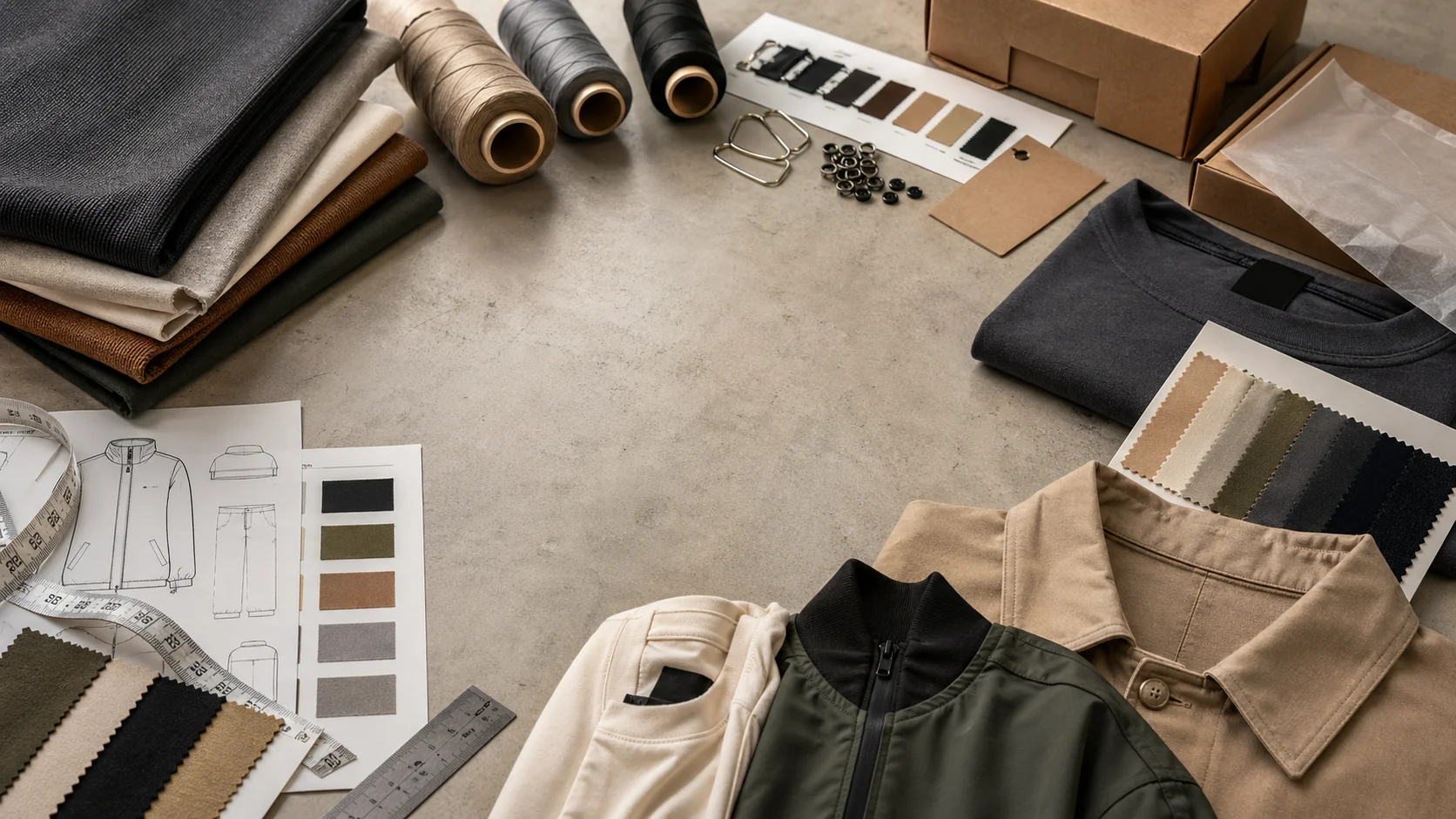
Garment Factory Pricing Factors with checks for samples, fit, MOQ, QC evidence, pricing terms, and delivery risk.
Fast answer: Garment Factory Pricing Factors: What Shapes Clothing Manufacturing should be judged by production evidence, not by a generic sourcing promise. The buyer needs sample proof, cost breakdowns, QC checkpoints, and delivery buffers in writing.
Ask for recent sample photos, measurement tolerances, fabric or print test assumptions, decoration test notes, packing examples, and a named inspection checkpoint. These details show whether the team can repeat an approved sample at bulk volume.
Separate garment cost, decoration, labels, packaging, sampling, testing, freight, and rush charges. When every cost line is visible, it becomes easier to reduce colorways, adjust size depth, or reserve more time for sampling.
Understanding garment factory pricing factors matters for any apparel brand, retailer, startup, or private label business planning a collection. Whether you are launching a small capsule line or scaling an established clothing brand, manufacturing cost can affect margins, retail pricing, and long-term growth strategy.
Garment factory pricing is not based on one single number. Instead, it is shaped by a combination of variables, including fabric choice, garment complexity, order volume, production location, labor requirements, and quality expectations. A simple t-shirt and a fully constructed technical jacket may both be produced in the same factory, but their costs can differ dramatically because each requires different materials, processes, and expertise.
For clothing brands, the key to better sourcing decisions is learning how factories calculate pricing. Once you understand what drives cost, you can create more accurate budgets, improve product development decisions, negotiate effectively, and avoid surprises during production. In my experience, the brands that get this right early save themselves a lot of back-and-forth later (and a few headaches, too). This article breaks down the main garment factory pricing factors and explains how each one affects the final cost of manufacturing clothing.
If you are looking for a manufacturing partner, you can also explore Fabrikn’s services or reach out through our contact page to discuss your project.
Garment factory pricing usually includes direct costs, indirect costs, and margin. Direct costs are the easiest to identify: fabric, trims, labor, cutting, sewing, printing, embroidery, washing, and packaging. Indirect costs include factory overhead, utilities, machinery maintenance, administration, compliance, and quality assurance.
Factories also consider business factors such as order size, risk, complexity, and urgency. A factory is not simply selling production time; it is also taking on development work, managing workflow, and ensuring the product meets quality standards. I have seen factories where a “simple” order turned complicated the second the sample arrived (because of course it did). The more specialized the garment, the more labor, time, and skill it may require, which increases the price.
Many brands focus on the lowest unit cost, but value often tells a fuller story. Honestly, this approach works better because a slightly higher factory price may include better quality control, more reliable delivery, lower defect rates, and stronger communication. Those factors can reduce overall business risk and save money in the long run.
Fabric is often the largest component of garment manufacturing cost. The choice of material affects almost every part of production, from cutting efficiency to sewing difficulty to final garment appearance. Natural fibers such as organic cotton, wool, silk, or linen may cost more than standard synthetic fabrics. Specialty fabrics like waterproof shells, performance knits, stretch denim, or brushed fleece also tend to increase the cost.
Several material-related elements affect pricing:
Fabric type: Woven, knit, technical, or specialty textiles each carry different cost structures.
Fabric quality: Higher yarn counts, better hand feel, durability, and color consistency usually cost more.
Fabric width and yield: Narrow fabrics may create more waste during cutting, increasing cost per unit.
Color and dyeing: Custom colors, garment dyeing, or special finishing processes add expense.
Minimums from mills: Some mills require high minimum order quantities, which can raise upfront investment.
Material sourcing also impacts lead time. If your chosen fabric must be imported or custom-developed, the factory may need to wait for mill production before manufacturing can begin. This may require bulk purchasing and cash upfront, which affects the overall project cost.
The more complex the garment design, the more it usually costs to produce. Simpler garments with fewer pattern pieces, fewer seams, and basic construction are faster and cheaper to manufacture. Garments with multiple layers, shaped panels, lined interiors, specialty stitching, or complex silhouettes require more time and skill.
Examples of complexity-driven pricing differences include:
A basic crewneck t-shirt versus a fashion tee with raw hems, paneling, and embroidery
A simple hoodie versus a hoodie with double lining, custom zipper pulls, and applique details
A basic dress versus one with pleats, hidden closures, and delicate finishing
Garment construction complexity affects both sewing time and labor skill. More complicated items may need specialized machines, experienced operators, and additional quality checks. I have seen factories slow to a crawl on pieces that looked straightforward on paper but needed five extra steps on the line (those are the ones that sneak up on you). Factories often price these garments higher because they require more production steps and greater risk management.
Brands should also consider whether their design choices are cost-effective for the target retail price. Sometimes a small design adjustment can reduce manufacturing cost substantially without harming the overall product appeal.
Labor is another major factor in garment factory pricing. Apparel production relies on a sequence of operations, including spreading, cutting, sewing, pressing, inspecting, folding, and packing. Each operation adds labor time, and labor rates vary based on the country, region, factory expertise, and workforce availability.
Labor cost is not just about hourly wages. Efficiency matters just as much. A factory with highly trained workers, modern machines, and smooth production flow may produce garments faster and with fewer defects. That efficiency can lead to better pricing or better value, even if the labor rate is slightly higher than in a lower-cost factory.
Labor pricing is influenced by:
The complexity of the garment
The number of operations required
Operator skill level
Automation and machinery availability
Factory productivity and workflow organization
For brands comparing suppliers, the cheapest labor market does not always mean the best production cost. If a factory has poor efficiency, high rejection rates, or delayed delivery, the true cost can become much higher than the quoted unit price suggests. In my experience, paying a bit more for a well-run line is usually worth it (especially when you are trying to keep launch dates intact).
Order quantity is one of the most important garment factory pricing factors. In apparel manufacturing, larger orders typically have lower unit prices because fixed costs are spread across more pieces. These fixed costs may include pattern development, machine setup, sampling, cutting prep, and administrative work.
For small orders, factories may charge more per unit because the same setup costs are divided across fewer garments. A 100-piece order may have a much higher unit price than a 5,000-piece order, even if the garment is the same. This is why minimum order quantities, or MOQs, matter so much in clothing manufacturing.
Scale can reduce cost in several ways:
Lower setup cost per piece
Better fabric utilization in bulk cutting
More efficient production runs
Reduced packaging and handling cost per unit
That said, larger orders also increase total investment and inventory risk. Brands should balance unit price savings with sales forecasts, storage capacity, and cash flow. If you are unsure which order structure is right for your business, Fabrikn’s team can help through our about us page, where you can learn more about our approach and capabilities.
Before bulk production begins, most garments go through a development stage that includes tech packs, pattern making, sample sewing, fit revisions, and approvals. This stage is essential, especially for new products, custom fits, and branded designs, but it also adds to the overall cost.
Sampling costs may include:
Pattern creation or modification
Sample cutting and sewing
Fit revisions and corrections
Material sourcing for production samples
Some brands underestimate how many sampling rounds a product may need before it is production-ready. Honestly, that is where budgets can get messy fast. A strong development process can save money later by reducing bulk mistakes, but repeated changes will increase both time and cost.
Trims and accessories may seem minor, but they can have a real effect on garment factory pricing. Items such as zippers, buttons, snaps, labels, hangtags, drawcords, rivets, elastic, and embroidery all add material and labor cost. Finishing details like washing, distressing, laser effects, printing, or special stitching can also increase pricing.
Custom trims usually cost more than standard off-the-shelf components because they may need to be sourced, approved, or specially produced. If a brand wants branded hardware or custom packaging elements, the factory must coordinate extra suppliers and production steps.
Even small decorative choices can make production more expensive. For example, a logo patch may be inexpensive on its own, but if it requires multiple placement checks and hand application, the labor cost rises.
Quality control is a major part of garment factory pricing, especially for brands that need consistent fit, construction, and appearance. Factories may run inline inspections, final audits, measurement checks, and defect reviews to ensure products meet specifications.
Compliance requirements can also affect cost. Depending on the market and product category, a factory may need to follow standards related to chemical safety, labeling, worker conditions, social audits, or product testing. These processes add administrative effort, documentation, and sometimes third-party fees.
Brands selling into premium, children’s, or regulated categories often need stricter quality controls. That extra attention may raise factory pricing, but it can prevent returns, recalls, and reputational damage. (And those problems are far more expensive than a careful inspection sheet.)
Lead time affects price because urgent orders disrupt normal factory scheduling. If a brand needs a quick turnaround, the factory may have to shift resources, pay overtime, or prioritize one order over others. That urgency typically comes with a premium.
Longer lead times usually allow factories to plan production more efficiently, source materials at better prices, and manage workflow more smoothly. Rush orders, on the other hand, create pressure on labor, quality, and logistics. Factories may charge more because they are taking on a higher operational risk.
Brands can often save money by planning ahead, confirming materials early, and avoiding last-minute changes. Clear communication during development also helps keep production on schedule and reduces unnecessary rush fees.
Packaging and shipping are sometimes treated as separate from manufacturing, but they still influence the total garment factory price. Folding methods, poly bags, cartons, labels, inserts, barcodes, and hangtag application all add material and labor cost.
Logistics can also change the final price. Domestic shipping, international freight, customs clearance, duties, and port fees may be included or excluded depending on the factory quote. Brands should always confirm what is covered in the quoted price and what will be billed separately.
If you want to lower packaging costs, simplifying packaging specifications can help. Standardizing carton sizes, reducing decorative materials, and using fewer custom components may save money without affecting the product itself.
Factory location plays a major role in garment pricing because wages, utilities, rent, taxes, and compliance costs vary by region. A factory in a high-cost urban area will often have higher overhead than one in a lower-cost industrial zone. Local infrastructure, access to mills, freight routes, and labor availability also matter.
Overhead includes expenses that support the business but are not tied to a single garment. These may include office staff, management, equipment depreciation, maintenance, training, insurance, and certifications. Factories with stronger infrastructure and more advanced systems may charge more, but they may also provide better reliability and consistency.
Choosing a factory in a lower-cost region can reduce unit price, but brands should look beyond geography alone. I have seen brands chase the lowest quote and then spend twice as much fixing communication or quality issues later. A balanced sourcing decision usually delivers better total value.
Reducing manufacturing cost does not always mean choosing the cheapest supplier. Often, it means making smarter product and sourcing decisions. Brands can lower cost by simplifying designs, selecting more efficient fabrics, increasing order volume where possible, and reducing unnecessary sampling changes.
Other cost-saving strategies include:
Using standard trims instead of fully custom components
Consolidating production into fewer styles or colorways
Improving tech packs to avoid development mistakes
Planning orders earlier to avoid rush fees
Choosing fabrics with better cutting yield
Honestly, this approach works better because it protects both your margin and your production timeline. Small design and planning changes can have a bigger impact on cost than brands expect.
The right manufacturing partner should offer more than a low unit price. Brands should evaluate communication, sample accuracy, production capability, quality control, compliance, and delivery reliability. A factory that understands your product category and business goals can help you avoid costly mistakes and improve long-term performance.
When comparing suppliers, ask for a clear breakdown of what is included in the quote. Review sample quality carefully. Confirm minimum order quantities, lead times, and payment terms. If possible, look for a partner that can support development as well as bulk production (that combo saves a lot of time later).
At Fabrikn, we work with brands that want a practical, transparent approach to garment production. If you would like to discuss a project, you can explore our services or contact us directly.
Garment factory pricing factors are shaped by a mix of materials, labor, construction, quantity, lead time, location, and quality expectations. Once brands understand these moving parts, they can make better sourcing decisions and build more accurate production budgets.
The cheapest quote is not always the best choice. In apparel manufacturing, a smart pricing decision balances cost, quality, reliability, and brand goals. By paying attention to the factors outlined above, clothing brands can reduce surprises, improve margins, and choose a factory partner that supports long-term growth.
What is the biggest factor in garment factory pricing?Fabric cost is often the biggest factor, but labor, design complexity, and order quantity can also have a major impact.
Why do small clothing orders cost more per unit?Because setup, sampling, and development costs are spread across fewer pieces, which raises the unit price.
Do more complex designs always cost more?Usually yes, because they require more sewing time, more skilled labor, and often more quality checks.
How can brands lower garment manufacturing costs?They can simplify construction, improve planning, use standard trims, increase order volume, and reduce unnecessary sampling revisions.