
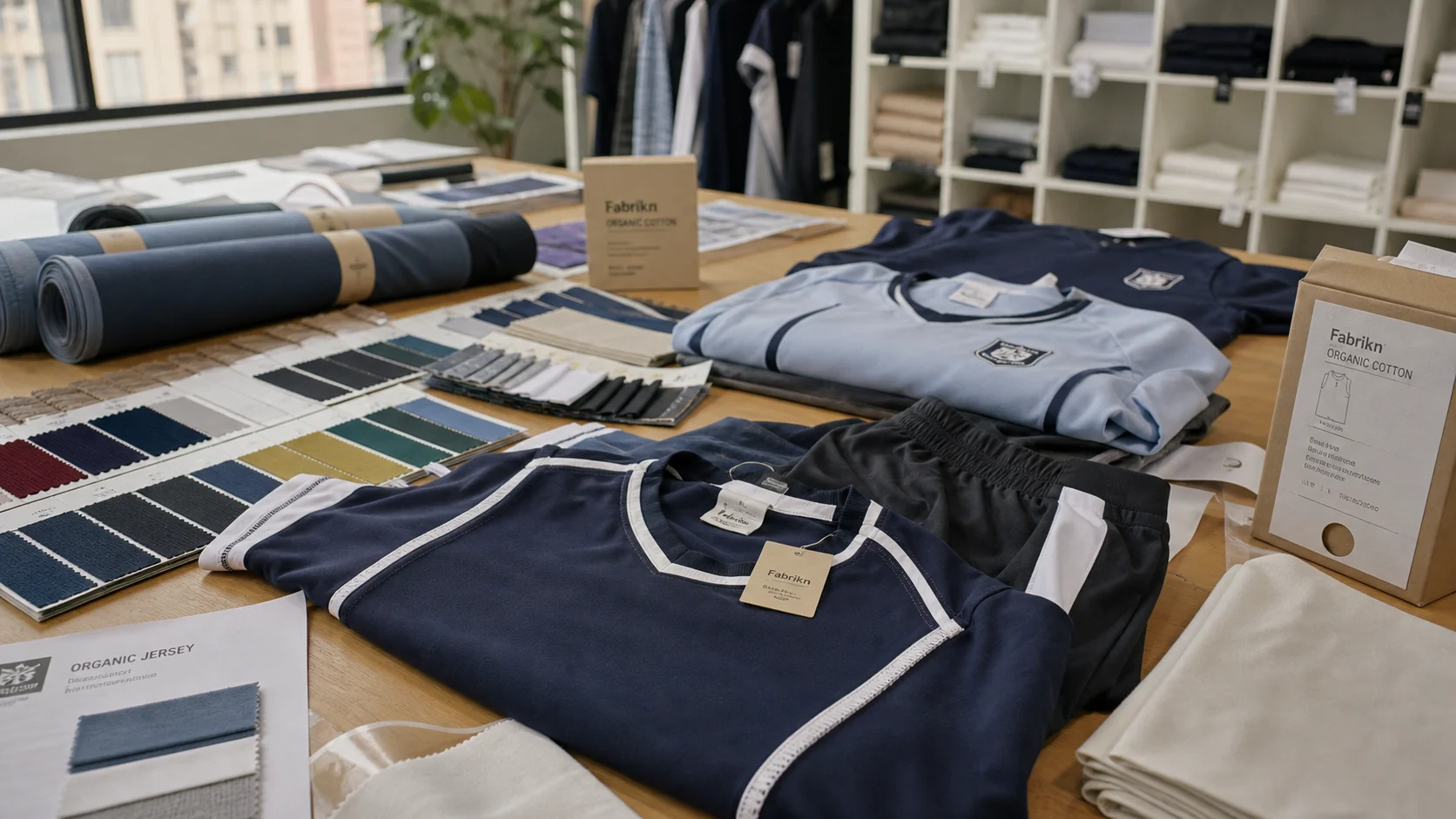
Garment Sampling and Approval Process with checks for samples, fit, MOQ, QC evidence, pricing terms, and delivery risk.
Fast answer: Garment Sampling and Approval Process: Samples, Cost Lines, QC, and Delivery Risk should be judged by production evidence, not by a generic sourcing promise. The buyer needs sample proof, cost breakdowns, QC checkpoints, and delivery buffers in writing.
Ask for recent sample photos, measurement tolerances, fabric or print test assumptions, decoration test notes, packing examples, and a named inspection checkpoint. These details show whether the team can repeat an approved sample at bulk volume.
Separate garment cost, decoration, labels, packaging, sampling, testing, freight, and rush charges. When every cost line is visible, it becomes easier to reduce colorways, adjust size depth, or reserve more time for sampling.
In clothing manufacturing, the garment sampling and approval process is one of the most important stages between product concept and bulk production. It is where an idea becomes a real garment, and where design intent gets tested against what a factory can actually make while buyers look for proof that fit, quality, and branding will hold up. A sample has to answer the hard questions.
Sometimes a first sample from Guangzhou or Ho Chi Minh City takes 7-12 business days. More complex styles can stretch to 18-22 business days once embroidery, garment washing, or bonded seams enter the picture.
For fashion brands, private labels, startups, and established retailers, garment sampling is not just a formality. It is a critical quality control step that helps prevent costly mistakes, production delays, and customer dissatisfaction. A good sample approval process saves money, keeps communication cleaner, and lowers risk across the supply chain. A basic jersey tee may sample at $2.50-4.00 per unit at 500 MOQ, while a denim jacket with custom hardware, enzyme wash, and branded patchwork may land at $12-28 per unit depending on complexity and fabric availability.
Need a reliable manufacturing partner?
In this guide, we will look at what garment sampling is, why it matters, the sample stages, how approvals work, what manufacturers and buyers should check, and how to build a smoother workflow. If you are looking for a reliable manufacturing partner, you can learn more about Fabrikn’s capabilities on our services page or get in touch through our contact us page.
Garment sampling is the process of creating one or more prototype garments before bulk production begins. These samples are made to verify design, construction, fabric choice, fit, measurements, trims, labeling, and overall appearance. In many cases, multiple rounds of sampling are needed before a product is approved for mass manufacturing, especially for styles using knit jersey, woven cotton poplin, brushed fleece, French terry, stretch denim, or technical nylon.
Sampling lets clothing manufacturers and buyers evaluate a product in physical form. Technical drawings and spec sheets help, but they cannot fully show how a garment will drape, feel, stretch, or fit on the body. A sample bridges that gap by turning documentation into something you can inspect, measure, and revise. For instance, a circular knit T-shirt made on a 28-gauge single jersey machine will behave very differently from a woven shirt stitched on a Juki DDL-8700 lockstitch machine with flat-felled seams or French seams.
The sampling and approval process can vary depending on product type, order size, fabric complexity, customization level, and the client’s development workflow. Still, the goal stays the same: confirm that the final bulk order will match the agreed specifications as closely as possible. Many buyers also require compliance testing and certification alignment at the sample stage, especially for factories carrying GOTS, OEKO-TEX Standard 100, GRS, WRAP, or BSCI credentials.
Sampling plays a central role in successful apparel manufacturing because it protects both the buyer and the factory from expensive errors. Without proper sampling, small issues can turn into major production problems once thousands of units are already in progress. In markets like Dhaka, Istanbul, and Guangzhou, where bulk capacity is strong and lead times are competitive, sample approval often decides whether a brand meets a seasonal calendar or misses the delivery window.
Here are the main reasons garment sampling matters:
For brands building a product line, sampling is also a decision-making tool. It helps teams compare options, refine details, and move toward a final product that fits their target market and brand standards. In competitive apparel categories, that kind of precision can make a real difference in product performance and customer satisfaction. A small change such as switching from 180 gsm combed cotton to 220 gsm organic cotton, or from plastic buttons to corozo or recycled polyester trims, can affect hand-feel, shrinkage, cost, and approval speed.
The garment sampling and approval process usually follows a structured path. While the number of steps may differ from one manufacturer to another, most apparel development programs include the following stages.
The process usually starts when the brand sends a tech pack, design sketch, measurement chart, fabric references, logo artwork, and construction notes. The tech pack is the blueprint for the factory, so it needs to be detailed. The clearer the input, the easier it is for the manufacturer to produce an accurate sample. Strong tech packs often call out needle type, stitch class, seam allowance, GSM, shrinkage tolerance, print placement, and packaging instructions.
Once the design information is received, the factory team develops the pattern based on the size specifications and garment construction requirements. Pattern-making is a foundational step because every sample depends on accurate pattern interpretation. Even a small error here can affect fit, symmetry, or garment balance. Many factories use CAD pattern systems such as Gerber AccuMark or Lectra, with manual correction on pattern tables for shoulder slope, armhole depth, and balance points.
The factory then sources the required fabrics, trims, labels, buttons, zippers, prints, and embellishments. In some cases, exact bulk materials are used. In others, substitute materials may be used for the first sample if the final materials are not yet available. The goal is to get as close to the final product as possible. A certified organic cotton style may require GOTS-approved yarn and dye house confirmation, while recycled polyester programs may require GRS-compliant fabric, recycled zipper tape, and traceability documents.
After materials are prepared, the sample is cut and sewn by skilled technicians. This stage needs careful attention because the sample must reflect the intended design, stitching methods, seam construction, and finishing standards. For complex garments, multiple handoffs may be involved, including printing, embroidery, washing, and finishing departments. Common machines include overlock machines, flatlock machines, coverstitch machines, bartack machines, buttonhole machines, and needle detectors for final inspection.
When the first sample is completed, it is reviewed by the factory quality team and sent to the buyer for evaluation. Depending on the workflow, this may be called the first sample, proto sample, or development sample. At this point, the brand checks the details carefully and notes any revisions. In many factories, first-round comments are consolidated in a fit report within 24-48 hours to keep the development schedule moving.
If the sample is intended for fit testing, it is tried on a fit model or checked against a standard body form. Measurements, proportions, comfort, mobility, and silhouette are examined. Any needed corrections are documented and sent back to the factory. For example, a women's woven blouse may need a 1.0 cm adjustment at the bust, 1.5 cm at the waist, and 2.0 cm sleeve length correction before approval.
The factory updates the pattern, construction details, or measurements based on feedback and creates a revised version. There may be several sample rounds, especially for tailored garments, performance wear, activewear, or fashion-forward styles with unusual construction. A three-round development cycle is common for jackets, suiting, swimwear, and technical outerwear, particularly when water-resistant coatings, bonded seams, or heat-transfer prints are involved.
Once the design is aligned and fit is approved, the final sample may be used as the pre-production sample. This version confirms that all materials, measurements, trims, and construction details are ready for bulk production. It serves as the final reference point for the factory before the production line begins. And if anything still feels off at this stage, it is usually worth stopping and fixing it now.
A strong brief makes the supplier's job narrower and the quote more reliable. For garment sampling and approval process, include the target customer, sales channel, expected order quantity, size range, decoration needs, packaging requirements, and delivery market. Then call out the details most likely to affect the result, especially MOQ, line capacity, and pattern control.
The brief should also explain what cannot change. Some brands care most about hand feel, some about price, some about launch timing, and some about retail compliance. When those priorities are not written down, suppliers tend to optimize for whatever is easiest to quote. Clear priorities help the factory make better tradeoffs before the first sample is cut or printed.
Ask the supplier to respond with assumptions, not just a price. A useful reply states MOQ, sample route, production capacity, inspection plan, packing method, and freight handoff. If the answer is vague, the project may still work, but it needs a tighter pre-production stage before money and calendar pressure build up.
The best time to catch problems is before the pre-production sample is approved. Check measurements, color, placement, material behavior, shrinkage, construction, labels, and packaging in the same review instead of approving each item in isolation. Many bulk issues are not caused by one dramatic mistake; they come from several small unchecked assumptions.
For garment sampling and approval process, pay special attention to QC checkpoint, export packing, and communication rhythm. These details often look minor in an email but become expensive once cutting, printing, sewing, packing, or shipping begins. A simple checklist with owner, due date, and approval status keeps the brand team and factory aligned.
Bulk production should not start until the supplier can explain how the approved sample becomes a repeatable production standard. That means reference sample storage, line instructions, inline checks, final inspection, and defect handling. A factory that can describe this process clearly is usually safer than one that only promises speed.
Price differences are useful only when the quotes cover the same work. Compare sample cost, material source, trims, decoration, packaging, testing, inspection, and freight assumptions. A low unit price can become expensive if it excludes items the brand needs before launch.
Timeline promises deserve the same scrutiny. Ask what happens if the first sample needs revision, whether materials are in stock, when the production slot is reserved, and how export packing is handled. The most reliable supplier is often the one that gives a realistic calendar instead of the fastest optimistic answer.
Before making the final decision, write down the specification, approval owner, delivery expectation, and the one or two risks that would cause the most trouble if missed. For garment sampling and approval process, this usually means checking MOQ, line capacity, pattern control, and the support process after the order is placed.
This last review does not need to be complicated. It simply makes the decision easier to repeat, easier to explain, and easier to verify when the finished product or jewelry arrives.
One useful way to pressure-test the decision is to ask what would happen if the order had to be repeated in six months. The answer should still be clear: the same MOQ, the same line capacity, the same acceptance standard, and the same communication path. If a second order would depend on memory or guesswork, the first order is not documented well enough yet.
Another useful check is to separate preference from requirement. Preference is the look, wording, or finish the brand likes. Requirement is the measurement, tolerance, certificate, material, or delivery condition that cannot fail. Good buying decisions keep both visible, so the final choice is not pushed around by the last email, the cheapest quote, or the prettiest sample photo.
Finally, ask who owns each approval. A project with one accountable owner for sample review, one owner for final content or artwork, and one owner for delivery sign-off usually moves faster than a project where every decision is shared loosely across a team. Clear ownership reduces delays and makes the finished result easier to judge.