
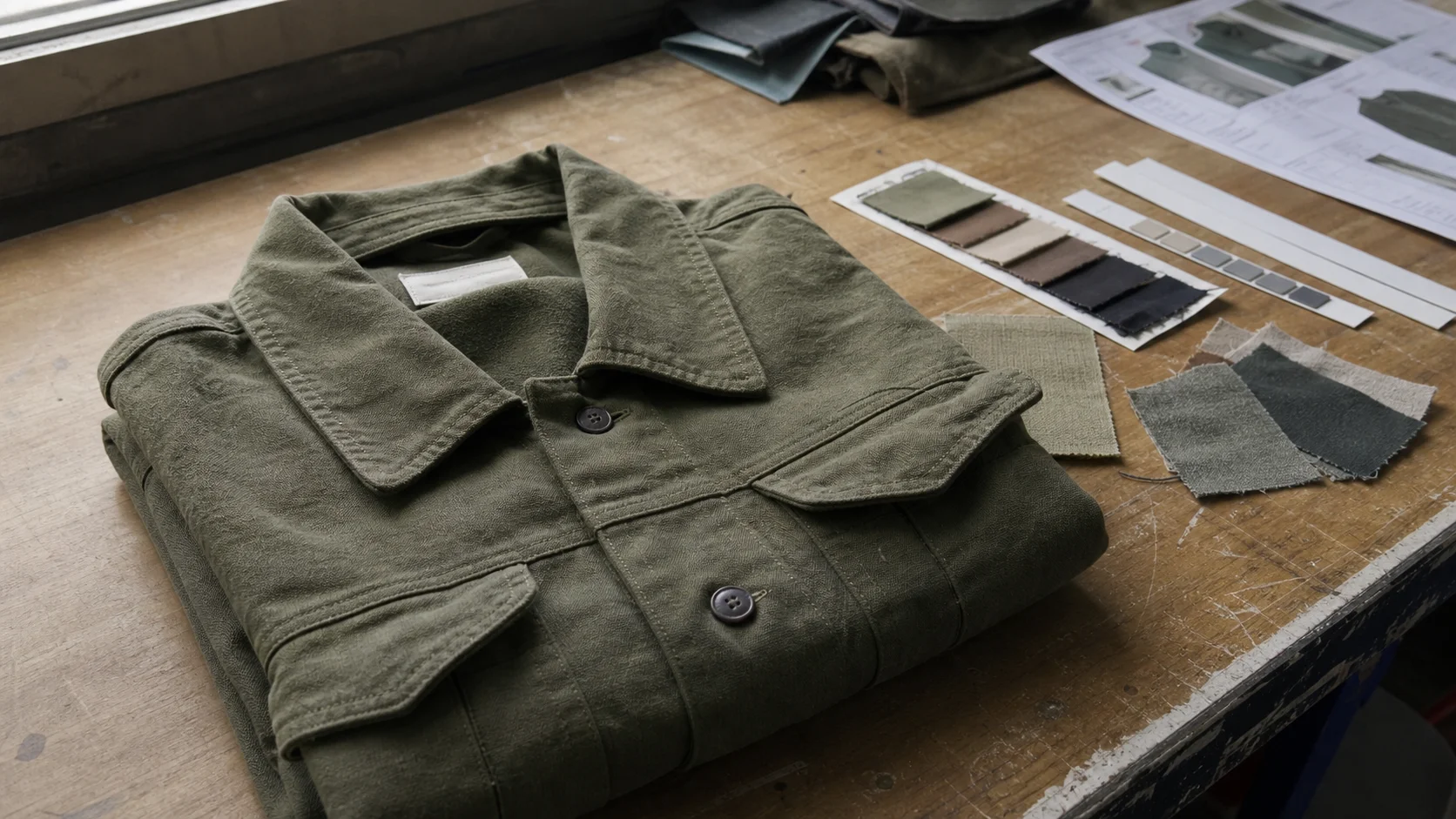
A product-specific SEO outline for fitness club buyers evaluating hemp utility coat manufacturers through colorfastness audits, sweat exposure testing,...
Hemp Utility Coat Colorfastness Audit for Buyers - Sustainable Fashion manufacturing guide
Fitness club buyers usually evaluate outerwear by style, brand fit, sustainability claims, and unit cost. Colorfastness deserves equal attention, especially when sourcing hemp utility coats for staff uniforms, retail merchandise, trainer apparel, or member-facing lifestyle collections.
A hemp utility coat may look excellent in a showroom sample. The commercial risk appears later: dye rubbing onto light upholstery, color bleeding during laundering, fading after repeated exposure to perspiration, or shade inconsistency between production lots. In a fitness club environment, these issues are more visible than in many retail settings because garments are worn around sweat, cleaning chemicals, towels, changing rooms, branded interiors, and high-touch surfaces.
For buyers, the question is not simply whether hemp is sustainable. The question is whether the manufacturer can control hemp fabric coloration well enough for a repeated uniform or merchandise program. Hemp has legitimate sustainability advantages, but it also has fiber characteristics that can complicate dye uptake and finishing if the mill and garment factory do not manage the process carefully.
Practical sourcing judgment: a sustainable coat that stains club furniture, fades after ten washes, or varies visibly between batches is not a low-risk purchase. Colorfastness should be audited before price negotiation is treated as final.
This article outlines how fitness club buyers can audit a hemp utility coat manufacturer for colorfastness risk. It covers fabric and trim specifications, testing expectations, sample approval steps, typical MOQ ranges, lead-time dependencies, production checks, and final inspection risks.
Fitness clubs create a demanding wear environment. A hemp utility coat may be used by front desk teams, floor staff, outdoor instructors, spa attendants, café employees, or retail customers who wear it before and after training. The garment may also be handled by staff who are moving equipment, cleaning spaces, folding towels, or commuting between club locations.
Colorfastness risks are higher when a coat is exposed to multiple stress factors in the same day. Sweat can affect dye stability. Friction against straps, benches, bags, and seating can reveal poor crocking performance. Commercial laundry routines can be harsher than home washing. Cleaning agents used in gyms may contain ingredients that affect dark dyes or garment finishes.
Fitness club buyers should treat colorfastness as a customer experience issue, not just a technical textile issue. A member who buys a premium sustainable coat from a club retail wall will judge the club brand if the garment stains a white car seat or fades unevenly after a few washes.
A colorfastness audit should begin before the purchase order. Buyers should request written specifications, test reports, physical standards, and production control details. Verbal reassurance is not enough. The manufacturer should be able to explain how color is controlled from fabric dyeing through garment washing, pressing, packing, and final inspection.
For a more complete view of sourcing support and garment development, buyers can review Fabrikn’s apparel manufacturing services and compare the listed support areas with the controls requested from any hemp utility coat supplier.
The audit should also confirm whether the manufacturer controls fabric sourcing directly or relies on a trading intermediary. A factory may sew coats well but have limited authority over dyehouse quality. For hemp garments, the mill relationship matters because fabric preparation and dyeing determine much of the final colorfastness performance.
Hemp can be used in pure form, but many commercial utility coats use hemp blends for better handfeel, cost control, dimensional stability, or dye consistency. Buyers should not approve a hemp utility coat only by visual appearance. The fabric specification determines how color behaves over time.
Many sustainable fashion buyers prefer natural-looking shades: undyed ecru, sage, olive, clay, washed black, stone, navy, and khaki. These colors are commercially appealing for a fitness club lifestyle range. Dark colors and saturated earthy tones carry higher colorfastness risk, especially if pigment dyeing or garment washing is used to create a broken-in effect.
Hemp fibers can contain natural impurities and variation. Scouring, bleaching, mercerizing alternatives, enzyme treatment, and softening all influence dye uptake. Poor preparation may lead to cloudy color, panel-to-panel differences, streaks, and inconsistent wash performance.
Buyers should ask whether fabric is dyed before cutting or whether finished garments are dyed after sewing. Piece-dyed fabric is usually easier to control for uniform programs because panels can be shade-matched before sewing. Garment dyeing gives a relaxed look, but it can create edge abrasion, seam variation, and shade differences between body fabric and trims.
Undyed or natural hemp may reduce dye-related bleeding risk, but it still needs testing. Natural color can vary between fiber lots. Bleaching level, residual oils, finishing agents, and optical brighteners can create inconsistent shade. For a club uniform program, natural hemp should have an approved shade range and yellowing resistance checks.
Colorfastness audits often focus on shell fabric and ignore trims. That is a mistake. Utility coats typically include multiple components: buttons, snaps, zippers, drawcords, pocket bags, labels, tapes, interlinings, thread, patches, toggles, and sometimes contrast lining. Any of these can create staining, bleeding, or shade mismatch.
For fitness clubs, trims should be selected for durability and cleaning tolerance. A coat that looks sustainable but uses unstable decorative trims can create avoidable complaints. Buyers should require trim cards and component-level test data for any dark or contrast materials.
Thread color matters in garment-dyed hemp coats. Polyester thread may not absorb dye the same way as hemp or cotton fabric. This can be attractive if contrast stitching is intentional, but it can look like a defect if the design expected tonal stitching. Cotton thread may dye more tonally but can have different strength and abrasion performance.
The safest route for a fitness club uniform coat is usually piece-dyed shell fabric with pre-approved thread matching. For fashion retail capsules, garment dyeing can work if the buyer accepts natural variation and defines it clearly in the product standard.
Buyers should request third-party lab testing or documented internal testing from a qualified textile lab. Test methods may vary by market, but the principle is the same: simulate common exposure conditions and grade color change or staining. A manufacturer that cannot explain test standards clearly may not be ready for a structured club uniform order.
Lab performance requirements should be linked to end use. A limited fashion capsule can tolerate more shade character than a multi-location staff uniform. That said, wet rubbing below grade 3 is a warning sign for dark hemp coats used in fitness clubs. If a supplier argues that poor rubbing is normal for sustainable dyeing, buyers should treat that as a commercial risk rather than a technical excuse.
A test report for one fabric color does not prove performance for all colors. Black, navy, olive, rust, and deep brown may behave differently from stone or ecru. A test report from a previous season may not represent the current bulk lot. Buyers should request reports tied to the actual fabric composition, color, finish, and supplier lot intended for production.
For larger programs, test both pre-production fabric and bulk production fabric. If the order includes multiple colors, test the darkest shade and any pigment-dyed or garment-dyed options. If the coat includes contrast trims, test the complete garment or composite component set.
A disciplined sample process prevents many colorfastness disputes. The goal is to approve not only fit and styling, but also fabric behavior, shade range, trims, care labeling, and production repeatability.
Buyers should retain one approved pre-production sample at the buying office and require the manufacturer to retain a duplicate. If a dispute appears during inspection, both sides need the same reference standard. Digital photos are useful for communication, but they are not enough for shade approval because lighting, screens, and camera settings distort color.
Hemp garments can show natural variation, especially in washed or garment-dyed styles. A shade band defines the acceptable lightest and darkest production shades. This is more practical than expecting every unit to match a single swatch perfectly.
For uniform programs, keep the shade band tight. For lifestyle merchandise, a slightly wider band may be acceptable if the visual effect is intentional. The tradeoff is simple: wider shade tolerance can reduce production rejection and cost, but it may weaken brand consistency across club locations.
A good hemp utility coat manufacturer should control color risk during fabric receiving, cutting, sewing, washing, finishing, and packing. The factory does not need to overcomplicate the process, but it should have visible control points.
Fabric rolls should be checked against the approved standard before cutting. The inspection should include roll number, dye lot, width, weight, visible defects, and shade. For hemp canvas and twill, buyers should ask whether the factory uses a lightbox or standardized lighting to compare roll shades. Natural daylight alone is not a reliable quality control system.
If roll-to-roll shade variation exists, the factory should cut garments by shade lot and avoid mixing panels. Sleeve, body, pocket, collar, and belt pieces should be cut from compatible rolls. Panel mismatch is one of the most visible defects in utility coats because large flat surfaces make shade differences easy to see.
Bundling errors can create shade mismatch even when fabric lots are acceptable. Each bundle should carry lot identification. If the coat has multiple panels, the factory should prevent components from different shade groups being sewn into the same garment.
This is especially important for styles with large patch pockets, storm flaps, belts, hoods, or detachable liners. A slightly darker pocket on a light hemp coat may be more noticeable than a minor measurement issue.
Garment washing can improve handfeel and reduce shrinkage, but it adds color risk. Enzyme washing, stone washing, pigment dyeing, softener use, and tumble drying can alter shade. Buyers should approve washing parameters before production, including load size, time, temperature, chemical recipe, drying method, and target appearance.
For fitness club buyers, the safest instruction is to avoid unapproved wash variation. If the design calls for a washed look, define the acceptable appearance with physical samples and shade bands. Aesthetic variation should never be left to interpretation on the sewing floor or wash plant.
Packing can also affect color perception and staining. Dark garments should be fully dry before folding. Tissue, hangtags, labels, and polybags should not transfer ink or marks. If coats are packed tightly while still warm or damp after finishing, there is a risk of creasing, odor, mildew, or color migration.
Fitness clubs often distribute uniforms across multiple branches. Cartons should be labeled clearly by style, color, size, and lot. If a replenishment issue appears later, lot traceability helps isolate the problem.
MOQ and lead time vary by fabric, dye method, trim customization, factory capacity, and testing requirements. Buyers should treat any quoted timeline as conditional until fabric, trims, lab dips, and sample approvals are complete.
These ranges are typical planning references, not guaranteed rules. Some manufacturers accept lower quantities if fabric is available, trims are standard, and the sewing line has open capacity. Custom hemp fabric, custom dyeing, branded trims, and lab testing usually push MOQ upward.
A realistic first-order timeline for a custom hemp utility coat is often 8-14 weeks after design confirmation. More complex programs can take longer, especially if the buyer requires multiple colorways, branded trims, third-party testing, or staggered delivery to different club locations.
Lower unit cost can be achieved by using stock fabric, standard trims, fewer pockets, simpler construction, and a broader shade tolerance. The tradeoff is reduced exclusivity and less control over color continuity. Higher unit cost may be justified when the coat supports a premium club brand, staff visibility, or a retail price point that depends on consistency.
Buyers should not cut third-party testing first. Testing is usually a small percentage of total program cost compared with the cost of returns, staff dissatisfaction, stained interiors, or unusable inventory. If budget is tight, reduce decorative complexity before reducing colorfastness controls.
Final inspection should verify the approved quality standard, not discover the standard for the first time. The inspection team needs the purchase order, spec sheet, approved sample, shade band, trim card, care label, test requirements, measurement chart, and packing instructions.
Many apparel buyers use AQL inspection levels such as 2.5 for major defects and 4.0 for minor defects, though requirements vary by buyer and market. For fitness club uniform programs, visible shade mismatch, dye transfer, wrong care label, and severe staining should be treated as major defects. A loose thread may be minor. A dark patch pocket on a lighter body panel is not minor if it affects front-facing appearance.
Inspection should include both folded and worn-view assessment. Utility coats can hide some problems when flat but reveal twisting, panel mismatch, or pocket imbalance when placed on a form. If the coat is intended for staff who interact with members, front body, collar, sleeve, and pocket appearance deserve extra scrutiny.
Buyers should ask direct questions and expect specific answers. A supplier who gives vague replies about sustainability, natural variation, or artisan dyeing may still be suitable for a small fashion run, but not necessarily for a structured fitness club uniform program.
For buyers comparing supplier capability, company background and production approach matter. The Fabrikn about page can be used as a reference point for the type of manufacturing partner information buyers should look for when assessing transparency and sourcing fit.
A hemp utility coat can be a strong product for fitness clubs. It fits the sustainable fashion category, supports a practical lifestyle aesthetic, and can work across staff uniforms, member retail, wellness events, and outdoor programming. The main sourcing risk is assuming that sustainability claims automatically equal commercial performance.
The better purchase is not always the cheapest coat or the most heavily washed coat. For staff uniform use, prioritize controlled piece-dyed fabric, stable trims, clear shade bands, tested care performance, and repeatable production. For retail capsules, buyers can accept more natural variation if the product story, hangtag copy, and quality standard are aligned. The key is to decide what variation is acceptable before production starts.
If the manufacturer cannot provide test reports, cannot explain dye methods, or resists shade control procedures, the buyer should slow down the order. A small pilot run may be safer than a full multi-location rollout. If the pilot passes wear testing, laundering, and member feedback, the buyer can scale with more confidence.
Direct purchasing judgment: approve hemp utility coats for fitness club programs only when the supplier proves colorfastness through samples, testing, and bulk controls. Do not rely on sustainability positioning alone.
Buyers planning a custom hemp utility coat program can start by clarifying fabric, color, use case, quantity, and testing expectations with the manufacturer. For project discussions, use the Fabrikn contact page to outline the coat specification, target MOQ, delivery window, and colorfastness requirements.
Get a free quote from Fabrikn — your trusted B2B clothing manufacturer with 10+ years of experience. MOQ as low as 200 pieces.
Get a Free Quote →The most important tests are colorfastness to washing, dry and wet rubbing, perspiration, water, and light. Fitness club buyers should pay close attention to wet rubbing and perspiration because coats may contact sweat, towels, seating, bags, and light-colored uniforms.
Not necessarily. Performance depends on fiber preparation, dye selection, fabric construction, finishing, and laundering instructions. Hemp can perform well when processed correctly, but natural fiber variation and garment dyeing can increase shade control challenges.
Garment dyeing can work, but it is usually riskier for strict uniform consistency. It may create attractive washed character, yet it can also increase shade variation, seam abrasion, and crocking risk. Piece-dyed fabric is often safer for multi-location staff uniforms.
Typical MOQs range from about 100-300 pieces per color for stock fabric styles and 300-800 pieces per color for custom dyed hemp blend fabric. More complex garment-dyed or branded trim programs may require 300-1,000 pieces per color or more, depending on supplier capacity and material sourcing.
A first custom order often takes 8-14 weeks after design confirmation. Lead time depends on lab dip approval, hemp fabric availability, trim sourcing, sample rounds, test reports, production capacity, and inspection scheduling.
Some natural variation is normal, especially in washed hemp, linen blends, and garment-dyed styles. Uniform programs should use a tight approved shade band. Retail lifestyle capsules may accept a wider shade band if the variation is intentional and clearly approved.
Yes, if wet or dry rubbing performance is poor. Dark shades such as black, navy, olive, charcoal, and brown should be tested carefully before production. Buyers should not approve dark hemp coats for club use without acceptable crocking results.
Check drawcords, zipper tapes, pocket bags, leather or faux leather patches, printed labels, dyed buttons, tapes, thread, and contrast lining. Trim bleeding can damage the shell fabric even when the main fabric passes testing.
Undyed hemp reduces dye bleeding risk, but it can still vary in natural shade and may yellow over time. Buyers should approve a shade range and test the finished fabric for laundering, staining, and appearance stability.
Pause cutting and request corrective action from the supplier. Options may include re-finishing, changing the dye process, using the fabric for a different end use, or rejecting the lot. Cutting failed fabric usually transfers the risk to the buyer.