
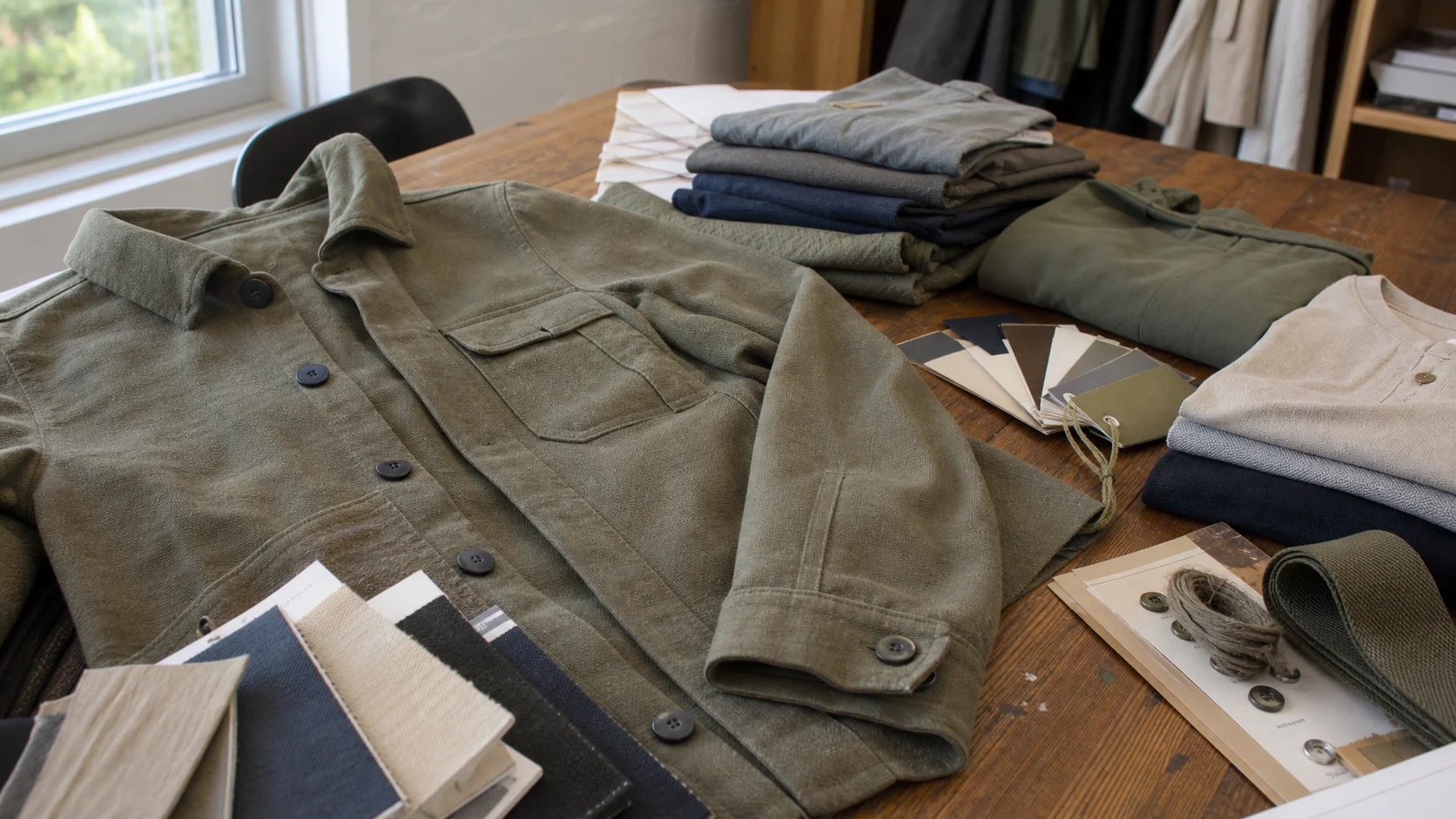
A retail operations checklist for validating hemp utility coats before launch, covering fiber claims, labeling, care instructions, durability tests,...
Hemp Utility Coat Compliance Checklist for Retail Ops - Sustainable Fashion manufacturing guide
For retail operations teams, a hemp utility coat is not just another outerwear SKU. It sits at the intersection of sustainable fashion claims, functional garment performance, labeling rules, vendor documentation, store handling, and customer-facing accuracy. If the coat is marketed as hemp, durable, workwear-inspired, low-impact, or ethically made, every claim needs a file behind it.
This checklist is built for retail operators, sourcing managers, production coordinators, compliance leads, and merchandising teams that need a practical way to bring hemp utility coats into stores or online channels without creating avoidable risk. It focuses on what needs to be checked before purchase orders are placed, before goods ship, before stock reaches stores, and before product copy goes live.
Hemp outerwear can be a strong category for sustainable fashion retailers. It gives buyers a durable natural-fiber story, a practical silhouette, and a material that feels more substantial than lightweight basics. The commercial appeal is clear: utility coats sell across gender-neutral assortments, workwear capsules, outdoor-inspired collections, and transitional weather drops.
The compliance burden is also real. Hemp fiber content must be declared accurately. Sustainability language needs support. Hardware must meet restricted substance requirements. Care instructions must match actual test results. Country-of-origin labeling needs to be correct. If the coat is sold into multiple regions, the retail operations team may need different label formats, language requirements, packaging rules, and product documentation by market.
The biggest risk is not usually one dramatic failure. It is a stack of small assumptions: a hangtag says “100% hemp” while the lining contains cotton, the product page says “chemical-free” without proof, the care label allows machine drying after a garment wash test showed shrinkage, or a supplier swaps buttons after sample approval. Retail ops teams need a checklist that catches these issues early enough to fix them before the shipment is packed.
Purchasing judgment: hemp utility coats are best treated as compliance-sensitive outerwear, not as simple casualwear. The fabric story attracts attention, and the garment construction gives suppliers more places to make undocumented substitutions.
Start by defining exactly what the hemp utility coat is. A “utility coat” can mean a chore coat, field jacket, overshirt, lined work jacket, belted coat, parka-style shell, or cropped canvas jacket. Compliance checks become messy when the product brief is loose.
The product definition should cover silhouette, intended use, fabric composition, lining, closure type, pocket structure, reinforcement panels, finishing process, size range, target market, and sales region. If the coat is marketed as outerwear, buyers will expect more durability and weather resistance than they would from a shirt jacket. If it is described as workwear, avoid implying protective performance unless testing supports it.
This matters because compliance is tied to the exact item being sold. A hemp-cotton chore coat with metal shank buttons and no lining has a different risk profile than a lined hemp utility parka with cord adjusters, coated fabric, and branded metal hardware.
The main fabric is the heart of the product. For hemp utility coats, common fabric options include hemp cotton canvas, hemp organic cotton twill, hemp recycled polyester blends, hemp linen blends, and hemp Tencel-style blends. Pure hemp fabrics are possible, but they can be stiff, costly, and more challenging to source consistently at scale.
Typical fabric weights for hemp utility coats often range from 220 GSM to 420 GSM, depending on whether the garment is an overshirt, midweight jacket, or structured coat. Canvas and twill are the most common choices. A heavier fabric gives a stronger utility feel but can create shrinkage, seam bulk, and pressing issues. A lighter fabric improves drape and cost but may not support a rugged product story.
Retail ops teams should be cautious with supplier descriptions such as “hemp look,” “hemp touch,” or “eco hemp blend.” These phrases may not mean the fabric contains meaningful hemp content. The commercial invoice, care label, product page, and hangtag must align with the confirmed fiber composition.
Fabric Type Typical Use Compliance Watchpoint Purchasing Tradeoff Hemp Cotton Canvas Chore coats and utility jackets Fiber percentage and shrinkage control Strong hand feel, but higher seam bulk Hemp Organic Cotton Twill Midweight coats and field jackets Organic certification scope Good sustainability story, usually higher cost Hemp Recycled Polyester Blend Performance-inspired outerwear Recycled claim documentation Improved stability, less natural-fiber purity Hemp Linen Blend Resort or summer utility styles Wrinkle behavior and care instructions Premium texture, less rugged appearanceLabeling is one of the most visible compliance areas for retail operations. It is also one of the easiest to overlook until goods are already packed. A hemp utility coat may need a main label, care label, size label, country-of-origin label, hangtag, barcode sticker, carton marking, and sometimes a sustainability claim tag.
The care label should be based on testing, not habit. Hemp blends can shrink, crease, fade, or stiffen depending on fabric construction and finishing. Garment-dyed hemp coats need special attention because color loss and shade variation may be part of the intended look, but customers still need accurate washing guidance.
Country-of-origin rules depend on where the garment is manufactured and where it is sold. The label should reflect the country where the substantial transformation of the garment occurs, not only where the fabric was grown or woven. If fabric is woven in one country, dyed in another, and cut and sewn in a third, the documentation should make that chain clear.
Internal retail systems should mirror the same information. If the product data management platform says “Made in Country A” and the sewn-in label says “Made in Country B,” distribution centers and customer service teams inherit the problem.
Sustainable fashion claims are under closer scrutiny. Hemp has a favorable reputation because it is a natural bast fiber and can be grown with relatively efficient land use. That does not make every hemp garment automatically sustainable. Fabric processing, dyeing, finishing, transport, trims, labor conditions, and end-of-life claims all affect the final risk profile.
Retail teams should avoid broad claims such as “planet-friendly,” “zero impact,” “chemical-free,” or “fully sustainable” unless the company has strong evidence and legal review. Safer claims are specific, measurable, and tied to documentation.
Retailers can strengthen their sourcing process by working with manufacturing partners that understand documentation, technical packs, and claim discipline. For teams building or refining a responsible apparel production workflow, fabrikn.com’s services page is a useful internal reference point for garment development and manufacturing support.
Utility coats usually rely on visible trims. Metal snaps, zippers, rivets, buckles, cord locks, branded buttons, patches, and drawcords give the garment its function and identity. They also create compliance and inspection risk.
Hardware should be reviewed for restricted substances, corrosion, attachment strength, sharp edges, plating consistency, and care durability. If the coat is sold in markets with strict chemical regulations, trim suppliers may need to provide declarations or test reports. This is especially important for metal components, coated labels, synthetic patches, and plastic adjusters.
Trim substitution is a common production issue. A supplier may use a similar-looking button or zipper because the approved trim is delayed or more expensive. That can affect product appearance, wash performance, nickel exposure, barcode descriptions, and repair policy. The purchase order should state that trim substitutions require written approval before bulk use.
A hemp utility coat should be comfortable enough for layering and stable enough to hold its shape. Fit approval should consider fabric stiffness, sleeve mobility, pocket placement, shoulder ease, armhole depth, and closure strain. Dense hemp canvas can feel restrictive if the pattern is copied from a softer cotton jacket without adjustment.
Performance expectations should be written carefully. A utility coat may be durable, but that does not make it personal protective equipment. A water-repellent finish may resist light rain, but that does not make the garment waterproof. Retail copy should not overstate function unless testing supports it.
Performance Area Suggested Check Retail Ops Risk Shrinkage Wash and dry test on approved care cycle High return rate due to size change Colorfastness Washing, crocking, perspiration, light Customer complaints and transfer claims Seam Strength Stress areas: armhole, pocket, side seam Failure during wear or store try-on Button/Snap Strength Pull testing and wash testing Loose hardware and safety complaints Dimensional Stability Measure before and after finishing Inconsistent size grading across bulkSampling should be structured. A hemp utility coat has too many variables for informal approval through photos alone. Retail operations teams should insist on a staged process that documents the path from concept to shipment.
For practical buying, the pre-production sample is the most important approval point. It should include final fabric, final trims, final labels, final care instructions, final packaging, and final finishing. If the pre-production sample is made from substitute fabric or temporary trims, it is not a true compliance approval sample.
Sample comments should be written in measurable language. “Make it better” does not help production. “Increase sleeve length by 1.5 cm,” “reduce pocket flap width by 0.8 cm,” or “change snap finish from antique brass to matte black per BOM code” creates a clearer approval trail.
MOQ planning affects compliance because rushed production is where substitutions and documentation gaps appear. Hemp fabrics can have longer lead times than standard cotton or polyester fabrics, especially when the buyer requires certified fiber, custom dyeing, garment washing, or lower-impact processing.
Typical MOQ ranges vary by supplier, fabric mill, trim sourcing, and customization level. For hemp utility coats, buyers may see lower MOQs around 100 to 300 pieces per style for stock fabric and simple trims. Custom fabric, custom dyeing, garment washing, or branded hardware may push MOQ to 500 to 1,000 pieces per style or more. Some mills may require fabric MOQs measured in hundreds or thousands of meters, which can be more important than the garment factory’s cut-and-sew MOQ.
Order Type Typical MOQ Range Lead-Time Consideration Buying Judgment Stock hemp blend fabric 100 to 300 pieces Shorter if fabric and trims are available Good for market testing, less control over color and hand feel Custom-dyed fabric 300 to 800 pieces Lab dips and dye approval add time Better assortment control, more risk if sales forecast is uncertain Garment-dyed coat 300 to 1,000 pieces Wash trials and shrinkage control are critical Strong casual look, higher shade variation risk Certified organic or recycled blend 500 pieces and above Certificate chain must be confirmed early Stronger claim potential, more documentation workLead times can range from 45 to 90 days after all approvals for straightforward production. More complex hemp utility coats may need 90 to 120 days, especially when fabric development, lab dips, trim tooling, certification review, or garment washing is involved. The calendar should include time for testing and corrections. A production plan that leaves no time for failed colorfastness or shrinkage results is not a real production plan.
Teams that need help building a production calendar, confirming manufacturer fit, or preparing tech packs can review fabrikn.com’s about us page to understand the company’s manufacturing focus and operating model.
Final inspection for hemp utility coats should be stricter than inspection for simple knitwear. The garment has more seams, more trims, more measurement points, and more visual risk. Hemp fabrics can show slubs, neps, wrinkles, and shade variation. Some of that texture may be acceptable, but it needs to be defined before inspection.
Inspection criteria should clarify what is acceptable for natural hemp texture. If every slub is treated as a defect, the order may fail unfairly. If no limits are set, visibly flawed garments may reach stores. A good standard separates natural fabric character from defects that affect appearance, durability, or customer perception.
For utility coats, measurement inspection should focus on chest, shoulder, sleeve length, body length, sweep, armhole, collar, pocket placement, and cuff opening. Garment-washed styles should be measured after the final wash and finishing process, not before.
The retail operations checklist should bring together sourcing, production, legal, merchandising, e-commerce, warehouse, and store requirements. The goal is not to create paperwork for its own sake. The goal is to prevent incorrect product information, shipment holds, relabeling costs, and customer complaints.
Direct buying call: do not launch a hemp utility coat online with generic sustainability copy. Use specific fiber percentages, precise care instructions, and clear limits on performance claims. That approach is less flashy, but it is safer and usually more credible.
A complete supplier file protects the retailer if questions arise after launch. It also makes repeat orders easier. Retail ops should build a shared file that includes all approvals and compliance documents by style code, season, supplier, and purchase order.
Documentation should be checked for consistency. If a certificate names the fabric supplier but not the garment manufacturer, confirm whether the claim can still be used for the finished product. If a test report applies to a previous batch, confirm whether the current bulk fabric is the same quality, color, and finish. Documents are useful only when they match the actual goods.
For retailers preparing a hemp utility coat program and needing support with supplier communication or production readiness, fabrikn.com’s contact us page gives teams a direct route to discuss manufacturing requirements.
A hemp utility coat can be positioned as a premium sustainable outerwear item, but every sourcing decision changes cost, compliance load, and operational risk.
Retail operations teams should decide which tradeoffs matter most before supplier negotiation. If the first priority is a credible sustainability story, documentation and certified materials should be budgeted from the start. If the first priority is market testing, a stock hemp blend with restrained claims may be the more practical route.
A hemp utility coat can be a strong sustainable fashion product when the operational controls are in place. The checklist should not sit only with compliance. Sourcing, merchandising, technical design, QA, logistics, e-commerce, and store operations all touch the product before customers do.
The safest retail launch is built on precise fiber declarations, tested care instructions, approved trims, realistic MOQ planning, controlled sampling, disciplined sustainability claims, and documented final inspection. That may sound basic, but in outerwear the basics are where margin is often protected.
The best purchasing decision is not always the most ambitious hemp story. It is the style that the team can source, verify, label, ship, sell, and support with confidence.
Get a free quote from Fabrikn — your trusted B2B clothing manufacturer with 10+ years of experience. MOQ as low as 200 pieces.
Get a Free Quote →Start with the product definition, fiber composition, sales region, and intended claims. These four items determine the label requirements, testing needs, supplier documentation, and product copy risk.
Typical MOQs can range from 100 to 300 pieces for stock hemp blend fabric and simple trims. Custom fabric, garment dyeing, branded hardware, or certified materials may push MOQ to 500 to 1,000 pieces or higher.
A straightforward order may take 45 to 90 days after approvals. More complex programs with custom fabric, lab dips, garment washing, certification review, or special trims may need 90 to 120 days.
Only use sustainability claims that are specific and supported. A safer claim is “made with 55% hemp and 45% organic cotton” if documentation supports it. Broad claims like “fully sustainable” or “chemical-free” carry higher greenwashing risk.
Key tests usually include fiber content, shrinkage, colorfastness to washing and rubbing, seam strength, trim pull strength, and care label validation. The exact test plan depends on market, fabric, finish, and claim set.
Common risks include shade variation, excessive slubs, twisted seams after washing, loose hardware, uneven pockets, incorrect labels, measurement issues, and packaging or barcode errors.
Not always. Hemp fabrics can naturally show slubs and texture. The retailer should define acceptable fabric character versus defects that affect appearance, durability, or customer satisfaction.
Retail ops can coordinate the checklist, but ownership should be shared. Sourcing, QA, technical design, compliance, merchandising, logistics, and e-commerce all need to approve the parts they control.