
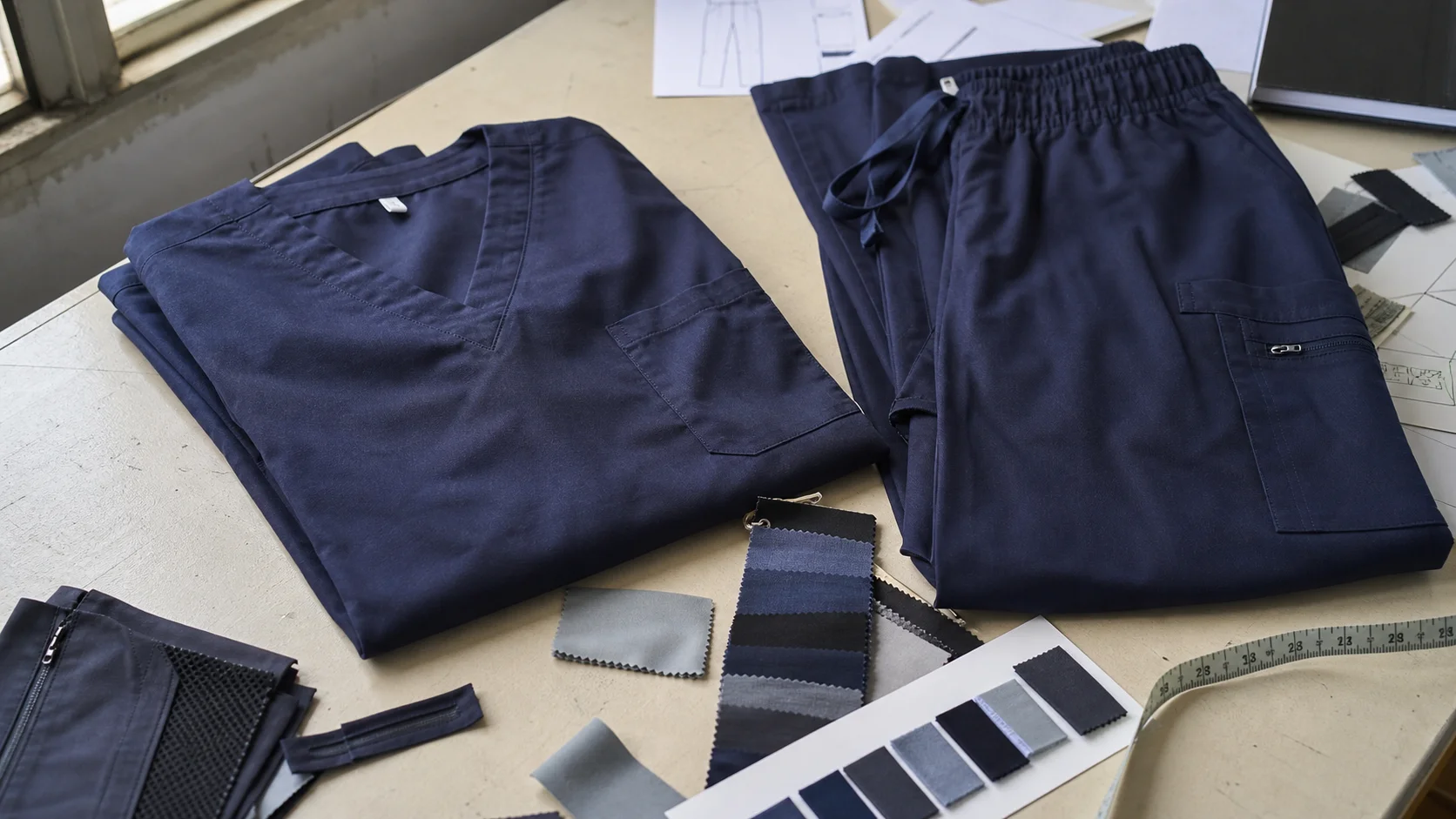
A product-specific outline for gym program buyers evaluating hemp utility coat size grading, fit consistency, mobility, sustainability claims, and...
Hemp Utility Coat Grading Review for Gym Buyers - Fabrikn production reference
Category: Sustainable Fashion
Hemp utility coats are moving from outdoor and workwear assortments into gym retail, staff uniform programs, recovery-wear capsules, and sustainable lifestyle collections. For gym buyers, the grading review matters as much as the fabric story. A coat that looks responsible on a line sheet can still fail commercially if the size run is too narrow, the shoulder grade is too aggressive, or the sleeve length misses the way members actually layer hoodies and training tops underneath.
This review looks at hemp utility coat size grading from a practical purchasing angle. It is written for gym program buyers, studio operators, wellness retailers, and sourcing teams planning a sustainable outerwear drop. The focus is not only on the garment’s eco claim, but on how the size chart, fit model, pattern increments, sample approval process, MOQ, and inspection plan should be checked before production.
Gym retail is no longer limited to leggings, tanks, performance tees, and shaker bottles. Many fitness brands are building lifestyle assortments that members wear before and after training. A hemp utility coat can fit this space well because it signals durability, sustainability, and everyday function without looking overly technical.
For a gym buyer, the commercial appeal sits in three places. First, hemp has a stronger sustainability position than many conventional cotton or synthetic outerwear options, assuming the supplier can support fiber and processing claims. Second, a utility coat offers storage and styling value through pockets, snaps, zippers, and structured panels. Third, it can be worn across seasons, especially as a mid-weight layer over hoodies, recovery tops, or casual uniforms.
The risk is that utility coats are less forgiving than knit gym apparel. A tee can tolerate small grading issues because the fabric stretches. A woven hemp coat does not usually behave the same way. If the chest grade is tight, members may not zip or button it comfortably. If the armhole grade is wrong, the wearer feels restriction when driving, carrying a gym bag, or reaching overhead. If the length grade is inconsistent, the product looks sloppy on larger sizes or too boxy on smaller ones.
That is why the grading review should be treated as a purchasing checkpoint, not a technical formality. A good hemp coat program can support premium pricing. A poor size run creates returns, staff complaints, markdowns, and inconsistent brand presentation.
Size grading is the process of increasing or decreasing a base pattern to create the full size range. In a hemp utility coat, the base size is commonly medium for unisex programs or small/medium depending on the brand’s target customer. The graded sizes might run XS to XXL, S to 3XL, or a more inclusive XS to 4XL range.
Grading is not simply “make every measurement bigger.” Each point of measure needs a controlled increment. Chest width may increase more than shoulder width. Sleeve length may grow slowly across sizes. Body length may change by only small amounts, especially if the coat is intended to look cropped or workwear-inspired. Pocket placement also needs adjustment so it does not sit too high on larger sizes or too low on smaller sizes.
For gym buyers, grading should be reviewed against the actual use case. A hemp utility coat for front-desk staff might need a cleaner, more uniform fit. A retail jacket sold to members may allow a more relaxed silhouette. A coat meant to layer over branded hoodies should have more ease through chest, bicep, and armhole than a light overshirt.
A hemp utility coat should be graded for movement and layering, not just for standing fit on a model. Gym buyers should review seated comfort, arm lift, and hoodie layering before approving production.
Before a technical team can judge the grade, the buyer needs to define the fit objective. Many grading problems start because the product brief says “relaxed fit” without explaining what that means in measurable terms.
A gym program should decide whether the hemp utility coat is one of the following:
Each objective changes the grading review. A uniform coat might use a smaller chest grade and controlled shoulder shape to keep staff looking neat. A member retail coat may need more oversized proportions, but the grade still needs discipline. If the small size looks intentionally relaxed and the XXL looks like an unshaped box, the grading has not been solved.
Direct purchasing judgment: for most gym programs, a relaxed-but-controlled fit is safer than a fashion-oversized fit. Oversized coats photograph well, but they create size confusion online and often increase exchanges. If the product is a first-time hemp outerwear test, choose a fit that members can understand from the size chart.
The size range depends on the program type, expected order volume, market, and whether the coat is sold online, in-club, or issued as staff apparel. For many gym buyers, the safest starting range is XS to XXL or S to 3XL. A more inclusive size run up to 4XL is commercially better for many brands, but it requires more careful pattern work, more fit review, and often more inventory risk.
Program Type Typical Size Range Buying Comment Small studio retail test S to XL or XS to XL Lower inventory exposure, but may exclude members and distort demand data. Gym chain lifestyle capsule XS to XXL Balanced range for first production if quantities are moderate. Staff uniform program XS to 3XL Better coverage for employee needs; fit consistency is important. Inclusive member retail XS to 4XL Strong brand signal, but requires more graded fit validation and inventory planning.Unisex sizing is common for gym programs, but it should not be treated as a shortcut. Unisex coats often fit male bodies better in shoulders and female bodies less predictably in hip and sleeve length. If the coat is designed as unisex, review hip sweep, sleeve length, shoulder width, and body length across multiple body types. A “unisex” label does not solve fit; it only simplifies the selling structure.
For women-focused studios, a women’s grade may be more commercially accurate, especially if the coat is intended to sit at the high hip or mid-thigh. For mixed membership gyms, unisex can work if the silhouette is intentionally relaxed and the size chart is clear.
A hemp utility coat has more grading complexity than a basic hoodie. The buyer should ask for a full spec sheet with points of measure, tolerance, and graded increments. At minimum, review chest, waist, sweep, across shoulder, sleeve length, bicep, armhole, cuff opening, body length, collar, and pocket placement.
Chest width is usually the first fit issue noticed by customers. For a relaxed woven coat, many suppliers use a grade of around 2 inches in total circumference between alpha sizes, though this varies by market and silhouette. Some oversized styles use larger increments, while more tailored jackets may use smaller increments.
Gym buyers should check the chest measurement over the intended layering piece. If the coat will be worn over a hoodie, the sample should be tested over a hoodie with realistic fabric weight, not a thin T-shirt. A medium coat that fits nicely over a tee may be too tight once layered over fleece.
Shoulder grading is a common failure point in utility coats. Too much grade creates a dropped, sloppy look in larger sizes. Too little grade restricts movement and makes the garment feel tight across the upper back. Hemp blends with limited stretch need more practical ease than stretch woven performance jackets.
For gym retail, a slightly dropped shoulder can be useful because it supports unisex sizing and layering. It should still look intentional. If the shoulder seam falls too far down the arm in XL and XXL, the sleeve may twist and the coat may look cheap.
Armhole depth and bicep width must be reviewed together. A narrow bicep is especially problematic for gym audiences because many customers have developed arms and shoulders. A coat that fits a generic fashion model may fail on members who lift regularly.
The bicep grade should allow movement without creating an oversized sleeve tube. Review arm lift, forward reach, and elbow bend. If the wearer cannot comfortably reach forward as if holding a steering wheel, the coat will feel restrictive during commuting and daily use.
Sleeve length should not grow too aggressively across sizes. Oversized sleeve length is one of the fastest ways to make a coat look unpolished. If cuffs have snaps or tabs, check whether adjustment works across the size range.
Cuff opening also affects usability. Gym members often wear smartwatches, wrist wraps, or thicker sweatshirts. A very narrow cuff may look clean but feel annoying. A wide cuff may interfere with training bags and layering. Adjustable cuffs are useful, but they add trim cost and inspection points.
Body length affects both styling and mobility. A shorter utility coat can look modern, but it may ride up over hoodies. A longer coat offers coverage but can restrict sitting if the sweep is too narrow. For gym buyers, mid-hip length is often the safest commercial choice for a first hemp utility coat.
Sweep grading matters if the coat is sold as unisex. Customers with wider hips may need more room at the bottom opening. If sweep is not graded properly, the coat may fit in the chest but pull at the hem when closed.
Pocket position should be graded, not simply copied from the base size. Chest pockets that look balanced on medium can sit awkwardly on 2XL. Lower utility pockets may become too close to the hem on smaller sizes. Pocket bags also need enough depth for phones, keys, access cards, and small gym items.
For staff uniforms, pocket function can be more important than fashion symmetry. Front-desk teams may need secure pocketing for keys or radios. Trainers may need easy-access storage without bulky flaps that catch on equipment.
Hemp is valued for strength, texture, and sustainability positioning, but it has technical behavior that must be considered during grading. Pure hemp can feel stiff at first and may wrinkle heavily. Hemp-cotton blends are common because they soften the hand feel and make the garment more familiar to customers. Hemp-Tencel or hemp-organic cotton blends can improve drape, though costs rise. Hemp with a small amount of elastane is less common in utility coat fabrics, but it can improve comfort if the construction and recovery are controlled.
Typical fabric weights for hemp utility coats may sit around 220 to 360 gsm, depending on whether the product is closer to an overshirt, chore coat, or outerwear jacket. A lighter hemp blend is easier to wear indoors and after workouts. A heavier canvas offers structure but increases stiffness, shrinkage risk, and sewing difficulty.
Fabric Option Typical Use Grading Impact Hemp-cotton canvas Utility coats, chore jackets Needs enough ease; can feel stiff before washing. Hemp-organic cotton twill Cleaner lifestyle outerwear Good balance of structure and comfort; shrinkage must be tested. Hemp-Tencel blend Softer premium coat Better drape; may need reinforcement at pockets and seams. Heavy hemp canvas Workwear-inspired jacket Durable but less forgiving; grade must allow movement.Shrinkage is critical. Hemp and hemp blends may shrink during garment wash or home laundering, especially if fabric has not been properly pre-shrunk. The size chart should reflect finished garment measurements after wash treatment, not greige or pre-wash pattern assumptions.
Ask suppliers for fabric shrinkage test results in warp and weft directions. If the body length shrinks more than expected, the coat may become too short. If width shrinkage is high, the chest and sleeve can become tight. A gym buyer does not need to manage the technical lab process directly, but the purchase order should require approved shrinkage standards and finished measurement tolerances.
Trim choices also affect fit and grading. Metal snaps, zippers, cord adjusters, buttons, drawcords, labels, and pocket reinforcements add function but can change how the coat hangs. A heavy zipper can pull the center front down. Large patch pockets can stiffen the front body. Adjustable waist tabs can improve shape but add production complexity.
For sustainable positioning, trims should match the product story where practical. Recycled polyester thread, corozo buttons, recycled metal snaps, organic cotton labels, and minimal plastic packaging may be considered. The tradeoff is cost, lead time, and availability. A sustainable trim package that delays shipment by six weeks may not be suitable for a seasonal gym launch.
A disciplined sample process protects the buyer from grading surprises. A hemp utility coat should not move from one attractive prototype straight into bulk production. The sample path should confirm fabric behavior, fit, construction, and graded measurements.
The development sample establishes design direction. It may be made in available fabric, not final bulk fabric. At this stage, review silhouette, pocket concept, closure type, collar shape, and basic construction. Do not approve bulk fit from this sample unless the fabric and wash are production-representative.
The fit sample should be made in correct or very close fabric weight. Review the base size on a fit model that matches the target market. For gym programs, it is sensible to test over both a T-shirt and a hoodie. Check chest closure, shoulder comfort, arm movement, sleeve length, and hem position.
If the coat will be garment washed, enzyme washed, softened, dyed, or overdyed, review the garment after the actual wash process. Hemp fabric can change hand feel and dimensions after finishing. The wash standard should be recorded clearly, including color, hand feel, shrinkage, and appearance.
The size set is where grading problems become visible. Request samples across the size range, not only the base size. If budget or timing does not allow every size, review at least the smallest, base, and largest sizes. For a size run XS to 3XL, checking only medium is not enough.
During size set review, compare actual measurements to the graded spec. Put garments on bodies where possible. A spec sheet can pass while the garment still looks wrong because proportions, pocket placement, and sleeve balance are off.
The pre-production sample should represent final fabric, final trims, final labels, final wash, and final construction. Approve this sample only after comments from development, fit, and size set have been resolved. If major changes are still needed, request another sample or accept the risk knowingly.
Top of production samples are pulled from the beginning of bulk production. They confirm that the factory is following the approved standard. For hemp coats, check seam tension, puckering, snap attachment, pocket placement, shade consistency, and finished measurements.
Buyers needing production support can review apparel development and sourcing options through Fabrikn’s services. For program-specific planning, it is better to clarify fit, MOQ, and timeline before committing to a launch date.
Minimum order quantity for hemp utility coats varies widely by fabric, trim, factory setup, dyeing method, and size range. A realistic MOQ for a custom hemp coat often starts around 300 to 500 pieces per style for smaller specialist production, while more efficient pricing may require 800 to 1,500 pieces or more. Custom-woven hemp fabric, garment dyeing, special trims, or multiple colorways can push MOQs higher.
Gym buyers should separate style MOQ, color MOQ, and fabric MOQ. A supplier might accept 500 pieces total but require 250 pieces per color. A mill may require a fabric minimum that supports 1,000 garments, even if the sewing factory can produce fewer. This is where many sustainable fashion programs become more expensive than expected.
Order Scenario Typical MOQ Range Purchasing Risk Stock hemp blend fabric, simple coat 300-600 pcs Limited color control and fabric availability. Custom color, existing fabric quality 500-1,000 pcs Lab dip approval and dye lot risk. Custom hemp fabric development 1,000+ pcs Longer development and higher inventory exposure. Inclusive size range with several colors Often 800-1,500+ pcs Size and color fragmentation can raise unit cost.Lead time also deserves caution. A basic custom coat using available fabric might take 8 to 12 weeks after sample approval, though this depends on capacity and trim readiness. Fabric development, lab dips, bulk dyeing, garment washing, custom trims, and extended size sets can push timelines to 14 to 20 weeks or more.
For gym launches tied to New Year fitness campaigns, Earth Month, summer challenges, or club openings, the calendar should include time for sample comments and corrections. The production clock should not start from first inquiry. It starts after design, fabric, trims, fit, grading, and purchase order details are aligned.
Cost tradeoffs are direct. A lower MOQ often means higher unit cost. A wider size range improves brand inclusivity but spreads inventory across more SKUs. A better hemp blend may support premium pricing but raises landed cost. Sustainable trims improve the story but can complicate procurement. Gym buyers should decide which features are essential and which can be phased into a second order.
For many first programs, the smart move is one strong neutral color, a controlled size range, reliable hemp-cotton fabric, and excellent fit. Multiple colors, heavy trim packages, and complex wash effects should wait until demand is proven.
Inspection standards should be clear before bulk production. Hemp utility coats have several risk points that are less common in simple gym knits.
AQL inspection should include measurement checks across sizes and colors. Common tolerance might be plus or minus half an inch for many width measurements and plus or minus three-eighths to half an inch for some smaller points, but tolerances depend on the spec and garment type. Larger tolerances may be needed for washed garments, though buyers should not accept sloppy variation just because the product is hemp.
Review packaging too. A structured hemp coat can crease heavily if packed too tightly. If the garment is sold in-club, presentation matters. If it arrives crushed, staff may need to steam every unit before merchandising. That hidden labor cost should be considered.
A hemp utility coat is a good candidate for sustainable gym retail when the buyer treats it as outerwear, not as a simple logo item. The garment needs enough technical review to protect fit, function, and brand credibility.
The strongest buying case exists when the gym has a clear lifestyle identity, members buy branded apparel beyond basics, and the coat can be styled with existing hoodies, joggers, bags, and caps. It also works well for staff-facing programs where sustainability is part of the brand message.
The weakest case is a rushed seasonal drop with uncertain sizing, untested hemp fabric, and too many colorways. Hemp carries a premium perception, but customers will still judge the coat by fit, comfort, and durability. A sustainability story cannot rescue a sleeve that is too tight or a snap that falls off.
Practical recommendation: start with a base size fit approval, then require a size set review before bulk. Test the coat over a hoodie. Check the largest size on a real body, not just a table measurement. Keep the first order focused. If the coat sells through cleanly with low return rates, expand colors or size range in the next buy.
For sourcing teams building a broader sustainable apparel program, the background and manufacturing approach of a partner matter. Buyers can learn more through Fabrikn’s about page or discuss a specific hemp utility coat brief through Fabrikn’s contact page.
Use this checklist before approving a hemp utility coat program:
Gym customers often have different body expectations than general fashion customers. Some have broader shoulders, larger biceps, or thicker thighs and hips from training. Others want easy layering after class and do not want a restrictive jacket over warm-up apparel. This makes standard fashion grading less reliable for a gym audience.
A hemp utility coat should allow enough upper-body movement without becoming shapeless. The most important commercial test is simple: can a customer try it over a hoodie, close it comfortably, reach forward, and still look put together? If the answer is yes across the size range, the coat has a stronger chance of selling at full price.
Online size guidance should be specific. Include finished garment measurements, model size references, and a fit note such as “designed for light to mid-weight layering.” If the coat is oversized, say so. If customers should size down for a closer fit, say that too. Clear guidance reduces exchanges and protects inventory.
Hemp utility coat size grading is not just a technical pattern exercise. For gym program buyers, it is a margin, inclusivity, and brand presentation issue. The coat must support movement, layering, and repeated wear while still delivering the sustainable fashion message that makes hemp attractive in the first place.
The best programs balance ambition with control. Choose a hemp blend that feels wearable. Keep the first color range focused. Demand a proper size set. Inspect the trims and measurements carefully. Make the fit clear to customers. Those steps do more for sell-through than adding another pocket, wash effect, or sustainability phrase to the hangtag.
Get a free quote from Fabrikn — your trusted B2B clothing manufacturer with 10+ years of experience. MOQ as low as 200 pieces.
Get a Free Quote →Yes, hemp can work well for gym utility coats when the fabric weight, blend, and wash are suitable. Hemp-cotton blends are often more commercially wearable than very stiff pure hemp. The coat should be tested for shrinkage, comfort, and layering before production.
Many first programs use XS to XXL or S to 3XL. A more inclusive XS to 4XL range is stronger for brand accessibility, but it requires more careful grading, more sample review, and a larger inventory commitment.
Typical MOQs may start around 300 to 500 pieces for simple programs using available fabric. Custom fabric, custom dyeing, several colors, or complex trims can push MOQs to 800, 1,000, or more pieces.
A straightforward program using available fabric may take around 8 to 12 weeks after sample approval. Custom hemp fabric, lab dips, garment washing, extended size sets, and special trims can extend the timeline to 14 to 20 weeks or longer.
Size set approval shows how the grading works across the full size range. A medium sample can look good while XS or XXL has poor shoulder balance, sleeve length, pocket placement, or sweep. Gym buyers should review at least the smallest, base, and largest sizes before bulk production.
Unisex sizing can work for relaxed hemp utility coats, especially for mixed-member gyms and staff programs. It still needs careful review because shoulder, hip, sleeve, and body length can fit different body types unevenly. Clear size charts are essential.
The main risks are measurement variation, shrinkage, seam puckering, shade differences, snap or button failure, pocket misalignment, uneven wash effects, and unsupported sustainability claims. These should be addressed in the spec, sample approval process, and final inspection plan.
They can be positioned as sustainable fashion if the material content and claims are supported by documentation. Buyers should avoid vague claims and confirm fiber content, trims, dyeing, packaging, and certifications where relevant.