
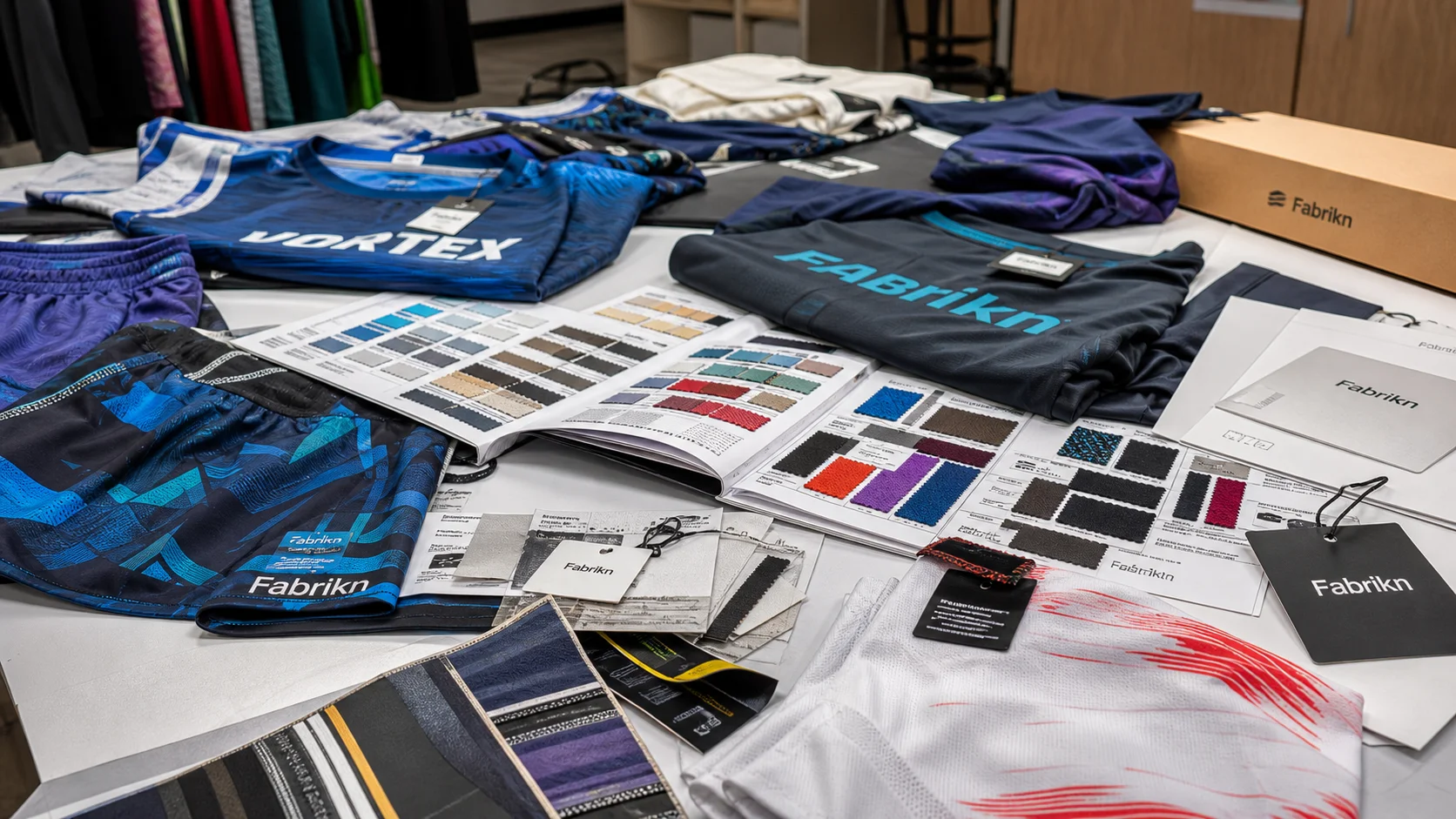
Clothing Production Timeline with checks for samples, fit, MOQ, QC evidence, pricing terms, and delivery risk.
Fast answer: Clothing Production Timeline: Sampling, Fabric Booking, Bulk Sewing, and Freight should be judged by production evidence, not by a generic sourcing promise. The buyer needs sample proof, cost breakdowns, QC checkpoints, and delivery buffers in writing.
Ask for recent sample photos, measurement tolerances, fabric or print test assumptions, decoration test notes, packing examples, and a named inspection checkpoint. These details show whether the team can repeat an approved sample at bulk volume.
Separate garment cost, decoration, labels, packaging, sampling, testing, freight, and rush charges. When every cost line is visible, it becomes easier to reduce colorways, adjust size depth, or reserve more time for sampling.
I’ve seen the same T-shirt leave one factory in four weeks and another in sixteen. Same garment, wildly different calendar. If you are asking how long does clothing production take, the honest answer depends on fabric readiness, trim sourcing, sample approvals, and the queue already sitting in front of your order. Even a re-order priced at $2.50-4.00 per unit at 500 MOQ from a Guangzhou knitwear plant delivering GOTS-certified 180 GSM combed cotton can sit in pre-production for four to six weeks while the development lab waits on OEKO-TEX Standard 100 reports and embroidery files for heat-applied logos.
Change the neckline, add embroidery, swap cotton jersey for French terry at 320 GSM, and the “12-week” promise starts wobbling. A $15 tee can move slower than a $60 one because the cheaper style is often pushed through a crowded, high-volume line with less priority. Dhaka’s mega-factories, audited to BSCI and WRAP standards, can handle 60,000 sewing operators but still book a $3 basic tee six weeks out because the cutting room is tied to a different retailer’s denim order. A premium piece may go to a smaller development-focused manufacturer in Istanbul that holds GOTS and WRAP certificates, charges more, and gets decisions done faster.
Region matters, but not in the tidy way buyers hope. A local factory can cut transit from 28 days to 2 and still lose time because its production queue is full for the next six weeks. Offshore sourcing can be faster on labor hours—some large knitwear plants finish 10,000 units in five days—yet shipping still adds 18-22 business days by sea from Ho Chi Minh City to Los Angeles, plus customs. Domestic speed and offshore speed are not the same thing.
Low-complexity basics move faster. Fashion-led pieces don’t. A plain hoodie may need one sample round and two trims; a sweatshirt with puff print, contrast binding, and enzyme wash can need three sample rounds, seven to ten days of wash testing, and special thread approval. I’ve stood beside lines where one embroidery panel added two days because the needle density had to be corrected before bulk, on a production line running Juki AMS-221 coverstitch machines, industrial Brother double-needle chains, and Yamato bartacking heads. Normal stuff.
Design readiness, material availability, sample approvals, factory capacity, quality checks, and freight all shape the answer. Miss one and the whole calendar slips. According to the World Trade Organization, trade runs on logistics as much as manufacturing, and garment production follows the same rule. Buyers who separate sewing time from everything else usually miss by 30% to 60%. That is why how long does clothing production take is never just a sewing question.
Factories that build WRAP, GRS, or BSCI compliance into their production planning usually block calendar space for test reports, chemical management, and worker auditing, but even they slip when a container sits for seven days on the quay. Understanding that the timeline is a sum of sourcing, development, and freight, not just sewing, will keep expectations tied to the real numbers instead of wishful thinking.
The early stage eats time before a single production unit exists. A clean tech pack can shave off one to two weeks; a vague one can add a month. From tech pack to final sample, the usual window is three to eight weeks for simple goods and six to twelve weeks for more technical pieces. For example, a sample of a Ho Chi Minh City–produced sports bra knitted on a Stoll CMS 330 machine from GRS-certified recycled polyester can return in 3.5 weeks once grading and yarn dyeing are confirmed.
Pattern making usually takes one to two weeks, especially when grading has to be checked across three sizes or five sizes. Digitized patterns created in Lectra Kaledo and Gerber AccuMark feed directly into the cutting room. First samples can come back in seven to 14 days if the factory already has the fabric and trims. Fit sample, salesman sample, and pre-production sample can each take one to three weeks. And then a buyer wants the sleeve one centimeter shorter or the pocket two centimeters higher.
Missing information is the silent killer. I’ve seen delays caused by unclear stitch construction, unconfirmed packaging, and measurements written in inches but sampled in centimeters. One brand sent a “relaxed fit” spec with no tolerance range, then spent three rounds arguing over whether 56 cm across the chest meant 56.0 or 57.5. No factory can guess correctly. It has to stop and wait.
Fabric and trim sourcing can stretch the sample calendar more than sewing ever will. If the zipper, rib, or label is not stock-supported, add seven to 21 days. If the cloth must be knitted, dyed, and lab-tested, add two to five weeks. A sample round is not only sewing. It is coordination across mill, trims room, and quality team. The Chinese mill in Guangzhou producing French terry on Mayer & Cie circular looms may need a GOTS audit and OEKO-TEX Standard 100 test before shipping swatches, and that paperwork alone is five business days.
The thing nobody tells you: brands that rush approval often lose more time later because they force corrections into bulk production, where a mistake on two samples becomes a mistake on 2,000 units.
According to OEKO-TEX, material verification and chemical compliance are not just paperwork; they are part of disciplined product development. I’ve seen buyers save 10 days by approving color standards before the final sample instead of after. That is one of the simplest ways to reduce how long does clothing production take without sacrificing quality. Add in a mid-stage lab test for pilling and seam strength on the GOTS-certified cotton crewneck, and you may tack on another three days, but you also avoid a $1,200 rework on bulk.
Product type changes everything. A basic T-shirt in 180 GSM combed cotton can move from fabric booking to packed cartons in four to seven weeks if the supplier has stock and the factory is running the style on preset templates in Guangzhou. A hoodie may take six to nine weeks because it needs drawcords, kangaroo pockets, GRS-certified recycled polyester fleece, and a garment dye pass on a WinTech batch dye machine. Denim, tailored shirts, outerwear, and knitwear live on a different clock because they need more finishing, more attachment work, and more chances for failure.
Sewing minutes matter, but they are not the whole story. A tee may take eight to 12 minutes to sew. A denim jacket can take 35 to 50 minutes once pocketing, topstitching, rivets, and labeling are counted. Yet washing and finishing often create the bigger delay. Stone wash can add five to eight days and trigger extra QA reviews, while enzyme wash may add three to five days and require a separate lab for colorfastness. Bonded seams, beading, heat-applied logos using ultrasonic welding, and multilayer shells can add one to three weeks. The outerwear line in Istanbul that uses laser-cut TPU waterproof taping runs each jacket through a 12-minute automated taping arch, and that alone means they only process 320 pieces per day.
I break categories into three practical clocks. Quick-turn basics: four to seven weeks. Standard seasonal products: eight to twelve weeks. Complex fashion or technical apparel: twelve to twenty weeks. That range is realistic. A leggings order of 500 pieces in stocked jersey from a Dhaka factory that already owns the mold for the gusset can move in three to five weeks. A tailored overshirt with custom buttons, garment dye, branded hangtags, and a double-pass finishing process in Ho Chi Minh City often needs nine to 14 weeks.
For buyers building a line, a product catalog helps separate what can be repeated from what must be developed from zero. Repeated styles usually stay near the lower end because the pattern, fit comments, and trim set already exist. New custom styles, especially those with custom hardware or specialty yarns, add at least two to four weeks, and a GRS-certified recycled nylon shell for a raincoat requires additional UV and hydrostatic head testing before the cutting room releases the markers.
Outerwear deserves special caution. A padded jacket with two shell fabrics, one lining, hidden snaps, and waterproof taping can require three sample rounds and two inspection gates before bulk. Knitwear is its own story. Fully fashioned sweaters need machine programming on a Stoll CMS 530, yarn dyeing, and often a two to four week lead just for yarn allocation. Complexity is not a style choice. It is a calendar choice.
The price point can mislead. A $28 fashion tee with garment dye and heavy print may take longer than an $85 minimal blazer if the blazer uses stock suiting and a factory that already runs that silhouette. I’ve seen this contrast again and again. The lower retail price is not always the faster one. When buyers ask how long does clothing production take, product type usually matters more than sticker price.
Country choice affects both production time and shipping time, and buyers often confuse the two. Guangzhou can move quickly on volume because fabric access is deep, trim sourcing is fast, and mills have inventory of GOTS-certified yarns, but a full factory may still need four to six weeks before bulk starts because the calendar is held by a large OEM customer. Dhaka can offer strong sewing speed and low labor cost, yet mill dependencies and port timing can add two to five weeks, especially if the cotton is not carded on time. Ho Chi Minh City tends to be efficient on cut-and-sew basics, especially for sportswear, while Portugal often wins on speed for smaller European orders because transit is short, even if unit cost is higher.
Turkey gets underestimated all the time. For EU buyers, a batch can arrive in three to seven days once finished, and domestic trucking beats a 25-day sea route every time. Portugal and Turkey both do well on 500- to 2,000-piece runs because the market rewards shorter approval loops. For a premium local order, paying $4.50 to $12 more per unit can still cut the total calendar by two to four weeks. Istanbul workshops audited to WRAP and OEKO-TEX Standard 100 frequently offer shorter lead times because they keep smaller, flexible crews focused on detail work, while also running garment dye on WinTech tanks to hit Pantone targets.
Large export factories and small-batch workshops behave very differently. A 1,000-person factory in Dhaka may not start your order for three weeks because it is finishing a 120,000-unit retail drop, but once it starts, it can finish 12,000 units of jersey apparel in eight days on 12 Juki 8700 coverstitch lines, with inline inspection and a BSCI-certified quality team reviewing every 500-piece carton. A boutique facility in Istanbul or Ho Chi Minh City with eight pattern cutters can pull a four-week turnaround for a complex athleisure set because the owner runs just two runs per month and reserves a dye tank for GRS-certified recycled poly blends.
Smaller, compliance-focused shops often account for shipping in their proposals, booking the 18-22 business day ocean sailing from Guangzhou to Los Angeles or the six-day RoRo from Istanbul to Rotterdam before they release the fabric to cutters. That transparency prevents buyers from assuming once sewing is done, the job is complete.
Material shortages are the top delay. When a Guangzhou mill must wait for GOTS-certified organic cotton or GRS-certified recycled polyester, the fabric dyeing slot itself adds 10-15 days plus another 5 days for OEKO-TEX Standard 100 chemical testing. Markers can’t be cut without the dumped rolls, so the sewing floor idles. Trim bottlenecks—missing YKK zippers, embroidered labels, or silicone patches—add seven to 21 days if they are custom, particularly when the supplier sources them from Istanbul hardware houses or Ho Chi Minh City plastic shops that also serve other brands.
Decision paralysis contributes as well. Each correction round adds one to three days. If the buyer delays sample approval for a sportswear set needing laser-cut mesh, the factory must hold the dye lot, reline the machine, and re-test the seam. That can easily add five business days per round. Miscommunication on packaging can add two to four days: a factory may line up cartons but then wait because the buyer neglected to confirm retail-ready stickers, hangtags, or barcode placements.
Machine downtime and capacity crunches also matter. A line of 15 Brother single-needle machines in Dhaka may run 160,000 stitches per day, but if a cam strip snaps or a Juki coverstitch is down for preventive maintenance, the whole bundle stops. Air compressors, steam boilers, and dye boilers all require daily checks—if the maintenance crew is short, a single broken dye pump can add another two days. Scheduling overtime after 12-hour shifts is not automatic either; some factories only run six days a week, so a day missed in Ho Chi Minh City equates to five extra production days.
Freight delays can add 10-14 days beyond production. A container booked from Guangzhou may sit three days waiting for customs inspection, five days for inland trucking, and then 18-22 business days on the water. Buyers who track only sewing time are surprised when shipment adds another 25% to the calendar.
Fast-track: 6-8 weeks. This typically applies to repeat styles produced in Guangzhou or Ho Chi Minh City on assembly lines already set up with the pattern, trims, and hangtags. The factory may pre-book the dye lot, schedule a single wash in an enzyme tank, and run three Juki 8700 coverstitchers plus two Yamato bar tacking heads across the line. Freight is often consolidated to hit a 18-22 business day sailing date immediately after packed goods are scanned.
Standard production: 9-12 weeks. This includes seasonal drops manufactured in Dhaka or Turkey where calibration of new trims, a garment dye cycle, or a puff print under an embossing module adds time. Two sample rounds, a pre-production meeting, and a QC check gate are baked into the calendar. Machines may include a combination of Brother DS-1300 double-needle, Yamato AS-5X1, and a WinTech dye tank, and the factory often runs parallel quality inspection by a BSCI-certified team.
Custom or technical production: 12-20 weeks. Think of outerwear made with multiple shell fabrics, insulated fillings, ultrasonic welded seams, and TPU taping. The supply chain has to secure hydrostatic head testing on the shell, laser-cut linings, and certified hardware from Istanbul. Sampere rounds cover fit, thermal lab testing, and shrinkage tests. Yarn for fully fashioned knitwear must be dyed, milled, and quality checked before the Stoll CMS 530 is even programmed. This timeline includes extra buffer for compliance paperwork from WRAP, GRS, and OEKO-TEX partners.
Map your critical path. Outline the time each step takes—from fabric booking and sample approval to washing and packaging. Use that map to identify compressible steps (e.g., lock trims and packaging specs while samples are still in review) and unavoidable ones (e.g., a 12-day dye cycle or 18-22 business day shipping). Producers in Guangzhou, Dhaka, Ho Chi Minh City, or Istanbul appreciate clarity on what’s ready now and what still needs approvals.
Share complete data. Provide tech packs with exact densities, stitch counts, hardware specs, and Pantone codes, and align on which certifications matter to you—GOTS for organic cotton, OEKO-TEX Standard 100 for chemical safety, GRS for recycled content, and WRAP/BSCI for social compliance. When the factory can preload these requirements, they can align machines (like Juki AMS-221 or Brother DS-1500) and chemistries in advance.
Book capacity early and plan freight. Ask factories how many suites of the required machines (coverstitch, flatlock, laser cutting) they have, confirm their maintenance schedules, and reserve your spot twice: once for sewing and once for the 18-22 business day ocean sailing from the nearest port. If your production can ship out of Istanbul to Rotterdam, include the six-day trucking buffer so you do not lose weeks waiting for space.
Q: How much time should I plan between tech pack approval and bulk production? A: For basics, expect 4-6 weeks; for complex garments with special trims and washes, plan for 8-12 weeks, especially if the factory is in Guangzhou or Dhaka and needs to align dye lots with OEKO-TEX and GOTS requirements.
Q: Can I speed things up by splitting production between countries? A: Yes, but it requires coordination. Quick turns can happen in Istanbul or Ho Chi Minh City for small batches, while large volume runs in Dhaka or Guangzhou benefit from economies of scale. Factor in the 18-22 business day ocean leg or short-haul trucking when you calculate total time.
Q: What certifications do modern factories typically maintain? A: Serious facilities often run with WRAP, BSCI, GOTS, OEKO-TEX Standard 100, and GRS certificates, ensuring chemical compliance, social responsibility, and recycled content tracking, which gives buyers peace of mind even if timelines stretch due to auditing requirements.