
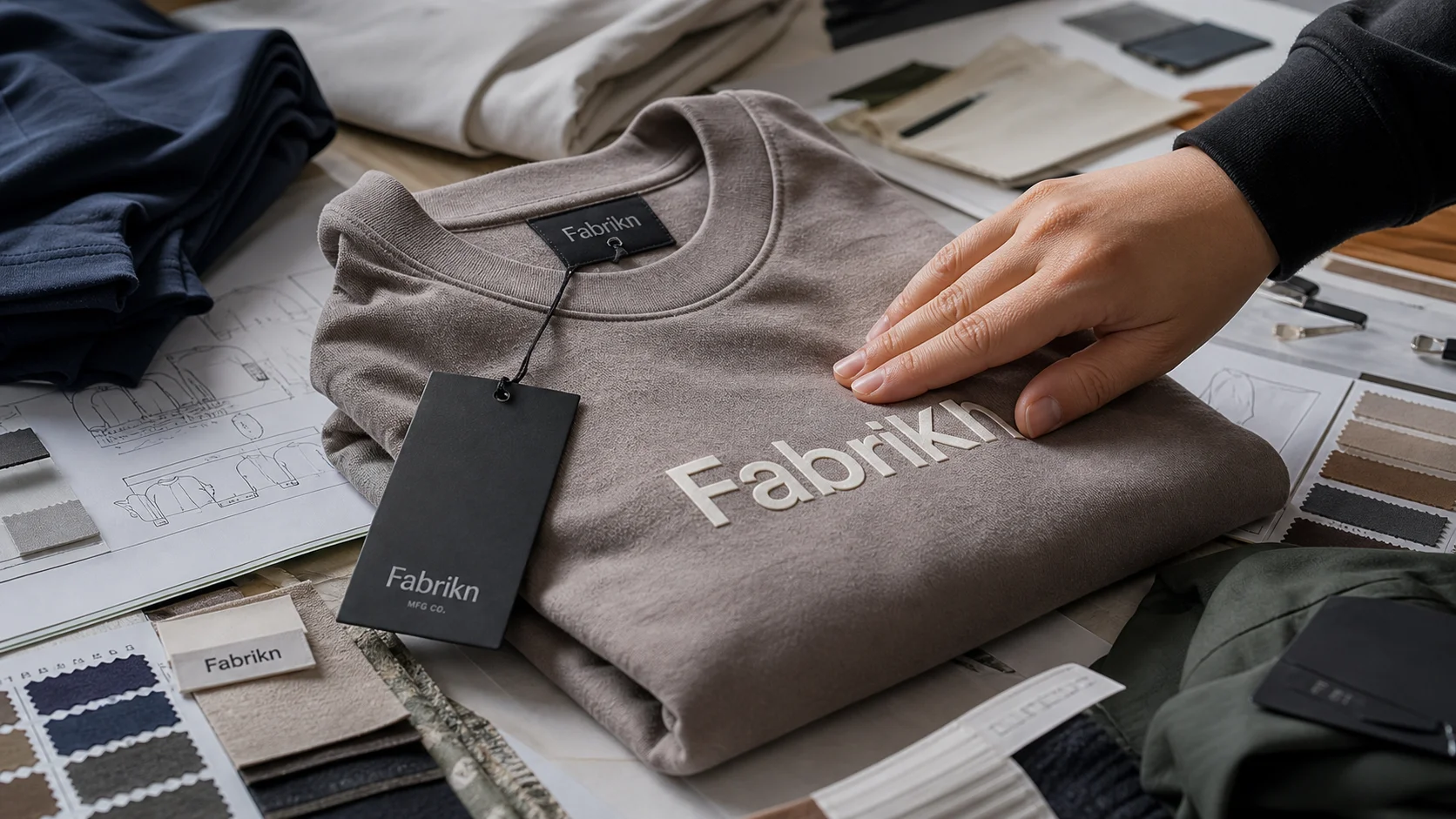
Apparel Production Lead Time with checks for samples, fit, MOQ, QC evidence, pricing terms, and delivery risk.
Fast answer: Apparel Production Lead Time: Sampling, Fabric Booking, Cut Dates, and Freight should be judged by production evidence, not by a generic sourcing promise. The buyer needs sample proof, cost breakdowns, QC checkpoints, and delivery buffers in writing.
Ask for recent sample photos, measurement tolerances, fabric or print test assumptions, decoration test notes, packing examples, and a named inspection checkpoint. These details show whether the team can repeat an approved sample at bulk volume.
Separate garment cost, decoration, labels, packaging, sampling, testing, freight, and rush charges. When every cost line is visible, it becomes easier to reduce colorways, adjust size depth, or reserve more time for sampling.
A 6,000-unit order quoted at 10 weeks reached 18 in one factory I visited after a fabric mill lost 21 days of capacity and trims arrived in two partial shipments. That is how long is apparel production lead time in the real market: not a neat calendar, but a chain of fragile handoffs that can stretch fast. I have seen factories where a single misrouted spool of thread shuts down 34 sewing machines, which is funny until it isn't (true story).
In Guangzhou’s dyeing cluster, the same crew can juggle reactive dye vats, enzyme washes, and the Sakurai heat-press finishes needed for reflective trim in a single shift, but when the dyebath mix is late, the entire production week pushes. I have watched a Ho Chi Minh City factory burn through 18-22 business days of ocean freight waiting for a container berth, which made the internal sewing line look surprisingly punctual by comparison. When the line finally turned, the Juki DDL-8700 tables hummed along, but the calendar had long since been painted red by the freight forwarder.
A factory calendar is not a promise. It is a best-case map, and buyers often mistake it for a contract. Lead time starts before cutting ever begins. Yarn booking, lab dips, fabric development, testing, and bulk color approvals can chew through 25% to 40% of the total calendar before the sewing floor touches a blade.
And then a “12-week program” becomes 24 without anyone technically lying. Seven days for a lab dip. Ten to 14 for strike-offs. Two to four weeks for bulk fabric. Another 5 to 10 days disappear in approval loops. By the time the PO is real, the clock has already been running.
Regional speed tells a blunt story. Nearshore knit programs in Mexico or Honduras can ship in 4 to 8 weeks. Cut-and-sew in South Asia often runs 10 to 16 weeks. Complex woven products, especially with custom trims or special finishes, can cross 20 weeks. Data from trade.gov trade and logistics guidance shows why transit, documentation, and port handling matter as much as sewing capacity once schedules tighten.
Late delivery hurts more than inconvenience. It erodes margin through airfreight, pushes brands into markdowns, and kills launch windows built around retail floorspace, influencer campaigns, or wholesale appointments. I have seen a 14% gross margin drop on a basic knit line because the brand paid to fly half the order and discount the rest. Painful. Predictable too. In my experience, the only thing worse than a delay is pretending the spreadsheet still looks good (and yes, the CFO has seen that thrilling version).
Here's what most people miss: smaller factories can move faster on urgent jobs, but only if their fabric suppliers, sewing lines, and QC team already work in sync. Size alone does not predict speed. In my experience, the biggest differentiator is how often the supplier, sewing, and QC teams talk before the line fires up. Honestly, this approach works better because it pushes every department to flag bottlenecks ahead of the cut date. I have watched a 70-person unit ship a 1,200-piece repeat in 9 days, while a 400-worker factory needed 19 because every handoff was siloed.
Product type sets the first guardrail. Basic tees usually need 3 to 6 weeks. Hoodies and fleece run 5 to 8 weeks. Denim takes 8 to 12 weeks. Tailored wovens sit at 10 to 16 weeks. Outerwear stretches to 12 to 20 weeks. Swimwear with prints or special trims often lands between 8 and 14 weeks.
Order size shifts that clock in both directions. A 500-unit order often moves 10% to 20% faster than 5,000 units if the manufacturer has spare capacity, ready fabric, and a stable line. Yet very small orders can slow down too, because dye lots, pattern setup, marker making, and machine changeovers still need to happen. In Istanbul, a 500-unit organic cotton GOTS-certified tee run with WRAP and BSCI audits can still ship in 7 weeks because the factory stacks orders with stable dye batches; the same design at 2,500 units stretched into 10 weeks because the mill prioritized a larger denim partner.
Sample lead time is a different animal. Honestly, bundling lab dip and strike-off approvals into one rhythm works better because it keeps the whole team from playing email tag for a week (and yes, I've been the one stuck hitting refresh on those approvals). One proto sample set can take 7 to 21 days, and fit comments can add another 3 to 7 days if the tech pack is vague. Bulk production then adds 30 to 120 days depending on the fabric, finish, and how many approvals sit between approval and cutting.
Price point changes the schedule in a way many buyers miss. Low-cost basics often look simpler on paper, yet the raw material queue can be longer because mills prioritize larger, steadier wholesale and bulk programs. Premium fashion can move faster because mills reserve capacity for higher-margin customers, and those bookings get protected when slots tighten. I have seen a $6.50 tee take longer than a $28 tee because the cheaper program was pushed behind a larger dyehouse allocation. I have also seen a luxury hoodie stall for 11 days because the custom drawcord tips were held up in customs. Price does not guarantee speed. Priority does. In my experience, pushing a low-cost basic through a busy dyehouse is like trying to cut ahead in Disneyland—you're almost always sent to the back of the line.
When I visited factories in Vietnam and Guatemala, the most delayed orders were rarely the most complex. They were the ones with design changes after tech pack approval. A color change from black to washed charcoal can mean a new lab dip, another strike-off, and 4 to 9 extra days. The production floor can only move as fast as the last revision.
If you need a benchmark for sourcing conversations, keep this range in mind: simple knits at product catalog scale can be fast, but custom fashion needs more breathing room. The calendar is driven less by sewing minutes than by waiting periods between decisions (because nobody wants to be the brand watching the launch slip).
China and Vietnam often deliver standard bulk runs in 8 to 14 weeks. Bangladesh usually lands at 10 to 18 weeks for woven and knit programs. India can range from 9 to 16 weeks depending on vertical integration, especially when spinning, knitting, dyeing, and sewing sit under one umbrella. Turkey and Portugal often run 4 to 10 weeks. Mexico and Central America can reach 3 to 8 weeks for repeat programs.
Those faster regions are not always cheaper. Nearshore cut-and-sew may save transit time and trim airfreight exposure, but unit labor can be 15% to 40% higher than South Asia. That premium sometimes buys more certainty. Honestly, that premium works better for brands that cannot afford a miss because when schedules tighten, reliability pays for itself. It also buys fewer containers stuck offshore while a launch date slips away.
The hidden calendar cost is ocean freight. An extra 18 to 32 days in transit can erase a production advantage if the order arrives late to market. I have watched a brand save $0.42 per unit in factory cost and lose $2.10 per unit in markdowns because the goods hit the floor after the seasonal peak.
Integrated mills and garment units compress time. In Turkey and Portugal, fabric, dyeing, finishing, and sewing are often closer together, which reduces handoffs and makes corrections faster. Fragmented supply chains in some low-cost hubs create the opposite effect. Each transfer adds a day here, two days there, and suddenly the calendar leaks.
Customs and holidays can punch holes in a schedule. Lunar New Year, Eid, Diwali, and Golden Week can each add 1 to 3 weeks, even when the sewing lines are ready. Port congestion can do the same. A factory may be “on time” internally while a container sits idle for 9 days at origin or destination. It feels like the supply chain version of Groundhog Day (I half expect the same container to roll backward) and by the time Golden Week rolls around I want to text the port team a motivational quote, which is both pathetic and totally accurate.
Last year I worked with a brand that shifted part of a private-label run to Portugal through private label clothing services. The factory cost was 18% higher than its Bangladesh option, but transit fell by 24 days and the brand avoided a wholesale cancellation. Geography changes the bill, then changes the risk profile.
The formula is simple and brutal: sampling, material sourcing, pre-production approvals, bulk cutting and sewing, finishing and packing, then freight and customs. Each stage has its own queue. If one queue moves slowly, the entire schedule drags. For example, a denim jacket in Ho Chi Minh City might wait for tonal hardware that only comes through a WRAP- and BSCI-certified metal supplier in Guangzhou; that supplier has its own ISO 9001 line, and once the order is released, the 18-22 business days shipping window becomes non-negotiable. Missing that window drags sewing and finishing out by another week.
Material sourcing is where certification counts. Organic cotton from Dhaka can carry a GOTS tag, ensuring traceability from the farm to the spinning mill, while recycled polyester knit made with GRS feedstock needs OEKO-TEX Standard 100 testing to pass before it hits the circular knitting machines. The mill in Istanbul I visited runs 18-feeder circular knitters that deliver tubular jersey directly to the cut room, and the same yardage feeds the BSCI-audited garment unit down the road. Keeping the chain certified, especially with WRAP and OEKO audits, adds steps, but it avoids compliance delays that can freeze a PO for a month.
Machines and processes count, too. Gerber AccuMark markers and Lectra CAD systems shorten marker-making, but only if the layout specialist has the updated tech pack. I have seen a Durkopp Adler 867 spend 32 hours idle because the feed dog setting was wrong, while a neighboring Juki MO-6814 serger rolled past the same issue in 4 minutes with a hot-fix tutorial on YouTube. Finishing often relies on heat pressing, ultrasonic welding, or laser-cut edge sealing, and every machine needs a qualified operator whose overtime runs out after 48 hours—extend the shift slips into the next week.
Testing and approvals add invisible days. ASTM shrinkage tests, flammability runs for sleepwear, and random pull tests for welded seams may not be in the tech pack, but their reports are required before the third-party inspection. That means a 500-unit run of recycled ripstop jackets priced at $2.50-4.00 per unit at 500 MOQ can sit on hold for 5 days while the lab certifies the fluorine-free DWR, and another 6 days while the QA team waits for the ICCL inspection slot in Guangzhou.
Standard programs follow the calendar above: 8 to 14 weeks in Asia, 4 to 10 in Europe, and 3 to 8 nearshore for repeat styles. Rush lanes chop that down to 4 to 8 weeks by overlapping lab dips with pattern making, pre-booking trims with the mill, and frontloading pre-production samples. Rush lines often demand 30% to 45% of the order as a rush fee, and you still need to brace for a 12-day adjustment if a dye lot jumps or an attachment machine breaks.
Private-label programs mix the worst of both worlds unless you have a trusted partner. In Dhaka, a private-label brand I advised put together a 10,000-unit outerwear program with its own fabric recipe, finished at a factory that already runs OEKO-TEX Standard 100 and GRS-certified recycled liners. Having a dedicated project manager, a two-day on-site QC approval process, and the ability to call the dyehouse in person kept the lead time to 12 weeks, versus the 20 weeks the brand had in its previous vendor book. The difference was not magic; it was communication, planning, and the discipline to hold the calendar for every single approval.
Standard programs often use general production slots and shared trims, so they need the full 12 to 20 weeks to clear every gate. Rush programs take on the additional cost and logistical muscle to compress those steps, and private-label runs require that you supply the specs, the fabric, and often the logistics. Having all certifications ready (GOTS, OEKO-TEX, WRAP, BSCI, GRS) is the ticket to faster approvals.
First, lock in your raw materials early. If you book the organic cotton GOTS/GRS-certified yarn in Dhaka or the recycled PET filament in Ho Chi Minh City before the tech pack is final, your lead time shrinks by 5 to 8 days. Second, align your trims. Tie down Zippers, toggles, and snaps from suppliers in Guangzhou who already hold OEKO-TEX and WRAP compliance; these vendors often offer buffer stock ports of call for 2 to 3 extra days, but those days beat a full week of line stoppage.
Third, break the sampling into modular approvals. Run lab dips, strike-offs, and proto samples on overlapping schedules while the garments are still in CAD review. Use Gerber AccuMark or Lectra data to finalize markers and send cut files to the Juki DDL-8700 straight away, so the cutting team can start day one instead of waiting for a printed tech pack.
Finally, get the freight locked in early. A 40-foot container moving from Ho Chi Minh City to Los Angeles takes 18-22 business days when the port is clear, but rush season can creep into 25 days. Booking with a freight forwarder that understands your forecasts—especially if they handle customs in Istanbul, Guangzhou, or Dhaka—keeps the closing weeks intact.
Q: Can a 500-unit order realistically move faster? A: Yes, especially if you price it at $2.50-4.00 per unit at 500 MOQ with ready-to-use fabric from a mill in Dhaka or Ho Chi Minh City. The smaller volume can skip long dyehouse queues, but you still need to plan for marker making, spread, and machine setup. Expect 7 to 10 weeks with an aligned team.
Q: How do certifications affect lead time? A: They add about 3 to 6 days when you factor in testing and documentation, but they also prevent costly rework. Having those documents ready streamlines customs, especially when shipping through Istanbul or Guangzhou.
Q: Does nearshore always mean faster? A: Not automatically. Nearshore locations like Mexico still face the same approval queues, but they do shrink transit, so the total lead time can be 4 to 8 weeks. The trade-off is higher unit labor, which is why some brands blend nearshore execution with Asian-material sourcing.
Q: Should I rush every order? A: No. Only hit the rush lane when delays would cost you more than the premium. For complex private-label projects, a well-planned standard program with integrated mills may actually beat a rushed Asian run that lacks certified trims.
Q: How do I prevent false timelines? A: Demand daily updates during critical phases, document every approval, and keep your manufacturers honest with shared dashboards. When people see the calendar move publicly, they coordinate better. And always remember: the only thing worse than a delay is pretending the spreadsheet still looks good.