
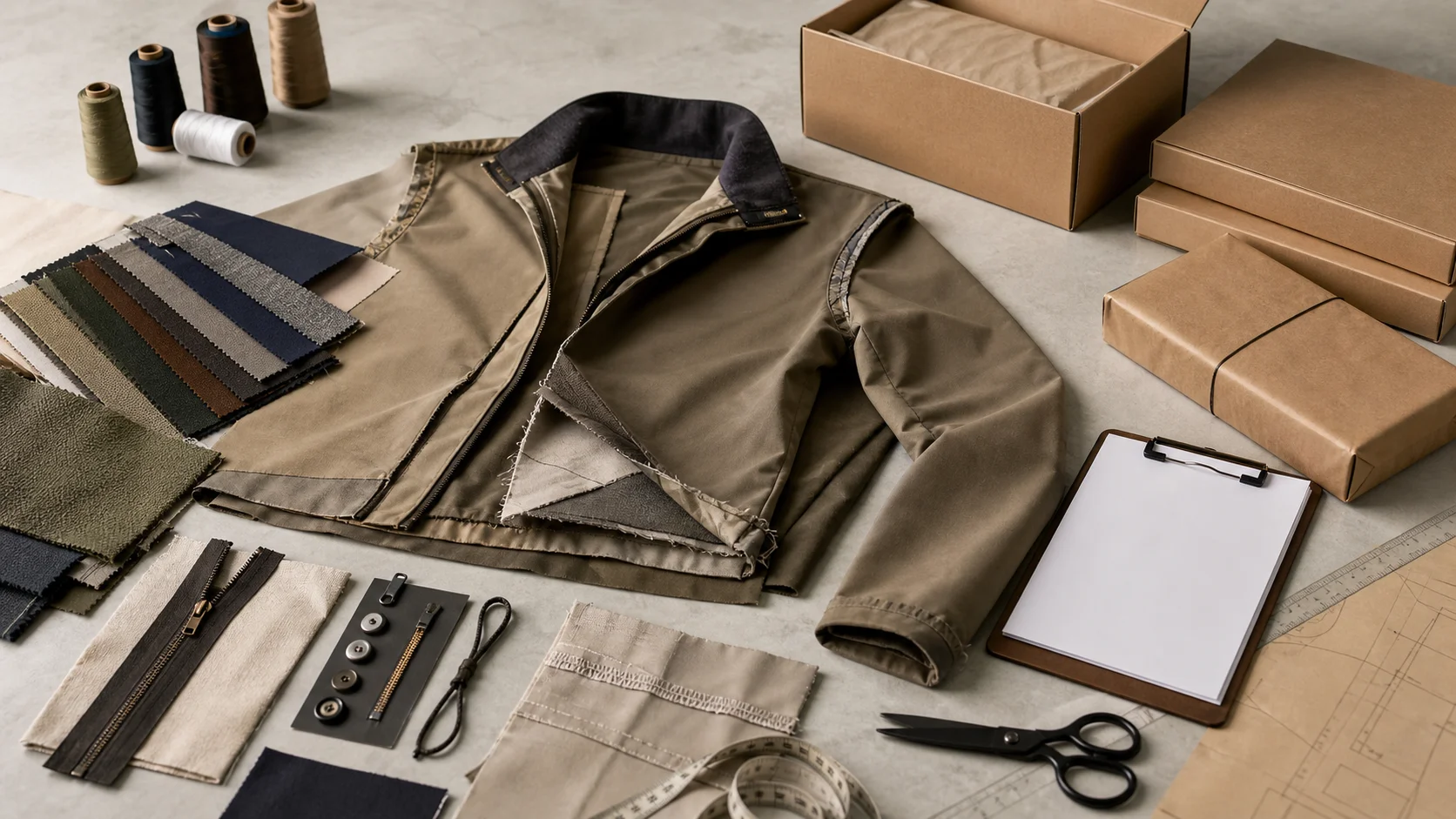
Much Does It Cost to Start A Clothing Brand compared by sample evidence, fabric or trim specs, MOQ, AQL terms, cost lines, delivery timing, and rework...
Fast answer: Much Does It Cost to Start A Clothing Brand: Tech Pack, Sample Gate, MOQ, and QC Terms should be judged by production evidence, not by a generic sourcing promise. The buyer needs sample proof, cost breakdowns, QC checkpoints, and delivery buffers in writing.
Ask for recent sample photos, measurement tolerances, fabric or print test assumptions, decoration test notes, packing examples, and a named inspection checkpoint. These details show whether the team can repeat an approved sample at bulk volume.
Separate garment cost, decoration, labels, packaging, sampling, testing, freight, and rush charges. Clear cost lines make it easier to reduce colorways, adjust size depth, or reserve more time for sampling.
Starting a clothing brand can be exciting, creative, and profitable, but it also requires careful financial planning. Many new founders ask the same question: how much does it cost to start a clothing brand? The answer depends on your product type, business model, production strategy, branding level, and how much inventory you plan to order at the beginning.
For some founders, a clothing brand can be launched with a few thousand dollars. For others, especially those building a premium label with custom design development, professional branding, and larger inventory runs, the startup cost can reach tens of thousands of dollars or more. Understanding these costs early helps you avoid budget surprises and make smarter decisions from the beginning.
In this guide, we’ll break down the major expenses involved in starting a clothing brand, explain what influences your budget, and show you realistic startup scenarios. If you are planning to build a brand and need a manufacturing partner, you can explore our services or learn more about our team on the about us page.
The average cost to start a clothing brand typically falls between $5,000 and $50,000 for a small to mid-sized launch. However, some brands start with less than $2,000 using print-on-demand or very lean inventory strategies, while premium labels may need $100,000 or more.
The biggest factor is whether you are launching:
Each model comes with a different financial structure. A print-on-demand model reduces upfront inventory risk but usually offers lower margins. A custom brand requires more capital, but it gives you more control over quality, fit, and brand identity.
To get a more accurate estimate, it helps to divide startup costs into categories: product development, manufacturing, branding, website setup, marketing, legal fees, and operating expenses. That is where the real cost breakdown becomes useful.
Before you calculate your total startup investment, it’s important to understand what drives the cost up or down. These are the most important variables.
A basic T-shirt brand is much cheaper to launch than a brand focused on tailored jackets, denim, activewear, or technical outerwear. Simple garments usually require fewer materials, less development time, and lower sample costs.
If you are using blank garments with screen printing or embroidery, your startup budget can stay relatively low. If you need custom patterns, fabric sourcing, trims, labels, and fit development, your costs will rise significantly.
Manufacturers often offer better unit prices at higher quantities, but larger orders require more upfront cash. A small MOQ can help new brands test the market with less risk, while larger runs can improve profitability later.
Premium fabrics, special washes, organic cotton, recycled materials, and technical textiles can increase production costs. The same applies to high-end finishes, packaging, and construction.
A direct-to-consumer eCommerce brand has different costs than a wholesale-only brand or a hybrid model. If you plan to sell on your own website, you’ll need to invest more in branding, website development, and marketing.
Where your products are manufactured and where they are shipped to will affect your budget. International shipping, import duties, taxes, and freight charges can add a meaningful amount to your startup costs.
Below is a practical breakdown of the major categories you should budget for when starting a clothing brand. The ranges vary depending on your niche, scale, and approach, but they give you a solid planning framework.
Before selling anything, you’ll need to establish your business legally. This can include forming an LLC or corporation, registering your business name, obtaining licenses, and setting up basic contracts. If you work with a lawyer to create trademark filings or custom agreements, this cost can be higher.
Your brand identity includes your name, logo, typography, color palette, packaging style, and overall message. Strong branding helps your clothing line stand out in a crowded market. If you hire a professional designer or agency, expect higher costs, but the investment can improve your market positioning.
Sampling is one of the most important steps in launching a clothing brand. This is where you test designs, fabrics, fit, construction, and finishing before going into bulk production. Depending on complexity, you may need several rounds of samples.
If your designs are highly customized, this category can grow quickly. Many founders underestimate how many sample revisions are needed to get the product right.
This is often the largest startup expense. Your manufacturing cost depends on the number of units, garment complexity, fabric quality, trims, labeling, and packaging. For a small launch, you might spend a few thousand dollars on a limited run. For a broader initial collection, inventory can become the biggest line item in your budget.
Working with the right production partner can help you balance cost, quality, and minimum order quantities. If you are exploring manufacturing support, you can also contact our team through the contact us page.
Packaging affects how customers perceive your brand. Basic poly bags and mailers are inexpensive, but custom boxes, branded tissue paper, stickers, inserts, and specialty packaging increase costs. For premium brands, packaging can become an important part of the customer experience.
Your website is your digital storefront. At minimum, you’ll need a domain, hosting, an eCommerce platform, theme setup, product pages, payment processing, and basic design work. If you hire a developer or designer to create a premium branded site, the cost increases.
Fashion is visual, so strong photography is essential. You’ll need product photos, lifestyle images, and potentially video content for social media and advertising. If you want your brand to look polished and trustworthy from day one, this is not a category to ignore.
Even the best clothing product won’t sell if nobody knows it exists. Marketing expenses include paid ads, influencer outreach, email marketing tools, social media content, SEO, and launch campaigns. A lot depends on whether you plan to grow organically or use paid advertising from the start.
Once inventory arrives, you need to store, pack, and ship products efficiently. Some founders handle fulfillment themselves in the beginning, while others use third-party logistics providers. Don’t forget inbound freight from the factory, storage fees, and outbound shipping materials.
Every clothing brand should have a buffer for unexpected costs. This may include replacement samples, product returns, chargebacks, software subscriptions, accounting help, or additional inventory if demand is stronger than expected.
A good rule is to keep at least 10% to 20% of your launch budget set aside as contingency funds.
Now let’s look at a few realistic startup scenarios.
This budget is usually for founders using print-on-demand, pre-orders, simple decoration methods, or very small inventory quantities. It’s a good option for testing ideas before committing to larger production runs.
This is a common range for founders launching a focused collection with a few core styles and modest inventory. It offers a better balance of control and scalability.
This budget suits founders building a more established fashion brand with custom development, higher-end manufacturing, and a stronger marketing push. It is ideal if you want to launch with enough inventory and visual polish to compete at a higher level.
When asking how much does it cost to start a clothing brand, many founders focus only on product and website costs. But several hidden expenses can disrupt your budget if you are not prepared.
These costs may seem small individually, but they can add up fast. Planning for them early protects your margins and helps you avoid cash flow problems.
It is possible to launch smartly without overspending. Here are practical ways to keep startup costs under control.
Instead of launching ten styles at once, start with one to three hero products. This lowers sampling, production, and marketing costs while helping you test the market faster.
Select materials and garment construction methods that fit your budget and market positioning. A well-made simple product often performs better than an overcomplicated design with thin margins.
Smaller batches reduce inventory risk, even if unit costs are slightly higher. For many startups, preserving cash is more important than getting the absolute lowest unit price.
Focus on the branding assets that directly impact sales: logo, packaging, product photography, and a clean website. You can upgrade other assets later as revenue grows.
A good manufacturing partner can help you avoid costly mistakes in sampling, materials, sizing, and production planning. The right partner should help you improve product quality while keeping your launch realistic. If you’re ready to discuss your project, visit our contact page.
Launching a clothing brand is not just about the initial setup. You also need to budget for the first 6 to 12 months of operation. Many brands fail because they spend everything on inventory and have nothing left for marketing or reorders.
A good first-year budget should include:
You should also think about sales velocity. If products sell faster than expected, can you afford to reorder quickly? If sales are slower, can your business still survive while you refine your strategy? Building this flexibility into your financial plan is crucial.
Your manufacturer has a huge impact on your costs, quality, timeline, and overall brand success. A reliable partner can help you make better decisions about materials, product development, and order quantities. A poor partner can create delays, quality issues, and unexpected expenses.
At Fabrikn, we work with brands that want to build products with the right balance of quality and scalability. Whether you are developing your first sample or preparing for a production run, having clear manufacturing support can make the process far more efficient. Learn more about what we do on our services page.
Understanding your production costs early makes it easier to price products correctly, protect your margins, and grow sustainably. That is especially important in a competitive clothing market where customer expectations are high.
So, how much does it cost to start a clothing brand? The short answer is that it depends on your model, but most founders should expect to spend anywhere from $5,000 to $50,000 to launch properly. Lean setups can cost less, while custom premium brands can require significantly more capital.
The key is to understand every major expense before you begin: legal setup, branding, sampling, manufacturing, packaging, website, marketing, logistics, and operating buffers. When you know where your money is going, you can launch with more confidence and a better chance of long-term success.
If you are planning to start your own clothing brand and want support with manufacturing, product development, or production planning, Fabrikn is here to help you move from idea to product with clarity and confidence.
Get a free quote from Fabrikn — your trusted B2B clothing manufacturer with 10+ years of experience. MOQ as low as 200 pieces.
Get a Free Quote →A small clothing brand can often be started with around $5,000 to $20,000, depending on whether you use print-on-demand, limited inventory, or custom production.
Yes, print-on-demand usually has lower upfront costs because you do not need to buy inventory in advance. However, profit margins are often lower than with bulk manufacturing.
For many brands, the biggest cost is manufacturing and inventory. For others, especially eCommerce-first brands, marketing and customer acquisition can become the largest expense over time.
It is very difficult to start a true clothing brand with no money. You may be able to begin with pre-orders, crowdfunding, or print-on-demand, but some initial investment is almost always required.
Start with fewer products, use strategic materials, keep your first production run small, and work with a manufacturer that helps you avoid costly mistakes during sampling and production.
You need both, but the best balance usually depends on your sales model. If you are selling directly online, strong branding and product presentation are critical, but you still need enough inventory to meet demand.
Fabrikn supports clothing brands with manufacturing and production services designed to help founders develop quality products efficiently. If you’re ready to get started, reach out through our contact us page.