
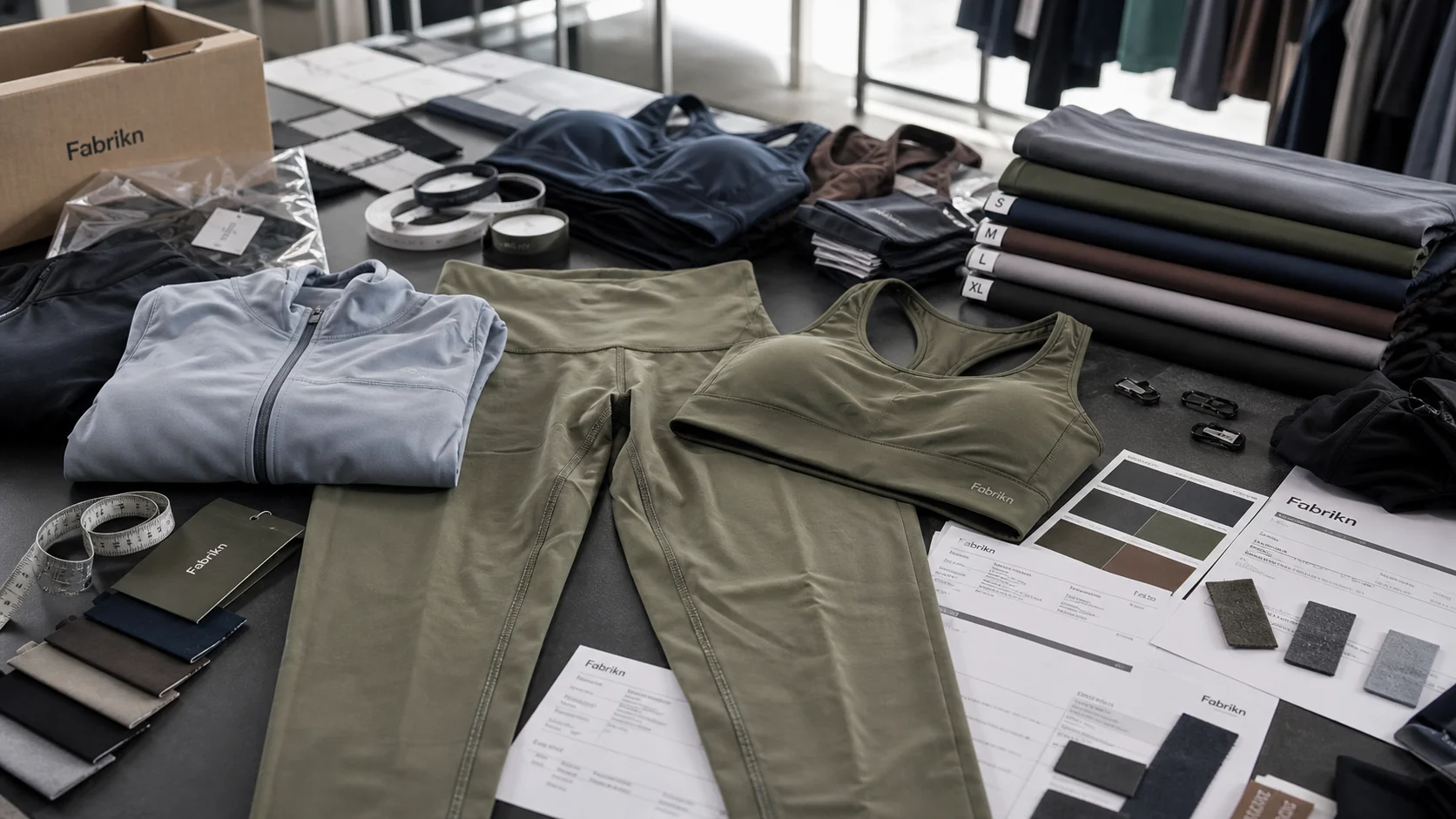
Much Inventory Should A Clothing Startup Buy compared by sample evidence, fabric or trim specs, MOQ, AQL terms, cost lines, delivery timing, and rework...
Fast answer: Much Inventory Should A Clothing Startup Buy: Tech Pack, Sample Gate, MOQ, and QC Terms should be judged by production evidence, not by a generic sourcing promise. The buyer needs sample proof, cost breakdowns, QC checkpoints, and delivery buffers in writing.
Ask for recent sample photos, measurement tolerances, fabric or print test assumptions, decoration test notes, packing examples, and a named inspection checkpoint. These details show whether the team can repeat an approved sample at bulk volume.
Separate garment cost, decoration, labels, packaging, sampling, testing, freight, and rush charges. Clear cost lines make it easier to reduce colorways, adjust size depth, or reserve more time for sampling.
One of the hardest questions for a new fashion brand is simple to ask but difficult to answer: how much inventory should a clothing startup buy? Order too little, and you risk stockouts, lost sales, and frustrated customers. Order too much, and you can end up with cash tied up in unsold products, storage costs, markdowns, and deadstock that drains your margins before your brand has a chance to grow.
For clothing startups, inventory planning is not just a finance decision. It affects product launches, brand perception, fulfillment speed, customer satisfaction, and your ability to reinvest in future collections. The right inventory strategy depends on your budget, product category, price point, sales channels, and how confident you are in your demand forecasts.
This guide breaks down how to think about initial inventory, how to estimate your first buy, and how to avoid the most common mistakes that new fashion brands make. If you are building a private label, DTC, wholesale, or small-batch apparel brand, understanding inventory planning early can save you a great deal of time and money. If you want support from an experienced clothing manufacturer, learn more about our services or contact us to discuss your production needs.
Inventory is one of the biggest upfront investments for a clothing brand. Unlike digital products or service businesses, fashion brands must produce physical goods before they can sell them. That means every decision about quantity affects cash flow and risk.
When inventory planning is done well, a startup can launch with enough stock to satisfy demand, test the market, and collect real customer data. When it is done poorly, a brand may spend too much on styles that do not sell or miss opportunities because the most popular sizes and colors run out too quickly.
For new brands especially, the goal is not to buy as much inventory as possible. The goal is to buy enough inventory to:
That balance is different for every brand. A premium basics label may need fewer styles but larger units per style. A trend-driven fashion brand may need smaller quantities because demand changes quickly. A seasonal outerwear brand may need to plan months ahead with more precise forecasting. A capsule collection may focus on limited runs to maintain exclusivity and reduce overproduction.
Before placing your first production order, you need to evaluate several variables. These are the most important factors that affect how much inventory a clothing startup should buy.
Your sales model changes the ideal order quantity. Direct-to-consumer brands often start with smaller runs because they can test demand online. Wholesale brands may need larger quantities because buyers expect reliable stock and full size curves. Hybrid brands selling through both channels must plan for broader coverage.
Inventory needs differ by product type. T-shirts, hoodies, and loungewear generally have broader appeal and more repeat potential, which may justify larger orders. Fashion-forward pieces, structured garments, or highly seasonal items usually require smaller buys because they carry more trend risk.
If your margin is strong, you may have more flexibility to hold inventory and absorb slower turns. If your margins are tight, overordering can quickly hurt profitability. Lower-priced items also need larger sales volume to cover costs, so inventory decisions should be linked closely to your break-even analysis.
Your forecast should be based on real assumptions, not optimism alone. Use website traffic projections, email signups, ad spend, pre-launch interest, and comparable brand benchmarks to estimate likely demand. Even if your forecast is imperfect, it gives you a starting point for order planning.
Many startups ask how much inventory they should buy when the better question is how much they can afford to buy while still leaving enough capital for marketing, photography, packaging, samples, shipping, and day-to-day operations. A healthy launch plan should not put all available cash into product alone.
The longer your production lead time, the more carefully you need to plan. If it takes 8 to 12 weeks to produce and another few weeks to ship, you need to account for future demand rather than current demand alone. Long lead times increase the cost of stockouts and make early forecasting more important.
Buying inventory is not only about total units. You also need to decide how those units are distributed across sizes and colors. Some products perform better in certain sizes, while others sell unevenly across colorways. A balanced first buy often performs better than overcommitting to one option.
If you are selling on your own website, you may be able to test smaller quantities. If you plan to sell to retail stores, trade shows, or marketplaces, buyers may expect more depth in size runs and consistent availability. Your channel strategy should shape your order quantities from the start.
There is no universal formula that works for every startup, but there is a practical framework you can use to estimate your first inventory order with more confidence.
Start with a clear goal. Are you trying to validate a concept, generate profit, secure wholesale accounts, or build brand awareness? A brand focused on validation may intentionally start with a leaner order. A brand that wants to make a strong market impression may need more depth in best-selling styles.
Use all available data to forecast sales. Look at:
If you have no sales history, keep your estimate conservative. For a new brand, the first order should usually be treated as a test, not a final answer.
Weeks of cover means how many weeks of sales your inventory can support. For example, if you expect to sell 50 units per week and you want 8 weeks of inventory on hand, you would need 400 units. This method helps connect demand forecasts to actual production quantities.
Not every product deserves the same quantity. Core items like logo tees or basic hoodies may justify deeper stock because they are easier to sell repeatedly. Trend-driven colors, seasonal items, and experimental designs should usually be ordered in smaller quantities until demand is proven.
Once you know total units, split them into sizes based on expected demand. A common mistake is ordering equal quantities in every size. Instead, use a size curve informed by your target customer, fit testing, and early feedback.
For most clothing startups, the first inventory order should be intentionally conservative. It is far better to sell through a smaller first batch and reorder confidently than to overbuy and discount heavily later.
A practical starting point for many new fashion brands is to order enough inventory for a limited launch, then restock based on sales performance. This approach reduces risk while still providing enough product to test your offer properly.
Your first order should not be the last. The smartest startups design their launch around the possibility of a second or third production run. That means monitoring sales daily, understanding your lead time, and keeping enough cash available to reorder your winners quickly.
Let’s look at a few simplified scenarios to understand how different brands might approach inventory buying.
A startup launching three core t-shirt colors with a modest email list may decide to order 100 to 150 units per color, depending on budget and confidence in demand. Because t-shirts are versatile, the brand can often justify a slightly deeper initial buy if it has strong marketing support.
A brand selling fashion-forward pieces may order only 30 to 60 units per style, especially if colors and silhouettes are seasonal. The goal is to test which pieces resonate before committing to larger quantities.
An athleisure brand might launch with a smaller number of styles but broader size runs. Since fit and comfort matter more than novelty, the startup may prioritize stocking enough size availability in black, gray, and neutral colors rather than spreading inventory too thin across many designs.
A brand hoping to sell to boutiques may need stronger inventory depth per style. Buyers often want confidence that reorders will be possible, so the company may produce larger quantities of fewer styles rather than many small runs.
These examples show that the right inventory level depends on product strategy, not just company size. A small brand can need a large first order, and a larger brand can still launch with a controlled test batch if the concept is new.
Understanding how much inventory should a clothing startup buy becomes easier once you know the common traps. New brands often make these mistakes:
Another common mistake is confusing inventory volume with brand success. Large inventory does not guarantee a strong launch. In many cases, a smaller, well-planned buy combined with effective marketing and a clear brand story performs much better than a large, unfocused order.
Deadstock is especially dangerous for new clothing businesses because it ties up cash that could have been used for growth. If product does not sell, you may need to discount it, bundle it, donate it, or write it off entirely. That is why conservative inventory planning is often the safest path at the beginning.
There are several ways to reduce inventory risk without limiting your ability to grow.
A capsule collection lets you launch with fewer styles and test what customers actually want. This can be especially useful for fashion startups with limited capital or brands entering a new market.
Pre-orders can help validate demand before full production. When used correctly, they reduce inventory risk and improve cash flow. However, they require clear communication about delivery timelines and reliable manufacturing.
Drop-based releases create urgency and allow you to test the market in stages. Instead of committing to a huge collection, you release smaller batches over time and adjust based on real sales data.
Core styles are the backbone of many successful apparel brands. Basic tees, sweatshirts, or staple bottoms often have longer life cycles than fashion trends, making them safer candidates for deeper inventory buys.
Never skip fit and product sampling. Poor fit or construction can cause returns and slow sales. A well-tested sample stage helps you make smarter bulk inventory decisions by reducing uncertainty before production.
Some manufacturers are better suited to startups than others. If you are still testing your brand, look for a production partner that can handle smaller quantities, provide guidance on fabrics and sizing, and support future scaling as demand grows. You can explore more about our approach on the About Us page.
The first inventory order is only the beginning. Once sales data starts coming in, you can make more informed decisions about what to reorder and what to discontinue.
You should consider scaling inventory when:
When scaling, do not simply multiply your first order across every SKU. Instead, focus on winners. If one style sells twice as fast as others, that product deserves more investment. If another style underperforms, reduce future orders or retire it.
Scaling should also be gradual. The most resilient fashion brands learn to grow inventory in response to data, not emotion. That means tracking sell-through rates, reviewing profit margins, and revisiting forecasts often.
Working with an experienced clothing manufacturer can make a major difference in your inventory strategy. A good manufacturing partner can help you think through minimum order quantities, fabric sourcing, fit development, production timelines, and reorder planning.
At Fabrikn, we understand that new fashion brands often need guidance before they are ready to place large orders. The right manufacturer should help you align your production plan with your launch strategy so you are not overbuying inventory too early.
When evaluating a production partner, ask questions like:
If you want to discuss your launch strategy, production goals, or first-order planning, contact our team through the contact page. We help clothing startups make smarter manufacturing decisions from the start.
So, how much inventory should a clothing startup buy? The answer depends on your business model, product type, budget, lead time, and level of market validation. For most new brands, the smartest approach is to start conservatively, focus on a small number of styles, and use real sales data to guide future orders.
The best inventory strategy is not the one that looks biggest on paper. It is the one that protects cash flow, reduces risk, and gives your brand room to learn. By planning carefully, testing demand, and working with the right manufacturing partner, you can launch with confidence and scale with purpose.
If you are building a fashion brand and need help turning your concept into production-ready inventory, explore our services, learn more about Fabrikn, or reach out to our team to get started.
Get a free quote from Fabrikn — your trusted B2B clothing manufacturer with 10+ years of experience. MOQ as low as 200 pieces.
Get a Free Quote →Most clothing startups should begin with a conservative first order that tests demand rather than tries to cover every possible sale. The right quantity depends on your budget, lead time, product type, and forecasted demand.
For most new fashion brands, smaller initial orders are safer because they reduce the risk of deadstock. You can always reorder best-sellers once you see real sales performance.
If your inventory budget is consuming too much of your cash, if you cannot afford marketing, or if you are unsure whether the product will sell, you may be ordering too much. Forecast conservatively and make room for reorders.
Yes, pre-orders can be a smart way to validate demand and reduce inventory risk, especially for startups with limited capital. Just make sure delivery timelines are clearly communicated to customers.
The biggest mistake is often overordering based on optimism instead of data. Many startups buy too many styles or too much of one product before they have enough proof of demand.
An experienced manufacturer can help you determine minimum order quantities, set up small-batch production, plan size curves, and prepare for future reorders. This support is valuable for startups that are still learning how much inventory to buy.