
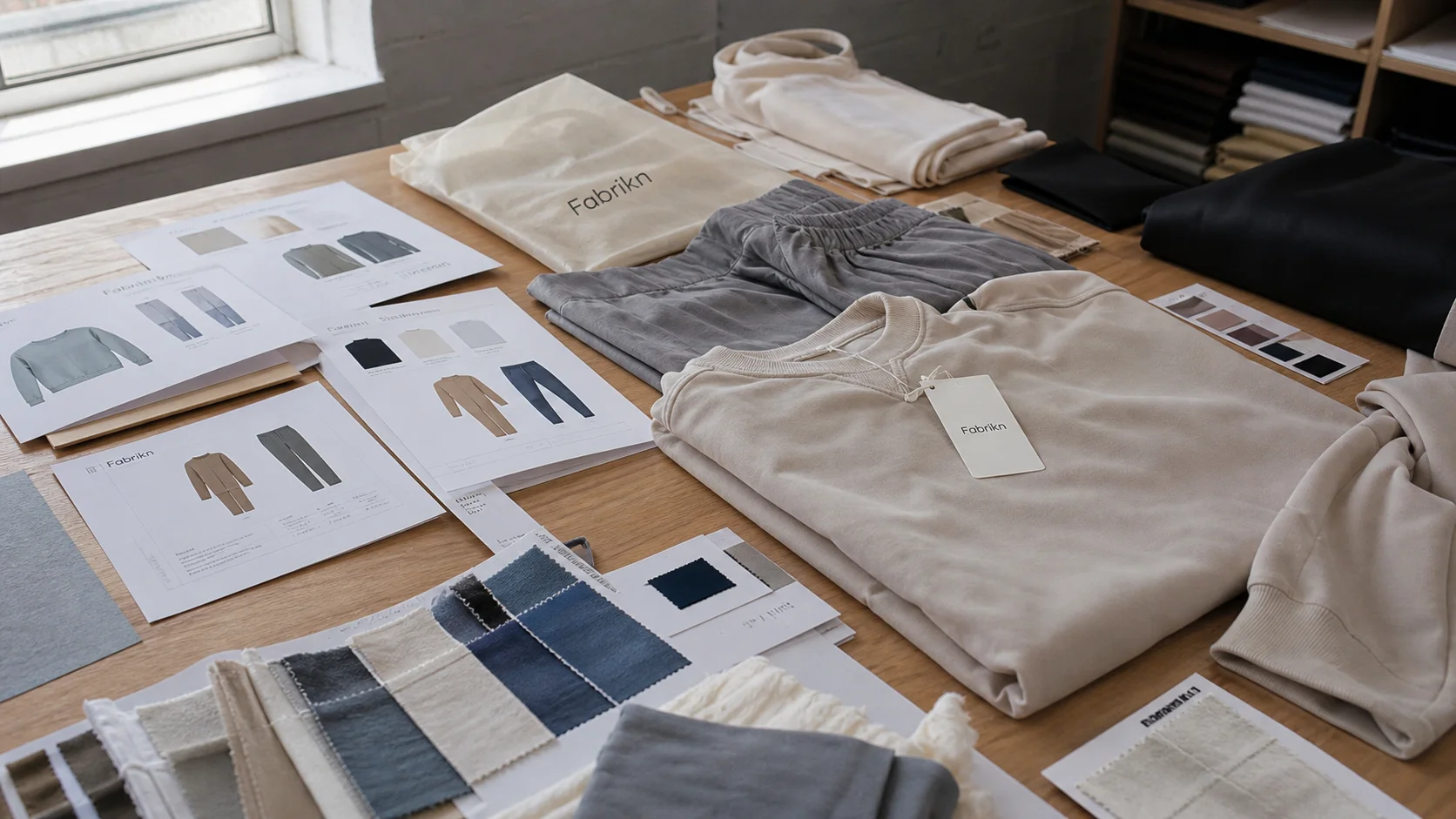
Assess Factory Capabilities for Embellished Apparel Production compared by sample evidence, fabric or trim specs, MOQ, AQL terms, cost lines, delivery...
Fast answer: Assess Factory Capabilities for Embellished Apparel Production: Sample Evidence, MOQ, Capacity, and Rework Terms should be judged by production evidence, not by a generic sourcing promise. The buyer needs sample proof, cost breakdowns, QC checkpoints, and delivery buffers in writing.
Ask for recent sample photos, measurement tolerances, fabric or print test assumptions, decoration test notes, packing examples, and a named inspection checkpoint. These details show whether the team can repeat an approved sample at bulk volume.
Separate garment cost, decoration, labels, packaging, sampling, testing, freight, and rush charges. Clear cost lines make it easier to reduce colorways, adjust size depth, or reserve more time for sampling.
Embellished apparel can elevate a collection from ordinary to memorable. Whether you are developing rhinestone-studded fashion tops, embroidered uniforms, sequined eventwear, appliqué-heavy streetwear, or digitally printed and decorated promotional garments, the factory you choose will determine much more than your cost per unit. It will influence product quality, production speed, consistency, defect rates, and ultimately your brand reputation.
Assessing factory capabilities for embellished apparel production is different from evaluating a basic cut-and-sew supplier. Embellished garments require specialized machinery, skilled labor, careful material handling, advanced quality control, and the ability to manage added complexity at every stage of production. A factory may be excellent at standard T-shirts and still be a poor fit for highly decorated garments.
This article explains how to assess a factory’s true capabilities, what to look for during an audit, and how to identify a manufacturing partner that can handle complex decoration work reliably. If you are comparing suppliers or planning a new embellished apparel line, this guide will help you make a smarter sourcing decision. You can also learn more about Fabrikn’s manufacturing support on our services page or explore our company background on the about us page.
Not all factories are built for embellishment. Decorative techniques add extra steps, higher labor intensity, and more room for error. A well-selected factory can maintain your creative vision while keeping production efficient and scalable. A poorly selected one can introduce problems such as crooked embroidery, poor adhesion, color inconsistency, damaged fabrics, delayed deliveries, and high rejection rates.
For buyers and brand owners, a detailed assessment helps answer key questions:
When embellished apparel goes wrong, the losses are often larger than in basic garment production. A small flaw in a plain shirt may be acceptable to some customers, but a flaw in a premium embellished piece can destroy perceived value. That is why capability assessment should be treated as a strategic business step, not just a procurement checkbox.
The first thing to determine is whether the factory has direct experience producing the same type of embellished apparel you want to make. A factory that has produced embroidered polo shirts may not be prepared for heavy beading, laser-cut appliqué, or mixed-decoration fashion pieces.
Ask for examples of similar products, production photos, and case studies. Better yet, request sample garments that demonstrate the factory’s technical range. You want to see not only attractive results, but also consistency and finishing quality.
Factory equipment must match the decoration method. For example, embroidery production requires multi-head embroidery machines, digitizing capabilities, and thread control systems. Screen printing and heat transfer operations require accurate press settings, curing equipment, and temperature management. Rhinestone or stud application may require specialized placement machines or reliable manual application teams.
During assessment, confirm whether the factory owns, leases, or outsources key processes. Outsourcing may be acceptable in some cases, but it introduces dependency, higher coordination effort, and more variable lead times. A factory with in-house technical capabilities usually has greater control over quality and deadlines.
Even the best machinery cannot compensate for untrained workers. Embellished apparel production relies on operators who can handle delicate materials, align decorations correctly, and identify defects early. Ask how the factory trains its staff, how often refresher training is conducted, and whether specialized teams are assigned to different embellishment types.
For highly detailed work, the difference between a generic sewing operator and a decoration specialist can be significant. Skilled labor is especially important for hand-applied embellishments, intricate embroidery, and multi-step decoration sequences.
Many brands can find a factory that produces a small sample or a limited run. The real test is whether the factory can scale without quality degradation. Ask about monthly production capacity, peak-season load, and the maximum volume they can handle for your specific product type.
Also ask how the factory handles multiple orders at once. If they are already operating near capacity, your project may face delays or receive less attention. A reliable manufacturing partner should be transparent about workload and able to explain how they manage scheduling.
Embellishments interact with base fabrics in important ways. Lightweight fabrics may pucker under embroidery, stretch materials may distort during decoration, and coated fabrics may not bond well with certain adhesives or transfers. A capable factory understands how different textiles behave under heat, pressure, stitching, and finishing.
Ask whether the factory tests fabric stability before production and whether they can recommend the right base materials for your desired decoration method. This is particularly important for premium fashion garments, activewear, and performance apparel.
Embroidery is one of the most common forms of garment embellishment, but quality varies widely. A capable factory should be able to show:
Look closely at stitch precision, alignment, thread tension, and the back side of the embroidery. Loose threads, puckering, and uneven edges are warning signs of weak process control.
If your embellished apparel includes printed decoration, evaluate the factory’s ability to manage ink consistency, registration, curing, and special effects such as puff print, foil print, gel print, and high-density print. Specialty printing often requires greater technical skill than standard logo printing.
Ask whether the factory performs wash tests and adhesion checks. Print quality must survive garment use, not just look good on the production line.
These embellishments can look luxurious, but they also add fragility and labor intensity. Assess whether the factory has experience placing decorative elements accurately and securely. Poor adhesion or weak stitch reinforcement can cause pieces to fall off after minimal wear.
For appliqué work, the factory should understand layering, edge finishing, and reinforcement methods. Sequins and beaded decorations require especially careful handling to prevent distortion and breakage.
Heat transfer applications depend on precise temperature, timing, and pressure. If a factory lacks control in these areas, the result may be peeling, cracking, or incomplete adhesion. For digitally decorated garments, ask about color accuracy, file handling, and compatibility with various textile surfaces.
In apparel manufacturing, a slight deviation in decoration application can create a large visual defect. That is why process repeatability matters as much as artistic capability.
Quality control is one of the most important indicators of factory capability. A factory that handles embellished apparel well should have a structured inspection process from incoming materials to final packing.
Ask how the factory checks fabric before cutting, how they inspect decoration placement during production, and how they review final garments before shipment. Strong factories use multiple inspection points to catch defects early, rather than waiting until the end of production.
Each product category should have clear acceptable limits for stitching issues, placement variation, color deviation, and surface defects. Ask the factory to explain its acceptable tolerance levels. If they cannot clearly define standards, that may indicate weak quality discipline.
One good sample does not guarantee good production. Ask for several samples or production references from multiple batches. Consistency across units is especially important for branded apparel and uniform programs where every piece must look nearly identical.
Embellished garments should be tested for durability. That includes wash resistance, rubbing resistance, stretch recovery, and long-term appearance. If the factory cannot support basic durability testing or does not understand product performance requirements, they may not be suitable for commercial embellished apparel.
The sampling stage reveals much about a factory’s true capability. A strong partner will not only produce a sample, but also communicate clearly about technical limitations, improvements, and options for optimizing the design.
How quickly does the factory respond to your sample request? Do they ask relevant technical questions? Do they identify risks early? Clear communication during sampling is often a sign of how the production relationship will function later.
For embellished apparel, artwork interpretation matters. The factory should know how to translate brand files, placement instructions, embroidery digitizing notes, print specs, and decoration positioning into a production-ready sample. Errors at this stage often become expensive later.
Most embellished garments require at least one round of revisions. Ask how the factory handles corrections, re-sampling, and approval cycles. A mature supplier will have a straightforward process for revising details without losing control of timing.
If you want a closer look at how Fabrikn supports product development and manufacturing coordination, visit our contact us page to start a conversation.
Capable factories do more than make good garments. They also maintain legal, ethical, and operational standards that protect your business over the long term.
Ask about working hours, employee safety, wages, and worker retention. High turnover can damage consistency, especially in decorated garment production where skill matters. Ethical labor practices also reduce the risk of reputational damage for your brand.
Depending on your market, you may need factories that meet specific compliance or certification requirements. Ask for documentation related to business registration, quality systems, and product-specific standards where applicable.
Even a technically strong factory can be a poor partner if it misses deadlines. Ask for on-time delivery records, production planning methods, and contingency plans for material shortages or equipment failures. Reliable scheduling is essential for seasonal collections and retail launch dates.
When you visit or evaluate a factory remotely, use focused questions to uncover actual capability. Good suppliers answer clearly and specifically. Vague answers often indicate limited experience or weak process control.
These questions help you move beyond sales claims and understand the factory’s practical strengths. If a supplier hesitates to answer, cannot show proof, or gives inconsistent explanations, proceed cautiously.
Some warning signs appear early in the evaluation process. Identifying them before placing an order can save time, money, and brand damage.
One red flag alone may not disqualify a supplier, but several together suggest the factory may not be ready for embellished apparel production at a professional level.
Assessing factory capabilities is not just about avoiding mistakes. It is also about finding a partner that can help bring your creative ideas to market with confidence. The best supplier combines technical knowledge, dependable communication, production discipline, and a willingness to solve problems collaboratively.
When comparing factories, look for more than the lowest quote. A lower price may be attractive initially, but if it comes with inconsistent decoration, high rejection rates, or delayed shipments, the true cost is much higher. In embellished apparel, production quality and reliability often matter more than small unit-cost differences.
For brands looking for a manufacturer that understands both technical production and business needs, Fabrikn supports apparel development, production planning, and sourcing coordination across multiple garment categories. Learn more about our approach on the services page.
The ideal factory should be able to answer three questions with confidence:
If the answer to any of these is uncertain, keep evaluating. The right partner will not just say yes; they will show how they will deliver.
How to assess factory capabilities for embellished apparel production comes down to one central idea: decorative garments require specialized competence. You must evaluate equipment, labor skills, embellishment experience, quality control systems, sampling discipline, scalability, and compliance practices. A factory that performs well in all these areas is far more likely to deliver garments that match your design intent and commercial goals.
Taking time to assess suppliers properly can prevent costly mistakes and build a stronger manufacturing relationship. Whether your collection is focused on fashion, sportswear, uniforms, or promotional apparel, the best results come from factories that understand the technical demands of embellished production and can support your brand as it grows.
Get a free quote from Fabrikn — your trusted B2B clothing manufacturer with 10+ years of experience. MOQ as low as 200 pieces.
Get a Free Quote →Embellished apparel production refers to making garments with added decorative elements such as embroidery, screen printing, rhinestones, sequins, studs, appliqué, patches, or specialty transfers.
Because embellishments add complexity, a factory needs the right machinery, skilled labor, and quality systems to produce consistent, durable, and visually accurate garments.
Review their past work, inspect samples, ask about equipment and training, and check whether they have a structured quality control process for decorated garments.
In-house capability is usually better because it improves control over quality, cost, and lead time. However, some outsourced steps may be acceptable if the supplier manages them reliably and transparently.
Ask about their embellishment experience, machinery, sample process, quality checks, lead times, capacity, and handling of fabric compatibility issues.
Fabrikn supports apparel manufacturers and brands with production services, sourcing coordination, and communication support. You can contact our team through the contact us page to discuss your project needs.