
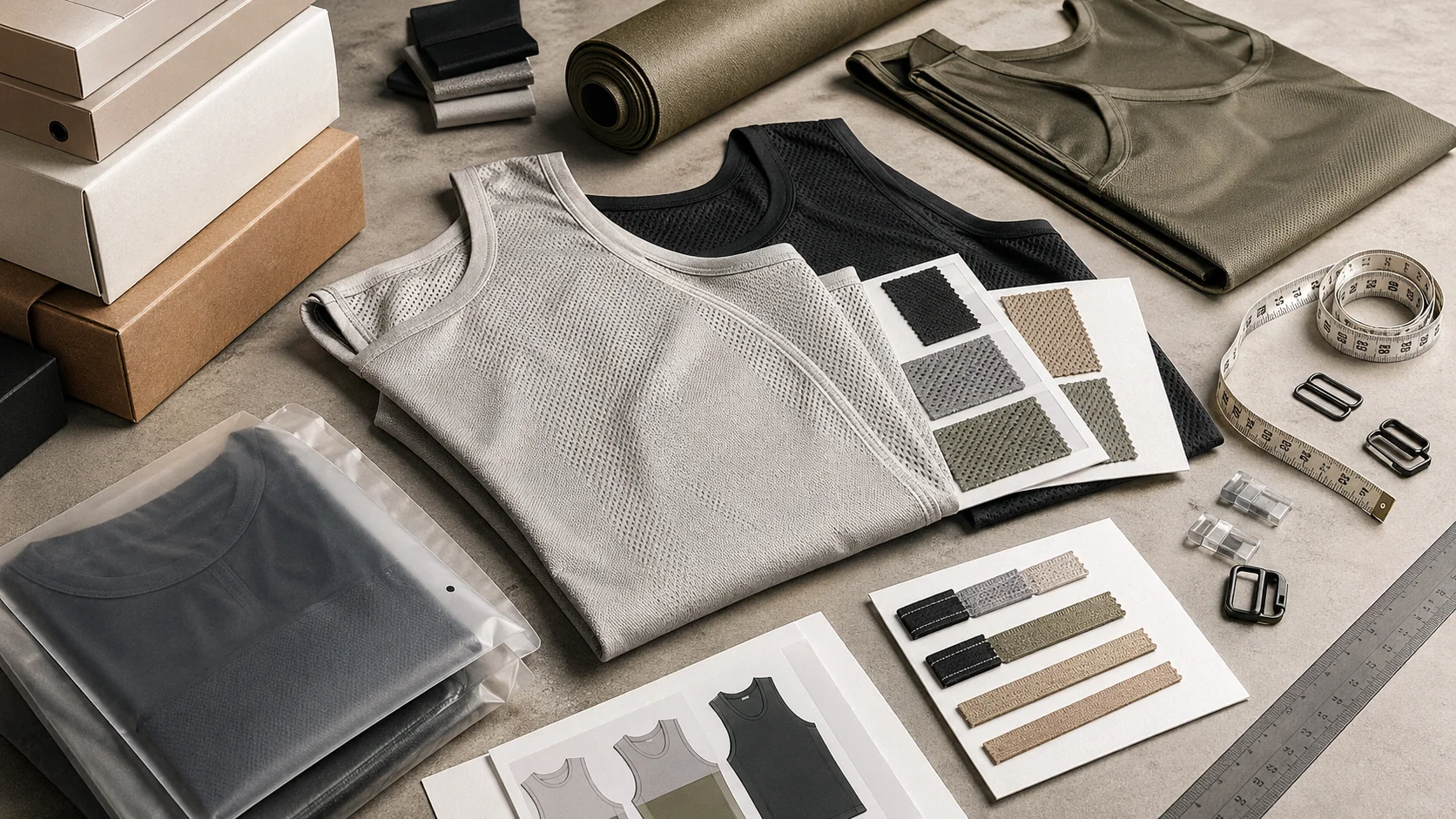
Ensuring Fit Consistency Across Apparel Manufacturing with checks for samples, fit, MOQ, QC evidence, pricing terms, and delivery risk.
Fast answer: Ensuring Fit Consistency Across Apparel Manufacturing should be judged by production evidence, not by a generic sourcing promise. The buyer needs sample proof, cost breakdowns, QC checkpoints, and delivery buffers in writing.
Ask for recent sample photos, measurement tolerances, fabric or print test assumptions, decoration test notes, packing examples, and a named inspection checkpoint. These details show whether the team can repeat an approved sample at bulk volume.
Separate garment cost, decoration, labels, packaging, sampling, testing, freight, and rush charges. When every cost line is visible, it becomes easier to reduce colorways, adjust size depth, or reserve more time for sampling.
Maintaining consistent fit across apparel manufacturing runs is a critical challenge for brands striving to deliver an exceptional customer experience. A garment that fits differently from one production run to another creates dissatisfaction, returns, and damages brand trust. This practical guide explores how to assess and assure fit consistency across manufacturing runs, empowering brands with actionable strategies to uphold quality at scale.
At Fabrikn, our mission is to help brands navigate the nuances of production, from initial sampling to final delivery. With expertise grounded in technical design, quality assurance, and manufacturing oversight, we understand how precision in fit can make or break customer loyalty. Whether you’re working with our services team or collaborating across the supply chain, this guide will equip you with the knowledge to evaluate fit consistently, minimize variance, and build garments your customers love.
Fit variability emerges from the complexity of apparel manufacturing. A single design must translate across different pattern makers, factories, materials, and operators. Each of these elements introduces potential deviation, which, if uncontrolled, results in inconsistent sizing and silhouette across production runs.
Several factors contribute to fit variability:
Understanding these variables is the first step in controlling fit consistency. Assessing fit depends on comprehensive measurement, standardized specifications, and a culture of precision.
Successful fit assessment starts before cutting fabric. It begins with clearly defined fit standards embedded within technical packages (tech packs), fit cards, and quality manuals. These standards serve as the benchmark for comparing every sample and production garment.
Key components of fit standards include:
Having fit standards documented reduces ambiguity. Brands and factories referencing identical standards align analyses and uphold the intended silhouette.
Fit assessment is iterative. As garments move from concept to production, each sample increases fidelity and deserves thorough evaluation. Here’s how to evaluate fit systematically at every stage:
Early muslin (or block) samples verify pattern integrity. Evaluate drape and balance before investing in full-scale prototypes. Identify major issues such as shoulder points, collar placement, or pocket alignment.
Proto samples represent the first complete version using production fabrics and trims. Conduct fit sessions with trained fit models or on live bodies. Document fit notes, take precise measurements, and compare them to your fit standards.
Use a complete size set to assess grading accuracy. Fit experts should confirm how the garment scales across sizes. Capture photos, video, and detailed notes to communicate adjustments to pattern makers.
Before mass production, salesman samples showcase the final design. Verify these against your approved fit standards. Consider third-party evaluation if you require an external quality check.
At every stage, maintain a fit log documenting issues, solutions, and final decisions. This log becomes a vital reference for future runs, ensuring changes aren’t lost or misapplied.
Consistent measurement is foundational to fit evaluation. Implementing standardized measurement protocols allows teams to compare garments across runs objectively.
Standardize how, where, and with what tools measurements are taken:
Not every measurement needs equal attention. Focus on measurements that significantly impact wearer perception:
Record these measurements for each sample and production batch. Analyze trends over multiple runs to identify drift from established standards.
Create measurement audit sheets that capture actual versus target values, tolerances, and comments. Audit sheets should also include:
These audit sheets become part of your quality documentation, allowing teams to trace discrepancies back to specific runs or decisions.
Advanced technologies enable more precise fit analysis and faster feedback loops. These tools help brands and manufacturers make data-driven decisions.
Digital fitting platforms offer 3D body scanning and virtual mannequins to predict how garments will fit. This not only accelerates iteration but also highlights fit issues before physical samples exist.
Align fit assessment with data analysis:
With data, you can convert subjective fit impressions into objective trends, enabling teams to act decisively.
Implementation of Product Lifecycle Management (PLM) or Quality Management Systems (QMS) ensures fit data stays centralized. These systems allow teams to:
Integrating these digital platforms with manufacturer workflows promotes transparency and accountability.
The human element remains critical. No matter how refined your tools are, fit depends on strong collaboration with manufacturing partners.
Choose partners with proven technical capacity and attention to detail. Consider:
Schedule regular fit workshops with factory teams. Share expectations, troubleshooting tips, and rework protocols. Invite fit engineers from factories to your design studio for mutual exchange.
Institutionalize communication channels for fit feedback:
Align internal stakeholders—design, production, sourcing, QA—so feedback loops are seamless. Document decisions in shared systems that are accessible to all.
At Fabrikn, we excel at bridging these connections. Our teams coordinate with brands, factories, and third-party vendors to ensure fit expectations remain consistent. Whether you need support through our about us section to understand our approach or are ready to discuss specifics, we’re dedicated to delivering quality across the board.
Consistency is not a one-time achievement but an ongoing process. During each manufacturing run, integrate regular checks:
Inline inspections occur while garments are still in production. Verify fit on samples after critical operations (e.g., panel sewing, collar setting). Final inspections on completed garments ensure conformance before shipment.
Establish frequency for fit sampling:
When fit inconsistencies arise, perform root cause analysis:
The goal is to fix issues at their source rather than apply reactive adjustments. Document these analyses to prevent recurrence.
Fit is part of your brand promise. It must align with positioning, target customers, and overall aesthetic. Brands should define their “fit personality”: is it relaxed streetwear, sharp tailoring, or technical outerwear?
Use customer feedback, returns data, and fit reviews to understand how well you meet expectations. Translate this insight into updated fit specifications, training materials, and quality goals.
As your brand evolves, revisit fit standards to ensure they reflect current trends and customer needs. Incorporate brand storytelling to keep fit teams motivated and aligned with the mission.
Assessing fit consistency across apparel manufacturing runs demands structure, collaboration, and diligence. By establishing clear standards, measuring precisely, leveraging technology, and fostering transparent factory relationships, brands gain the control needed to deliver reliable fit to customers.
Continuous monitoring, training, and data-driven decision-making round out a robust fit assurance program. Whether you are launching a new line or optimizing an existing one, implementing these strategies secures your brand’s promise of quality and trust.
Ready to refine your fit management process? Reach out via our contact us page to explore how Fabrikn can support your next apparel manufacturing run.
Get a free quote from Fabrikn — your trusted B2B clothing manufacturer with 10+ years of experience. MOQ as low as 200 pieces.
Get a Free Quote →A strong brief makes the supplier's job narrower and the quote more reliable. For ensuring fit consistency across apparel manufacturing, include the target customer, sales channel, expected order quantity, size range, decoration needs, packaging requirements, and delivery market. Then call out the details most likely to affect the result, especially fit intent, material source, and trim selection.
The brief should also explain what cannot change. Some brands care most about hand feel, some about price, some about launch timing, and some about retail compliance. When those priorities are not written down, suppliers tend to optimize for whatever is easiest to quote. Clear priorities help the factory make better tradeoffs before the first sample is cut or printed.
Ask the supplier to respond with assumptions, not just a price. A useful reply states MOQ, sample route, production capacity, inspection plan, packing method, and freight handoff. If the answer is vague, the project may still work, but it needs a tighter pre-production stage before money and calendar pressure build up.
The best time to catch problems is before the pre-production sample is approved. Check measurements, color, placement, material behavior, shrinkage, construction, labels, and packaging in the same review instead of approving each item in isolation. Many bulk issues are not caused by one dramatic mistake; they come from several small unchecked assumptions.
For ensuring fit consistency across apparel manufacturing, pay special attention to sample review, bulk inspection, and shipping plan. These details often look minor in an email but become expensive once cutting, printing, sewing, packing, or shipping begins. A simple checklist with owner, due date, and approval status keeps the brand team and factory aligned.
Bulk production should not start until the supplier can explain how the approved sample becomes a repeatable production standard. That means reference sample storage, line instructions, inline checks, final inspection, and defect handling. A factory that can describe this process clearly is usually safer than one that only promises speed.
Price differences are useful only when the quotes cover the same work. Compare sample cost, material source, trims, decoration, packaging, testing, inspection, and freight assumptions. A low unit price can become expensive if it excludes items the brand needs before launch.
Timeline promises deserve the same scrutiny. Ask what happens if the first sample needs revision, whether materials are in stock, when the production slot is reserved, and how export packing is handled. The most reliable supplier is often the one that gives a realistic calendar instead of the fastest optimistic answer.
Create a detailed measurement protocol that includes defined measurement points, tools, operator training, and tolerances. Provide visuals, conduct training sessions, and use centralized documentation systems so each factory accesses the same references.
Digital tools like 3D body scanning, virtual try-on platforms, and PLM systems facilitate early detection of fit discrepancies. Using these platforms with fit analytics helps you catch issues before they reach mass production.
Frequency depends on the style maturity and past performance. New styles or factories require fit checks per lot, while established items may be sampled randomly. Inline and final inspections should validate critical measurements regularly.
Use structured fit reports that include measurement comparisons, fit photos, and decision statuses. Hold scheduled fit review meetings, and ensure all revisions are reflected in updated documentation accessible through shared platforms.
Yes, Fabrikn combines technical expertise, factory partnerships, and quality systems to support brands in maintaining fit consistency. Learn about our approach on our services page and contact us to discuss customized support.