
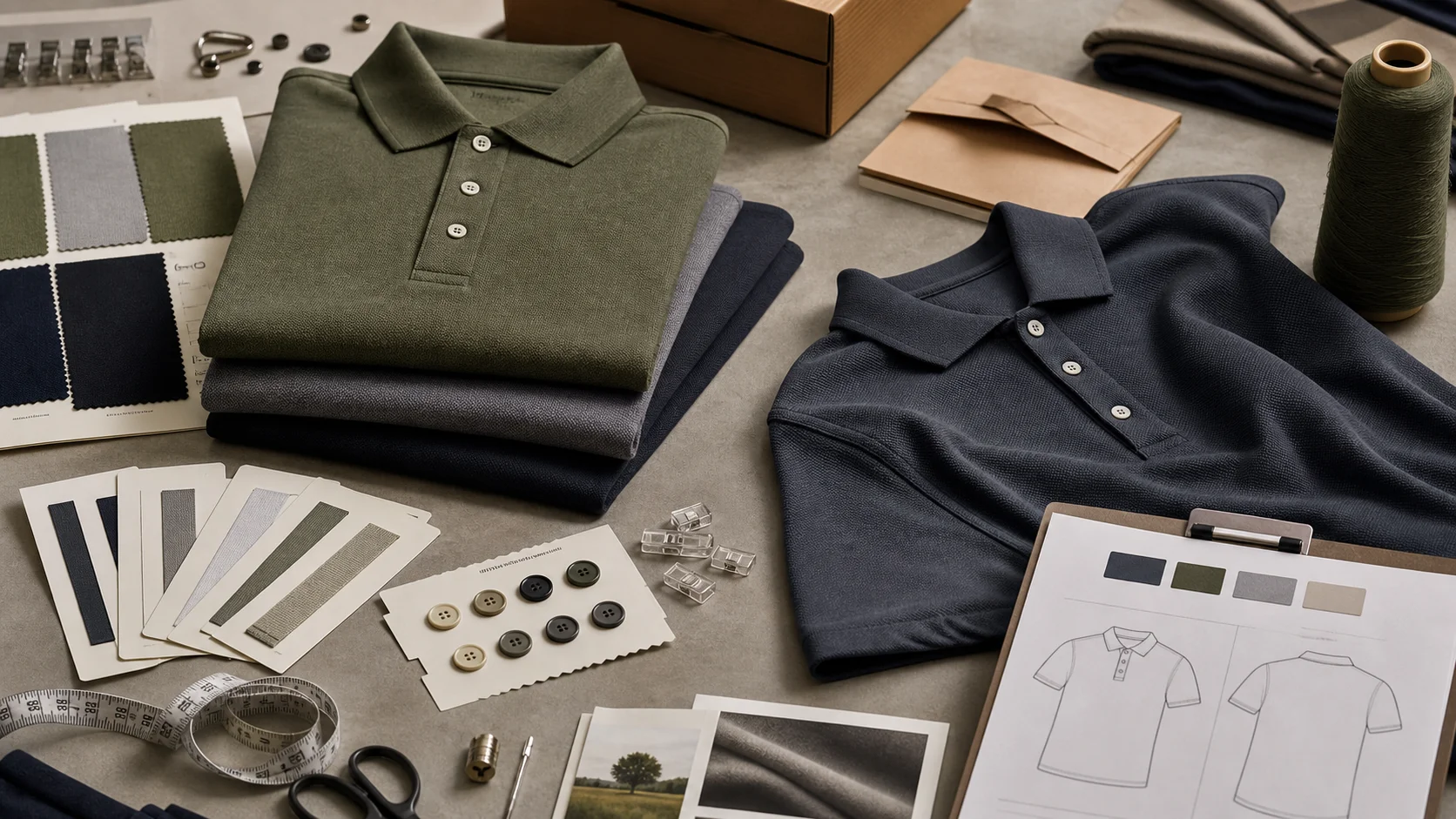
Build A Fashion Brand on A Tight Budget compared by sample evidence, fabric or trim specs, MOQ, AQL terms, cost lines, delivery timing, and rework...
Fast answer: Build A Fashion Brand on A Tight Budget: Tech Pack, Sample Gate, MOQ, and QC Terms should be judged by production evidence, not by a generic sourcing promise. The buyer needs sample proof, cost breakdowns, QC checkpoints, and delivery buffers in writing.
Ask for recent sample photos, measurement tolerances, fabric or print test assumptions, decoration test notes, packing examples, and a named inspection checkpoint. These details show whether the team can repeat an approved sample at bulk volume.
Separate garment cost, decoration, labels, packaging, sampling, testing, freight, and rush charges. Clear cost lines make it easier to reduce colorways, adjust size depth, or reserve more time for sampling.
Building a fashion brand is exciting, but it can also be expensive. Many aspiring founders assume they need a large budget for sampling, production, branding, photography, marketing, and inventory. The truth is that you can start lean if you make smart decisions early and focus on what matters most: a clear audience, strong product-market fit, disciplined spending, and a scalable business model.
If you are trying to figure out how to build a fashion brand on a tight budget, the goal is not to do everything cheaply. The goal is to spend strategically. That means reducing waste, validating ideas before placing big orders, using limited resources wisely, and partnering with the right suppliers. A fashion brand can start small and still look professional, create demand, and grow steadily over time.
This guide breaks down the most effective low-budget strategies for launching a fashion label, from defining your niche to finding production support and marketing without a huge ad spend. Whether you want to launch streetwear, athleisure, basics, luxury-inspired pieces, or a niche apparel line, these steps will help you build with confidence.
The biggest mistake many new founders make is treating the brand first and the business second. Visual identity matters, but your fashion brand must also be financially viable. Before designing anything, write out a realistic budget and split it into categories such as product development, samples, website, branding, marketing, and operations.
Budget-first planning helps you answer key questions:
When you understand your numbers, you can build a brand with much less financial risk. For example, instead of launching with 12 styles in multiple colorways, you might begin with 2 to 4 strong products in one or two colors. That smaller starting point reduces sampling and production costs while giving you room to test market demand.
If you need support in planning production or understanding the manufacturing process, it can help to speak with an experienced partner early. You can explore Fabrikn’s services to see how production support can fit into a lean launch strategy.
A tight budget works best when your target market is narrow and specific. A broad brand that tries to appeal to everyone often wastes money on scattered marketing and unfocused product development. A niche brand, on the other hand, can speak directly to a defined customer, making every dollar go further.
Ask yourself:
For example, instead of creating “women’s fashion,” you might focus on “minimalist workwear for young professionals” or “premium basics for men who want comfort and fit.” The more specific your audience, the easier it becomes to design products, write messaging, and choose marketing channels.
Clear positioning also helps you avoid unnecessary product expansion. Many brands spend too much on extra styles before proving that the core products sell. A focused niche lets you launch fewer items and still build a strong identity.
Not all fashion business models require the same upfront investment. If your budget is limited, choose a model that reduces inventory risk and lowers production costs. Some of the most budget-friendly approaches include made-to-order, small-batch production, pre-orders, and limited drops.
Made-to-order means you produce items after a customer places an order. This reduces the need for large inventory purchases and minimizes unsold stock. It is a strong choice if you want to test demand before investing heavily.
Small-batch production allows you to manufacture a limited quantity of each item. While the unit cost may be slightly higher than a large order, the overall risk is lower. This is often a smart tradeoff for new brands with limited cash flow.
A pre-order model lets customers pay before production begins. This can help fund manufacturing and give you early market validation. It also creates urgency and can increase launch interest.
Drop-based fashion brands release products in small, timed collections. This keeps inventory lean, creates excitement, and gives you opportunities to refine the product between drops.
The best model for you depends on your product type, audience, and supplier capabilities. In many cases, a combination of pre-orders and small-batch production offers an ideal balance between cash flow and brand quality.
A fashion brand must look intentional, but you do not need to spend a fortune on logos, packaging, or photoshoots. What matters most is consistency. A clear brand identity can be built with a few well-chosen elements and applied across every touchpoint.
Start with a clean, versatile visual system rather than a complex one. Many affordable tools can help you design basic branding assets in-house or with a freelancer. You do not need an expensive branding agency to create a professional look.
Instead of paying for a full-scale brand campaign, invest in essentials such as a strong website landing page, product labels, and simple packaging. A polished but minimal brand identity often feels more credible than an overdesigned one.
If you want to learn more about the company behind the production process, you can visit Fabrikn’s about us page.
Product development can quickly drain your budget if you are not careful. Sampling, revisions, pattern making, fabric sourcing, and testing all add up. To stay lean, keep your first collection focused and build on proven pieces instead of trying to do everything at once.
Here are practical ways to reduce product development costs:
Another cost-saving tactic is to design with production efficiency in mind. Simple silhouettes, repeatable measurements, and standardized components can reduce sampling time and help lower manufacturing costs. The goal is to create products that are attractive, functional, and commercially realistic.
You should also test your product ideas before committing to bulk production. This can happen through digital mockups, small sample orders, social media polls, or early customer feedback. The more you validate before production, the less money you waste on products that do not sell.
Choosing the right manufacturer is one of the most important decisions for a fashion startup. A good partner can help you save time, reduce errors, and avoid costly mistakes. A poor partner can lead to delays, quality issues, and wasted inventory.
When working with a limited budget, look for a manufacturer that understands small-batch production, flexible minimum order quantities, and efficient communication. Ask questions about turnaround times, sampling costs, fabric sourcing support, and whether they can help you scale later.
Before selecting a supplier, make sure you understand:
Even if a manufacturer’s unit price is slightly higher, the overall value may be better if they reduce mistakes and support you with a smoother process. For new fashion brands, reliability often matters more than chasing the lowest quote.
If you are looking for manufacturing guidance or a production partner for your apparel brand, you can contact Fabrikn through the contact us page to discuss your project needs.
Inventory is one of the biggest financial risks in fashion. Every unsold item ties up cash that could be used elsewhere. On a tight budget, your objective is to avoid overproducing and to keep your stock moving.
To manage inventory wisely, start small and monitor performance closely. A limited first run gives you real sales data and customer feedback without requiring a major upfront investment. If a product performs well, you can reorder. If it does not, you can adjust or replace it before losses grow.
Useful inventory strategies include:
Lean inventory management does more than protect your budget. It also makes your brand more agile. You can respond faster to trends, customer preferences, and product feedback when you are not buried under excess stock.
Marketing does not have to be expensive to be effective. In the early stages, your advantage is authenticity, not ad spend. You can grow awareness through organic content, community building, partnerships, and direct customer engagement.
Focus on one or two platforms where your audience is most active. Instead of trying to be everywhere, build a consistent presence with product stories, behind-the-scenes content, founder updates, and customer-focused posts.
Micro-influencers often have highly engaged audiences and lower collaboration costs than larger creators. A few well-matched partnerships can generate more trust than a costly one-off campaign.
Encourage early customers to share photos, reviews, and styling ideas. User-generated content is cost-effective and powerful because it shows real people wearing your products.
Email marketing is one of the most affordable long-term channels. Offer an early access sign-up, launch update, or small incentive to collect emails before your first drop.
People buy fashion brands for more than just the garment. They buy identity, values, and emotion. Share why you started, what your brand stands for, and what makes your products different. A clear story can help you stand out without a large advertising budget.
When building a fashion brand on a tight budget, the simplest sales channels are often the best. You do not need a complex retail strategy to start generating revenue. In fact, keeping your sales setup simple can help you focus on what works.
Your website should be clean, mobile-friendly, and easy to navigate. You do not need expensive custom development at first. A simple storefront with professional product photos, clear descriptions, and strong calls to action is enough to begin.
Make sure product pages answer the buyer’s main questions: fit, fabric, size, care, shipping, and return policy. When customers can shop confidently, conversion rates improve without additional marketing spend.
A lean fashion brand needs efficient systems. The more time you waste on manual processes, the more your budget gets consumed by avoidable admin work. Fortunately, many low-cost tools can help you manage orders, customer communication, inventory, and planning.
Examples of budget-friendly operational support include:
Create simple workflows for your product timeline, supplier communication, and customer service. Clear processes reduce mistakes and free you up to focus on sales and brand building. In a small business, saving time is just as important as saving money.
Once your brand begins to sell, resist the urge to expand too quickly. Growth should be based on evidence, not excitement alone. The smartest way to scale on a tight budget is to reinvest profit into the areas that drive repeatable growth.
That may include:
Track every launch carefully. Measure what sold, what received interest but not conversion, and which channels brought the best customers. This information helps you make better decisions with each collection.
Scaling gradually also protects your brand identity. Instead of chasing every trend, you can evolve in a way that feels intentional and sustainable.
When money is tight, mistakes are more expensive. Avoiding common pitfalls can save you from unnecessary setbacks.
By avoiding these mistakes, you preserve capital and improve your odds of building a brand that can last.
Learning how to build a fashion brand on a tight budget is really about discipline, strategy, and focus. You do not need to start with a massive collection or a huge marketing budget. Instead, begin with a clear niche, a lean business model, a simple but strong brand identity, and a production plan that reduces risk.
When you keep inventory low, validate products early, work with the right manufacturing partner, and market creatively, you can create a brand that feels professional and has real growth potential. Most importantly, you can build it without putting your finances under unnecessary pressure.
Fashion brands are built over time. Start small, learn quickly, and reinvest wisely. With the right approach, a tight budget can become a powerful advantage rather than a limitation.
Get a free quote from Fabrikn — your trusted B2B clothing manufacturer with 10+ years of experience. MOQ as low as 200 pieces.
Get a Free Quote →Yes. You can start with a small collection, low inventory, simple branding, and organic marketing. The key is to validate demand before investing heavily in production.
One of the cheapest ways is to use a lean model such as pre-orders or made-to-order, focus on one niche, and launch only a few products at first.
Most new brands should start with a small number of products, often two to four styles, depending on the category. This keeps sampling and production costs manageable.
No. You can use social media, email marketing, micro-influencers, and customer-generated content to grow awareness without large ad spend.
Look for a manufacturer that supports small-batch production, communicates clearly, and offers reasonable minimum order quantities. A reliable partner can save money by reducing costly mistakes.
Focus on product-market fit first, then build branding that supports the product. A strong brand matters, but it should be backed by something customers actually want to buy.