
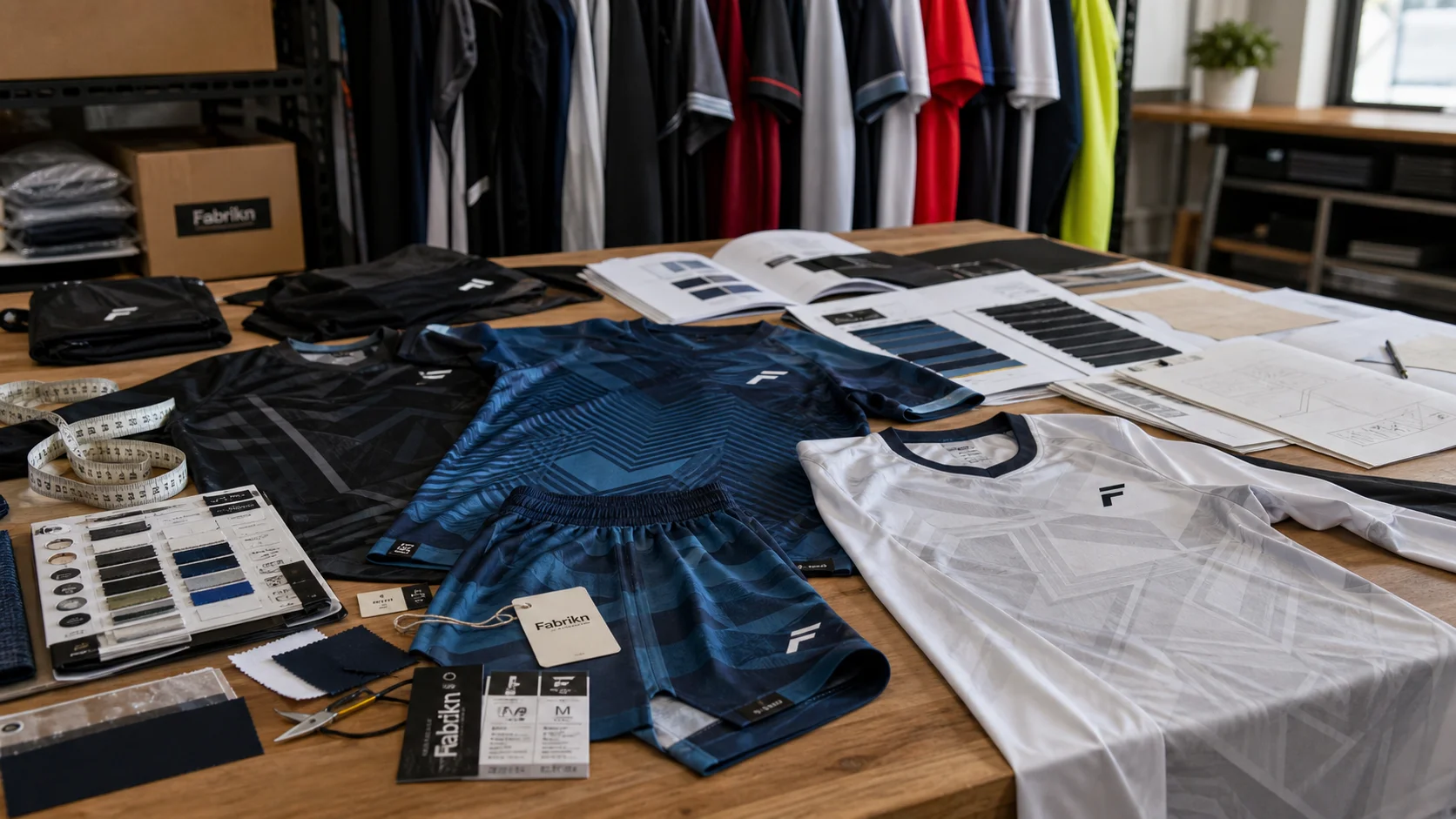
Check Ethical Labor Practices in Apparel Production Partners compared by sample evidence, fabric or trim specs, MOQ, AQL terms, cost lines, delivery...
Fast answer: Check Ethical Labor Practices in Apparel Production Partners: Sample Evidence, MOQ, Capacity, and Rework Terms should be judged by production evidence, not by a generic sourcing promise. The buyer needs sample proof, cost breakdowns, QC checkpoints, and delivery buffers in writing.
Ask for recent sample photos, measurement tolerances, fabric or print test assumptions, decoration test notes, packing examples, and a named inspection checkpoint. These details show whether the team can repeat an approved sample at bulk volume.
Separate garment cost, decoration, labels, packaging, sampling, testing, freight, and rush charges. Clear cost lines make it easier to reduce colorways, adjust size depth, or reserve more time for sampling.
Choosing an apparel production partner is not only a matter of quality, pricing, and lead times. For modern brands, retailers, and private label companies, one of the most important decisions is whether a manufacturing partner follows ethical labor practices. In an industry where supply chains can be complex and multi-layered, knowing how to check ethical labor practices in apparel production partners is essential for protecting your brand, your customers, and the people who make your products.
Ethical labor practices mean more than simply avoiding obvious abuse. They include fair wages, safe working conditions, reasonable working hours, legal employment, respect for workers’ rights, and transparent business conduct. Brands that fail to evaluate these issues may face legal risk, reputational damage, product disruptions, and customer backlash. On the other hand, brands that prioritize responsible sourcing often build stronger long-term supplier relationships and earn greater trust from buyers.
This guide explains how to evaluate ethical labor practices in apparel production partners, what evidence to request, which red flags to avoid, and how to create a repeatable vetting process. Whether you are launching a new clothing line or reviewing your existing supply chain, these steps will help you make more informed sourcing decisions.
Apparel production has historically been associated with labor concerns because of its labor-intensive nature, price pressures, and fragmented global supply chains. A single garment may pass through several subcontractors, mills, finishing facilities, and logistics providers before reaching the customer. Without strong oversight, poor labor practices can hide deep in the chain.
There are several reasons ethical labor practices matter to your business:
For B2B buyers, ethical sourcing is not just a values statement. It is a procurement requirement. Companies that check labor practices carefully can reduce risk while building more resilient supply chains.
When evaluating a potential manufacturing partner, you need a structured approach. Ethical labor practices cannot be confirmed by a friendly sales conversation alone. You should review documents, ask detailed questions, and verify claims with independent evidence whenever possible.
Start by determining whether workers are legally employed and paid according to local laws. Request information on payroll procedures, wage records, overtime pay, and employment contracts. Confirm whether workers are paid on time and whether deductions are lawful and transparent.
Key points to review include:
Excessive overtime is a common concern in apparel manufacturing. Even when overtime is technically voluntary, it can become coercive if workers feel pressure to meet impossible production targets or fear retaliation. Ask how the factory tracks hours and whether workers can refuse overtime without consequences.
Look for evidence of:
Ethical labor practices always include safety. Apparel factories should provide safe machinery, fire protection, proper ventilation, clear emergency exits, sanitation, and PPE where required. Unsafe work environments are one of the fastest ways to identify weak labor management.
Ask for:
Any serious ethical review must include policies against forced labor, bonded labor, trafficking, and child labor. Ask how the factory verifies worker age, how identity documents are handled, and whether any recruitment fees are charged to workers. Forced labor can sometimes be hidden through debt, document retention, or restriction of movement.
Critical questions include:
Workers should have a way to raise concerns without fear of punishment. Ethical factories typically have grievance mechanisms, worker hotlines, suggestion channels, or access to worker representatives. In many regions, the ability to join unions or worker committees is an important labor-rights indicator.
Review whether the partner has:
Labor risk often increases when factories rely on labor brokers, unvetted subcontractors, or informal hiring arrangements. Ask whether the partner outsources any portion of production and how those facilities are monitored. Ethical labor oversight must extend to all approved subcontractors.
Checking ethical labor practices requires more than collecting policy documents. The goal is to verify whether policies are actually implemented. A strong due diligence process combines documentary review, factory visits, worker interviews, and third-party verification.
Ask the manufacturer to provide a labor compliance package before you commit to production. Useful documents may include:
Do not rely on one document alone. Compare policies with records and operational practices. A factory may have a strong written policy but weak enforcement.
Whenever possible, visit the production site or hire an independent auditor to do so. A factory tour can reveal whether the environment matches the claims. You can observe cleanliness, safety equipment, worker flow, emergency exits, and overall management discipline.
During the visit, look for signs such as:
One of the most effective ways to verify labor practices is to speak with workers in a confidential, non-supervised setting. Worker interviews can reveal whether policies are actually experienced on the factory floor. Questions should be non-threatening and culturally appropriate, and workers should understand that responses will not affect their employment.
Topics to ask about include:
Certifications and audit reports can be helpful, but they should not replace your own due diligence. Look for recognized standards related to labor, safety, and social compliance. However, remember that a certificate is only as useful as its scope, freshness, and audit quality.
When reviewing certifications, ask:
Research the supplier using public sources, industry references, and news reports. Search for regulatory actions, labor disputes, major accidents, or allegations involving subcontractors. Ask for references from other clients, and if appropriate, speak with those buyers about their experience.
A responsible partner should be willing to discuss how they manage compliance and continuous improvement.
Some warning signs suggest a partner may not meet your ethical standards. One red flag alone does not always prove a serious issue, but multiple signals should trigger deeper investigation or disqualification.
Another warning sign is overdependence on verbal assurance. If a factory says it is ethical but cannot show records, site procedures, or worker protection systems, treat that as a serious concern.
Also watch for partners who seem unwilling to improve. Responsible suppliers usually accept feedback, collaborate on corrective actions, and understand that ethical compliance is part of doing business. If a factory becomes defensive or dismissive when asked basic questions, that may indicate future problems.
To check ethical labor practices effectively, you need the right questions. Use a consistent questionnaire so you can compare suppliers fairly.
Be specific. General questions like “Are you ethical?” are too vague to provide useful information. Detailed operational questions will reveal whether the supplier has mature compliance systems.
A one-time review is not enough. Ethical labor oversight should be built into your sourcing workflow from the beginning and monitored throughout the relationship. Here is a practical process your team can use.
Create a supplier code of conduct that outlines your minimum labor expectations. Align it with your business values, customer expectations, and applicable laws. Include clear rules on wages, hours, safety, age verification, freedom from coercion, and subcontracting.
Before requesting samples or pricing, ask suppliers to complete a labor compliance questionnaire. This saves time and helps identify unsuitable partners early in the selection process.
Collect licenses, certifications, worker policies, and labor records. Compare documents for consistency. If documents are incomplete or contradictory, request clarification before proceeding.
Use site visits, third-party audits, or independent assessments to verify the information you receive. When possible, include worker interviews and observations of production conditions.
Make labor standards part of your manufacturing agreement. Include the right to audit, expectations for corrective action, and consequences for serious violations. Contracts should clearly address subcontracting and reporting obligations.
Ethical compliance is not static. Reassess partners periodically, especially when order volumes increase, new product lines are introduced, or production shifts to new facilities. Ongoing monitoring can catch issues before they become crises.
Some suppliers may need help strengthening processes. If they demonstrate good faith and a willingness to improve, consider working with them on corrective actions, training, and better documentation systems. Long-term ethical sourcing often depends on collaboration, not just inspection.
For brands that want a more structured sourcing relationship, partnering with a manufacturer that understands compliance from the outset can save time and reduce risk. If you are reviewing options for your next project, explore Fabrikn’s services to learn more about production support and manufacturing capabilities.
At Fabrikn, we understand that B2B buyers need more than a factory that can make garments. They need a partner who values transparency, communication, and responsible production practices. Ethical sourcing requires trust, and trust is built through clear processes and consistent accountability.
When evaluating production partners, it helps to work with a team that is open about its capabilities, process expectations, and collaboration model. If you want to discuss your sourcing goals or ask questions about production, you can reach out through our contact page. For more about our company and approach, visit our about us page.
Whether you are developing private label apparel, uniform programs, or custom clothing collections, responsible manufacturing should be part of your supplier selection criteria from day one.
Once you have selected a partner, the work is not finished. Ethical labor practices should be monitored across the life of the relationship. Strong supplier management includes regular communication, performance reviews, and shared expectations.
The best apparel production relationships are built on mutual accountability. Brands should not expect ethical performance without providing clear standards, realistic timelines, and fair business practices. At the same time, suppliers should be willing to demonstrate compliance and correct problems promptly.
Knowing how to check ethical labor practices in apparel production partners is a critical skill for any brand or buyer in the clothing industry. By reviewing documentation, conducting audits, interviewing workers, and watching for red flags, you can make better sourcing decisions and reduce the risk of labor-related problems. Ethical sourcing is not just about avoiding harm; it is about building stronger, more reliable business relationships that support long-term growth.
If your company is looking for a manufacturing partner that understands the importance of responsible production, use a structured vetting process and ask the right questions from the start. The effort you invest now can protect your brand, strengthen your supply chain, and contribute to better outcomes for workers.
Get a free quote from Fabrikn — your trusted B2B clothing manufacturer with 10+ years of experience. MOQ as low as 200 pieces.
Get a Free Quote →The first step is to request basic compliance documentation, such as business licenses, labor policies, wage records, and safety certifications. This gives you a foundation for further review before moving to audits or site visits.
No. Certifications can be helpful, but they should be combined with your own due diligence, including documentation review, audits, and worker interviews. A certificate does not guarantee full compliance.
Ask whether any production is outsourced, request a list of approved subcontractors, and require proof that those facilities meet your labor standards. Ethical oversight should extend to every facility involved in your order.
Common red flags include refusal to share records, excessive overtime, unsafe conditions, unclear subcontracting, and inconsistent worker information. Multiple warning signs should prompt deeper investigation.
You should reassess periodically, especially when order volumes increase, production changes, or new risks emerge. Ongoing monitoring is more effective than a one-time check.