
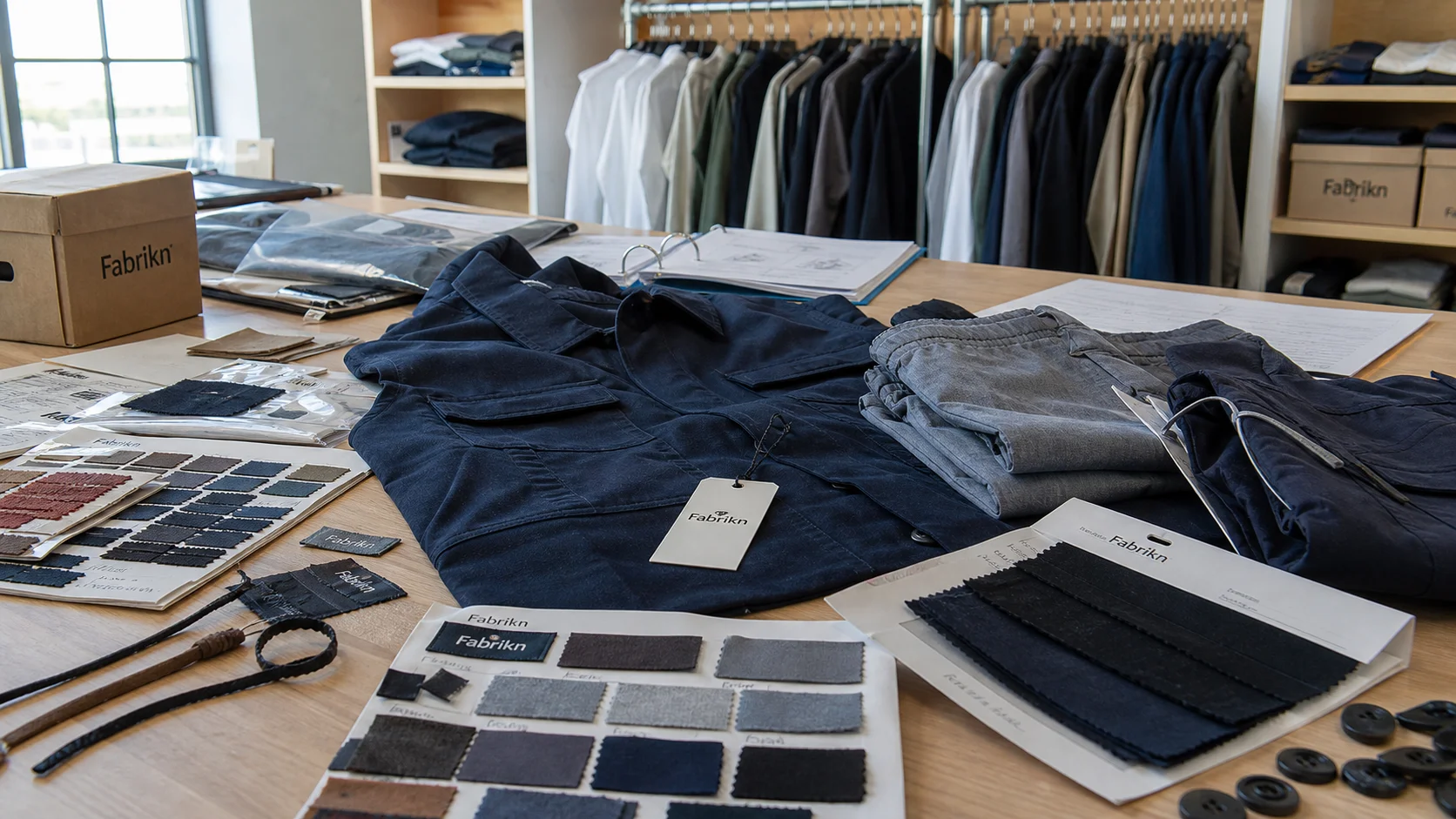
Check Oeko Tex Certification with checks for samples, fit, MOQ, QC evidence, pricing terms, and delivery risk.
Fast answer: Check Oeko Tex Certification: Samples, Cost Lines, QC, and Delivery Risk should be judged by production evidence, not by a generic sourcing promise. The buyer needs sample proof, cost breakdowns, QC checkpoints, and delivery buffers in writing.
Ask for recent sample photos, measurement tolerances, fabric or print test assumptions, decoration test notes, packing examples, and a named inspection checkpoint. These details show whether the team can repeat an approved sample at bulk volume.
Separate garment cost, decoration, labels, packaging, sampling, testing, freight, and rush charges. When every cost line is visible, it becomes easier to reduce colorways, adjust size depth, or reserve more time for sampling.
If you are shopping for sustainable fashion, you have probably seen labels that say “OEKO-TEX certified” or “Made with OEKO-TEX certified materials.” These claims can be helpful, but only if you know how to verify them. In a market full of greenwashing, it is important to understand how to check OEKO-TEX certification properly so you can make informed choices about the clothes you buy and the brands you support.
OEKO-TEX is one of the best-known textile certification systems in the world. It is designed to test fabrics, yarns, trims, and finished products for harmful substances and other quality and safety concerns. But a logo on a product tag does not automatically mean the item is genuinely certified. You need to know what to look for, where to check, and how to interpret the result.
This guide explains everything you need to know about how to check OEKO-TEX certification, including what the certification means, how to verify it online, and what brands should disclose to customers. Whether you are a conscious shopper, a fashion buyer, or a brand owner, this article will help you navigate OEKO-TEX claims with confidence. For more information about our manufacturing capabilities, you can also explore our services, learn more about us, or contact us directly.
OEKO-TEX is an independent testing and certification system for textiles and leather products. The most widely recognized standard is STANDARD 100 by OEKO-TEX, which tests every component of a product for harmful substances. That includes the outer fabric, lining, buttons, zippers, threads, prints, and other accessories.
OEKO-TEX certification is not the same as organic certification or recycled content certification. Instead, it focuses on product safety and chemical compliance. A garment can be OEKO-TEX certified even if it is made from conventional fibers, as long as it meets the standard’s limits for harmful substances.
There are several OEKO-TEX labels and systems, including:
When shoppers ask how to check OEKO-TEX certification, they are most often referring to STANDARD 100 or MADE IN GREEN. These labels are the ones most likely to appear on clothing tags, product pages, or retail packaging.
Sustainable fashion is about more than just recycled fibers or ethical labor. It also includes health, safety, and transparency. OEKO-TEX certification gives shoppers added reassurance that a garment has been tested for harmful substances at various stages of production.
This matters because clothing can contain residues from dyes, finishes, coatings, and processing chemicals. While not every chemical used in textile production is dangerous, some substances can pose risks if they exceed accepted limits. OEKO-TEX helps reduce that risk by setting strict criteria.
For consumers, the certification can offer peace of mind. For brands, it can support trust and improve product transparency. For manufacturers, it can help demonstrate compliance and quality control. In a competitive market, verified certification is a useful signal that a product is aligned with modern sustainability expectations.
Still, the certification should be viewed as one part of a broader sustainability assessment. It does not automatically mean the garment is carbon neutral, ethically produced, or made from organic fibers. It means the certified item has passed OEKO-TEX’s testing and documentation requirements.
Checking OEKO-TEX certification is easier than many shoppers think. The key is to look beyond the logo and confirm the certification details through official sources. Here is a step-by-step process you can follow.
The first step is to identify whether the product claims OEKO-TEX certification. This may appear on a garment tag, hangtag, packaging, or online product description. The label should usually specify the type of OEKO-TEX certification, such as STANDARD 100 or MADE IN GREEN.
If a product simply says “OEKO-TEX approved” or “OEKO-TEX quality,” be cautious. Those phrases are vague and may not indicate an actual certification. A genuine claim should be more specific and ideally include a certificate number, company name, or verification link.
Not all OEKO-TEX labels mean the same thing. Before you verify the claim, identify which certification is being referenced. STANDARD 100 means the product has been tested for harmful substances. MADE IN GREEN means the item can also be traced through a transparent production chain. LEATHER STANDARD applies to leather goods. STeP refers to production facilities rather than finished products.
Knowing the certificate type helps you understand what you are actually checking. A shirt may be STANDARD 100 certified, while the factory that produced it may also have a separate STeP certification. These are related but not identical.
The most reliable OEKO-TEX claims include a certificate number or product ID. This number is often listed near the logo or on the brand’s website. It can usually be entered into the OEKO-TEX label check tool or verification database.
If the seller does not provide a certificate number, look for additional details such as the certified company name, issuing institute, and validity period. The more specific the information, the easier it is to verify.
The best way to check OEKO-TEX certification is through the official OEKO-TEX label check or verification system. This tool allows you to search by certificate number, product ID, or label code depending on the certification type. It helps confirm whether the certificate is valid and whether the product details match the claim.
When you search, pay attention to the product name, company name, certification scope, and expiration date. A valid certificate should match the product or brand in question. If the result shows a different item, different company, or expired date, the claim may be inaccurate or outdated.
OEKO-TEX certificates are not permanent. They must be renewed regularly, and some expire after a set period. That means a brand may have once held a valid certificate but no longer does. This is one of the most common mistakes shoppers make when verifying a claim.
Always check the validity date. If the certificate is expired, the product may no longer be covered. If the seller has reused old marketing materials, the OEKO-TEX claim may be misleading.
Another important step is verifying that the certification scope covers the exact product you are buying. For example, a manufacturer may have a certificate for cotton T-shirts, but the product you are viewing could be a polyester blend or a different style that is not included.
Look for product-specific details such as material composition, item category, color, and factory location. These should align with the certification record. If the details do not match, ask the seller for clarification.
The product page should provide consistent information. If the website shows an OEKO-TEX logo but does not mention the certificate number, certification type, or product scope, that may be a sign to investigate further. Reputable brands usually provide clear supporting information because they want customers to trust the claim.
If you are buying from a retailer rather than the manufacturer, check whether the certification applies to the specific item sold by that retailer. Sometimes a brand’s broader collection may be certified, but not every product in the collection is covered.
If you cannot verify the certificate or the information seems incomplete, contact the brand directly. Ask for the certificate number, the certification type, the scope, and the validity period. Responsible companies should be able to provide this quickly.
This is especially important for premium or sustainable fashion purchases, where transparency is part of the value proposition. If a brand is serious about its OEKO-TEX claims, it should have no problem sharing documentation.
Even experienced shoppers can misread certification claims. Here are the most common mistakes to avoid when checking OEKO-TEX certification.
One of the biggest pitfalls is relying on outdated information. A garment may have been certified in the past, but current stock could come from a different production run or factory. Sustainable shoppers should treat certification as something to verify, not assume.
Knowing how to check OEKO-TEX certification is important, but it is equally important to understand what the certificate does and does not mean.
STANDARD 100 by OEKO-TEX means that every component of the product has been tested against a long list of harmful substances. This can include regulated chemicals, certain heavy metals, pesticides, formaldehyde, and other substances of concern depending on the product category and testing criteria.
However, OEKO-TEX certification does not automatically mean the product is:
In other words, OEKO-TEX is a health and safety benchmark, not a complete sustainability label. It is one of several factors shoppers can use when comparing products. For a fuller picture, consider material origin, durability, repairability, transport, and labor practices as well.
For fashion brands, transparency is essential. If a company uses OEKO-TEX certification in its marketing, it should present the claim accurately and clearly. This includes naming the certification type, identifying the certified product or range, and providing enough information for verification.
Best practice includes:
Brands working with trusted manufacturing partners can strengthen credibility by maintaining detailed compliance records throughout production. At Fabrikn, we understand that certification transparency supports both customer trust and long-term business growth. Learn more about our manufacturing approach on our about page or explore our services for more information.
From a B2B perspective, OEKO-TEX certification can be a valuable asset. Many buyers, retailers, and brands now ask suppliers to provide chemical safety documentation for fabrics and finished garments. Being able to show valid certification can shorten approval processes and improve buyer confidence.
For manufacturers, verification systems create an additional layer of accountability. They also support better sourcing decisions, because certified components often require tighter controls over dyes, trims, and finishing processes.
If you are a fashion brand developing a sustainable collection, choosing a manufacturer that understands certification requirements can save time and reduce risk. Documentation should be part of the production workflow, not an afterthought. If you need help with production planning, sample development, or compliance-focused garment manufacturing, you can contact our team for a discussion.
Use this checklist the next time you see an OEKO-TEX claim on a product:
If the answer to any of these is no, ask for clarification before buying. Verified certification should be easy to confirm.
Get a free quote from Fabrikn — your trusted B2B clothing manufacturer with 10+ years of experience. MOQ as low as 200 pieces.
Get a Free Quote →Look for the certification type and certificate number, then verify the claim using the official OEKO-TEX label check or database. Make sure the product details, company name, and validity period all match.
OEKO-TEX focuses on testing for harmful substances and product safety, while organic certification focuses on how fibers are grown and processed. A product can be OEKO-TEX certified without being organic.
Sometimes a brand may certify a fabric or component rather than the final product. That is why it is important to check the scope of the certificate and confirm exactly what is covered.
Certificates are time-limited and must be renewed. Always check the current validity date before trusting a claim on a product or website.
Contact the brand and ask for the certificate number, product scope, and validity period. If they cannot provide this information, consider that a red flag.
Not by itself. OEKO-TEX is an important indicator of chemical safety, but sustainability also includes materials, manufacturing practices, labor conditions, durability, and end-of-life impact.
Yes. Many manufacturers use OEKO-TEX certification to support buyer confidence, especially when working with brands that require chemical safety documentation and product transparency.