
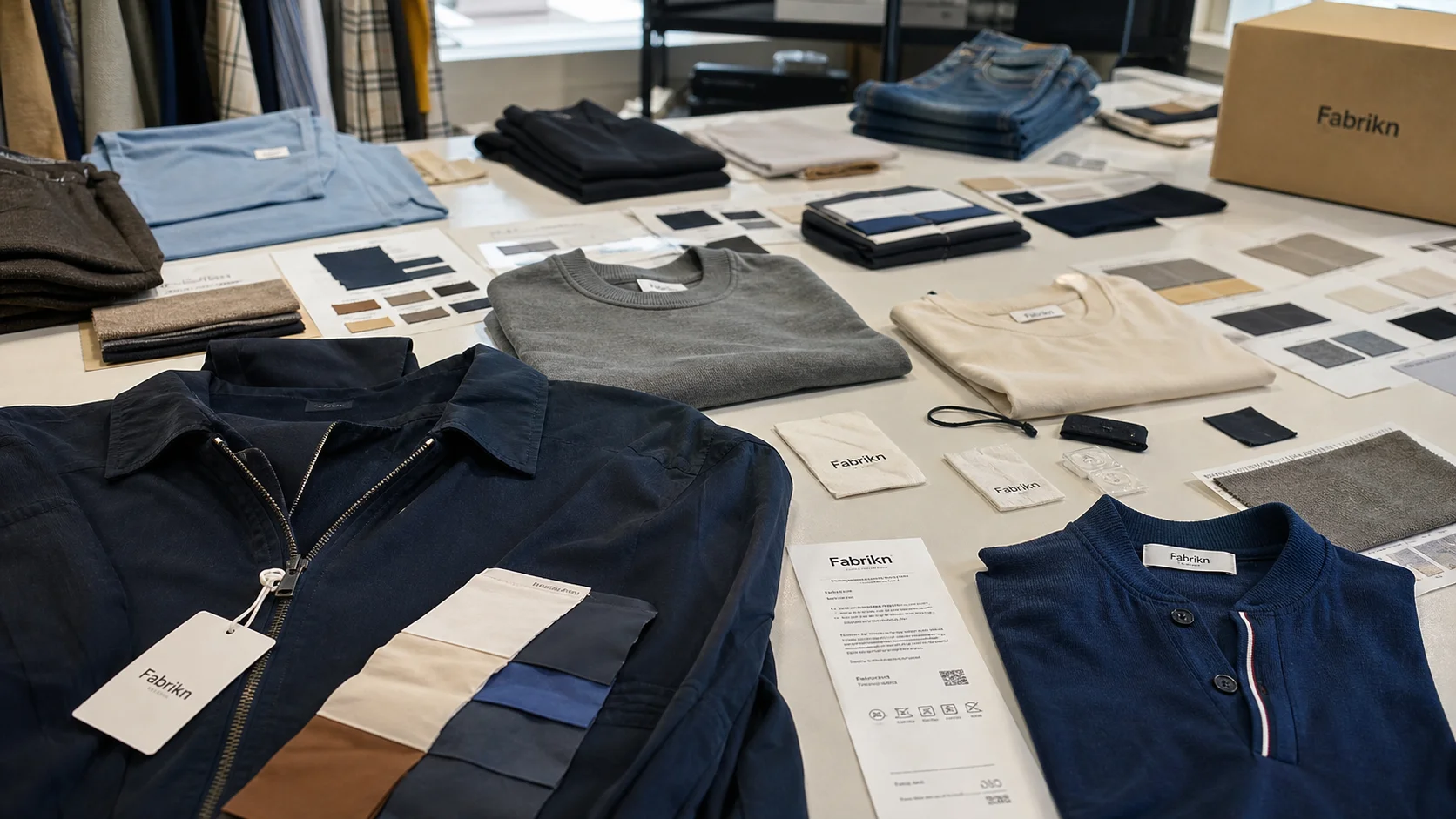
Mailer Bags for Clothing Shipping compared by sample evidence, fabric or trim specs, MOQ, AQL terms, cost lines, delivery timing, and rework responsibility.
Fast answer: Mailer Bags for Clothing Shipping: Material, Print, MOQ, and QC Terms should be judged by production evidence, not by a generic sourcing promise. The buyer needs sample proof, cost breakdowns, QC checkpoints, and delivery buffers in writing.
Ask for recent sample photos, measurement tolerances, fabric or print test assumptions, decoration test notes, packing examples, and a named inspection checkpoint. These details show whether the team can repeat an approved sample at bulk volume.
Separate garment cost, decoration, labels, packaging, sampling, testing, freight, and rush charges. Clear cost lines make it easier to reduce colorways, adjust size depth, or reserve more time for sampling.
One flimsy mailer can wipe out the savings from a thousand careful purchase decisions. Across 200 factory visits in 8 countries, I kept seeing the same expensive lesson: a bag that costs $0.08 can trigger a $7.50 return, a $12 reship, and a customer who never orders again. That is why how to choose mailer bags for clothing shipping is not a packaging footnote. It is margin protection, damage control, and brand psychology squeezed into one thin sheet of film or paper.
Factory teams in Vietnam, Turkey, and Portugal described the problem from different angles, but it was still the same problem. Tees folded in 320 GSM French terry often travel fine in 2.5 mil poly mailers. Denim with metal hardware does not. It needs thicker walls and stronger seals. Premium DTC brands selling $68 hoodies expect a cleaner hand-feel, while discount basics priced at $9.99 can survive a plain mailer if the fit is tight and the seal is honest.
In Los Angeles warehouses and Leicester distribution centers, the bag itself was rarely the only issue. Stacking pressure, corner crush from mixed cartons, and last-mile handling turned decent mailers into torn ones. A box may sit on a pallet for 3 weeks, then get dragged through rain, then compressed under 18 other parcels. If your mailer cannot survive that chain, the cheapest unit price becomes the priciest decision.
Protection, cost, branding, sustainability, fulfillment speed — that is the framework. Ignore one and the others wobble. I have seen brands obsess over printed logos while skipping seal strength, or choose compostable film with a 5-6 month shelf life that fails after humid storage. If you sell babywear, custom baby clothing manufacturing often comes with softer presentation expectations and tighter contamination standards, which pushes packaging higher on the priority list.
Lightweight basics behave differently from structured apparel, and a one-size-fits-all approach quietly raises returns. A 150-200 gsm cotton tee can fit in a slim 9 x 12 inch mailer with minimal void space. A chunky knit, by contrast, may need 14 x 19 inches, because trapped air and folded sleeves make the parcel thicker than the garment weight suggests. If you are mapping how to choose mailer bags for clothing shipping, start with the folded dimensions first and the shipping weight second.
For tees, underwear, leggings, and other low-bulk items, poly mailers stay the cheapest reliable choice at roughly $0.06-0.18 per unit in volume orders of 5,000 to 20,000 pieces. Sweaters and fleece ask for more — a stronger film or a paper mailer with a reinforced seam, especially if the item weighs 500-900 grams. Structured pieces such as shirts with collars, blazers, or lightweight jackets need cleaner folding and sometimes a rigid insert to protect shape.
Delicate items need secondary protection inside the bag. Tissue wrap, a garment sleeve, or a thin inner polybag keeps embellishment from scuffing against zipper teeth and buttons. I have seen silk-blend blouses arrive perfect in a padded mailer at $0.22 each, while the same garment in a loose oversized bag picked up crease marks and dirt at the corners. The bag is not the whole answer, but it is the first line of defense.
What many buyers miss: a smaller mailer can outperform a larger one even when the material is identical. A packed 10 x 13 inch bag with 5 mm of slack resists sliding damage far better than a roomy 12 x 15 inch bag, and it usually saves 20-40 grams in postage weight. That matters for brands shipping 2,000 to 10,000 units a month. If your brand uses private label clothing services, packaging should be matched to the exact folded spec, not guessed from a sample room table.
Virgin plastic still wins on water resistance and puncture tolerance. Recycled-content poly mailers are close behind, though quality varies wildly: 30% post-consumer resin can perform well, while low-grade recycled blends sometimes have pinholes, weak seals, or inconsistent opacity. Paper mailers look cleaner on a sustainability pitch deck, yet they absorb moisture, scuff faster, and often require more material to match the same tear resistance.
Textile Exchange data shows how seriously apparel brands now track material claims, and packaging buyers should be equally exact. A recycled-content claim needs resin source details, not just a green tint and a leaf icon. I have audited suppliers who said “eco-friendly” on the quote and could not provide a test report, let alone an ISO or ASTM reference. If you are sourcing from a manufacturer or factory in China, ask the supplier for material traceability before you compare price alone.
Compostable mailers deserve careful scrutiny. Certified compostable bags can work for certain brands, but they need proper storage, usually away from heat and humidity, and they have a shelf life that can be 6-12 months, not 3 years like conventional poly. They also contaminate recycling streams if customers toss them in the wrong bin. A badge on the outside does not fix bad disposal behavior. For any wholesale or bulk program, the production window and warehouse conditions matter as much as the claim.
Sustainability red flags are easy to spot in factories: vague recycled-content percentages, non-certified compostables, and supplier certificates that do not name the testing body. Ask for tensile strength data, seal integrity results, resin source details, and third-party certifications. For packaging used alongside cut and sew manufacturing, I push teams to request the same discipline they would demand for fabric audits. The bar should not drop because the product is thinner than a T-shirt. For third-party verification, see OEKO-TEX certification standards and U.S. Trade and market guidance for sourcing and compliance context.
Dimensions decide more than appearance. They affect freight, seal quality, and how much the garment shifts in transit. I start by measuring the folded item, then adding 10-20 mm for seams, inserts, and a return label. A men’s hoodie folded to 11 x 14 inches does not belong in a 12 x 14 bag if the zipper pull can punch through the side seam during compression.
Thickness, often listed in microns or mils, changes puncture resistance and touch. A 2 mil bag is fine for very light apparel in short domestic routes. A 3-4 mil bag handles heavier knits and mixed handling better. By 5 mil, you are paying for serious durability, which can be worthwhile for boots, denim, or export orders that move through multiple sorting hubs. The bag should feel firm, not brittle.
Closure types matter more than buyers expect. Self-seal strips are fast and cheap, but adhesive quality varies after 90 days in warm storage. Peel-and-seal closures are cleaner and usually more secure. Zip closures are reusable, though they add cost and time at packing stations. Tamper evidence is useful for premium goods, especially if the parcel passes through 2 or 3 carriers before delivery.
Oversizing hurts twice. It increases dimensional weight on some carriers and lets the product slide, which causes corner abrasion and pressure marks. Undersizing is worse in a different way: the seam stretches, the glue fails, and the parcel tears at the weakest point. I recommend drop tests from 1 meter, compression tests under 15-20 kg for stacked cartons, and seal pull checks on every new lot. That is the most practical way to apply how to choose mailer bags for clothing shipping in a real warehouse.
A bag priced at $0.09 is not automatically cheaper than one priced at $0.15. At 10,000 units, a lighter mailer can cut postage by $0.18 to $0.42 per parcel if it keeps dimensional weight down, and that swamps the unit price difference. I have seen brands save $3,000 to $8,000 a month simply by changing bag size and thickness together.
MOQ and lead time shape the real bill. Overseas sourcing can bring unit costs down to $0.05-0.12 for basic poly mailers at 20,000-piece runs, but freight, duties, and 6-10 week lead times add risk. Local suppliers may quote $0.14-0.28, yet they can deliver in 7-14 days, which matters if your sales spike every 3 weeks. Warehousing is a cost too, especially when minimum cartons pile up.
I build ROI using five inputs: unit price, postage impact, damage rate, storage cost, and replacement rate. If a premium mailer reduces damage from 2.4% to 0.8% on 5,000 monthly orders, the savings can pay for a stronger material within one quarter. That is before counting the refunds, which often cost more than the product itself.
Brands with complex product lines should separate by category. A lightweight basics line may justify a cheap poly bag, while limited-edition jackets deserve a more expensive closure and better print. This is where private label teams often lose money by standardizing everything. The best packaging buys are boring on the spreadsheet and quiet in the returns queue, whether you buy custom, wholesale, or bulk.
Packaging signals price before the garment is touched. Matte black mailers with crisp white print read premium at $38 to $120 price points. Bright white or kraft-paper finishes suggest transparency and restraint. Cheap glossy bags with fuzzy logos do the opposite. I have watched shoppers on live returns desks judge a $65 top as “low quality” before opening it, purely because the mailer looked careless.
Plain mailers can work for discount basics, but branded prints and custom inserts change perceived value fast. A small insert with size guidance, care instructions, or a QR code can reduce complaint emails by 10-15% in my experience. It also improves social sharing. Customers post packaging that feels intentional. They do not post packaging that looks like a supermarket sack.
Print quality and lead time must be planned together. A one-color print usually needs 2-3 weeks, while multi-color custom work can take 4-6 weeks and require 3,000-10,000 piece minimums. Artwork changes midseason are expensive, so I tell brands to keep one evergreen design and reserve special editions for low-risk capsules. That is especially useful for brands scaling through get a free quote conversations before committing to a large packaging run.
Sustainability messaging should be specific. Say “made with 40% post-consumer recycled content” or “certified compostable to ASTM D6400,” not “eco-conscious.” Buyers can spot vague language instantly. If you promise less waste, the mailer should actually weigh less, use certified materials, or travel fewer miles. Otherwise the claim becomes decoration, and customers notice.
Start with samples, not promises. Ask for 3 to 5 bag options in the exact size range you need, then test fit with your heaviest folded SKU, your most delicate SKU, and one awkward shape with hardware or embellishment. Check seal strength, label adhesion, scuffing, and water resistance. A bag that looks good on a desk can fail after 48 hours in a hot depot.
Run a pilot shipping test across 2 or 3 routes: local, cross-country, and one weather-exposed lane if you can. I like 50 to 100 parcels per variant. Track tear rate, customer complaints, transit time, and whether the bag opens cleanly on arrival. Compare suppliers on a simple scorecard: price 25%, quality 35%, sustainability proof 20%, turnaround 10%, and communication 10%.
The thing nobody tells you: ask for an extra 5% of each order as a holdback sample. If the shipment arrives after 8 weeks and the bags smell odd, stick, or cloud under heat, you will be glad you kept evidence. I have seen that tiny reserve save brands from reordering 15,000 unusable units.
For smaller brands, a sensible timeline is 7 days for sampling, 10-14 days for approval, and 2-4 weeks for production on local orders. Larger retailers should plan 8-12 weeks, especially if custom print plates or imported resin are involved. If you want a packaging review tied to garment specs and fulfillment volume, you can always get a free quote and compare options before the next buy. That is the practical finishing step in how to choose mailer bags for clothing shipping without overspending.
For tees under 250 grams, a 2-3 mil poly mailer in a tight size such as 9 x 12 inches usually works well. Allow 10-20 mm for folds and a return label, and test 20 to 50 units before placing a full order.
Basic poly mailers often cost $0.05-0.12 at higher volumes, while recycled-content or branded options can run $0.12-0.28. Paper or compostable versions usually cost more, especially at low MOQs of 500 to 2,000 pieces.
Use a larger format, usually 12 x 15 inches or 14 x 19 inches, and look for 3-5 mil thickness with strong seams. Heavy knits and hoodies benefit from reinforced closures and a little internal tissue or a sleeve to stop abrasion.
Yes, but only if the product is certified and your storage conditions are controlled. Compostable mailers can have a shelf life of 6-12 months and may fail in high humidity, so ask for certification and performance data before buying.
Local printed mailers can take 2-4 weeks after approval, while overseas orders often need 6-10 weeks. Build in 7 days for sampling and another 10-14 days for sign-off if artwork, size, or material is being changed.