
Size Gradation for Custom Team Uniforms compared by sample evidence, fabric or trim specs, MOQ, AQL terms, cost lines, delivery timing, and rework...
Fast answer: Size Gradation for Custom Team Uniforms: Tech Pack, Sample Gate, MOQ, and QC Terms should be judged by production evidence, not by a generic sourcing promise. The buyer needs sample proof, cost breakdowns, QC checkpoints, and delivery buffers in writing.
Ask for recent sample photos, measurement tolerances, fabric or print test assumptions, decoration test notes, packing examples, and a named inspection checkpoint. These details show whether the team can repeat an approved sample at bulk volume.
Separate garment cost, decoration, labels, packaging, sampling, testing, freight, and rush charges. Clear cost lines make it easier to reduce colorways, adjust size depth, or reserve more time for sampling.
How to Choose Size Gradation for Custom Team Uniforms - Custom Clothing manufacturing guide
Choosing size gradation for custom team uniforms is one of those things that looks simple on paper and turns into a mess the moment the first bulk order lands on the cutting table. I have seen it happen many times. A coach sends over “sizes from XS to 3XL,” the factory makes a standard jump chart, and then half the team says the shoulders feel tight while the larger players drown in extra fabric. The problem is rarely the sewing. It is usually the gradation plan.
If you are ordering for a sports club, school, corporate team, or performance group, the right size gradation keeps uniforms looking consistent, moving comfortably, and fitting real people instead of a theoretical size range. That matters for appearance, yes, but it also affects mobility, confidence, and how long the uniform lasts under stress.
In this guide, I’ll break down what size gradation actually means, how it works across different garment types, and what to ask your manufacturer before production starts. I’ll also share practical charts, cost considerations, and the mistakes I see most often in custom uniform projects.
Size gradation is the step-by-step adjustment of a garment pattern from one size to the next. It is not just “making it bigger.” Good grading changes the right measurement points in the right proportions so the garment still hangs correctly as it scales up or down.
For example, a medium team jersey may be adjusted to a large by adding width at the chest, slight length at the body, a bit more sleeve opening, and subtle changes at the shoulder. The same piece should not just become a stretched-out version of the medium. That is lazy grading. It creates odd proportions, baggy necklines, and sleeves that twist when athletes move.
In custom uniforms, size gradation usually starts from a base pattern, often a medium or a sample size, and then is extended into a size set like XS to 3XL, or even 2XS to 5XL depending on the team.
Team uniforms are worn by multiple body types at the same time, and that is exactly why gradation matters so much. A single team can include slim players, broad-shouldered players, youth athletes, and adults with very different proportions. The same applies to corporate teams and event staff. One fit standard rarely works for everyone.
When the gradation is wrong, the issues show up fast:
I have seen clubs spend money on premium fabric and embroidery, then undermine the whole order with poor sizing logic. That is a painful mistake because it is usually avoidable with one good pre-production fitting review.
The right gradation depends on who will wear the uniform, how the garment is used, and what silhouette you want. A basketball jersey needs different sizing behavior than a fitted polo for a sales team. A cricket shirt should allow shoulder mobility. A track jacket needs different balance at the chest and sleeve than a basic tee.
Collect actual wearer data if you can. Heights, chest ranges, waist ranges, and age groups matter. If you are outfitting a youth team, the grade should account for stronger jumps between smaller sizes because kids change proportions quickly. For adult teams, the size spread is often broader, so you need more careful grading in the chest, hip, and body length.
The base size is the foundation for the whole run. In many factories, medium is the base because it is easy to scale up and down. That works for standard adult teams. For women’s uniforms, a small or medium women’s block may be more realistic. For youth programs, the base can be adjusted around age-specific measurements instead of adult standards.
Loose-fit uniforms tolerate slightly larger grade increments. Slim-fit uniforms need finer control. A compression-style top might only gain 2 to 3 cm in chest width from one size to the next, while a relaxed training tee may gain 4 to 6 cm. Jackets often need more room in the body and armhole than knit tops do.
Knit fabrics stretch and recover. Woven fabrics do not. That changes everything. A polyester mesh jersey can tolerate smaller grade steps because the fabric gives a little during wear. A woven baseball shirt or formal team blazer needs more exact width and length adjustments because the garment has less natural flexibility.
This is one of the smartest steps in the entire process. Ask the manufacturer for a size set sample, not just one showroom sample. Seeing the grading across several sizes makes it easier to spot problems before bulk production. If the medium looks right but the 2XL pulls too hard at the chest, you catch it early.
If you are comparing production partners, it helps to look at a manufacturer’s process first. You can review details on custom clothing services, ask questions through contact us, or learn more about the team behind the work on about us.
Different garments need different size logic. There is no universal formula that works perfectly for every team uniform. A proper factory will adjust the grade based on construction, fabric, and end use.
Garment Type Typical Chest Step Typical Length Step Notes Performance T-shirt 4-6 cm 1-2 cm Works best with knit fabric and athletic fit. Team Jersey 4-5 cm 1-2 cm Allows movement without looking oversized. Polo Shirt 4-5 cm 1-2 cm Collar and placket must stay balanced across sizes. Track Jacket 5-7 cm 2-3 cm Needs extra room at armhole and sleeve head. Shorts 3-5 cm at waist 1-2 cm Waist elastic and drawcord change fit tolerance. Woven Uniform Shirt 4-6 cm 1-2 cm Less stretch means cleaner pattern control is critical.Sports teams need a grade that supports movement first. Shoulder mobility, chest room, and armhole comfort are usually more important than a fashion-tight silhouette. For basketball, volleyball, football training, and similar active uniforms, I usually recommend a slightly more generous upper-body grade and a controlled body length so the shirt does not become sloppy.
For shorts, the waist and rise matter more than a fashion waistline. A team short should stay secure when players sprint, crouch, or jump. If the grading is too aggressive in the rise, the shorts can feel short in larger sizes or sit too high on smaller wearers.
These need a cleaner, more consistent look across body types. Fit should be neat but not restrictive. In my experience, many brands choose a “safe” grade and then wonder why the shirt looks boxy on one employee and tight on another. The answer is almost always to refine the grade by size group rather than forcing one generic chart.
Youth sizing is its own world. Kids do not scale like adults. One size jump can feel huge in the torso but barely noticeable in the shoulders. For youth teams, the grading should reflect age range, growth room, and activity level. A little extra ease is usually helpful, especially if the uniform needs to last through a full season.
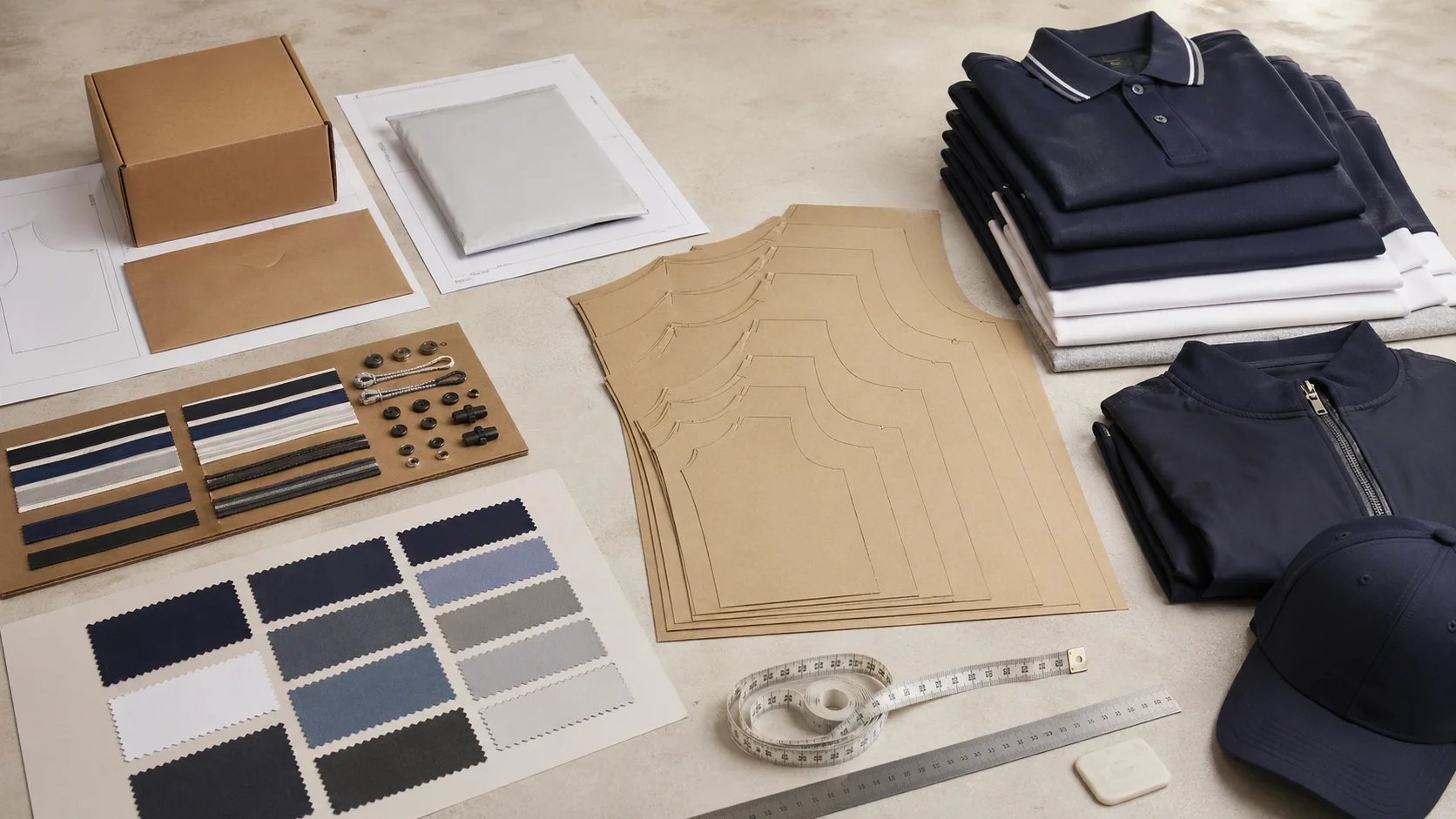
In a solid cut-and-sew factory, the grading process starts with the approved base pattern and measurement specification sheet. The pattern maker then marks the points that will change across sizes: chest, waist, hip, shoulder, sleeve length, bicep, body length, and sometimes neck opening.
A typical mid-size factory making 500 to 1,500 custom pieces per order will often use digital pattern software for grading, then confirm the result with manual checks. That matters. Software is fast, but it is only as good as the operator and the base block.
Here is how I usually see the best workflow handled:
A good factory will not rush this stage. A poor factory will tell you “don’t worry, size grading is standard.” That phrase makes me nervous. Standard is not the same as correct.
The best gradation charts are boring in the best possible way. They look intentional, balanced, and almost invisible when the uniform is worn. The worst ones are the charts nobody questions until production is already halfway done.
Let’s say your team jersey base size is medium with a 104 cm chest, 70 cm body length, and 44 cm shoulder width. A practical grade for a performance knit jersey might look like this:
Size Chest Body Length Shoulder Fit Note XS 96 cm 67 cm 40 cm Trim, youth-friendly fit S 100 cm 68.5 cm 42 cm Balanced athletic fit M 104 cm 70 cm 44 cm Base size L 109 cm 71.5 cm 46 cm Slightly roomier for movement XL 114 cm 73 cm 48 cm Good upper-body balance 2XL 120 cm 74.5 cm 50 cm Comfort fit without distortionThis is not a universal chart. It is an example of balanced grading. A different sport, fabric, or target market may need tighter or looser increments. That is why one-size-fits-all thinking causes so much trouble.
There are a few mistakes I see again and again. They are easy to avoid once you know what to look for.
A jersey, a polo, and a jacket cannot all use the same grade logic. The pattern shape, seam structure, and fabric behavior are too different.
People do not get bigger in one perfectly even way. Chest, waist, shoulder, arm length, and torso length do not always scale together. If you only increase width, the garment can look short. If you only increase length, it can look narrow and awkward.
This is a costly shortcut. A fit test with 3 to 5 people from the target group can reveal issues that a paper spec sheet never will. I would rather delay bulk production by two days than remake 300 uniforms after delivery.
Some factories make large sizes too roomy because they are afraid of complaints. That creates a tent effect. Bigger sizes should be proportionally balanced, not oversized just for comfort.
Small and extra-small garments often get neglected. The result is a shirt that looks like a shrunken medium rather than a true smaller size. That is especially obvious in youth and women’s team orders.
My honest opinion: this is where many low-cost suppliers cut corners. They will quote a good price, but the size system is built for convenience, not performance. It shows immediately on a real team.
Size gradation itself is not usually the most expensive part of custom uniform production, but it does affect the total cost structure. If the pattern needs more development time, sample revisions, or size set approvals, the order becomes slower and slightly more expensive.
For a typical custom uniform order, grading and pattern development may add anywhere from $20 to $80 in development fees for a simple run, or more for technical sportswear, depending on complexity and how many sizes need to be created. In larger production runs, that cost is often absorbed into the factory’s quote. For smaller batches or highly customized fits, it may appear as a separate line item.
Timelines also shift. A basic size run with a stable pattern may take 7 to 10 days for sampling and 2 to 4 weeks for production after approval. A more complex team uniform with detailed grading, custom fabric, and embroidery can stretch to 4 to 6 weeks or longer, especially if you request a full size set sample review before cutting bulk.
If a supplier promises a fully custom fit system, multiple design options, and rushed turnaround in a few days, I would question the quality control. Good grading takes a little time. That is normal.
The right manufacturer will ask questions before they quote you a size chart. That is a good sign. They should want to know the sport, target gender mix, size range, fabric type, and whether the uniforms need a relaxed or fitted look.
When you speak with a factory, ask these questions:
If the answers are vague, that is a warning sign. A professional team should be able to explain their process clearly. If you want to see how a capable partner frames the service, the team at Fabrikn services gives a useful starting point, and you can always reach out through contact us to discuss your exact size run.
Strong factories also document measurements after cutting and sewing. In a well-run facility, the QC team checks key points at pre-production, inline inspection, and final inspection. That is how they keep the gradation consistent across an order of 200 pieces or 2,000 pieces.
So what size gradation is needed for custom uniforms across teams? The short answer is: enough variation to fit real people, but not so much that the silhouette loses identity. The long answer depends on the garment, the fabric, and the team’s actual body profile.
For most custom team uniforms, I recommend:
That approach keeps the uniforms practical and visually consistent. It also reduces remakes, which is something every buyer cares about once the budget is on the table.
If you are building a team program from scratch, I would strongly suggest treating size gradation as part of the design phase, not an afterthought. The best-looking uniform in the world still fails if the players cannot wear it comfortably.
Get a free quote from Fabrikn — your trusted B2B clothing manufacturer with 10+ years of experience. MOQ as low as 200 pieces.
Get a Free Quote →The best gradation depends on the garment and target group, but most team uniforms work well with 4 to 6 cm chest increments, balanced by smaller changes in length and shoulder width.
No. Jerseys, polos, jackets, shorts, and woven shirts each need different grading logic because fabric behavior and garment structure are different.
Only if the team is truly uniform in body type, which is rare. Mixed teams usually need separate women’s or unisex grading options for better fit.
A practical starting point is XS to 3XL for adult teams, or a youth-specific run if the group is under 18. The final size spread should reflect real wearer data.
Yes, and you should. A good manufacturer can adjust the grade based on your target fit, fabric, and wearer profile.
For simple orders, grading and pattern development may add a modest fee, often around $20 to $80 or bundled into the price. Complex technical uniforms can cost more.
Basic size approval can take a few days. Size set samples and revision rounds can extend the timeline to one to two weeks before bulk production begins.
If you want a deeper conversation about fit, material choice, and production scheduling, the team at about us can help you understand how a factory handles custom uniform development from first pattern to final packing.