
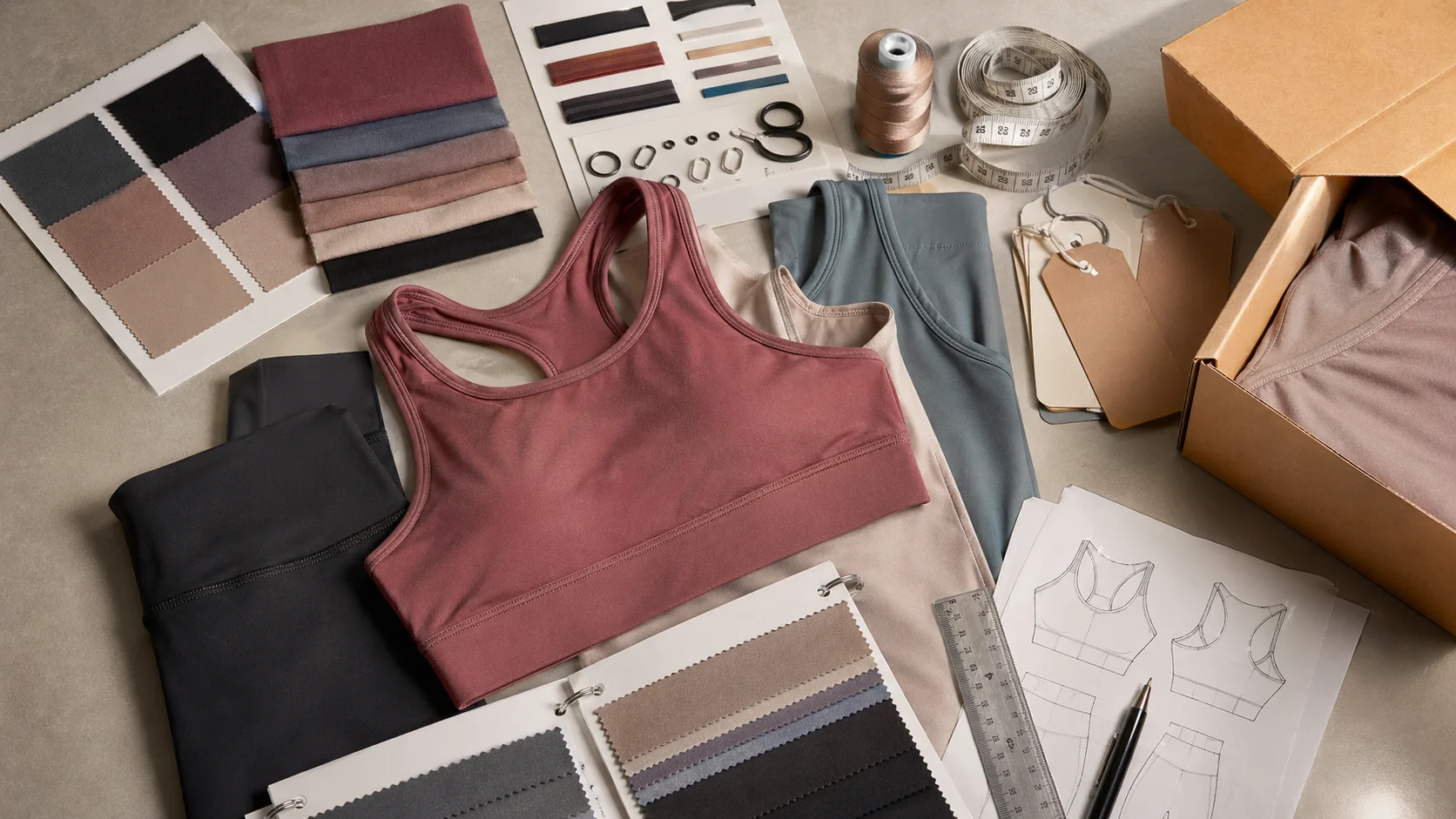
The Right Sizes for A Custom Clothing Order compared by sample evidence, fabric or trim specs, MOQ, AQL terms, cost lines, delivery timing, and rework...
Fast answer: The Right Sizes for A Custom Clothing Order: Tech Pack, Sample Gate, MOQ, and QC Terms should be judged by production evidence, not by a generic sourcing promise. The buyer needs sample proof, cost breakdowns, QC checkpoints, and delivery buffers in writing.
Ask for recent sample photos, measurement tolerances, fabric or print test assumptions, decoration test notes, packing examples, and a named inspection checkpoint. These details show whether the team can repeat an approved sample at bulk volume.
Separate garment cost, decoration, labels, packaging, sampling, testing, freight, and rush charges. Clear cost lines make it easier to reduce colorways, adjust size depth, or reserve more time for sampling.
Choosing the right sizes for a custom clothing order is one of the most important steps in creating apparel that customers, employees, or event attendees will actually wear and enjoy. A great design can still fail if the sizing is off. Too small, and you risk returns and complaints. Too large, and the garment may look unprofessional or feel uncomfortable. For brands, businesses, and organizations ordering custom clothing, sizing decisions directly affect customer satisfaction, production efficiency, and overall profitability.
If you are planning a custom apparel project, the goal is not simply to “pick a few sizes.” It is to build a sizing strategy that matches your target wearer, your garment type, and your production budget. That means understanding your audience, choosing the right measurement system, and working closely with your manufacturer to create a size range that reflects real-world needs. In many factories, a standard T-shirt program at 500 MOQ may be quoted at about $2.50-4.00 per unit for basic combed cotton jersey, while a garment with garment-dyeing, embroidery, or heavier GSM fleece can move significantly higher.
This guide explains how to choose sizes for custom clothing order projects with confidence. Whether you are ordering branded uniforms, promotional shirts, private-label fashion, or custom merchandise, these steps will help you reduce fit issues and improve the final result. If you need support from an experienced clothing manufacturing partner, explore our services or get in touch through our contact page. Depending on the factory and location, sampling usually takes 7-10 business days and bulk production is often 18-22 business days after lab dip, size set, and PP approval.
Sizing is more than a technical detail. It is a business decision. When garments fit well, they are more likely to be worn often, which increases brand visibility, employee comfort, and customer satisfaction. When garments fit poorly, they are more likely to be returned, exchanged, discarded, or left unused.
For B2B buyers, sizing also affects inventory planning. A custom order that includes too much of one size and too little of another can create waste and extra cost. In contrast, a balanced size run can improve sell-through, reduce reordering problems, and support more accurate forecasting. In export manufacturing hubs such as Guangzhou, Dhaka, Ho Chi Minh City, and Istanbul, brands often request size breakdowns based on local market data rather than a one-size-fits-all chart.
Good sizing is especially important for:
In short, if your apparel is meant to be worn by real people, sizing should be planned with as much care as design and fabric selection. Factories with GOTS, OEKO-TEX Standard 100, WRAP, BSCI, or GRS certification are often preferred when the order uses organic cotton, recycled polyester, or chemical-sensitive materials.
Before you decide on sizes, you need to define the intended fit. The same size label can mean very different things depending on the garment and the desired style. For example, a relaxed-fit hoodie and a tailored button-down shirt cannot follow the same fit logic.
Start by asking these questions:
Defining the fit goal early helps your manufacturer draft patterns with the right ease and proportions. It also helps you avoid the common mistake of relying on generic size labels without clarifying how the final garment should actually feel on the body. For example, a 180 GSM single jersey T-shirt with 2-3 cm of chest ease may feel like a standard fit, while a 320-350 GSM French terry hoodie with a brushed back and dropped shoulder can be intentionally oversized.
If you are unsure how to translate your fit vision into a production-ready product, a manufacturer with product development support can help. Learn more about our company and approach on our about us page.
There are several ways to approach sizing for a custom clothing order, and the best method depends on your audience and order size. Most brands and companies use one of the following approaches:
This is the most common method. You offer standard sizes such as XS to XXL or S to 3XL, based on your market and garment type. This is efficient for most apparel programs because it is easy to understand, simple to manufacture, and familiar to wearers.
Numeric sizing, such as 2, 4, 6, 8, or 30, 32, 34, is often used for fashion garments, trousers, tailored apparel, and some region-specific markets. It gives more precision but may require stronger size chart support.
For special projects, team uniforms, made-to-order garments, or premium fashion collections, you may use actual body measurements or garment measurements. This method offers the highest level of fit accuracy but may require more coordination and larger development effort. Many factories will build the first sample using a base pattern in a CAD system such as Gerber or Lectra, then adjust the spec after the initial fit test.
For bulk orders, you may distribute quantities based on historical sales data or a standard size ratio. For example, a company may order more M and L than XS and XXL. This approach is useful when you do not have individual wearer data.
The right method depends on whether your project is mass-produced, customer-facing, employee-specific, or fully custom-made. In practice, many suppliers in Guangzhou or Ho Chi Minh City will recommend a ratio like 1:2:3:2:1 across S-M-L-XL-XXL for general retail tees, while uniform programs in Dhaka often require tighter control around chest and shoulder measurements for consistent team presentation.
If your custom clothing order depends on sizing accuracy, measuring correctly is essential. Small errors in measurement can create large fit problems once production begins. Whether you are measuring individuals or developing a size chart, consistency is critical.
Body measurements are taken directly from the person who will wear the garment, such as chest, waist, hip, inseam, or shoulder width. Garment measurements are the measurements of the finished piece. Both are useful, but they are not interchangeable.
Manufacturers often use garment measurements to build patterns and samples, while buyers may use body measurements to determine which sizes to order. You should always confirm which measurement system your supplier uses. For woven shirts, factories typically measure across the chest, across the shoulder, front length, sleeve length, and armhole; for knitwear, they may also track hem opening, rib stretch, and after-wash shrinkage.
For teams, employees, or customer groups, it is helpful to use a standardized measurement form. This keeps data organized and reduces confusion during production planning. Many factories will also request a tolerance sheet, such as +/- 1 cm for knitwear and +/- 1.5 cm for woven garments, to define acceptable variance before bulk cutting.
One of the biggest decisions in choosing sizes for a custom clothing order is determining the size range. A size range should reflect the actual people who will wear the garment, not just an idealized chart.
To build a practical size range, consider the following:
For example, a retail brand may need a broader range than a company ordering uniforms for a specific workforce. A promotional T-shirt might be limited to S to XXL, while a fashion collection may need XXS to 4XL or a more detailed numeric range. For a 500-piece MOQ, a common size split might be 5% XS, 20% S, 30% M, 25% L, 15% XL, and 5% XXL, though this changes by market and gender mix.
It is also wise to include a small buffer in your size run. If your customer or employee base is diverse, carrying too narrow a size range can leave out important users and reduce the value of the order.
Not all clothing fits the same way, even when the size label is identical. The product category, pattern shape, and fabric behavior all influence sizing decisions.
A T-shirt, polo, hoodie, jacket, trouser, and dress each have different fit expectations. For example, knitwear often has more stretch and forgiveness than woven garments. Tailored pieces typically require more precise size grading than casual basics. A camp-collar rayon shirt, a 280 GSM loopback hoodie, and a twill work jacket all need different grading logic.
Fabric can dramatically affect fit. Stretch fabrics may allow a slimmer pattern, while rigid woven fabrics may require more ease. Shrinkage, drape, recovery, and thickness all matter. Your manufacturer should account for how the material behaves after washing, wearing, and repeated use. Common materials include 100% combed cotton, cotton-poly 60/40 fleece, organic cotton jersey, recycled polyester interlock, viscose, Tencel, and 2-way or 4-way spandex blends.
Style details also change the fit profile. Features such as dropped shoulders, oversize pockets, elastic waistbands, raglan sleeves, pleats, or curved hems affect how the garment sits on the body. Construction choices also matter: a flatlock seam on activewear, overlock stitching on knit tees, or double-needle topstitching on denim can alter comfort and stretch recovery.
For example, a fleece hoodie with brushed interior may need extra sleeve length to account for shrinkage after the first wash, while a viscose blouse may require more room in the bust and armhole because the fabric has limited recovery. Always align the sizing chart with the actual material and construction method, not just the style name.
Fit samples are one of the best ways to validate sizing before bulk production. A sample lets you see how the garment looks and feels on a real body or mannequin, and it gives you a chance to correct pattern issues early.
Common sample types include:
A size set is especially useful when you are producing garments across multiple sizes. It allows you to check grading between sizes, not just the base size. For instance, you can confirm whether shoulder slope, sleeve opening, waist position, and hem width scale correctly from S to XL.
If possible, test samples on different body types. This is especially helpful for fashion brands, uniforms, and activewear programs where comfort and movement matter. A factory in Istanbul or Guangzhou may offer faster sample turnaround for basic knits, while more complex wash treatments, embroidery, or bonded seams can add additional days.
Even experienced buyers make sizing mistakes. The good news is that most of them are preventable.
Another frequent issue is approving production before confirming tolerances, wash shrinkage, and measurement points. A reliable supplier should provide a tech pack, graded spec sheet, and clear measurement method before cutting any fabric.
Good sizing depends on strong collaboration with your manufacturing partner. Your supplier should do more than sew the product. They should help translate your fit goals into a production-ready size chart and advise you on grading, tolerances, and fabric behavior.
When communicating with your manufacturer, provide the following:
If your project requires specific compliance standards, ask about certifications such as GOTS for organic cotton, OEKO-TEX Standard 100 for tested materials, WRAP for social compliance, BSCI for supply-chain audit support, and GRS for recycled content. These certifications are especially useful for brands sourcing in Dhaka, Guangzhou, Ho Chi Minh City, or Istanbul where buyers often compare quality, compliance, lead time, and price side by side.
Clear communication reduces mistakes and speeds up production. It can also save money by minimizing sample rounds and avoiding costly rework. A well-prepared tech pack often includes stitch type, seam allowance, fabric GSM, color standard, print placement, washing instructions, and packaging requirements.
A size chart is one of the most valuable tools in any custom clothing order. It helps the buyer, supplier, and end user understand how the garment is intended to fit.
A useful size chart should include:
Make sure your chart is based on the actual construction of the garment. If the shirt is cut in a compact 20s single jersey, the measurements may differ from a 240 GSM pique polo or a brushed fleece hoodie. Similarly, a woven pant using a YKK zipper, waistband elastic, and bartack reinforcement will require a different fit spec than a stretch knit jogger.
It is also a good idea to compare your chart against a known reference brand or sample fit model. That way, you can align expectations before production begins. In many cases, the final size chart is refined after a fitting session, wash test, and tolerance review.
Before you approve bulk manufacturing, review this final checklist:
Final production should begin only after the spec sheet, sample approval, and size breakdown are all signed off. In a typical factory workflow, that means fabric sourcing, cutting, stitching, finishing, trimming, QC inspection, and packing are all aligned to the same approved measurements.
When these steps are handled correctly, your custom clothing order has a much better chance of delivering the fit, function, and value you expect.
What is the best size range for a custom clothing order? The best size range depends on your audience. For general apparel, S to XXL is common. For inclusive retail or fashion, you may need XXS to 4XL or a numeric system.
Should I use body measurements or garment measurements? It depends on your workflow. Body measurements are useful for choosing wearer's sizes, while garment measurements are better for pattern development and factory production.
How many samples do I need before bulk production? Most projects need at least one fit sample and one pre-production sample, though complex garments may need a size set and additional revisions.
Can my manufacturer help with sizing? Yes. A good manufacturer should help with grading, size charts, fit corrections, and tolerance planning. They can also advise on fabric shrinkage and construction details.
Do certifications matter for sizing? Yes, especially for brands that require verified material sourcing or social compliance. Certifications such as GOTS, OEKO-TEX Standard 100, WRAP, BSCI, and GRS can support product claims and buyer confidence.