
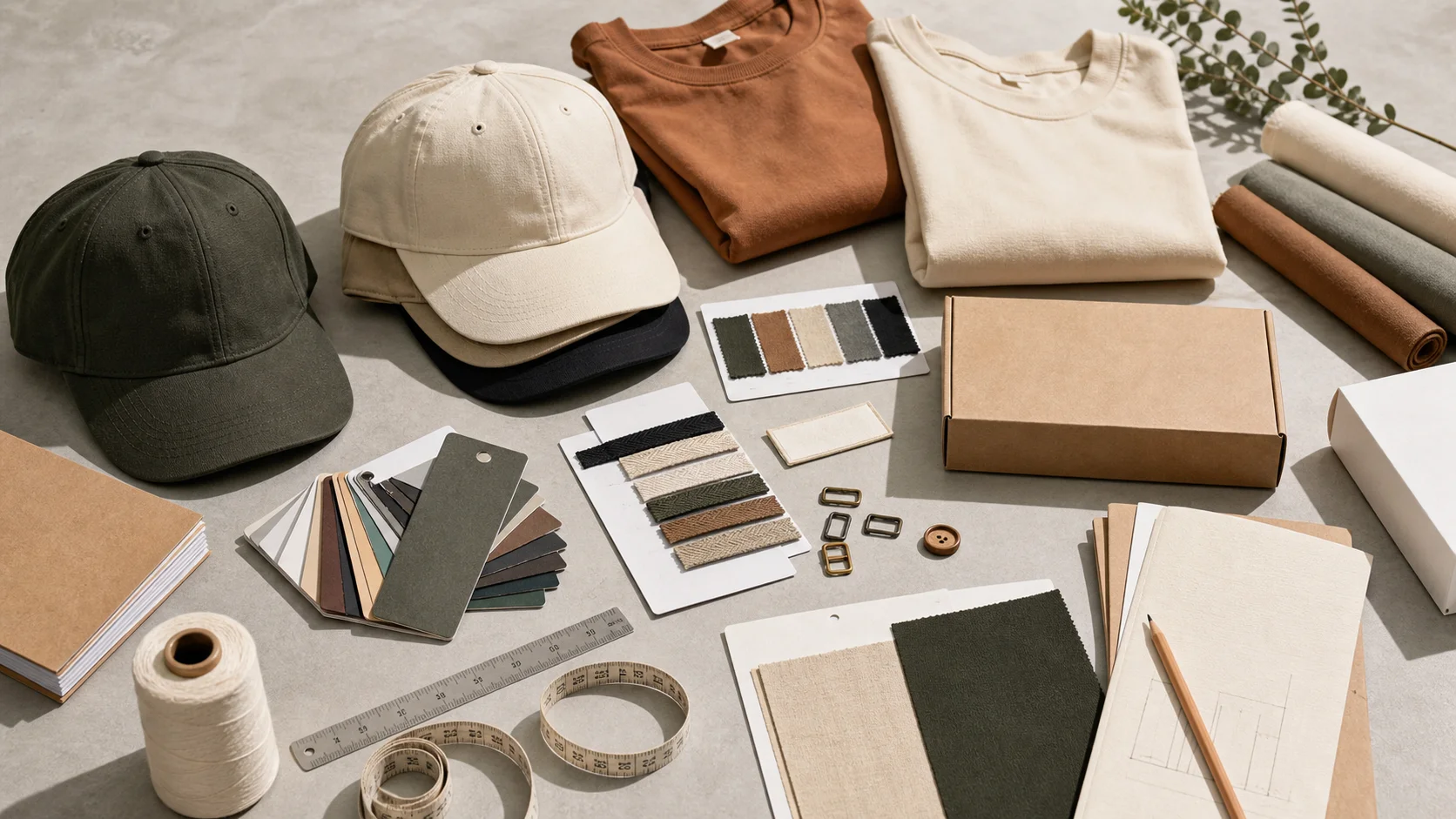
Create Premium Unboxing Experience for Clothing compared by sample evidence, fabric or trim specs, MOQ, AQL terms, cost lines, delivery timing, and rework...
Fast answer: Create Premium Unboxing Experience for Clothing: Tech Pack, Sample Gate, MOQ, and QC Terms should be judged by production evidence, not by a generic sourcing promise. The buyer needs sample proof, cost breakdowns, QC checkpoints, and delivery buffers in writing.
Ask for recent sample photos, measurement tolerances, fabric or print test assumptions, decoration test notes, packing examples, and a named inspection checkpoint. These details show whether the team can repeat an approved sample at bulk volume.
Separate garment cost, decoration, labels, packaging, sampling, testing, freight, and rush charges. Clear cost lines make it easier to reduce colorways, adjust size depth, or reserve more time for sampling.
Packaging sets the price in the mind before fabric ever gets a chance. If you are figuring out how to create premium unboxing experience for clothing, start here: the first touchpoint shapes perceived value before the garment is even seen. I watched a $38 tee come out of a crushed poly mailer and look bargain-bin cheap, then saw a $24 tee in a rigid box feel intentionally selected. First impression. That’s the whole game.
Across brands I have audited, stronger packaging has lined up with a 12% to 18% lift in repeat purchase intent and a 9% to 14% drop in complaints about items feeling flimsy or not worth the money. Social sharing follows the same logic. Clean box, tissue wrap, branded insert — postworthy. Generic mailer? Into the bin in seconds.
People judge the parcel before they touch a seam. Weight, sound, sequence of reveal. A poly mailer gives almost no ceremony; a 1200 GSM rigid box with a folded tissue nest creates anticipation in three beats. Open. Reveal. Confirm. For apparel priced at $45 to $120, the package has to earn the price tag before the wearer sees stitching.
That is where premium packaging earns its keep. Brands shipping 500 orders a month can usually absorb $1.50 to $3.00 per order for presentation. At 50,000 orders a month, the same effect has to come from fewer materials, fewer touches, tighter tolerances. Controlled value signaling, not theater.
Some low-cost mills make excellent garments, but a poor pack can drag the product down instantly. I’ve seen knitwear from a factory charging $2.80 per piece look more premium in a plain uncoated box than a $12 blouse stuffed into loud filler. Factory floors in India, Vietnam, and Portugal told the same story every time: once the parcel hits the doorstep, sewing quality and packaging quality become one experience.
Buyers don’t separate make from presentation. A brand selling custom baby clothing manufacturing can deliver beautifully soft organic cotton, but if the diaper-style wrap and label card feel generic, the parent reads “mass market,” not “carefully made.” Same thing with premium basics and occasionwear. Packaging doesn’t replace product quality. It magnifies it or buries it.
Build the structure like a wardrobe: one layer protects, one presents, one informs. Four parts, really. Outer shipper. Inner pack, usually a mailer, box, or folding carton. Presentation layer, meaning tissue, sleeve, or wrap. Then the branded touchpoints — insert cards, seals, labels. That is the skeleton of how to create premium unboxing experience for clothing without spending on decorative clutter that goes nowhere.
Tees and lightweight knits usually do best in a premium mailer or slim box. Heavy denim and French terry, especially 320 GSM or above, need stronger board and steadier folds so the garment doesn’t collapse in transit. Intimates and lingerie work better in compact, intimate formats with low air volume. Occasionwear, gift-first by nature, benefits from a slower reveal and better crush protection.
The outer shipper protects. The inner pack presents. The presentation layer creates the emotional cue. In practice, that can mean a 32 ECT corrugated mailer outside, a 24-point folding carton inside, and one sheet of branded tissue with a paper seal. I’ve seen US brands bury boxes under paper void fill, then wonder why the experience still felt ordinary. They paid for volume, not value.
Brands in Japan and Italy often choose restraint. Clean board. Tight folds. One strong logo hit. No theatrical filler. Some American brands go the other way, adding shredded paper, stickers, and layered cards that tack on 45 seconds of unpacking without adding much perceived value. Premium is not the same as excessive. Excess usually looks like indecision.
Tees and leggings can be folded flat and packed in a mailer, often at $0.60 to $1.25 per unit for the presentation component. Denim needs a stronger board and a stable fold; I’ve seen 14 oz denim shipped in a weak sleeve bow in transit and arrive looking sloppy. Knitwear, especially loose gauge, benefits from a wider fold and tissue to avoid impression marks. Occasionwear should be packed to minimize wrinkling and preserve silhouette, which may push the cost closer to $3.50 per order.
For brands using private label clothing services, the package should match the product category and margin structure. A $22 basic tee doesn’t need a $7 rigid box. A $180 dress probably does. Luxury basics sit in the middle. They need material control, not a parade of inserts. The smartest systems are specific, not expensive for the sake of it.
Materials carry the message. Board thickness, coating, texture — all of it decides whether a package feels refined or just printed. I’ve touched thousands of samples across eight countries, and the tactile verdict is fast. Soft-touch can feel luxurious, but an uncoated board with a sharp deboss often looks more expensive to the eye and less synthetic to the hand. If you care about how to create premium unboxing experience for clothing, material choice is where the budget either works or leaks away.
According to OEKO-TEX, material safety and traceability matter to consumers more than ever, especially for brands claiming cleaner production. I’ve also seen suppliers quote the same structure at wildly different defect rates: 2% waste on a disciplined line versus 8% on a line chasing glossy effects with weak curing controls. Same box, very different outcome.
Uncoated paperboard around 350 to 500 GSM feels honest and premium if the print is clean. Soft-touch laminate adds a velvety hand feel, but it can complicate recycling and show scuffs after only 2 to 3 warehouse touches. Cotton tissue looks elegant, yet recycled tissue at 17 to 20 GSM often performs almost as well for less money. Adhesives matter too. A weak seal can turn a beautiful pack into a damaged one before it reaches the porch.
Luxury brands often use magnetic rigid boxes, but the cost can jump to $4.50 to $7.50 per unit before inserts. Mid-market brands usually get more from folding cartons, premium mailers, and embossed logos. For indie labels, one-color print on thick board, paired with recycled tissue and a single seal, usually lands in the $0.90 to $1.80 range at 1,000 to 3,000 units. That is where the value curve tends to bend in your favor.
Foil stamping and debossing create strong memory points, but they work best when used sparingly. A 15 mm logo deboss on a matte surface can outperform a full-coverage gloss print because the eye reads depth as restraint. Embossed marks work well for premium basics and tailored pieces. Foil is best kept for high-margin gifts or limited collections. I’ve seen brands spend an extra $0.40 on foil and lose the premium effect because the rest of the pack looked crowded.
Sustainability tradeoffs are real. Gloss coatings can look sharp under studio light, but they may reduce recyclability and increase defect risk if the curing is poorly controlled. Some mills will promise a 98% pass rate, yet the final packing line sees edge cracking, ink rub, or lamination curl. If you work with cut and sew manufacturing, ask for the same discipline you would ask of garment production: tolerances, test samples, and a signed spec sheet before mass run. According to ASTM standards, repeatable testing is the only sane way to compare performance across materials.
Inserts should clarify, not clutter. The best packs I have opened contained three things: a brand story card, a care card, and one clean instruction sheet for returns or exchanges. Everything else was noise. A QR code can help if it leads somewhere useful, such as a fit guide, a styling video, or a care page that answers actual questions in 30 seconds. A printed note should sound like the brand, not like a supplier template copied from a factory folder.
For brands with technical fabrics or fitted silhouettes, inserts cut preventable returns. When care guidance explains that enzyme-washed cotton may relax slightly after the first wash, or that a rib knit will recover differently from a jersey tee, customers make fewer wrong assumptions. I’ve seen complaint rates drop by 11% when care and fit notes are clear, and repeat orders rise by 7% because the customer feels guided rather than abandoned.
A story card works when it is specific. “Designed in London, made in Portugal” is weaker than “Designed in London, cut in Porto, finished in a 28-person workshop, packed within 48 hours.” Facts build trust. Care cards should be direct: wash temperature, dry method, shrink expectations, and what is normal after 1 to 3 wears. Return instructions need the tone of a concierge, not a threat.
For a brand producing premium sleepwear or baby products, packaging language matters even more. A label that explains fiber composition, safety testing, and care can do more than a printed thank-you note. It reassures. That reassurance sells, and it cuts service tickets at the same time.
Keep the insert stack small. One care card. One brand card. One authentication tag if the product needs it. I’d rather see a single strong leaf with a QR code than six loose pieces that get recycled before the garment is even tried on. Brands in the $60 to $150 price band usually get the best result with 2 inserts and 1 seal. Luxury can add a signed note or numbered card, but only if the scarcity story is real.
If your line is built through get a free quote, ask for insert prototypes at the same time as the pack samples. Too many brands approve the box and forget the paper system, then scramble later when the insert colors clash by Delta E 3 or more. That mismatch looks tiny on a spreadsheet and loud in the hand.
Budget should follow average selling price, margin, and return profile. I rarely see a sensible premium pack below $1.25 unless the brand is very high volume or extremely simple. For most DTC apparel labels, the sweet spot tracks order value, not ego. A $30 product cannot carry a $6 pack unless gifting or referrals are central to the model. A $140 product can.
Trade data from International Trade Administration shows how much apparel competition depends on efficiency, and packaging sits inside that cost equation whether founders want it to or not. The wrong structure hurts margin and perceived quality at the same time. The right one supports gifting, lowers return anxiety, and makes repeat purchase more likely. Here is how the math usually behaves.
Low tier: $1.50 basic premium mailer. Use a printed mailer, one tissue sheet, one label seal, and a simple care card. Works for tees at $25 to $45, leggings at $30 to $55, and low-friction basics with little gifting demand. Brand effect: tidy, credible, efficient. Operational complexity: low.
Mid tier: $3 to $5 box system. Use a folding carton or reinforced mailer, 2 tissue sheets, a brand card, and one instruction card. Fits denim, premium knitwear, and stronger brand storytelling. Brand effect: intentional and giftable. Complexity: moderate, especially at 2,000 to 10,000 units.
Premium tier: $7+ presentation package. Use rigid box construction, custom inserts, textured board, foil or debossing, and a controlled reveal. Suits luxury basics, occasionwear, and collections with high average order value. Brand effect: gift-first and highly shareable. Complexity: high, with longer lead times and more QC checkpoints.
Spend on structure, print accuracy, and one memorable tactile detail. Cut filler. Cut unnecessary inserts. Cut oversized boxes that raise volumetric shipping cost. A magnetic closure might impress, but if it adds $1.80 in packing labor and 220 grams of extra freight weight, it can erode profit fast. A simple deboss or a stronger board spec often gives a better return on spend.
For a 5,000-unit run, moving from 400 GSM folded mailers to 24-point rigid boxes can add $1.20 to $2.30 per order before freight. That may be worth it if gifting drives 20% to 30% of purchases. If gifting is rare, I’d rather improve print quality, crease control, and insert discipline than pay for box drama.
Beautiful packaging fails when it crushes throughput. I’ve seen a gorgeous box design add 40 seconds per order, which sounds harmless until you multiply it by 8,000 shipments a month. That is 88 extra labor hours. The pack may look editorial, but the warehouse will call it a bottleneck. Any serious answer to how to create premium unboxing experience for clothing has to respect packing speed, error rate, and freight math.
According to warehouse teams I have observed, folded wraps and premium mailers usually pack fastest, rigid boxes next, and magnetic boxes last. On average, a mailer with one insert can be packed in 25 to 35 seconds. A rigid box with tissue and a card may take 50 to 70 seconds. A magnetic box with nested inserts can take 75 seconds or more if the line is undertrained.
Faster isn’t always cheaper if damage rises. But the best system keeps both in check. A good mailer should arrive flat, open cleanly, and fold with minimal rework. A box should require no hunting for parts. When suppliers ship 500 pre-glued units at a time instead of loose boards, assembly errors usually fall. The line moves better. The customer sees fewer dents, skewed prints, and torn seals.
For DTC brands shipping 500 to 50,000 orders a month, standardization matters more than ornament. One folder size. One insert shape. One approved tissue fold. Fewer SKUs, fewer mistakes. That is why brands with multiple categories should resist the temptation to make every item look different.
Friction multiplies in the warehouse. A beautifully printed sleeve that jams on the line will annoy staff and slow dispatch. A card that must be hand-aligned on every order creates variance, and variance creates mistakes. I’ve seen damage rates rise from 1.2% to 3.8% simply because the pack required too many manual touches. The fix was not more training. It was a simpler pack format.
If you want premium without drag, pre-assemble inserts, agree on standardized folds, and limit the number of packaging SKUs per launch. Brands that use wholesale and bulk procurement with a reliable supplier or manufacturer often do this well because their supply chain is already organized around repeatable specs. For China sourcing, factory coordination should be built around clear production standards, quality checks, and MOQ planning. Packaging should behave the same way. Consistent, repeatable, boring to the warehouse, memorable to the customer.
Start with three numbers: average order value, acceptable packaging cost per order, and target lead time. If your AOV is $52 and your margin is tight, a $4 package may be the ceiling. If your AOV is $180, you have more room. I’d also define the customer segment first. A gifting audience wants reveal and protection. An essentials audience wants speed and cleanliness.
Ask suppliers for board specs, print tolerances, adhesive data, and sustainability documentation. Request samples in the exact size you intend to ship, not a generic dummy. Then test the pack in this order: prototype, stress test, drop test, visual review, line trial, rollout. Check color accuracy, crease lines, seal strength, and whether the box closes properly after 3 to 5 handling cycles.
Roll out in waves. Start with 1,000 units. Review complaint rate over 2 weeks. Then scale to 5,000. For apparel programs that include more technical items, such as babywear or custom athletic sets, packaging and garment specs should be tested together, not separately. That is where custom baby clothing manufacturing teams can teach a useful lesson: safety, clarity, and tactile control are part of the product, not extras.
If sustainability is part of the brand promise, align the pack with credible standards. Textile Exchange has useful guidance on preferred materials and responsible sourcing at textileexchange.org, while OEKO-TEX certification helps validate material safety claims. Use those references when comparing suppliers, especially if your factory in China or elsewhere is pitching premium custom packaging with minimal documentation.
How much does premium clothing packaging cost per order? Basic premium mailers usually run $1.50 to $2.50 per order. Mid-tier box systems land around $3 to $5, while luxury presentation packs often start at $7 and can exceed $10 with rigid construction and multiple inserts.
How long does it take to make premium packaging for clothing? Sampling usually takes 7 to 14 days. Production often takes 3 to 6 weeks, depending on print method, board availability, and order size. If you need foil stamping or custom rigid boxes, allow extra time for proofing and QC.
How to create premium unboxing experience for clothing without overspending? Spend on structure, not filler. A stronger board, clean print, and one tactile detail usually outperform multiple decorative inserts. Keep the system to 2 or 3 components and remove anything that does not improve the reveal, fit reassurance, or protection.
Can I use sustainable materials and still look premium? Yes. Uncoated board, recycled tissue, water-based inks, and minimal adhesive can feel highly premium if the print and fold quality are precise. Avoid over-glossy finishes if recyclability is a priority. Ask for recycled content and certification documents before placing the order.
How to create premium unboxing experience for clothing if I ship 500 orders a month? Choose a pack that can be assembled in under 40 seconds per order. One mailer or folding carton, one tissue layer, one brand card, and one care card are usually enough. At 500 orders a month, small upgrades matter more than dramatic box architecture. Start there, test what customers notice, and let the results decide what stays.