
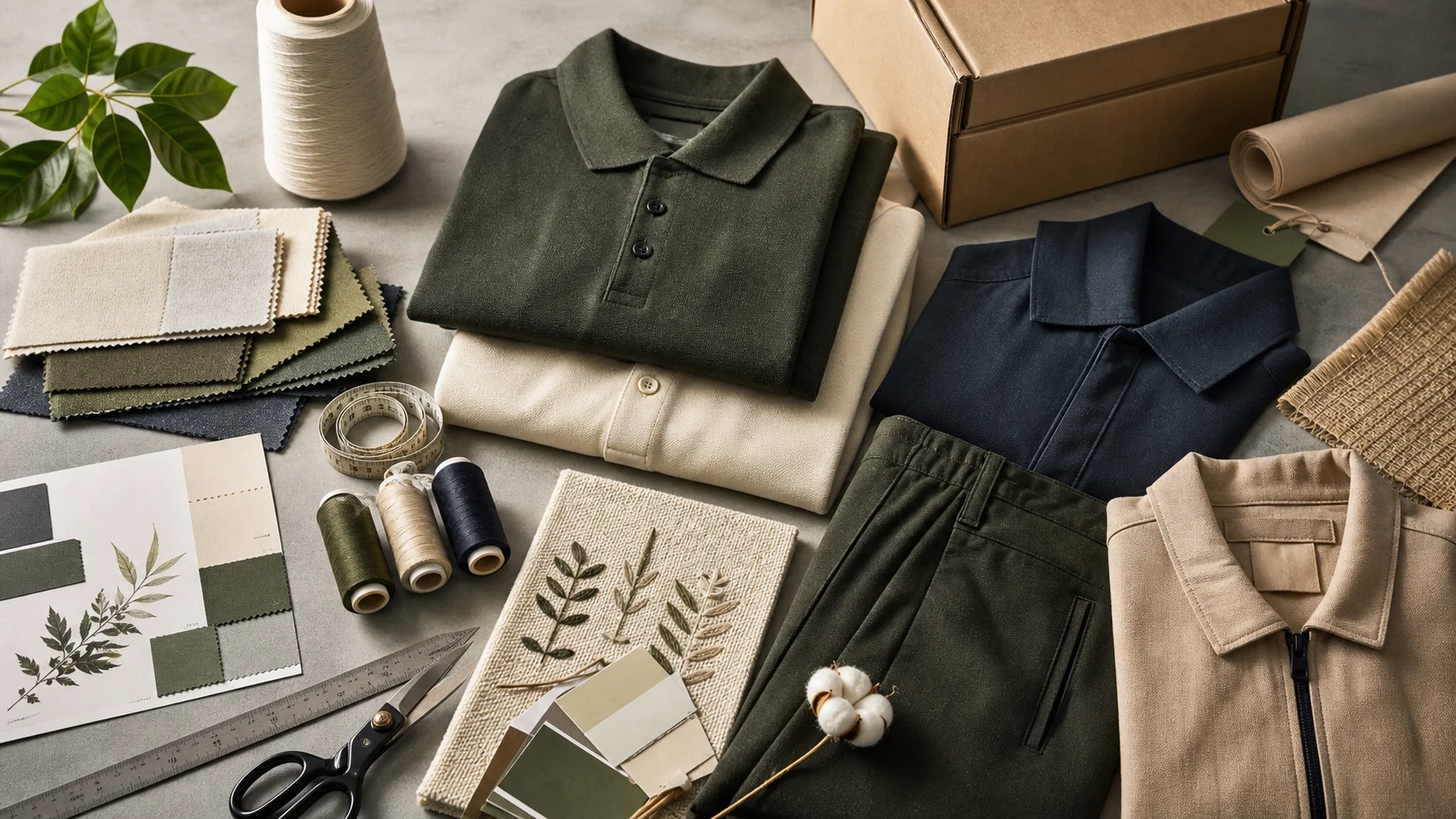
Design Branded Packaging for Clothing with checks for samples, fit, MOQ, QC evidence, pricing terms, and delivery risk.
Fast answer: Design Branded Packaging for Clothing: Material, Print, Packing Flow, and Cost should be judged by production evidence, not by a generic sourcing promise. The buyer needs sample proof, cost breakdowns, QC checkpoints, and delivery buffers in writing.
Ask for recent sample photos, measurement tolerances, fabric or print test assumptions, decoration test notes, packing examples, and a named inspection checkpoint. These details show whether the team can repeat an approved sample at bulk volume.
Separate garment cost, decoration, labels, packaging, sampling, testing, freight, and rush charges. When every cost line is visible, it becomes easier to reduce colorways, adjust size depth, or reserve more time for sampling.
Branded packaging is more than a box or bag that holds apparel during transit. It is one of the first physical touchpoints a customer has with your brand, and it can shape how they perceive your products before they even try them on. In fashion and apparel, packaging plays a unique role because it communicates quality, style, consistency, and attention to detail. Whether you sell premium basics, streetwear, activewear, or luxury garments, the right packaging can elevate the entire customer experience.
If you are wondering how to design branded packaging for clothing, the process involves more than choosing a color and placing a logo on a mailer. You need to consider the customer journey, packaging structure, sustainability, material selection, printing methods, unboxing experience, and practical logistics. Done well, branded packaging supports brand recognition, encourages repeat purchases, and makes your products more shareable across social media.
In this complete guide, we will walk through everything you need to know to create effective branded packaging for clothing, from strategy and design to production and fulfillment.
Clothing packaging is often underestimated because garments themselves are the hero product. However, packaging influences how customers feel about the brand long before they inspect the fabric or stitching. In an e-commerce environment, packaging may be the only tactile brand experience a customer receives.
Branded packaging helps apparel businesses in several important ways:
Builds brand recognition: Consistent colors, typography, and logos make your brand more memorable.
Signals quality: Premium packaging suggests premium products.
Improves customer experience: Thoughtful presentation creates a more enjoyable unboxing moment.
Encourages social sharing: Attractive packaging is more likely to be featured in user-generated content.
Supports repeat business: Positive first impressions increase the chance of reorders and loyalty.
For many clothing brands, packaging is also a practical marketing tool. A garment shipped in a plain poly mailer may arrive safely, but it does not communicate identity. A branded mailer, tissue wrap, insert card, or custom box turns a shipment into a branded experience.
If you are building or scaling a clothing line, packaging should be treated as part of your product strategy. At Fabrikn, we often see brands strengthen their customer perception by aligning packaging with their overall apparel manufacturing and presentation goals. If you are planning your production workflow, you can learn more about our capabilities on the services page.
Before designing any packaging, clarify what your brand stands for. Packaging should reflect the same identity that appears in your clothing labels, website, product photography, and social channels. Without a clear brand foundation, packaging decisions can become inconsistent and ineffective.
Is your brand premium, casual, sporty, minimal, bold, eco-conscious, or playful?
Who is your target customer?
What emotions should your packaging create?
What colors, textures, and styles already define your brand?
Do you want your packaging to feel luxurious, sustainable, youthful, or utility-focused?
The answers will influence every design choice. For example, a luxury loungewear brand may use matte rigid boxes, soft-touch finishes, and minimal typography. A streetwear label may prefer bold graphics, oversized logos, and high-contrast colors. An eco-minded basics brand may choose recycled kraft mailers and understated printing.
Consistency is critical. If your apparel brand communicates minimalism, your packaging should not suddenly become loud and colorful. A cohesive visual identity makes your brand feel trustworthy and intentional.
Different clothing products require different packaging formats. The right choice depends on garment type, shipping method, budget, and customer experience goals. Many brands use a combination of packaging types to balance protection and presentation.
Poly mailers: Lightweight, cost-effective, and commonly used for e-commerce apparel shipping.
Kraft mailers: A more eco-conscious alternative that offers a natural, organic look.
Rigid boxes: Ideal for premium or giftable clothing products such as luxury shirts, sets, or limited-edition drops.
Folding cartons: Suitable for folded apparel or accessories and often used for retail-ready packaging.
Garment bags: Helpful for suits, dresses, outerwear, or apparel that needs to remain clean and protected.
Tissue paper and wrap: Adds a refined layer inside the packaging and enhances the unboxing experience.
Hang tags and insert cards: Provide brand messaging, care instructions, or promotional content.
When selecting a format, think about the full customer journey. A T-shirt shipped in a branded mailer may not need a rigid box. A luxury sweater or curated gift set, however, may benefit from layered packaging that feels elevated.
Brands with multiple product tiers often use different packaging strategies depending on the collection. For example, everyday items may ship in branded mailers while premium capsule pieces use custom boxes. This approach allows flexibility without sacrificing consistency.
Material choice has a major impact on both perception and performance. Packaging materials affect durability, print quality, sustainability, and cost. The goal is to find materials that support your brand image while protecting the product during storage and shipping.
Kraft paper: Recyclable, natural-looking, and ideal for eco-friendly branding.
Corrugated cardboard: Durable and protective, especially for shipping boxes.
Rigid board: Strong and premium, commonly used for luxury packaging.
Polyethylene film: Lightweight and moisture-resistant for mailers, though less sustainable than paper alternatives.
Recycled paper stocks: A good choice for brands emphasizing sustainability.
Textured specialty paper: Adds a tactile premium feel to boxes and sleeves.
Material selection should also consider how your packaging will be handled in transit. Clothing is often relatively lightweight, but packaging must still withstand compression, moisture, and friction. If a package looks beautiful but arrives crushed, the brand experience is damaged.
Balance aesthetics with practicality. A thick box may look luxurious, but if it significantly increases shipping cost, it may not be sustainable for an emerging brand. The best packaging design aligns with your operational model as well as your visual identity.
Once you have selected the packaging format and material, the next step is visual design. Great packaging communicates brand identity quickly and clearly. In clothing, less is often more, but the details matter.
Your logo should be visible, but not overpowering unless bold branding is part of your identity. Consider where it appears on the package front, flap, seal, or interior. Placement should feel intentional and balanced.
Typography is one of the strongest signals of brand personality. Serif fonts can suggest elegance and heritage, while sans-serif fonts often feel modern and minimal. Script fonts can add flair but should be used carefully to maintain legibility.
Packaging colors should reinforce your brand palette. Neutral tones such as black, white, cream, gray, and kraft brown are popular in apparel because they feel timeless and versatile. Bright colors can create energy and help your packaging stand out on a doorstep or retail shelf.
Illustrations, patterns, icons, or custom artwork can add personality. Use them strategically. Overly busy packaging may distract from the apparel itself. Strong visual systems often rely on one or two memorable design elements.
Matte finish: Offers a clean, understated, premium look.
Gloss finish: Creates shine and impact, especially for bold branding.
Soft-touch coating: Adds a velvety feel that communicates luxury.
Spot UV: Highlights specific graphics or logos with a glossy contrast.
Embossing or debossing: Adds texture and depth to logos or patterns.
Packaging is a great place for short brand messages. These may include your tagline, a sustainability statement, care guidance, a thank-you note, or a social media prompt. Keep the copy concise and relevant.
For instance, a minimalist brand might include a simple “Designed to last” line, while a sustainable brand may use “Made with recycled materials.” Messaging should feel authentic, not promotional.
Beautiful packaging must also function well. Apparel brands often run into problems when the design looks great in concept but creates issues in packing, shipping, or fulfillment.
Packaging should fit your products efficiently. A package that is too large may increase shipping costs and create unnecessary movement during transit. A package that is too tight can wrinkle garments or damage presentation. Consider your most common product sizes and fold patterns when creating packaging dimensions.
Clothing is less fragile than electronics or glass, but protection still matters. Packaging should guard against dirt, moisture, tearing, and compression. If you sell delicate fabrics, embellished items, or premium outerwear, protective layering is especially important.
Some packaging designs are stunning but difficult to assemble. If your business ships high volumes, labor efficiency matters. Choose packaging that can be packed consistently by your team or fulfillment partner.
Heavier or bulkier packaging increases postage and may affect profit margins. Keep dimensional weight in mind when selecting box sizes and materials. The most effective packaging is attractive without being unnecessarily expensive to ship.
Think about how packaging will be stored before use. Flat-packed mailers and foldable boxes are easier to warehouse than assembled rigid packaging. If space is limited, choose formats that align with your operations.
Sustainability has become a major factor in clothing packaging design. Many customers now expect brands to reduce waste, use recyclable materials, and minimize unnecessary layers. However, sustainability should be practical and credible, not just a marketing claim.
Use recycled or recyclable paper-based materials.
Avoid excessive plastic where possible.
Minimize packaging layers without reducing protection.
Choose water-based or eco-friendlier inks when suitable.
Design packaging that is reusable or easy to repurpose.
Keep package sizes optimized to reduce waste and shipping emissions.
For apparel brands, sustainable packaging can also reinforce product positioning. If your clothing line promotes ethical production, your packaging should reflect that value. Customers quickly notice when a brand’s environmental message is not matched by its packaging choices.
That said, sustainability should not come at the expense of product protection or brand consistency. The best solution is one that balances environmental goals with commercial reality.
The unboxing moment has become a powerful marketing opportunity, especially for direct-to-consumer clothing brands. A thoughtful unboxing experience can increase satisfaction, encourage reviews, and make your brand more shareable.
Layered presentation: Use tissue, wrap, or inserts to create anticipation.
Brand consistency: Ensure colors, logos, and messaging all work together.
Personalization: Add thank-you cards, handwritten notes, or customer-specific messages when possible.
Delightful details: Small touches such as stickers, seals, or custom tape can enhance the experience.
Practical organization: Keep garments neat, folded, and easy to inspect upon opening.
For clothing, the unboxing experience should make the product feel special while remaining efficient. The goal is not excess, but impact. A clean, elegant presentation is often more effective than elaborate packaging that feels wasteful or inconvenient.
Think about how customers will photograph the package. Social-friendly packaging can become free marketing if people feel proud to share their purchase online. Packaging that looks polished and distinctive has a better chance of earning organic exposure.
Many clothing brands make packaging mistakes that reduce the impact of their investment. Avoiding these errors can save time, money, and reputation.
If your packaging does not match your brand identity, it will confuse customers and weaken recognition.
Packaging that cannot survive shipping or slows fulfillment is not a good long-term solution.
Too many colors, fonts, or graphics can make packaging feel cluttered and less premium.
Beautiful packaging that destroys margins is not sustainable. Always account for materials, printing, labor, and shipping impact.
Packaging should enhance the experience from order placement to delivery to unboxing. If it only looks good in a design mockup, it is incomplete.
Never go straight to full production without testing a sample. You need to check color accuracy, fit, durability, and ease of assembly before scaling.
Designing branded packaging for clothing is a process, not a one-step decision. A successful workflow usually follows these stages:
Strategy: Define your brand, audience, budget, and packaging goals.
Concept development: Choose package type, material, size, and branding direction.
Artwork creation: Develop dielines, logo placement, typography, and print-ready files.
Sampling: Review prototypes and test real-world performance.
Revision: Refine design based on feedback and testing.
Production: Place the final order with a reliable manufacturing partner.
Fulfillment integration: Make sure the packaging works smoothly with your packing and shipping process.
If you are working on a clothing brand from the ground up, collaboration matters. Packaging should not be designed in isolation from product development, sourcing, and fulfillment. A manufacturer or production partner can help ensure the packaging aligns with garment construction, branding, and cost targets. If you would like to speak with a team about apparel manufacturing and product support, visit contact us.
For brands that want a partner with a broader manufacturing perspective, learning more about Fabrikn can also be useful. Our approach is built around helping apparel businesses produce products and presentation that feel cohesive from the inside out. You can read more on our about us page.
Branded packaging is a strategic asset for clothing companies. It protects your product, communicates your identity, and creates a memorable customer experience. When designed thoughtfully, packaging can help your apparel brand look more professional, more premium, and more consistent across every touchpoint.
To design branded packaging for clothing successfully, start with your brand identity, choose the right format and materials, keep practical shipping considerations in mind, and build an unboxing experience that feels intentional. The best packaging is not just attractive; it also supports your operations, reinforces your values, and leaves customers excited to buy again.
Whether you are launching a new clothing line or refining packaging for an existing collection, a well-planned approach will pay off in brand perception, customer satisfaction, and long-term growth.
Get a free quote from Fabrikn — your trusted B2B clothing manufacturer with 10+ years of experience. MOQ as low as 200 pieces.
Get a Free Quote →Branded packaging for clothing is custom packaging designed to reflect a fashion brand’s identity through logos, colors, materials, typography, and presentation details. It can include mailers, boxes, tissue paper, inserts, seals, and tags.
It helps create a memorable first impression, strengthens brand recognition, improves the unboxing experience, and can increase perceived product value. For online clothing brands, it is often the only physical brand touchpoint before the customer opens the parcel.
The best packaging depends on your product and brand position. Poly mailers and kraft mailers work well for everyday e-commerce shipping, while rigid boxes and folding cartons are better for premium or giftable items.
Use recycled or recyclable materials, reduce unnecessary layers, minimize plastic, choose efficient package sizes, and select eco-friendlier inks or finishes where possible. Sustainable packaging should still protect the garment and fit your brand image.
Costs vary based on material, size, print complexity, quantity, and finishing options. Simple branded mailers may be relatively affordable, while premium rigid boxes with specialty finishes will cost more. Sampling and volume planning can help manage budgets.
It should match your brand identity and collection positioning. For example, minimalist clothing brands usually benefit from clean, understated packaging, while bold streetwear brands may use more graphic and expressive designs.
Fabrikn supports clothing brands with manufacturing-oriented solutions that help keep products and presentation aligned. If you want to discuss your project, please visit our contact-us page.