
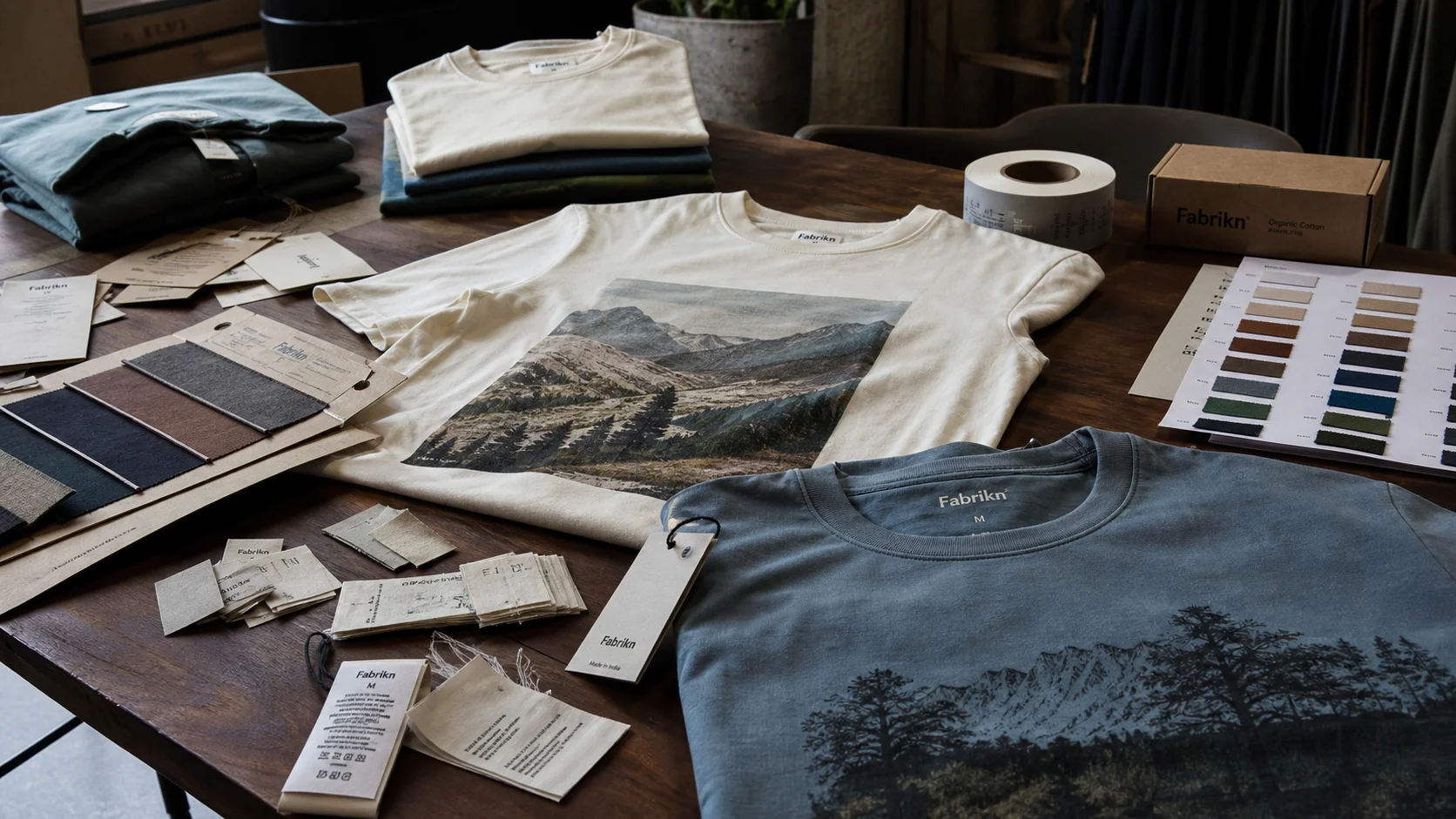
Design Custom Clothing for Overseas Production compared by sample evidence, fabric or trim specs, MOQ, AQL terms, cost lines, delivery timing, and rework...
Fast answer: Design Custom Clothing for Overseas Production: Sample Evidence, MOQ, Capacity, and Rework Terms should be judged by production evidence, not by a generic sourcing promise. The buyer needs sample proof, cost breakdowns, QC checkpoints, and delivery buffers in writing.
Ask for recent sample photos, measurement tolerances, fabric or print test assumptions, decoration test notes, packing examples, and a named inspection checkpoint. These details show whether the team can repeat an approved sample at bulk volume.
Separate garment cost, decoration, labels, packaging, sampling, testing, freight, and rush charges. Clear cost lines make it easier to reduce colorways, adjust size depth, or reserve more time for sampling.
Designing custom clothing for overseas production is one of the most effective ways for brands, startups, retailers, and private label companies to scale efficiently. When done well, overseas manufacturing can help reduce costs, improve production capacity, and unlock access to specialized materials and skilled workmanship. But successful overseas production starts long before the first sample is sewn. It begins with a clear, manufacturable, and detailed clothing design process.
If your goal is to create custom apparel that looks great, fits well, meets quality standards, and can be produced consistently in another country, you need more than a sketch or mood board. You need a production-ready design strategy that accounts for technical specifications, fabric sourcing, sizing, trim details, communication with suppliers, and quality control.
In this guide, we’ll break down how to design custom clothing for overseas production, from concept development to final approval. Whether you are launching a new clothing line or optimizing an existing one, this article will help you design smarter and manufacture with fewer mistakes.
Designing for overseas clothing production is not the same as designing for a local tailor or a small domestic workshop. Overseas manufacturers often work at larger scale, with different machinery, sourcing networks, labor structures, and communication workflows. That means your design must be prepared in a way that leaves little room for interpretation.
Many clothing production problems happen because a design looks good on paper but is difficult to replicate consistently at scale. A factory in another country may not know your brand preferences unless you document them clearly. Even a small missing detail—such as seam allowance, stitch type, or label placement—can lead to delays, rework, and extra cost.
For that reason, the design process must be both creative and technical. Your goal is to create garments that are attractive, commercially viable, and easy for the production team to execute accurately.
Before creating your first sketch, define what success looks like for your product. Your final goal should guide every design decision, from silhouette to fabric weight to packaging.
A premium garment sold at a high retail price can support more expensive trims, heavier fabrics, and more complex construction. A promotional item or entry-level private label piece may need a simpler design to stay within budget. When you understand the commercial purpose of the clothing, you can design accordingly.
This is also the stage where you should think about your brand identity. The product should match your brand voice, visual style, and customer expectations. If you’re not yet sure how to structure your apparel project, you may find it helpful to explore Fabrikn’s services to understand how a manufacturing partner supports development and production.
A tech pack is one of the most important documents in custom clothing production. It acts as the blueprint for your garment and tells the factory exactly how the item should be made. For overseas production, a detailed tech pack is essential because it reduces misunderstanding across language, time zone, and process differences.
The tech pack should be as clear and precise as possible. Avoid vague terms like “nice fit,” “high quality fabric,” or “standard stitching.” Those phrases mean different things to different people. Instead, specify exact measurements, material characteristics, and construction methods.
Factories appreciate organized information because it helps them quote accurately and produce samples faster. A strong tech pack can also protect your brand by reducing the chance of errors and inconsistencies in bulk production.
Fabric selection is one of the most influential decisions in custom clothing design. The wrong fabric can ruin a good silhouette, increase defects, or create production issues. When producing overseas, you must consider not only how the fabric looks and feels, but also whether it is available, affordable, and suitable for factory equipment.
Always request swatches or fabric lab dips before approving a final material. Overseas factories may have access to many textile suppliers, but not every fabric is suitable for every design. For example, a lightweight knit may work well for T-shirts but not for a structured jacket. A fabric that performs well in samples might behave differently in bulk if the supplier changes or the dye lot differs.
When possible, choose fabrics that are easy to source consistently across multiple production runs. This is especially important if you want to restock the product later. Stable sourcing supports brand continuity and reduces the risk of quality variation.
One of the biggest mistakes brands make is designing a garment that is visually appealing but difficult to manufacture efficiently. Overseas factories typically work best when garments are engineered with production methods in mind.
Every added detail has a cost. Extra panels, contrast stitching, custom hardware, special washes, and multi-layer construction can all increase labor time and potential error. That doesn’t mean you should remove all creative detail. It means each design element should serve a purpose and be achievable within your production budget and manufacturing timeline.
If you want a unique look, focus on impactful details that are easy to repeat, such as a signature neckline, branded label package, custom dye color, or distinctive embroidery placement. These elements can create strong brand identity without overwhelming the factory.
Fit is one of the most important factors in customer satisfaction. A beautiful garment that fits poorly will still underperform in the market. For overseas production, sizing must be clearly documented so the factory can grade patterns correctly and maintain consistency across all sizes.
Start with a base size, often the size you expect to sell most. Then create a size chart with exact measurements for key points such as chest, waist, hips, sleeve length, inseam, shoulder width, and body length. If you do not already have customer fit data, use market standards as a starting point, then refine through samples and wear testing.
Fit should also match the garment category. Activewear needs movement and stretch recovery. Menswear may require a more structured shoulder and straight silhouette. Women’s apparel might involve more shaping and contouring. Children’s clothing must prioritize comfort and safety. The best fit specification aligns with both customer expectation and factory capability.
Sampling is where the design meets reality. This stage allows you to test your ideas, identify errors, and make improvements before committing to bulk production. For overseas manufacturing, sampling is especially important because communication gaps can amplify small mistakes.
Review each sample carefully. Check the fit, stitch quality, measurements, fabric handfeel, color accuracy, logo placement, and overall construction. Compare the sample against your tech pack and make written notes on every issue you see.
Be specific in revisions. Instead of saying “make it better,” write “reduce sleeve opening by 1 cm,” “move left chest logo 2 cm higher,” or “change rib collar height from 2.0 cm to 2.5 cm.” Specific feedback makes production smoother and helps the factory correct the sample accurately.
It’s normal to go through multiple rounds of samples, especially for new products or more technical garments. Treat sampling as a problem-solving stage, not a failure. It is far cheaper to correct a sample than to fix a bad bulk order.
Successful overseas production depends on communication. Even the best design can fail if the factory misunderstands your intent. Clear, organized, and respectful communication is one of the most valuable tools in the development process.
Language barriers can create misunderstandings, so avoid relying on vague explanations. Visual references, sample comparisons, and measurement charts help bridge the gap. If needed, use simple direct language rather than idioms or slang.
It is also useful to build a positive working relationship with your manufacturer. A factory that understands your brand and communicates openly is more likely to help solve problems efficiently. If you want to discuss a custom production project, you can reach out through Fabrikn’s contact us page.
Quality control should be built into the design process from the start. If you wait until the product is finished, it may be too late to correct major issues. Overseas production makes quality control even more important because distance makes oversight harder.
Define what is acceptable and what is not acceptable. For example, you might allow a 1 cm tolerance on certain measurements but require exact placement on a printed graphic. The more specific your standards, the easier it is to inspect bulk production.
Some brands also arrange third-party inspections or internal quality checks before shipment. This can be especially valuable for first orders or higher-value garments. Quality control protects your brand reputation and reduces the risk of costly returns.
Many overseas clothing projects run into trouble because of avoidable mistakes. Understanding these early can save time, money, and frustration.
Another common issue is overcomplicating the first product. If this is your first overseas production run, simplicity is your friend. Start with a design that is high quality, commercially appealing, and technically manageable. Once you have a reliable production workflow, you can expand into more complex garments.
It is also important not to choose a manufacturer based on price alone. A very low quote can be a red flag if it comes with weak communication, poor fabric access, or limited quality control. The right partner should offer a balance of capability, transparency, and reliability.
At Fabrikn, we support brands that need custom clothing designed and produced with international manufacturing in mind. From development planning to production coordination, the goal is to help you create garments that are ready for scale and aligned with your brand standards.
If you are still shaping your apparel concept, our about us page can help you learn more about our approach and company background. Whether you need help with custom apparel development, sourcing, or production readiness, working with the right manufacturer can make the process much smoother.
When you combine strong design preparation with experienced overseas production support, you increase the chance of achieving consistent results. That means fewer sample issues, fewer production delays, and a better final product for your customers.
Designing custom clothing for overseas production is a strategic process that blends creativity, technical planning, and manufacturing awareness. The more detail you provide up front, the smoother your production journey will be. A strong tech pack, smart fabric selection, realistic sizing, careful sampling, and clear communication all play a major role in turning your concept into a successful product.
Whether you are launching your first collection or expanding an established apparel line, designing with overseas production in mind can help you control costs, improve consistency, and build a stronger brand. Focus on clarity, manufacturability, and quality from the beginning, and you’ll be much better positioned for a successful launch.
If you’re ready to move from concept to production, Fabrikn is here to help you take the next step.
Get a free quote from Fabrikn — your trusted B2B clothing manufacturer with 10+ years of experience. MOQ as low as 200 pieces.
Get a Free Quote →The first step is defining your product goals, target customer, price point, and production volume. This helps guide your design direction and ensures your garment is commercially and technically viable.
Yes. A tech pack is essential because it gives the factory all the details needed to create your garment accurately, including measurements, materials, construction methods, and branding placement.
Choose fabric based on the garment type, desired look and feel, performance requirements, cost, and availability. Always request samples or swatches before approving final materials.
Sampling allows you to test fit, construction, and appearance before bulk production. It helps identify issues early and prevents expensive mistakes in larger orders.
Use clear written instructions, visual references, consistent terminology, and detailed documentation. Confirm important decisions in writing and allow for time zone differences.
The most common mistakes include starting without a complete tech pack, choosing unsuitable fabrics, skipping sample reviews, and not setting clear quality standards.
Yes. Fabrikn supports brands with custom clothing manufacturing and production guidance. You can learn more on our services page or get in touch through our contact us page.