
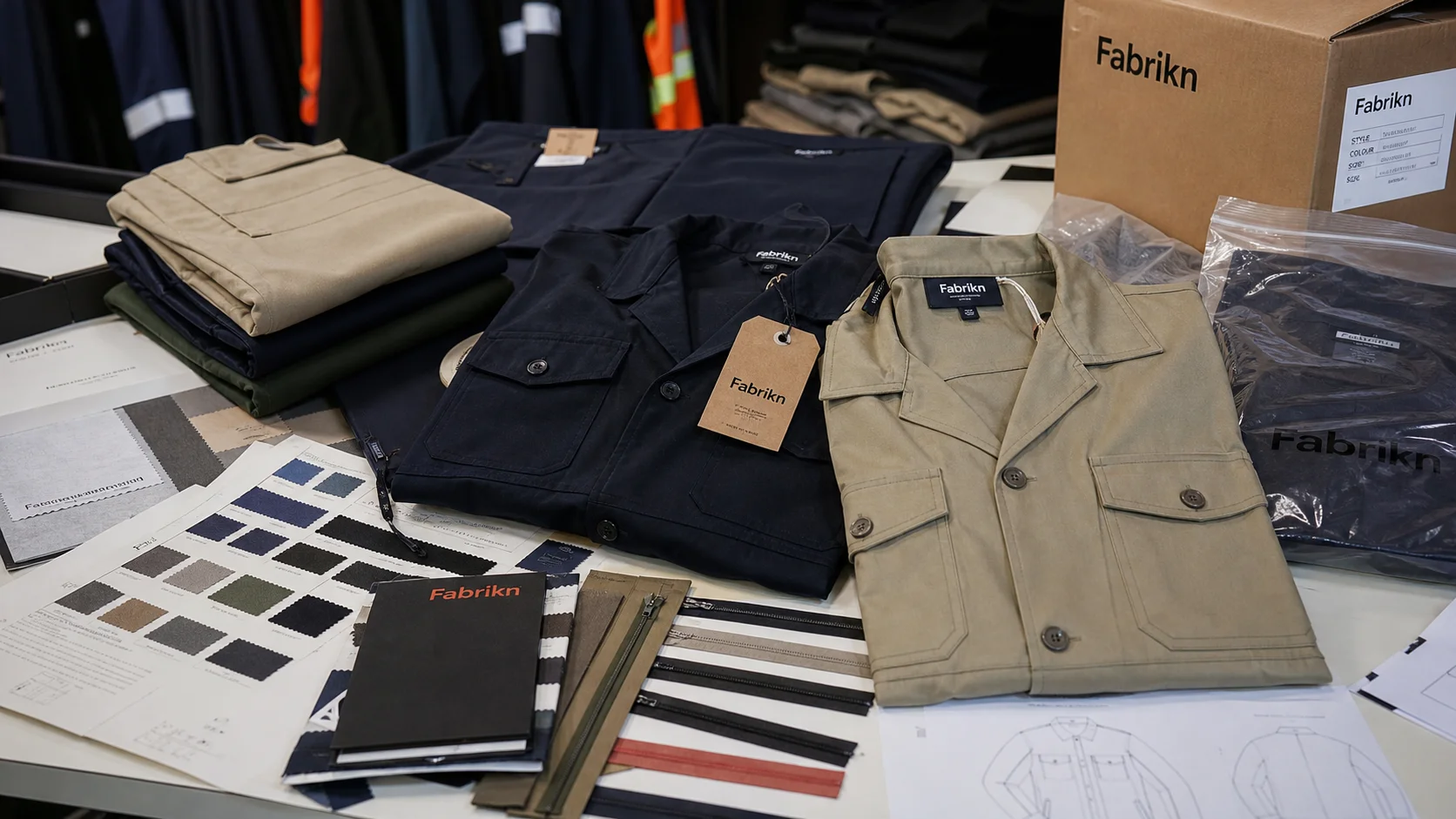
Find A Private Label Clothing Manufacturer compared by sample evidence, fabric or trim specs, MOQ, AQL terms, cost lines, delivery timing, and rework...
Fast answer: Find A Private Label Clothing Manufacturer: Material, Print, MOQ, and QC Terms should be judged by production evidence, not by a generic sourcing promise. The buyer needs sample proof, cost breakdowns, QC checkpoints, and delivery buffers in writing.
Ask for recent sample photos, measurement tolerances, fabric or print test assumptions, decoration test notes, packing examples, and a named inspection checkpoint. These details show whether the team can repeat an approved sample at bulk volume.
Separate garment cost, decoration, labels, packaging, sampling, testing, freight, and rush charges. Clear cost lines make it easier to reduce colorways, adjust size depth, or reserve more time for sampling.
If you are building a fashion brand, one of the most important decisions you will make is choosing the right private label clothing manufacturer. The manufacturer you select will affect your product quality, pricing, production timeline, brand reputation, and long-term growth potential. Whether you are launching a small capsule collection or scaling an established label, knowing how to find private label clothing manufacturer partners that match your goals is essential.
Private label manufacturing allows you to sell clothing under your own brand name while outsourcing production to an experienced factory. This model is especially attractive for startups, e-commerce brands, boutiques, and established companies that want to expand their product lines without investing in their own production facilities. But with so many options available globally, the search can feel overwhelming.
This step-by-step guide will walk you through the complete process of finding a reliable private label clothing manufacturer, from defining your product needs to vetting suppliers, requesting samples, and building a long-term partnership. If you are ready to bring your fashion idea to market, this guide will help you make informed decisions at every stage.
A private label clothing manufacturer produces garments that are sold under another brand’s name. In most cases, the manufacturer handles the sourcing, cutting, sewing, finishing, and packaging, while the brand owner controls the concept, branding, and retail strategy. Some private label manufacturers offer ready-made styles that can be customized with labels, tags, colors, fabrics, or trims. Others provide fully bespoke development support for brands that want unique designs.
This model is ideal for businesses that want to focus on marketing, customer experience, and sales while leaving production to experts. If you are looking for a partner that can support design development, sampling, and production, you may want to explore Fabrikn’s services page to understand how a professional manufacturer can support your brand growth.
The clothing manufacturer you choose will directly impact your ability to deliver consistent products and maintain customer trust. A good manufacturer helps you produce quality garments on time, at a cost that supports healthy margins. A poor fit can lead to delays, defects, poor communication, and expensive mistakes.
For private label brands, the manufacturer is more than a supplier. They are a strategic partner. If they understand your market, quality expectations, and growth plans, they can help you scale efficiently. If they do not, your business may face stock issues, quality complaints, and brand inconsistency.
The first step in finding a private label clothing manufacturer is to clearly define what you want to produce. Before you start contacting factories, build a detailed product vision that answers the following questions:
The more clarity you have, the easier it will be to find manufacturers that specialize in your category. For example, a factory that excels in premium activewear may not be the best choice for tailored womenswear or kids’ apparel. A clear product vision also helps you communicate professionally during the sourcing process.
Knowing your target market is critical because manufacturers often specialize in different production tiers. Some focus on budget-friendly basics, while others are experienced in premium or luxury clothing. Your target retail price should align with your manufacturing budget and expected margins.
Ask yourself:
If your price point is too low for your desired quality, you may struggle to find a manufacturer that can meet your expectations. On the other hand, if your margins are too tight, even a suitable factory may not be commercially viable. A balanced pricing strategy makes sourcing much easier.
Private label manufacturers often have different expertise depending on the product type. Some specialize in t-shirts, hoodies, and basics. Others are strong in denim, outerwear, knitwear, uniforms, swimwear, or children’s clothing. Choosing your product category early helps narrow your search.
You should also think about materials and construction details. Consider the following:
Manufacturers are more likely to respond positively when you provide specific technical information. Even if you do not have a full tech pack yet, a basic product brief can help them determine whether your project is a good fit.
The next step is to build a shortlist of potential manufacturers. Today, most brands begin their search online. Use search engines, trade directories, LinkedIn, fashion forums, and industry networks to identify suppliers with relevant experience. You can also ask for referrals from other founders, sourcing agents, or industry contacts.
When researching online, look for signs of professionalism and transparency:
Be cautious with manufacturers that provide very little information or make unrealistic promises. A legitimate private label partner should be able to explain what they do, who they serve, and how their process works. To learn more about a company’s background and manufacturing philosophy, you can visit Fabrikn’s about us page.
Once you have a shortlist, evaluate each manufacturer’s capabilities. Not every clothing factory offers the same services. Some may only do cut-and-sew production, while others provide full-package services that include fabric sourcing, pattern development, sampling, grading, labeling, and packaging.
Ask the following questions:
Choosing a manufacturer with the right capabilities reduces the number of middlemen involved and simplifies your workflow. The best partners can support your brand from product development through final delivery.
Sampling is one of the most important parts of the sourcing process. A sample shows you how the manufacturer handles construction, fabric choice, fit, stitching, and finishing. It also helps you judge whether they can translate your vision into a commercial product.
When reviewing samples, look at:
Do not rely on product photos alone. Even if a manufacturer has an impressive website, the physical sample is the true test of their capabilities. If possible, request revisions after the first sample so you can evaluate how responsive they are to feedback.
Minimum order quantity, or MOQ, is a key factor when finding a private label clothing manufacturer. MOQ refers to the smallest number of units a factory is willing to produce per style, color, or size range. Some manufacturers have flexible MOQs for startups, while others require larger orders.
Before moving forward, ask for detailed pricing information, including:
Low unit cost is not always the best option. A manufacturer may quote a lower price but require a high MOQ, charge more for revisions, or offer inconsistent quality. Compare total cost, not just the base unit price. The right balance between affordability and reliability is what supports sustainable brand growth.
Good communication is essential when working with any clothing manufacturer, especially in private label production where details matter. A reliable factory should respond clearly, ask relevant questions, and provide realistic timelines.
Pay attention to these signals:
Poor communication early in the relationship often becomes a larger problem later. If a manufacturer is slow, vague, or disorganized during the quoting stage, they may be even less dependable during production. Choose a partner who communicates as professionally as they produce.
For many brands, especially those selling internationally, compliance is non-negotiable. Depending on your market and product type, your manufacturer may need to meet certain standards related to labor practices, product safety, and material sourcing.
Ask whether they can provide relevant certifications or compliance documentation such as:
If your clothing brand focuses on sustainability, ethical production, or premium quality, compliance becomes even more important. A trustworthy manufacturer should be able to explain their procedures and provide documentation when needed. This protects your brand and helps build customer confidence.
Before committing to a large production run, negotiate the key terms of your relationship. This should include payment structure, timelines, revision policies, quality control expectations, packaging details, and delivery terms.
It is often wise to begin with a small trial order if the manufacturer offers this option. A trial order allows you to test the factory’s reliability, product consistency, and fulfillment process without taking on excessive risk. If the first order goes well, you can scale with more confidence.
Always confirm the final agreement in writing. Clear documentation helps prevent misunderstandings and ensures both sides know what to expect.
Many new brands make avoidable mistakes when searching for a private label clothing manufacturer. Being aware of these pitfalls can save time, money, and frustration.
A successful sourcing strategy is not about finding the first available factory. It is about finding the right one for your brand’s goals, budget, and product standards.
Finding a private label clothing manufacturer can feel complex, especially if you are launching a brand for the first time. At Fabrikn, we work with businesses that need a dependable manufacturing partner for private label apparel production. From concept to production support, our focus is on helping brands build quality clothing that reflects their identity and market position.
If you are exploring manufacturing options, you can learn more about our approach on the services page or reach out directly through our contact us page. A direct conversation is often the fastest way to determine whether your project is a good fit.
We understand that every brand has different goals. Some need flexible MOQs. Others need a production partner with strong quality control and long-term scalability. The key is matching your vision with a manufacturer that can support it consistently.
Learning how to find private label clothing manufacturer partners is one of the most important steps in building a successful fashion brand. The right manufacturer can help you turn ideas into products, improve your brand credibility, and support growth over time. The wrong one can create delays, quality issues, and unnecessary costs.
By defining your product vision, researching carefully, evaluating capabilities, requesting samples, and checking communication and compliance, you can make a much smarter choice. Private label sourcing is not just about production. It is about creating a foundation for long-term brand success.
If you are ready to explore a manufacturing partnership, take the next step by reviewing Fabrikn’s services, learning more about our team on the about us page, or contacting us directly through contact us.
Get a free quote from Fabrikn — your trusted B2B clothing manufacturer with 10+ years of experience. MOQ as low as 200 pieces.
Get a Free Quote →Private label manufacturing usually means producing garments under your brand name, often using existing styles or customizable templates. Custom clothing manufacturing involves developing unique designs from scratch, including pattern creation, fabric selection, and technical development.
Look for a professional website, clear contact details, relevant experience, sample work, transparent pricing, and responsive communication. A legitimate manufacturer should also be willing to discuss capabilities, minimum order quantities, and production timelines in detail.
MOQ varies depending on the product type, fabric, and manufacturer. Some factories offer low MOQs for startups, while others require larger volumes. It is best to ask directly and compare the MOQ against your budget and sales forecast.
Yes. Samples are essential for evaluating quality, fit, fabric, stitching, and branding accuracy. A sample also shows how well the manufacturer can follow your instructions and handle revisions.
Many can. Some manufacturers offer label application, hangtags, woven labels, custom packaging, and other branding services. Always confirm these options before placing an order.
The timeline depends on your product complexity, how quickly you research suppliers, and how fast samples are approved. In general, the process can take a few weeks to a few months before bulk production begins.
Ask about experience, product specialization, MOQ, sample cost, lead times, quality control, payment terms, compliance, and revision policies. The more detailed your questions, the easier it is to compare suppliers accurately.