
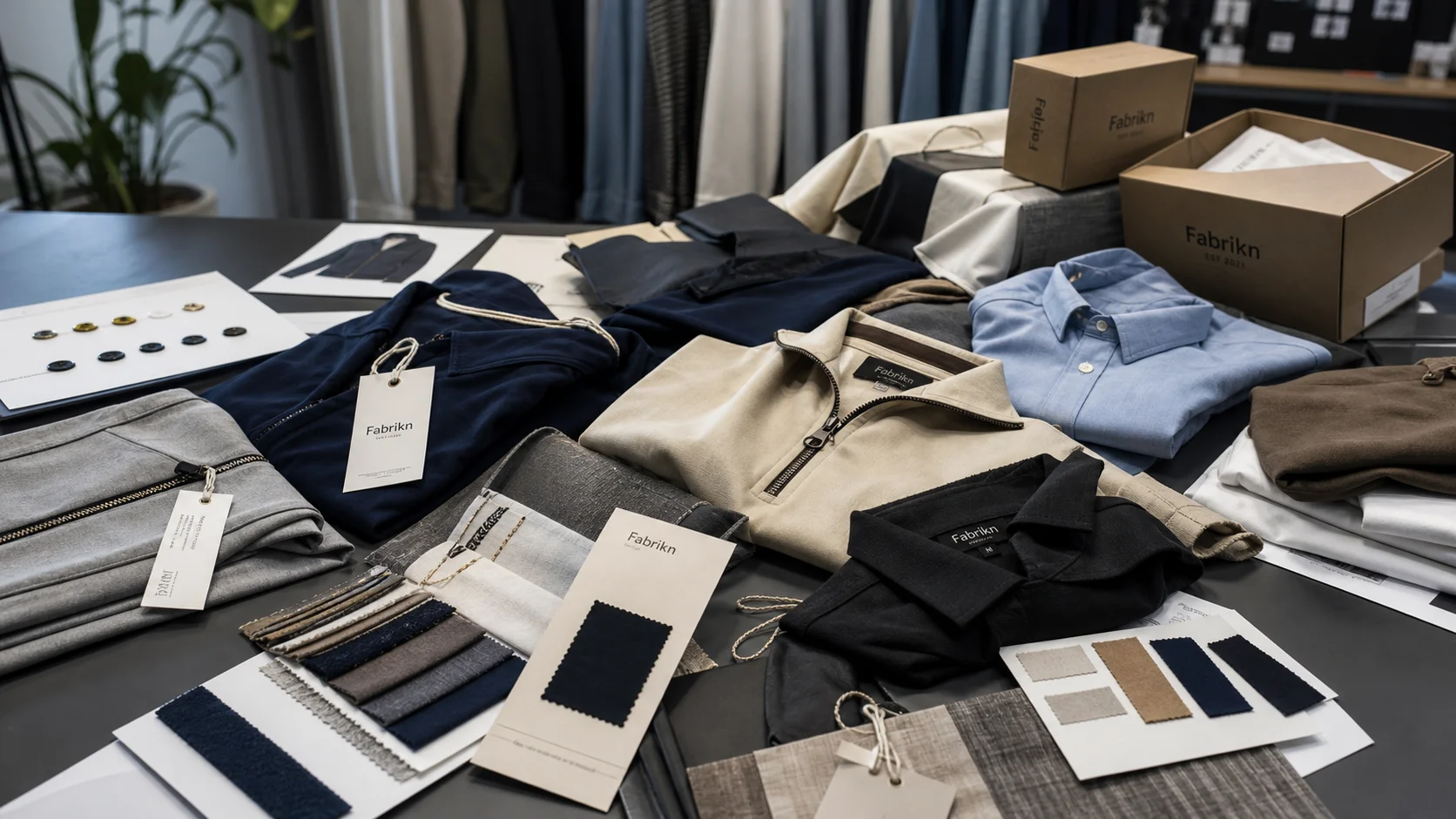
Identify Factory Red Flags Before Signing An Apparel Contract compared by sample evidence, fabric or trim specs, MOQ, AQL terms, cost lines, delivery...
Fast answer: Identify Factory Red Flags Before Signing An Apparel Contract: Tech Pack, Sample Gate, MOQ, and QC Terms should be judged by production evidence, not by a generic sourcing promise. The buyer needs sample proof, cost breakdowns, QC checkpoints, and delivery buffers in writing.
Ask for recent sample photos, measurement tolerances, fabric or print test assumptions, decoration test notes, packing examples, and a named inspection checkpoint. These details show whether the team can repeat an approved sample at bulk volume.
Separate garment cost, decoration, labels, packaging, sampling, testing, freight, and rush charges. Clear cost lines make it easier to reduce colorways, adjust size depth, or reserve more time for sampling.
Signing an apparel contract is a major milestone for any brand, retailer, startup, or sourcing team. It can also be one of the riskiest steps in the production process. The wrong factory partner can lead to missed deadlines, inconsistent quality, hidden costs, compliance issues, damaged customer trust, and lost revenue. That is why learning how to identify factory red flags before signing an apparel contract is essential for protecting your business.
Whether you are producing private label basics, technical activewear, uniforms, or premium fashion collections, a manufacturing partner should give you confidence, not uncertainty. In the early stages, many warning signs can be subtle. A polished sales pitch or a fast quote can hide problems that only appear after you place an order. This article breaks down the most common red flags to look for, the questions to ask, and the checks to complete before you commit.
If you are evaluating a potential manufacturing partner, it helps to understand what a reliable supplier should look like. You can also review Fabrikn’s About Us page to learn more about a factory partner built around transparency, collaboration, and production support, or explore our services to see what a dependable apparel manufacturing relationship should include.
An apparel contract is more than a purchase order. It defines your production timeline, quality expectations, pricing, responsibilities, and recourse if something goes wrong. Once signed, your leverage can decrease quickly if the factory is underperforming or misrepresenting its capabilities.
Red flags matter because they often predict future problems. A factory that is slow to respond before the contract may become even harder to manage after the order begins. A supplier that gives vague answers about quality control may struggle to meet your standards consistently. A partner that offers pricing far below market may be cutting corners, using inferior materials, or underestimating the scope of work.
Strong sourcing decisions are built on verification, not assumptions. The best time to ask difficult questions is before money changes hands. A careful review now can prevent costly delays later.
A credible factory should be able to clearly explain who they are, where they are located, what they produce, and how they operate. If the company website is sparse, the address is unclear, the business registration is difficult to verify, or the team cannot provide basic operational details, proceed with caution.
Possible warning signs include:
Ask for the factory’s legal business name, registration details, production site address, and key contacts. Verify this information independently where possible. A legitimate manufacturer should not hesitate to provide basic proof of existence.
Not every factory can produce every product. Some specialize in knitwear, others in woven garments, sportswear, lingerie, or outerwear. A common mistake is assuming that a supplier can handle your product category simply because they say yes to everything.
If a factory is vague about its machine list, team size, monthly output, fabric handling experience, or product specialization, that is a concern. It may mean they are overstating their capabilities or subcontracting work without telling you.
Questions to ask include:
If the factory cannot answer with specifics, they may not be the right partner for your line. Matching product complexity to factory capability is one of the most important sourcing decisions you can make.
Everyone wants a competitive price, but unusually low quotes should raise questions rather than excitement. In apparel manufacturing, pricing is tied to fabric quality, labor costs, finishing, packaging, compliance, testing, and overhead. If a quote is dramatically lower than others for the same spec, something may be missing.
Potential issues behind low pricing include:
Always compare quotes line by line. Make sure the same assumptions are being used for fabric weight, stitch count, decoration method, packaging, labeling, and shipping terms. If one quote seems too good to be true, it probably is. A good factory will explain pricing openly rather than relying on vague promises.
Communication is a strong predictor of production performance. A factory that takes days to answer basic questions before you sign may become a major bottleneck once production starts. Slow replies, missed calls, unclear answers, and contradictory information are all warning signs.
Watch for these communication issues:
Apparel production requires precise coordination across materials, trims, approvals, and timelines. If communication is weak during the sales phase, it usually gets worse under pressure. A reliable factory should be responsive, organized, and able to maintain clear communication throughout the project.
Quality control is where many apparel projects succeed or fail. If a supplier cannot clearly explain how they inspect materials, monitor production, and handle defects, that is a serious concern.
Ask about the factory’s quality control process at every stage:
A trustworthy factory should be able to describe the standards they use and provide documentation or reports if requested. If they refuse to share process details or say “we check everything” without explanation, consider that a red flag. Real quality control is structured, measurable, and documented.
Sampling is one of the best ways to test a factory before placing a large order. If the sample process is sloppy, rushed, or poorly managed, it may predict bigger issues in bulk production.
Warning signs include:
A professional manufacturer uses the sample stage to validate construction, fit, and finishing before committing to volume production. If the factory does not respect the spec sheet, they may also ignore approved details during production. Your sample should be treated as a prototype and a production roadmap.
A strong factory should be able to show proof of past work. If they cannot provide references, client examples, case studies, or portfolio samples relevant to your product category, be careful.
Things to look for:
Be cautious with testimonials that appear overly polished or impossible to verify. Ask for references you can contact directly, if appropriate. If the factory avoids sharing proof of experience, they may have less relevant expertise than they claim.
The contract itself can reveal a lot about the factory’s priorities. If the agreement is one-sided, unclear, or filled with vague language, review it carefully before signing.
Pay attention to terms related to:
Red flags in the contract often include open-ended delivery language, no penalty for missed deadlines, broad disclaimers that remove factory accountability, or clauses that allow the supplier to change specifications without approval. Never assume verbal promises will protect you. If it matters, it should be in writing.
Depending on your market and product type, compliance can be a critical factor. If you need standards related to labor practices, material safety, social responsibility, or environmental claims, the factory should be able to support them.
Red flags include:
Do not rely on claims alone. Verify certifications and ensure they are current and relevant to your order. If you sell into regulated markets or promote specific sustainability claims, your supplier should understand the standards that apply.
Financial instability can cause missed deadlines, quality compromises, or sudden project abandonment. While you may not have full access to a factory’s finances, there are signs that can indicate trouble.
Possible warning signs include:
Factories under financial pressure may take shortcuts or prioritize customers who pay faster. Stable operations usually have predictable processes and clear payment structures. If the supplier seems disorganized around money, that may affect every part of your order.
Before you sign an apparel contract, use a structured due diligence process. This helps you compare factories objectively and reduce risk.
It also helps to keep a scorecard for each supplier. Rate them on quality, communication, transparency, cost, compliance, and reliability. That way, your decision is based on evidence rather than impressions.
There are practical ways to reduce risk even when you have not yet found the perfect factory. Start with a small test order if possible. Ask for pre-production samples, fabric swatches, and trim approvals. Put detailed product requirements in writing. Make sure both sides confirm dimensions, materials, branding, labeling, packaging, and delivery expectations.
You should also use clear documentation throughout the process. Keep records of emails, quotes, sample approvals, revisions, and signed agreements. If a dispute comes up later, documentation becomes your best protection.
Another important step is to work with a supplier that values transparency from the beginning. At Fabrikn, we believe strong partnerships are built on clear communication, reliable production systems, and realistic commitments. If you are evaluating a manufacturing relationship, visit our Contact Us page to start a conversation about your product needs.
Not every red flag means you should immediately reject a factory. However, multiple warning signs at once usually indicate a higher-risk partnership. If a supplier is vague, slow, inconsistent, and unwilling to document terms, it is often better to move on.
Walking away may feel like losing time, but it is usually cheaper than fixing a bad manufacturing relationship later. A poor partner can damage your brand, consume your team’s energy, and force expensive rework. The right decision is not always the fastest one. Sometimes the most strategic move is to keep searching until you find a manufacturer that meets your standards.
The best apparel factories do more than sew garments. They help reduce risk, improve product quality, and support your growth. They provide clear answers, realistic timelines, and consistent communication. They understand your market and take your specifications seriously.
When evaluating partners, look for signs of professionalism at every stage: the first email, the first quote, the first sample, and the first contract draft. A trustworthy manufacturer will not pressure you into a rushed decision. Instead, they will earn your confidence through process, documentation, and results.
If you are looking for a partner that prioritizes clarity and production support, explore Fabrikn’s services and learn more about our approach on the About Us page. The right supplier relationship should help your business scale with less stress, not more.
Get a free quote from Fabrikn — your trusted B2B clothing manufacturer with 10+ years of experience. MOQ as low as 200 pieces.
Get a Free Quote →One of the biggest red flags is a lack of transparency. If the factory cannot clearly explain its capabilities, pricing, quality control process, or company details, that is a serious concern.
Compare quotes line by line and make sure they include the same materials, trims, labor, testing, packaging, and shipping assumptions. If one price is much lower than the others, ask what has been excluded or downgraded.
Not automatically, but you should verify everything carefully. Ask for registration documents, references, samples, and detailed operational information before proceeding.
Very important. Sampling reveals how well the factory understands your product, follows your specifications, and handles quality. A weak sample process is often a sign of future production issues.
Pay special attention to payment terms, lead times, defect policies, intellectual property ownership, cancellation terms, and responsibility for delays or material shortages.
Walk away when multiple red flags appear together, especially if the factory is vague, slow, inconsistent, or unwilling to provide written confirmation and proof of capability.