
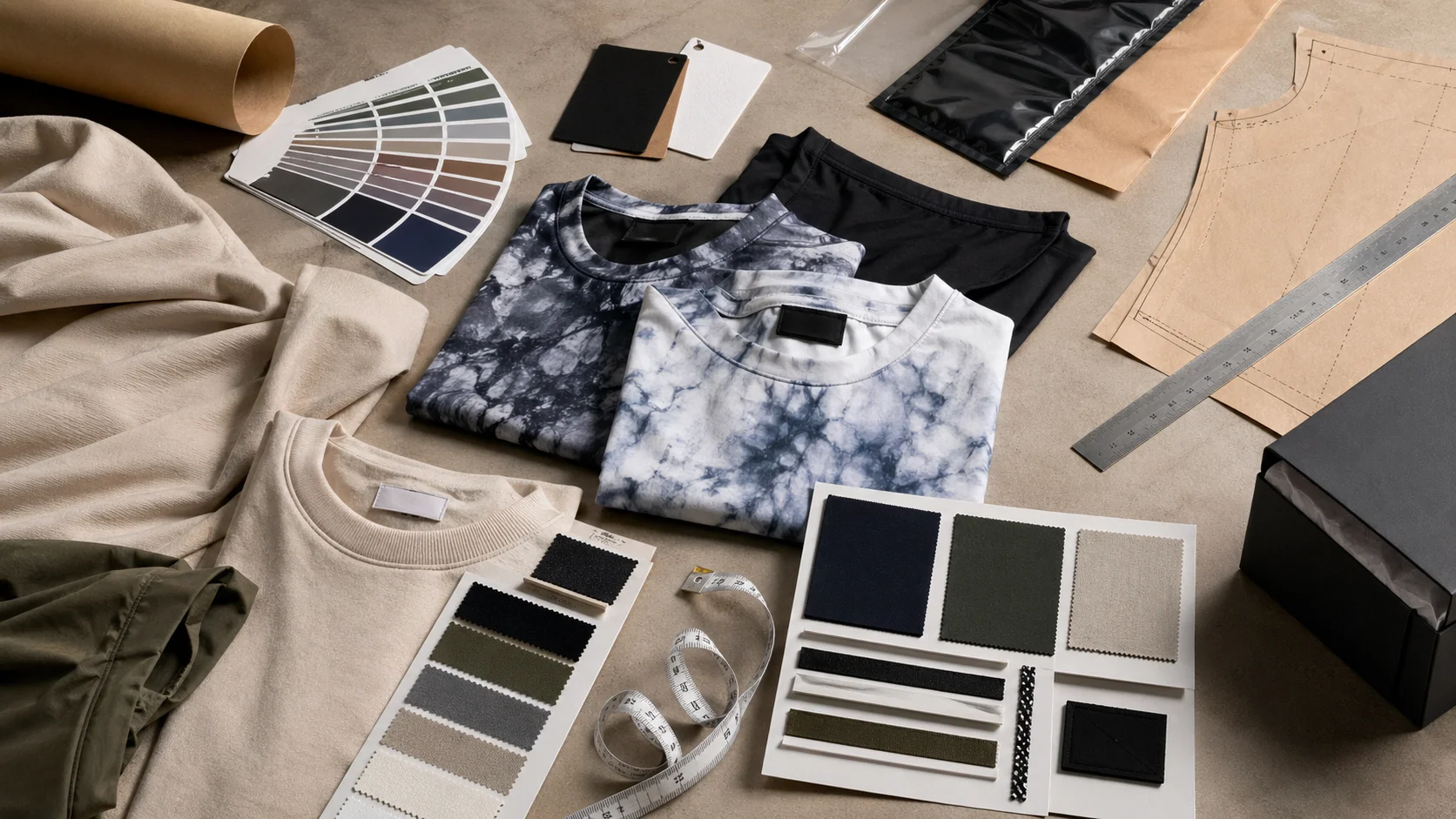
Inspect Bulk Garments Before Shipping compared by sample evidence, fabric or trim specs, MOQ, AQL terms, cost lines, delivery timing, and rework responsibility.
Fast answer: Inspect Bulk Garments Before Shipping: Tech Pack, Sample Gate, MOQ, and QC Terms should be judged by production evidence, not by a generic sourcing promise. The buyer needs sample proof, cost breakdowns, QC checkpoints, and delivery buffers in writing.
Ask for recent sample photos, measurement tolerances, fabric or print test assumptions, decoration test notes, packing examples, and a named inspection checkpoint. These details show whether the team can repeat an approved sample at bulk volume.
Separate garment cost, decoration, labels, packaging, sampling, testing, freight, and rush charges. Clear cost lines make it easier to reduce colorways, adjust size depth, or reserve more time for sampling.
Inspecting bulk garments before shipping is one of the most important steps in the apparel manufacturing process. Even a small defect in stitching, sizing, labeling, or packaging can lead to returns, chargebacks, customer complaints, and damage to your brand reputation. For B2B buyers, retailers, private label brands, and wholesalers, a reliable pre-shipment inspection process helps ensure that every carton leaving the factory meets the agreed specifications.
This complete quality control guide explains how to inspect bulk garments before shipping, what to check at each stage, and how to build a practical inspection system that reduces defects and protects your business. Whether you manufacture basic tees, workwear, activewear, fashion apparel, or uniforms, a structured inspection process can help you deliver consistent quality every time.
Bulk garment inspection is the final checkpoint before products are shipped to your customer, distributor, or warehouse. At this stage, the goal is to confirm that the entire production run matches the approved sample, purchase order, and technical package.
Without a proper inspection process, small production issues can go unnoticed until after delivery. That often means expensive returns, rework, or even rejected shipments. In B2B clothing manufacturing, the cost of poor quality is usually much higher than the cost of prevention.
A strong inspection process helps you:
If you work with a clothing manufacturer, clear inspection standards are essential. For companies building a long-term sourcing relationship, choosing a manufacturer with documented quality control systems can make a major difference. You can learn more about our production approach at Fabrikn About Us and explore our manufacturing support at Fabrikn Services.
Garment inspection should not happen only at the very end. The best quality control strategy includes multiple checkpoints throughout production.
Before production starts, inspect fabrics, trims, labels, zippers, buttons, and packaging materials. This helps prevent defects caused by poor inputs.
During sewing and assembly, inspect a portion of the production line to catch issues early. Inline inspection allows the factory to correct problems before they affect the full order.
A mid-production check is useful for identifying recurring defects or process errors while there is still time to fix them.
This is the most important bulk garment inspection stage. The finished goods are checked before packing is approved and goods are released for shipping.
Different inspections serve different purposes. A comprehensive quality control system often includes several of the following:
Each type of inspection adds another layer of protection. Together, they create a more reliable process for shipping bulk garments with confidence.
Preparation is critical. A rushed inspection can miss defects or create confusion between the buyer and factory. Before starting, make sure the correct reference documents are available.
It is also important to define the acceptable quality standard in advance. Many garment buyers use AQL-based inspections, which help determine how many pieces should be sampled and what defect level is acceptable. If AQL is not used, your inspection plan should still define clear sampling rules.
Finally, inspect in a clean, well-lit area with enough space to open cartons, lay out garments, and review each piece properly. Poor lighting and clutter can easily hide defects.
A proper bulk garment inspection covers every major element of the product. The exact checklist may vary depending on the item category, but the following areas should always be reviewed.
Check whether the fabric matches the approved standard in terms of composition, weight, hand feel, color, texture, and appearance. Look for defects such as:
Stitching quality is one of the most important indicators of garment workmanship. Review seam consistency, stitch density, thread tension, and reinforcement points. Common issues include loose threads, skipped stitches, broken stitches, and poor seam alignment.
Measure key points against the approved spec sheet. Important measurements may include chest width, body length, sleeve length, waist, hip, inseam, and shoulder width. Since even slight measurement deviations can affect fit, check multiple pieces from different cartons and sizes.
All garments should be checked for color consistency across panels, lots, and sizes. Color mismatches can happen between fabric rolls, dye lots, or replacement trims. Compare bulk production against approved samples under standard lighting.
For branded garments, print and embroidery quality must be carefully reviewed. Check placement, sharpness, color accuracy, size, registration, and durability. Problems can include crooked logos, cracking prints, thread breaks, or incorrect design placement.
Inspect all labels for accuracy and placement. This includes brand labels, care labels, size labels, country of origin labels, and compliance tags. Make sure they are correctly sewn, printed, or attached according to the buyer’s instructions.
Any functional component should be tested. Zippers should open and close smoothly. Buttons should be secure. Snaps should align properly. Elastic should recover well. Drawstrings should be correctly inserted and locked.
Visual symmetry is especially important for fashion garments. Check whether collars, pockets, sleeves, hems, and side seams are even and aligned. Small alignment problems can make a garment look lower quality even if it technically meets size specs.
Bulk garment inspection is not complete until packaging is checked. A perfect garment can still create a problem if the folding, labeling, or carton information is wrong.
Confirm that the folding method matches the packing instruction. Polybags should be the correct size, clear, clean, and sealed properly. Warning labels, suffocation warnings, and barcode stickers must be correctly placed if required.
If garments are packed in bundles or inner boxes, verify the quantity, size assortment, and product description. Make sure the contents match the packing list.
Carton labels should include the correct product code, size breakdown, color, quantity, destination, and shipping marks. Incorrect carton markings can cause warehouse delays and fulfillment issues.
Inspect cartons for damage, moisture, crushing, or poor sealing. Check that cartons are strong enough for export handling and long-distance transportation.
Good packaging protects product quality in transit and reduces the risk of damage before the garments reach the customer.
During bulk garment inspection, it helps to know the most common defects by category. This makes it easier to identify problems quickly and prioritize corrective action.
It is useful to classify defects by severity. Critical defects can make a garment unsafe or unusable. Major defects affect function, appearance, or buyer acceptance. Minor defects may be small but still matter if they accumulate across a large shipment.
To inspect bulk garments effectively, you need the right tools and references. A professional inspection setup usually includes:
Photographic evidence is very helpful when defects are discovered. Clear images support communication with the production team and help document whether a lot should pass, fail, or require rework.
A checklist keeps the inspection process organized and repeatable. Without one, different inspectors may focus on different issues and miss important details.
An effective checklist should include:
For best results, tailor the checklist to each product type. A T-shirt inspection checklist will be different from a jacket, hoodie, or performance wear checklist. The more specific the checklist, the more reliable the inspection outcome.
Even experienced teams can make mistakes during bulk garment inspection. The most common issues include:
One of the biggest risks is assuming that a few good pieces mean the whole shipment is fine. In reality, bulk production may contain lot-to-lot variation. That is why sampling from multiple cartons and sizes is essential.
Inspection should not only identify defects; it should also improve future production. Every issue found in a bulk garment inspection is a learning opportunity.
To strengthen your process over time:
Working with the right manufacturing partner is also important. A transparent factory that supports quality control, sampling, communication, and corrective action can help you avoid problems before they affect shipping. If you are evaluating a production partner, you can reach out through Fabrikn Contact Us to discuss your requirements.
Knowing how to inspect bulk garments before shipping is essential for protecting quality, reducing risk, and maintaining trust with your customers. A strong inspection process combines raw material checks, in-process control, final measurements, workmanship review, labeling verification, and packaging inspection.
The most effective quality control systems are consistent, documented, and based on clear standards. With the right checklist, tools, and production partner, you can minimize defects and ensure your bulk apparel shipments meet expectations every time.
For brands, wholesalers, and retailers looking for dependable apparel production support, Fabrikn offers manufacturing expertise designed to help you scale with confidence. Learn more about our capabilities on our services page, explore our company background on the about us page, or contact our team to discuss your next order.
Get a free quote from Fabrikn — your trusted B2B clothing manufacturer with 10+ years of experience. MOQ as low as 200 pieces.
Get a Free Quote →Bulk garment inspection before shipping is the process of checking finished apparel against approved specifications to ensure the products meet quality, sizing, labeling, and packaging requirements before they leave the factory.
The number depends on the order size, buyer requirements, and sampling plan. Many companies use AQL sampling standards, but the exact quantity should be based on your quality agreement and risk level.
Major defects usually affect the garment’s appearance, fit, function, or saleability. Examples include incorrect sizing, broken zippers, visible stains, skipped stitches, and incorrect labels.
Yes. Packaging, folding, labeling, carton strength, and shipping marks should all be checked because they affect delivery accuracy and product protection during transit.
Yes, and many factories do. However, buyers often also use a third-party inspector or conduct their own final check for added assurance, especially on large or high-value orders.
A checklist ensures consistent inspection across all orders and inspectors. It reduces missed defects, improves documentation, and makes pass/fail decisions more objective.