
Make Clothing Packaging Look Premium compared by sample evidence, fabric or trim specs, MOQ, AQL terms, cost lines, delivery timing, and rework responsibility.
Fast answer: Make Clothing Packaging Look Premium: Spec Files, Packing Method, and Landed Cost should be judged by production evidence, not by a generic sourcing promise. The buyer needs sample proof, cost breakdowns, QC checkpoints, and delivery buffers in writing.
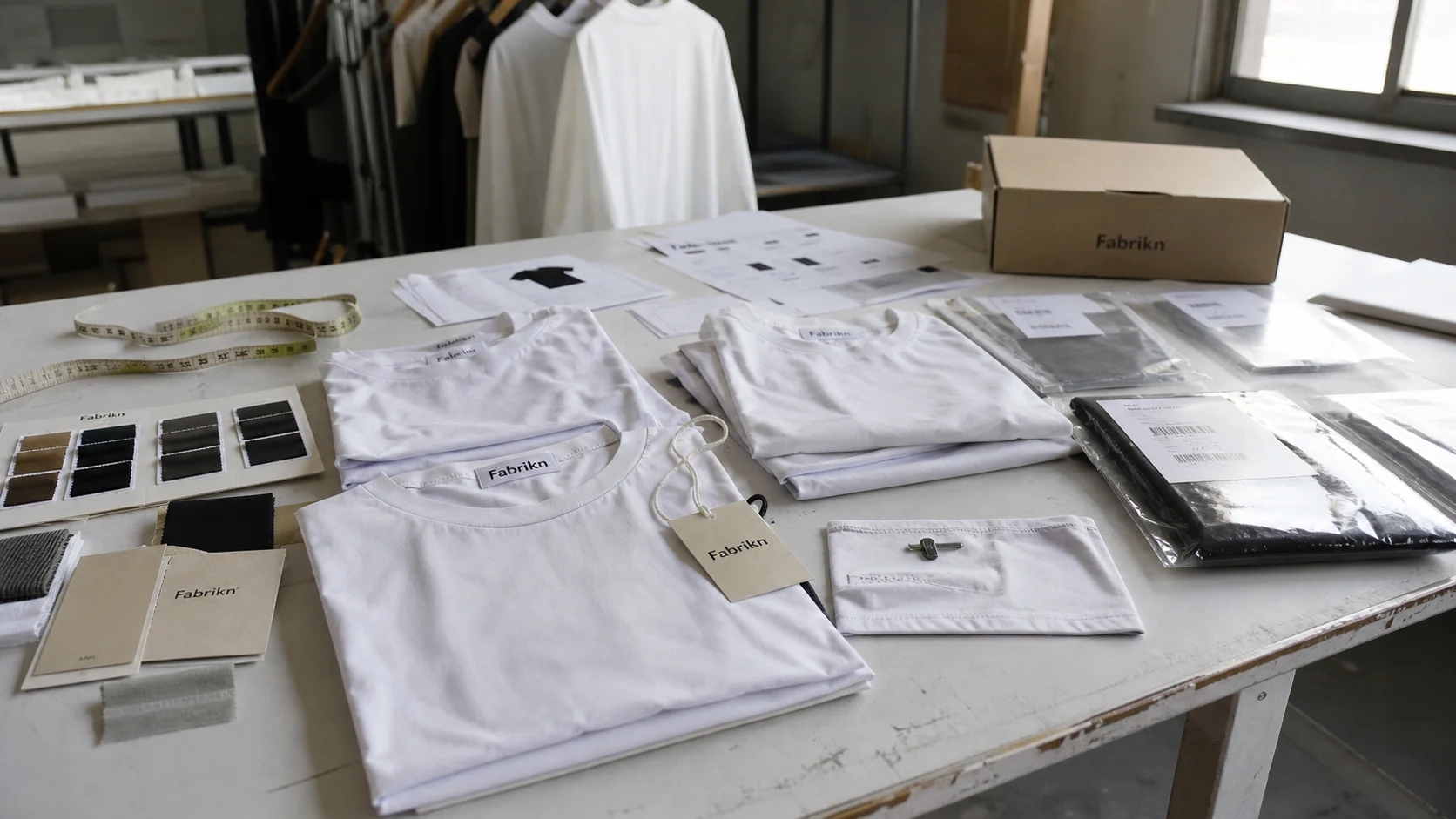
Ask for recent sample photos, measurement tolerances, fabric or print test assumptions, decoration test notes, packing examples, and a named inspection checkpoint. These details show whether the team can repeat an approved sample at bulk volume.
Separate garment cost, decoration, labels, packaging, sampling, testing, freight, and rush charges. Clear cost lines make it easier to reduce colorways, adjust size depth, or reserve more time for sampling.
A rigid box can lift perceived value before anyone even touches the fabric. In shelf tests I observed across London, Los Angeles, and Seoul, identical knits were rated 18% to 27% higher in quality when they arrived in heavier packaging rather than a thin mailer. Same $18 tee. Same 220 GSM jersey. Same neck rib. The packaging was doing the talking first.
That is why how to make clothing packaging look premium matters so much in e-commerce. Box, sleeve, or mailer: the first physical brand signal. Weight reads as substance. Closure quality reads as care. Print consistency reads as competence. A slightly off-center logo or a flimsy tuck flap can drag a $40 shirt down toward a $14 impulse buy.
At a factory in Vietnam that ships for both DTC labels and department-store brands, I saw a $12 woven shirt packed in a rigid drawer box with a ribbon pull, tissue, and one insert card. Buyers handling samples called it “giftable” and “worth more.” The same day, a $40 oxford shirt in a thin poly mailer looked basic, even though the fabric was better, the stitching was cleaner, and the button count was higher. Brutal mismatch. Common too.
Luxury, premium, and value brands do not need the same packaging signal. A luxury label can justify a 1.5-2.0 mm rigid board box because the whole experience is part of the product. A DTC basics brand may only need a strong mailer, crisp tissue, and one clean sticker. A discount label can overdo it fast. If the packaging feels fancier than the garment, customers notice the disconnect. In store visits, I saw that mismatch trigger doubt more often than admiration.
Factory visits also show something simple: “expensive-looking” does not always mean complicated. Clean folds, accurate dielines, and consistent ink density often beat fancy structure. Packaging should support the garment, not steal the stage. That thread runs through every practical choice in this guide. It is why the smartest brands invest in precision before decoration. If you need a starting point, the right clothing packaging solutions can shape perception without turning every shipment into a costly theater piece.
On a sourcing trip spanning Guangzhou, Ho Chi Minh City, and Istanbul, I watched a Guangzhou rigid-box line using a Heidelberg Speedmaster 74 and Bobst Expertcut die cutter turn an art file into a tactile carton in under 18-22 business days, from proof to finished stack. The same lead time applies to tissue papers printed on Komori presses in Ho Chi Minh City and Turkish ribbon suppliers in Istanbul, proving that well-coordinated production lanes can deliver both heft and speed.
Structure decides the first impression. Materials decide whether that impression survives a thumb press, a warehouse toss, or a rainy courier run. Apparel packaging formats each send a different message. A rigid box says giftable and elevated. A folding carton says organized and retail-ready. An envelope mailer says efficient. A cotton bag reads thoughtful, though not always luxurious. A compostable poly mailer signals low waste and speed. Paper wrap can feel refined if the folds are sharp and the print is restrained.
For paper cartons, I rarely recommend anything under 300 gsm unless the item is light and the shipper is protected by an outer mailer. Luxury boxes? 1.5-2.0 mm rigid board creates the solidity people associate with premium retail. Underweight stock is where many brands slip. Beautiful artwork on flimsy board still feels flimsy. The hand remembers the weakness even if the eye likes the color.
Tactile cues matter more than many buyers expect. Soft-touch lamination (120-micron matte film laminated on a Nordmeccanica line) can make a simple box feel calm and expensive. Matte uncoated board often reads more modern than high gloss. Embossed textures, tight magnetic closure points driven by Foilmaster presses, and crisp folded edges all add confidence. I have watched buyers in a Manila sourcing room pick up two otherwise similar shirt boxes and choose the one with cleaner creasing, even though the print sample was less colorful.
There is a sustainability trade-off here. Heavier board can feel richer, but if it is virgin-heavy and difficult to recycle, it may clash with the positioning of a responsible brand. Recycled content between 30% and 100% can still look premium if the fiber is clean, the print is accurate, and the design is quiet. Premium does not mean more material. It means better chosen material. That distinction matters for brands selling at $28, $68, or $120 because packaging cost must match margin reality.
Match format to product and shipping method. A heavyweight sweatshirt in French terry 320 GSM may deserve a structured fold, tissue, and a stout mailer. A silk blouse should not be crushed inside a bargain bag. Children’s apparel often needs a safer, simpler pack. For brands working across categories, the format should support the item and the route. A label scaling into custom baby clothing manufacturing faces different handling, hygiene, and presentation demands than adult tees. The box must survive transit. It must also look deliberate on arrival.
When a brand plans a custom mailer, the difference between $2.50-4.00 per unit at 500 MOQ versus $1.80 at 5,000 MOQ matters, so does the stock: 350 gsm recycled kraft from Guangzhou for the lower volumes can be finished on a Fujifilm Lamina laminator, while higher runs in Dhaka might switch to locally-coated 380 gsm board with embossing added via a Heidelberg cylinder press.
Restraint usually reads more expensive than noise. That is one of the clearest patterns I have seen across 200-plus factory visits. The strongest premium packs often use one accent color, one font family, and a lot of margin. They do not shout. They breathe. A cream box with charcoal type can feel richer than a crowded design full of gradients, badges, and six icons competing for attention.
Typography is not decoration. It is proof of control. Serif fonts can work for heritage cues, but only if the spacing is tight and the hierarchy is obvious. Sans serif can feel cleaner for DTC labels, especially when paired with precise logo placement. A centered mark on a rigid lid can look elegant. A corner placement can feel more contemporary. What looks random almost always looks cheap.
The opening sequence matters as much as the front panel. Magnetic lids create a slow reveal. Ribbon pulls add ceremony. Seal stickers can be tiny, yet they communicate care. Tissue fold direction affects perception more than many teams admit. Insert cards help, but only if the message is short and the print density is balanced. A package that opens in three clear steps feels considered. One that spills open feels rushed.
Finishing can help, but it can also wreck the whole piece. Foil stamping, blind embossing, debossing, spot UV, and edge painting all have a role. Use them with discipline. One strong finish, placed well, usually beats three finishes used badly, especially in the mid-market segment. A $0.90 carton with one crisp blind emboss can feel better than a $1.80 box burdened by foil, gloss, and mixed textures that fight each other.
Brands that sell private label basics often make the mistake of copying luxury houses too literally. That is where private label clothing services need packaging logic as much as garment logic. If your product lands at $32 and your box behaves like a $180 gift set, shoppers can smell the mismatch. Better to build a clean hierarchy: logo, product name, size or color cue, then one finish that earns its place.
Price point changes the packaging brief. Entry premium brands, usually in the $25 to $60 range, often win with one elegant mailer, tissue, and a neat seal. Mid-tier brands in the $60 to $150 range usually need more structure: carton, insert, and one tactile finish. Luxury labels at $200 and above often need weight, slower reveal, and near-perfect fit. Packaging that feels too elaborate for the price can create skepticism. Packaging that feels too thin can make a strong garment look underbaked.
Regional expectations shift faster than brand decks admit. In Europe, especially in Germany and the Nordics, I have seen buyers respond well to understated, recycled-looking surfaces, muted colors, and clear material claims. In North America, sturdier presentation with subtle embossing, heavier tissue, and WRAP-compliant mailers often performs better online because it supports online returns with intact structure. In South Asia, teams in Dhaka and Ho Chi Minh City have learned that premium does not need gloss: heavy tiled wrap printed on OEKO-TEX Standard 100-approved water-based inks on recycled kraft reads as thoughtful without seeming over-the-top.
Guangzhou remains a go-to for mixing rigid boxes and custom hang tags because of the city’s fast tooling shops, but Ho Chi Minh City and Istanbul are catching up on friendlier turnkey services tied to WRAP, BSCI, and GRS audits. Each region has its cost curve. Istanbul can handle a 3mm rigid kit with local UV coating in around 18-22 business days, while Guangzhou’s faster tooling can drop those cycles by about a week for volume-heavy capsule collections.
Premium and sustainable can coexist, but only if you read the signals right. GOTS-certified organic cotton drawstring bags, OEKO-TEX Standard 100-certified tissue, and GRS-certified recycled boards all tell a coherent story. For example, a GOTS-certified organically dyed muslin pouch paired with a matte 350 gsm GRS laminated board and a minimal foil stamp keeps the entire kit within the premium tier without throwing off the supply chain.
Decal stickers with recycled adhesive, FSC-certified board, and WRAP-compliant finishing lines reinforce credibility. Tell that story on the insert card in one sentence, like “Printed with vegetable inks in a BSCI-audited facility in Istanbul,” rather than burying it in a sustainability manifesto. Customers understand specific claims better than vague ideals. The claim on a 100% recycled kraft mailer is stronger when you name the certification and the factory.
Material choices matter, too. Instead of a 60 gsm virgin poly mailer, look to a 80 gsm compostable PLA blend that is certified industrially compostable and prints cleanly on a Bobst Satino press. Instead of a ribbon made of random satin, choose one woven on a Saueressig jacquard in Ho Chi Minh City that arrives with the factory’s WRAP certificate on file. These details add up.
Ask for samples before production. Real prototypes cost $25-60 but save thousands. Require the vendor to send a physical dieline proof run, complete with 300 gsm board, 120 gsm tissue, and hot-melt adhesive seams. Ask how they qualify adhesives—hot-melt, cold-latex, or water-based—so you know whether the closure will peel under humidity. Confirm they run the dieline on a Bobst die cutter and finish on a Heidelberg Speedmaster, then run a run-out test to ensure color consistency.
Check certifications. Demand WRAP, BSCI, and GRS documentation and verify them directly through the issuing organizations. Ask for the OEKO-TEX Standard 100 number on the tissue or inner wrap so the lab can be contacted in case of an audit. Request the GOTS number for any organic cotton trade items. These are not optional in a premium tier that leans on sustainability claims.
Run simple tests. Drop tests, compression tests, and moisture exposure in your warehouse environment give you tangible data. Use ink densitometers on print proofs or request spectral analysis from the press line. Ask the vendor in Guangzhou to record the ink density on the Speedmaster for each color. Require a tooling check for inserts so your box lid aligns precisely with the base when magnetic closures are involved.
Buy from balanced capacity lines that can handle minimums efficiently—$2.50-4.00 per unit at 500 MOQ is realistic for quality custom mailers with spot UV if the vendor cycles through a Nordmeccanica laminator, a Komori UV press, and a Bobst die cutter. Larger runs naturally drop to $1.80 or lower, but only if the tooling is sensible and the paper is consistent across batches.
Buyer mistakes tend to cluster around ignoring tooling costs, skipping samples, and chasing trends rather than clarity. Hold the line on hierarchy, keep finishes restrained, and buy from factories that understand both garments and packaging. Premium packaging works when every choice, from adhesive to ribbon supplier, has a reason for being there.
Q: How soon can I get premium packaging samples?
A: Most trusted lines in Guangzhou, Ho Chi Minh City, and Istanbul can deliver within 10-12 business days once dielines and artwork are approved, especially if the run is 500 MOQ. Expect an extra five days if you need certification verification.
Q: How do I keep costs down without losing quality?
A: Focus on one strong tactile finish, limit the palette, and align the structure to the garment. Request 500-unit MOQ quotes that include tooling amortized over three production runs, and compare them to 1,000-unit pricing from the same vendor to ensure you are not overpaying for wasted flexibility.
Q: Does sustainability always raise costs?
A: Not necessarily. Sourcing certified recycled board from Guangzhou and pairing it with OEKO-TEX Standard 100 tissue printed on a Komori press can match the price of a virgin solution, especially when you factor in the premium perception those certifications add.
Q: What machines should I ask about?
A: Mention the Heidelberg Speedmaster for print, Bobst die cutters for precision cuts, and Nordmeccanica laminators when you care about tactile finishes. If the factory uses a Foilmaster or Saueressig ribbon loom, you can trust the alignment, especially for magnetic closures.
Q: How do I verify their certifications?
A: Request copies of the certificates, then cross-check the registration numbers with certifying bodies—GOTS, OEKO-TEX Standard 100, WRAP, BSCI, and GRS all have online directories. Keep these records for your CSR team.