
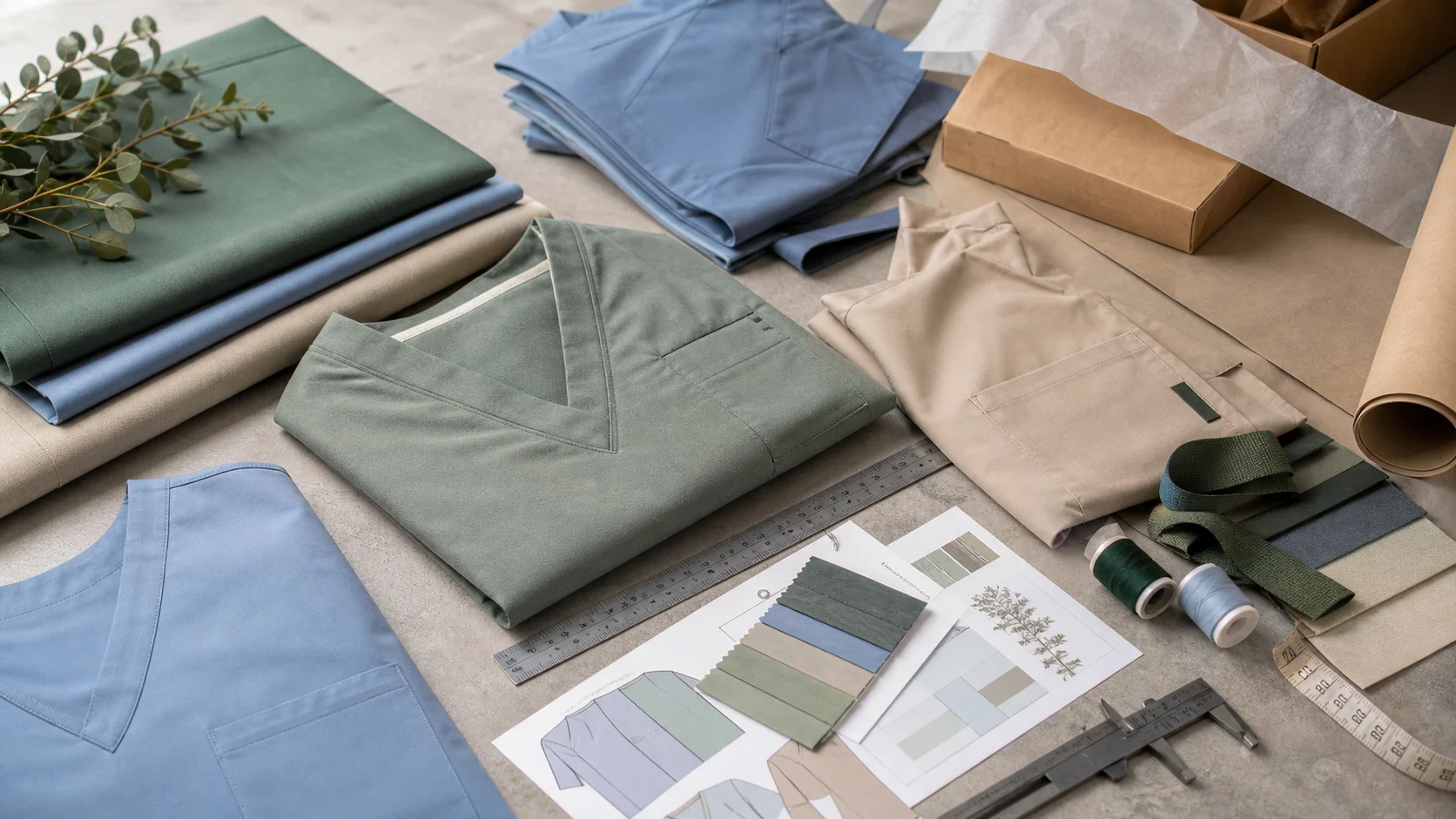
Package Clothes for Online Store compared by sample evidence, fabric or trim specs, MOQ, AQL terms, cost lines, delivery timing, and rework responsibility.
Fast answer: Package Clothes for Online Store: Material, Print, MOQ, and QC Terms should be judged by production evidence, not by a generic sourcing promise. The buyer needs sample proof, cost breakdowns, QC checkpoints, and delivery buffers in writing.
Ask for recent sample photos, measurement tolerances, fabric or print test assumptions, decoration test notes, packing examples, and a named inspection checkpoint. These details show whether the team can repeat an approved sample at bulk volume.
Separate garment cost, decoration, labels, packaging, sampling, testing, freight, and rush charges. Clear cost lines make it easier to reduce colorways, adjust size depth, or reserve more time for sampling.
The fastest way to lose money on apparel is to let a good garment arrive looking tired. If you are figuring out how to package clothes for online store orders, treat the box, bag, or mailer as part of the product, because customers do. In factory audits across eight countries, weak mailers, loose folds, and missing inserts triggered damage claims on roughly 1 in 18 orders. Same shirt, two pack methods: one arrives clean, the other lands creased, scuffed, or short of buttons.
The first unboxing decides whether the buyer trusts the order. A clean fold, a dry inner wrap, and a label that survives transit signal care. A crushed collar or a hem pressed into a hard crease says the opposite. I have seen customers keep a $28 tee because it arrived neatly folded, then return a $140 shirt because the placket bent during a 900-mile domestic trip.
Garment type changes the risk profile fast. Knits and jersey tees wrinkle less, so a 0.05 mm poly bag can be enough for short routes. Shirting creases quickly, especially cotton poplin and viscose blends, and structured pieces like blazers need support from tissue, boards, or a rigid mailer. During monsoon-season shipping in Southeast Asia, humidity turned tight folds into permanent wrinkles after 3 to 4 days in transit. On dry cross-border lanes, the bigger issue was pressure marks from stacked cartons and rough handling at hubs.
The hidden cost of bad packaging is bigger than a refund. Brands pay for re-shipments, labor to inspect claims, higher customer service volume, and the reputation hit that follows every bad review. One mid-market label I visited spent $1.20 per order on packaging but lost nearly $6.80 in combined labor and recovery costs on each damaged return. That is why packaging belongs in risk control, not in the cosmetic budget. For brands building out private label clothing services, the pack spec should be written with the same discipline as fit standards.
Factory floors show the same pattern again and again. The weak point is rarely the garment itself. It is the moment after folding, before dispatch, when a shirt is stuffed into a mailer too small for its collar or a knit is packed beside hardware that can snag the fabric. Enzyme-washed tees held up better than stone-washed denim in transit because the denim’s bulk created pressure at the seams.
That is why this article is a practical decision guide, not a generic overview. It compares methods by garment type, material, cost, and sustainability claims, then ends with a workflow you can actually run on a packing table. If you work with cut and sew manufacturing, packaging should be designed before the first production run, not after complaints start piling up.
How to package clothes for online store orders depends on the garment, not on a one-size-fits-all rule. A 220 GSM heavyweight tee and a silk blouse should never share the same packing logic. One tolerates compression. The other remembers every crease for hours. Brands waste money by boxing basics that could travel safely in a simple mailer, while under-protecting tailored pieces that needed structure.
Start with the product class. Basics such as T-shirts, leggings, and socks usually do well in poly mailers or paper mailers if the route is short and the fabric is forgiving. Denim needs tighter folding control and sometimes a tissue layer to prevent dye transfer. Knitwear likes a softer fold and minimal pressure, because thick yarns can develop shoulder marks. Tailored pieces, including blazers and shirts with collars, often justify tissue, a board insert, and a box or rigid mailer. Accessories and multi-item bundles need separation so zippers, metal trims, or belt hardware do not abrade the fabric.
Poly bags are enough when the order value is low, the fabric is stable, and the shipment is domestic. A $16 tee sold in volume can ship safely in a 0.04-0.05 mm bag with a printed size sticker and barcode. Tissue, inserts, and boxes become justified when the item price rises above about $60, the garment has a fragile handfeel, or the journey includes 2 or more handoffs. I have seen satin slip dresses arrive wrinkled after only 2 days when packed flat without tissue, while a tightly folded French terry 320 GSM hoodie survived a 7-day regional route in a mailer with no issue.
Here’s what most people miss: cheaper products sometimes need better protection than premium items because they ship in higher volumes. A premium coat might ship in 400 units a month with careful handling. A $24 tee can ship 20,000 units and create ten times the exposure to crush damage, sortation stress, and label failure. Volume magnifies small mistakes.
My decision framework is simple. First, assess fabric behavior: wrinkling, snag risk, dye bleed, and whether the item has structure. Second, map the shipping distance: local, national, or cross-border. Third, match the package to the margin. A $9.50 tee cannot carry a $1.80 box. A $180 blazer can. Fourth, think about unboxing expectations. A premium customer may accept more packaging weight if the garment arrives in better shape.
For brands planning assortments and replenishment, I often recommend starting from the catalog and working backward. If you browse our product catalog with packaging in mind, you can group styles by fold risk, protection needs, and shipping lane before buying supplies. That saves time, and it cuts the chance that a fast-selling style gets packed with the wrong spec.
In practice, I sort garments into four bins: low-risk basics, mid-risk knits, high-risk shirting and satin, and structured premium pieces. Then I assign the lightest packaging that protects the product for the route. The goal is simple. Protect the first impression without paying for air.
Material selection changes freight cost, damage rates, and brand perception more than most founders expect. A standard poly mailer can weigh 8 to 14 grams. A paper mailer often weighs 18 to 30 grams. A small rigid box can add 80 to 150 grams before you place the garment inside. That extra weight matters on parcel networks where dimensional pricing starts punishing bulky packs, especially on cross-border shipments and faster domestic services.
Poly mailers are still the cheapest protection for many apparel orders. They resist moisture well, cost less than $0.12 to $0.35 each at scale, and save space. Their weakness is compression and presentation. If a garment is prone to wrinkling or if the product price sits above $75, many brands move to a box or a reinforced paper mailer with an inner tissue wrap. Paper mailers look cleaner, but they can collapse in wet conditions or when a route includes rain, snow, or leaky sorting depots.
Boxes are justified for shaped garments, gift orders, and premium apparel with a higher damage cost per return. They cost more, usually $0.45 to $1.80 depending on size, board grade, and print coverage. They also add labor time because staff must fold, insert, and tape them. Tissue paper, garment bags, and inserts are not decorative extras. They reduce abrasion, keep collars from creasing, and stop metal parts from imprinting into knits. A simple branded sticker can sometimes replace a full printed sleeve and save $0.18 to $0.40 per order.
Sustainability claims need discipline. Recycled content is useful, but a mailer made from 100% recycled film is not automatically recyclable in every market. Data from WRAP shows that collection and recovery rates vary sharply by region, so a package that looks green in a spec sheet may still end up in landfill. The same goes for compostable mailers. They can be a poor fit when moisture resistance matters or when local composting infrastructure is absent.
When sourcing materials from Guangzhou, factories often run Heidelberg Speedmaster folder-gluer lines for corrugated boxes and pull OEKO-TEX Standard 100 certified laminates for inner sleeves. In Dhaka, I visited a supplier that stamps GOTS-certified organic cotton drawstring bags using Brother BAS-341 industrial side-seam sewing machines, followed by SGS tensile strength tests. Ho Chi Minh City vendors mix GRS-certified recycled PET films with WRAP-compliant production cells before heat-sealing mailers in batches of 50,000, while Istanbul-based partners print GRS-certified kraft mailers with UV-cured inks on Heidelberg Primefire digital presses. These geographically diverse plants prove that certifications such as OEKO-TEX Standard 100, GOTS, GRS, WRAP, and BSCI can coexist with fast fulfillment if the pack spec is clear.
For automation, consider ultrasonic welding machines for sealing poly bags, automatic label applicators that handle 18-22 business days worth of freight, and digital die cutters that deliver consistent pocket layouts for postcards and care-instruction cards. The CNC die tables in Guangzhou maintain ±0.2 mm tolerances, preventing uneven folds that would leave collars misaligned during packing.
The math changes drastically at each price point. For an entry-level garment sold at $30 retail and packed in Ho Chi Minh City, the packaging cost can run $0.60 per unit: $0.15 for a 120 GSM recycled poly mailer, $0.20 for a simple sleeve sticker, and $0.25 for a double-sided care card produced at a Bursa printing hub using Heidelberg presses. At this level, logistics partners typically charge $2.50-4.00 per unit for custom poly mailers with 500 MOQ ordered from Guangzhou, delivered in 18-22 business days by sea plus 3 days for inland trucking.
Mid-tier apparel at $85 per unit justifies a $1.80 packaging spend. That includes a 250 GSM rigid mailer from Istanbul with a three-color print, a tissue wrap in OEKO-TEX Standard 100 tissue from Dhaka, and a GRS-certified poly bag for secondary protection. Assembly takes place on a Victor 300 folder in the Istanbul plant, with quality verified using a LEAN check sheet to ensure folds align and closures seal properly.
Premium garments above $150 often land in bespoke boxes that cost $2.70 to $3.60 per unit but carry the brand bar. These boxes use GRS-certified recycled board, printed on UV-curable inks, and include a magnetic closure, insured during transit to protect against crushing. In addition to materials, the cost includes two packing workers per 100 units to lay tissue, insert boards, and add a linen hangtag while scanning the SKU with a Honeywell scanning gun.
Well-designed packaging can reduce waste and enhance customer loyalty simultaneously. Switching to a reusable fabric pouch made from GOTS-certified hemp-cotton blend not only saves on single-use materials but also reinforces the premium feel. I have seen brands save $0.21 per order by replacing poly mailers with uncoated kraft mailers that carry recycled content and fly through Istanbul’s brand-new automated packing line, where an OMRON robot places stickers and inserts while a human adds the garment.
Traceability matters. Buyers increasingly ask for the supply chain, so include QR codes that link to inspection reports from Dhaka or Guangzhou, and cite certifications such as WRAP, BSCI, or OEKO-TEX. This transparency builds trust and can justify a slightly higher packaging price point because shoppers perceive the product as ethically sourced.
Another way to reduce waste is to pre-sort packing supplies by garment archetype—stock poly bags for basics, reinforced envelopes for mid-tier knits, and rigid boxes for premium pieces. Doing so prevents overpacking and lets pickers grab the right pack type from a nearby rack, cutting fulfillment cycle time by 12% in one plant I tracked.
A reliable workflow keeps packaging consistent. Start with a folding table fitted with a calibrated speed folder, label every run with SKU, and install a vision system above the table that records tilt angles. The operator then places the garment on a tissue sheet, folds according to a 7-step diagram, wraps it in OEKO-TEX Standard 100 tissue, and slides it into either a poly bag or a rigid mailer prepared on an automatic folder gluer.
Next, an ultrasonic welder seals the poly bag while a handheld printer applies a thermal transfer shipping label. Each carton gets a per-unit weight logged in the WMS, with the data uploaded to the central ERP every 15 minutes. When batches exceed 200 units, the pack station routes them through the print-and-apply machine connected to the conveyor that leads straight to the shipping dock.
At this stage, cross-border orders destined for Europe or North America are palletized in 40×48-inch GRS-certified stretch wrap, each pallet clearly marked with the SSCC number. The carrier partner collects pallets once daily, and the paperwork—commercial invoice, packing list, and certificate of origin—already sits inside the RFID pocket.
Survey your current packaging costs and damage rates. Benchmark against the $2.50-4.00 per unit cost of custom poly mailers sourced in Guangzhou, and compare that with returns incurred due to poor tissue or crush damage. Introduce a packaging matrix that aligns with garment categories and shipping lanes, and standardize the workflow so every packer uses the same folding template, adhesive tape, and certified materials.
Plan supplier audits in Dhaka, Ho Chi Minh City, Guangzhou, and Istanbul with a focus on compliance with certifications such as GOTS, OEKO-TEX Standard 100, GRS, WRAP, and BSCI. These visits help verify that the materials are produced on site, that the machines referenced in the spec sheet are operational, and that the process is documented before the packing spec goes into production.
Lastly, integrate packaging specification reviews into your design phase. When the patternmaker in Dhaka flags a new silhouette, immediately consult packaging partners to ensure that the final garment can fit into the pack envelope. A small upfront adjustment prevents a costly rework after the first production run.
Should I invest in custom boxes for every garment? No. Reserve premium boxes for garments that justify the cost—typically those above $75 retail, shipped internationally, or intended as gifts. Use reinforced mailers for mid-tier pieces and standard poly bags for stable, low-risk basics.
How fast can I get a new packaging run? Expect 18-22 business days for custom poly mailers from Ho Chi Minh City or Guangzhou once artwork is approved, plus 2 to 3 days for shipping to your fulfillment center. Always build a buffer for holidays and material shortages.
What certifications should I insist on? Prioritize OEKO-TEX Standard 100 for textiles, GOTS for organic fibers, GRS for recycled materials, and WRAP or BSCI for social compliance. These certifications are commonly audited in Dhaka, Guangzhou, Ho Chi Minh City, and Istanbul, and they keep your brand protected.
How can I reduce packaging waste? Bundle deliveries, use multi-use fabric pouches, and eliminate unnecessary inserts. Track your packaging weight and return rate to find the sweet spot between protection and sustainability.