
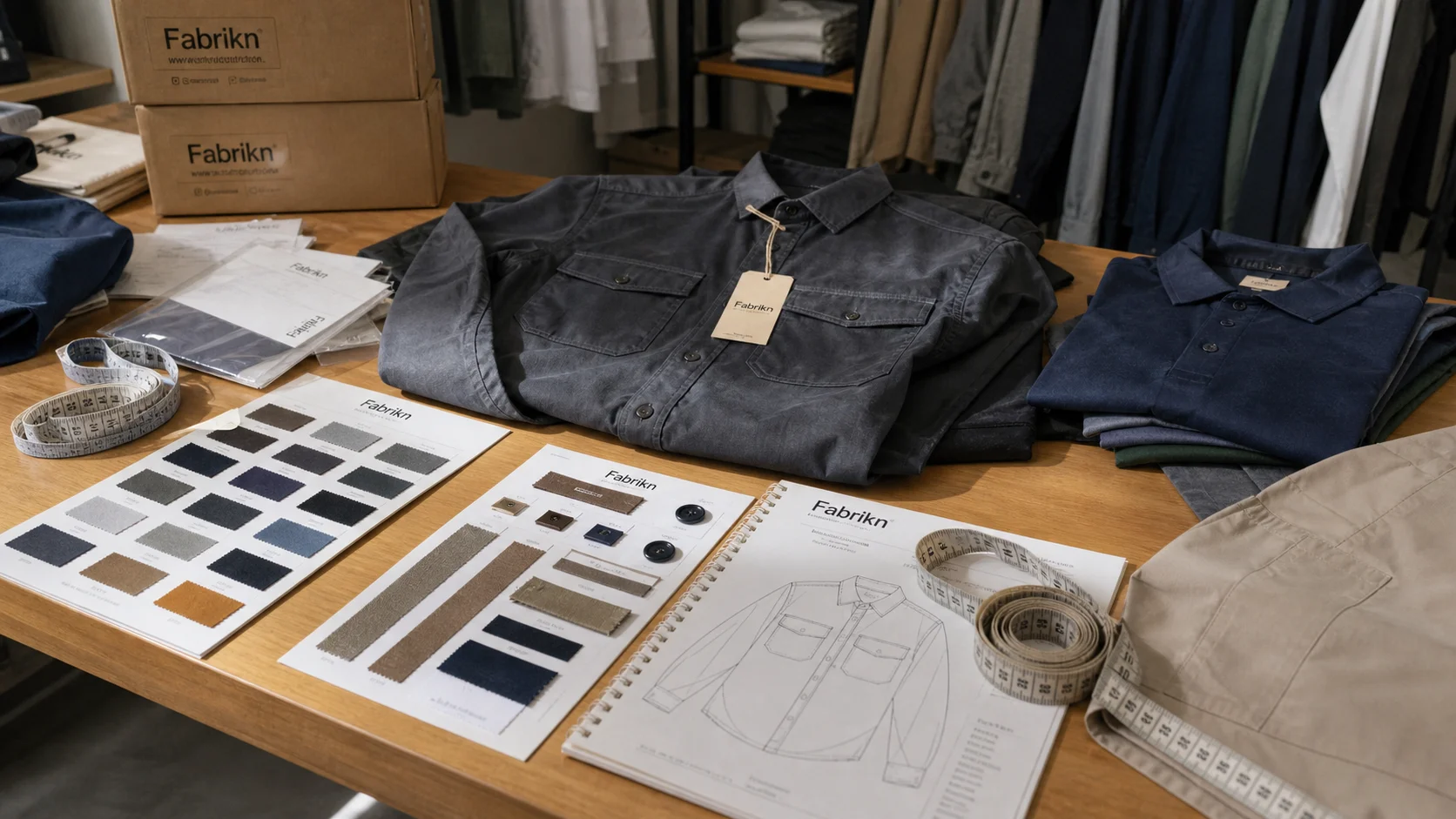
Plan A Reorder Strategy with Apparel Manufacturers compared by sample evidence, fabric or trim specs, MOQ, AQL terms, cost lines, delivery timing, and...
Fast answer: Plan A Reorder Strategy with Apparel Manufacturers: Sample Evidence, MOQ, Capacity, and Rework Terms should be judged by production evidence, not by a generic sourcing promise. The buyer needs sample proof, cost breakdowns, QC checkpoints, and delivery buffers in writing.
Ask for recent sample photos, measurement tolerances, fabric or print test assumptions, decoration test notes, packing examples, and a named inspection checkpoint. These details show whether the team can repeat an approved sample at bulk volume.
Separate garment cost, decoration, labels, packaging, sampling, testing, freight, and rush charges. Clear cost lines make it easier to reduce colorways, adjust size depth, or reserve more time for sampling.
Planning a reorder strategy with apparel manufacturers is one of the most important parts of building a stable, scalable apparel business. Whether you are managing a private label brand, growing a retail collection, or supplying uniforms and promotional apparel, reorder planning helps you avoid stockouts, reduce production delays, control costs, and maintain product consistency. A strong reorder strategy is not just about placing another purchase order when inventory runs low. It is about forecasting demand, aligning production lead times, managing fabric and trim availability, and building a reliable relationship with your manufacturing partner.
For growing brands, the challenge is even greater because demand can shift quickly. A style that sells slowly in one season may become a best-seller after a marketing push, influencer mention, or retail placement. If your reorder system is not ready, you may miss sales opportunities or rush production at higher costs. By working strategically with apparel manufacturers, you can create a process that supports consistent replenishment without creating excess inventory.
This guide explains how to build a reorder strategy that works with apparel manufacturers, what data you need to track, how to manage lead times and minimums, and how to create a repeatable process that supports growth.
A reorder strategy gives your apparel business structure and predictability. Instead of reacting to low inventory after it becomes urgent, you create a system that tells you when to replenish, how much to produce, and which items deserve priority. This matters because apparel production is slower and more complex than many other product categories. Fabric sourcing, cutting, sewing, finishing, labeling, packaging, and shipping all take time.
Without a reorder strategy, brands often face one of two problems: they stock out of high-performing items or they over-order and tie up cash in inventory that moves slowly. Both situations hurt profitability. A planned reorder system helps you balance service levels and cash flow, keeping your best sellers available while reducing waste.
For apparel manufacturers, reorders also improve planning. When a brand provides clear reorder logic, the factory can better schedule production, reserve raw materials, and streamline operations. This can lead to better lead times, more consistent quality, and stronger supplier relationships.
The foundation of an effective reorder strategy is demand understanding. You need to know how each style, size, color, and channel performs before deciding how much to reorder. One product may sell steadily every month, while another may peak only during promotions or seasonal periods.
Start by reviewing the following data:
This data helps you identify reorder candidates. For example, if a T-shirt style has sold consistently for six months across multiple sizes, it may be a strong candidate for repeat production. On the other hand, if an item sold well only during a short campaign but has not shown steady demand, a large reorder could be risky.
It is also important to understand lead indicators, not just past sales. Website traffic, add-to-cart rates, wholesale reorders, and social media engagement can all signal future demand. Apparel brands that combine sales data with leading indicators usually make better replenishment decisions.
Not every apparel manufacturer handles reorders the same way. Some factories specialize in fast replenishment for core basics, while others are better suited to seasonal collections or complex custom work. Before building your reorder strategy, understand exactly what your manufacturing partner can support.
Key questions to ask include:
Understanding these details helps you avoid surprises later. A manufacturer may be able to reproduce a style exactly, but if the original fabric has been discontinued, you may need to approve a substitute. In other cases, the factory may require a minimum quantity that affects your reorder timing and budget.
To learn more about working with a manufacturing partner, visit our services page.
A reorder trigger is the point at which you decide to initiate production. This trigger should be based on inventory levels, forecasted demand, and production lead time. If your trigger is set too late, you risk stockouts. If it is set too early, you may over-order.
There are several common reorder trigger methods:
For apparel, a practical reorder trigger often combines multiple factors. For example, if a style takes eight weeks to produce and ship, you may want to reorder when you still have 10 to 12 weeks of inventory available. That buffer allows time for manufacturing, quality checks, and transit without risking a gap in availability.
The best trigger also depends on the product type. Core basics like socks, tees, and hoodies may justify larger safety stock. Fashion-forward styles may need smaller, more cautious reorders because demand can change quickly.
Lead time is one of the most critical parts of reorder planning. Apparel manufacturers need time to source materials, prepare samples if needed, cut fabric, sew garments, complete finishing, inspect quality, and ship the finished goods. If you ignore lead time, you can misjudge your reorder window and run out of stock before the new batch arrives.
When calculating reorder timing, include the full timeline:
Always plan based on the longest realistic timeline, not the shortest optimistic one. Delays can happen due to fabric shortages, seasonal factory congestion, shipping disruptions, or approval changes. A conservative schedule protects you from missed sales.
If your business depends on fast replenishment, it is worth discussing whether the manufacturer can pre-book fabric or keep key materials in reserve. This can shorten future reorder cycles significantly.
Reorders become easier when the original materials are still available. If you plan well from the start, your manufacturer can often reuse the same fabrics, trims, labels, and packaging components. This improves consistency and helps maintain the same fit and finish across production runs.
However, reorders can become complicated when material suppliers change or when minimum order quantities are high. You may need to order more than your immediate demand requires just to meet fabric or trim requirements. That is why material planning should be part of your initial product development and reorder strategy, not an afterthought.
Color consistency is another major issue. Even small dye-lot variations can make repeat orders appear different from earlier batches. To avoid this, keep records of:
These records are especially valuable when reordering after several months. They help the manufacturer reproduce the product accurately and reduce the risk of inconsistencies that could affect customer satisfaction.
A successful reorder strategy depends on communication. The more clearly you share your plans, the easier it is for the manufacturer to support you. This is especially important if your order volumes fluctuate or if you expect several reorders over time.
Create a standard communication process that includes:
Many brands benefit from a monthly or biweekly review with their production partner. During this check-in, you can review sales trends, current stock, upcoming promotions, and expected replenishment needs. This helps both sides stay aligned and reduces the chance of emergency orders.
If you are still selecting a partner, contact our team through the contact us page to discuss your product and reorder needs.
There is no single reorder model that works for every apparel business. The best approach depends on your product category, sales volume, and margin structure. Most apparel brands use one of three common models.
This model works best for core styles with consistent demand. You place reorders on a regular schedule, such as monthly or quarterly. Scheduled replenishment helps you maintain a stable inventory position and is often ideal for basics and repeatable products.
In this model, you reorder when inventory falls below a predefined threshold. This is useful for products with predictable sales but varying demand timing. It gives you flexibility while still maintaining control.
This model uses historical sales data, market trends, and promotional plans to forecast future demand. It is often the best choice for growing brands that want to be more proactive and data-driven. Forecast-driven reordering requires better systems, but it can reduce both stockouts and overstock.
Many businesses use a hybrid approach. For example, they may schedule reorders for core items while using threshold-based triggers for seasonal styles. The goal is to match the model to the product lifecycle.
One common mistake brands make is assuming that a reorder will automatically match the first production run. In reality, repeat orders still need quality control. Even small changes in fabric, stitching, labeling, or finishing can affect the final product.
Before approving a reorder, compare it against the original approved sample and production records. Check the following:
If the reorder is based on a previous design, keep a sample archive. Physical reference samples are valuable for future production runs because they give the factory a clear standard to follow. Photos and tech packs are helpful too, but a saved approved sample is often the most reliable reference.
Strong quality control protects your brand reputation and keeps your reorder process efficient over time. If you know the product will arrive consistently, you can plan sales and marketing more confidently.
Each reorder should make the next one smarter. After every production cycle, review what happened. Did inventory run low too soon? Did you overproduce a size or color? Did demand exceed forecast after a campaign? The answers help refine your reorder system.
Useful performance metrics include:
Forecasting becomes more reliable when you combine sales data with merchandising, marketing, and manufacturing insight. For example, if a social campaign is scheduled next month, you can adjust reorder quantities in advance. If a product is slowing down, you may reduce the next batch or stop replenishment entirely.
Brands that treat each reorder as a learning opportunity typically improve their inventory control and profitability over time.
Even experienced apparel businesses make reorder mistakes. Avoiding these errors can save time, money, and stress.
The best way to avoid these issues is to create a repeatable reorder workflow and review it after every production cycle.
If you want a practical starting point, use this reorder framework:
This framework keeps your reorder process organized and helps your manufacturer support you more effectively. Over time, it creates a reliable supply rhythm that strengthens your business operations.
At Fabrikn, we work with brands that need dependable manufacturing support for both first-time production and repeat orders. Reorder planning is easier when you have a manufacturing partner that understands product consistency, lead time management, and communication. Our team helps clients organize product specifications, review repeat production requirements, and prepare for ongoing demand.
If you are building a brand or looking to improve your production workflow, our about us page explains more about who we are and how we support apparel businesses. You can also explore our services to see how we help with manufacturing solutions tailored to your needs.
A strong reorder strategy is not only about inventory. It is about creating a system that supports growth, protects margins, and builds customer trust. With the right planning and the right manufacturing partner, you can turn reorders into a strategic advantage rather than a last-minute emergency.
Get a free quote from Fabrikn — your trusted B2B clothing manufacturer with 10+ years of experience. MOQ as low as 200 pieces.
Get a Free Quote →A reorder strategy is a structured plan for when and how to replenish apparel products with your manufacturer. It includes demand forecasting, inventory triggers, lead time planning, and quality control for repeat production.
You should reorder when your stock reaches a predefined trigger based on sales velocity, safety stock, or forecasted demand. The trigger should account for your manufacturer’s production and shipping lead times.
Share product specs, size breakdowns, color references, approved samples, previous order quantities, target delivery dates, and any updated requirements. Clear communication helps avoid errors and delays.
You can reduce delays by documenting product details thoroughly, confirming fabric availability early, placing reorders before inventory is too low, and maintaining regular communication with your manufacturer.
Not necessarily. Reorder quantities should be based on current sales trends, forecasted demand, seasonal factors, and stock levels. A flexible approach usually works better than repeating the same quantity automatically.
The biggest risks include stockouts, overstock, inconsistent quality, material shortages, and production delays. A well-planned strategy helps reduce these risks and improve profitability.
Fabrikn supports apparel brands with manufacturing services, production planning, and communication around repeat orders. If you need help building a more reliable reorder process, you can reach out through our contact us page.