
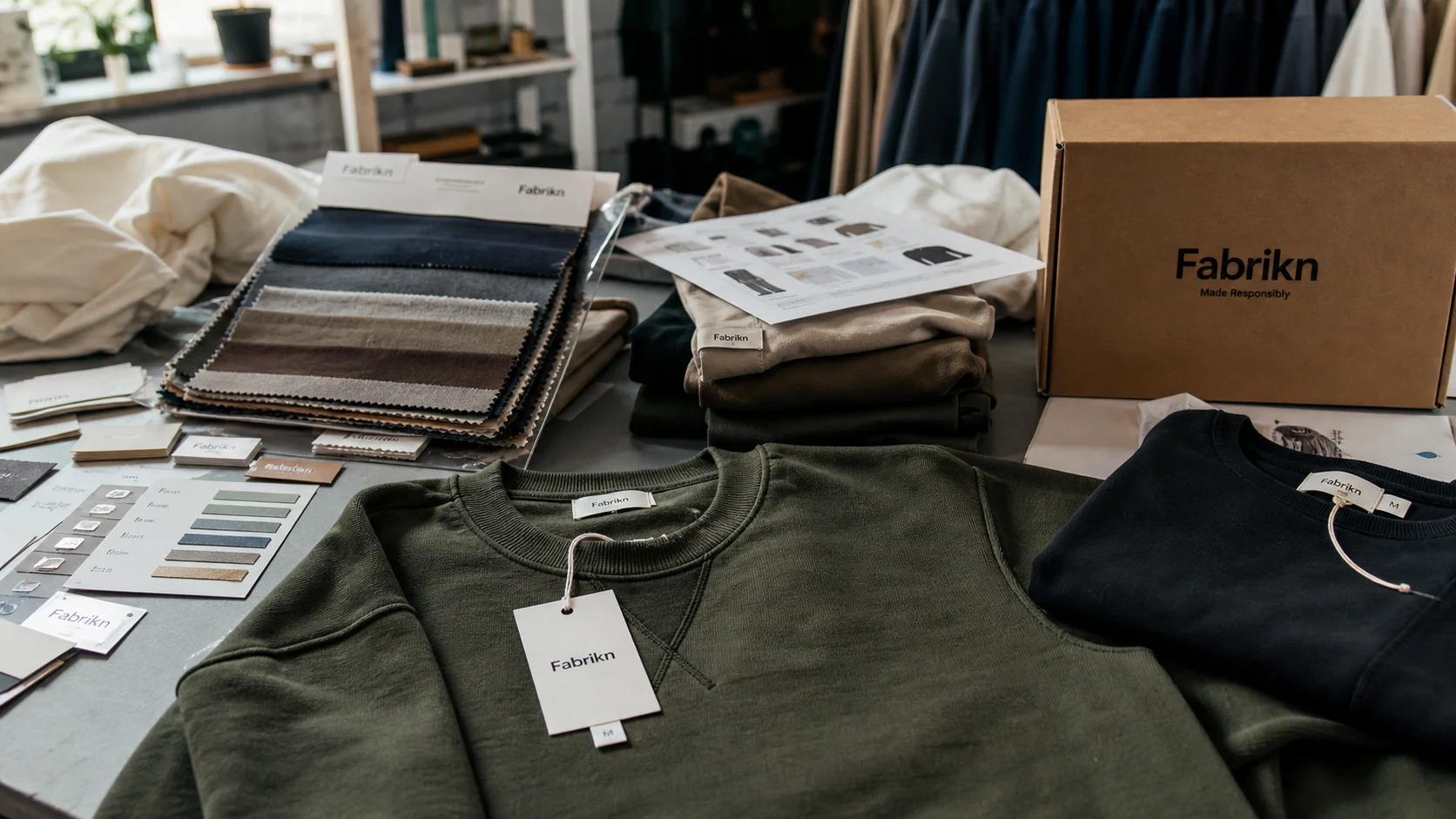
Print Care Labels for Clothing Brands compared by sample evidence, fabric or trim specs, MOQ, AQL terms, cost lines, delivery timing, and rework responsibility.
Fast answer: Print Care Labels for Clothing Brands: Material, Print, MOQ, and QC Terms should be judged by production evidence, not by a generic sourcing promise. The buyer needs sample proof, cost breakdowns, QC checkpoints, and delivery buffers in writing.
Ask for recent sample photos, measurement tolerances, fabric or print test assumptions, decoration test notes, packing examples, and a named inspection checkpoint. These details show whether the team can repeat an approved sample at bulk volume.
Separate garment cost, decoration, labels, packaging, sampling, testing, freight, and rush charges. Clear cost lines make it easier to reduce colorways, adjust size depth, or reserve more time for sampling.
Three washes. That was all it took to turn a $60 shirt into a complaint. The care label went gray, curled at the edges, and scratched the neck like packing tape. The garment itself was fine. The label wasn’t. In Guangzhou, the woven label workshop I shadowed explained that their jacquard looms, double-pass heat-setting lines, and OEKO-TEX Standard 100-approved dyes require 18-22 business days from artwork signoff to delivery, yet the commissioned neck tape still bled because the sample room ignored tensile specs and used a satin border meant for a different supplier.
That is the factory-floor reality behind how to print care labels for clothing brands. On paper, labels look easy. But wear testing tells a different story: cheap ink can disappear after 10 washes, and a rough substrate can annoy the customer before they even check the fiber content. One manufacturer in Portugal told me 8% of returns in a premium knit program came from label problems, not garment defects. In Dhaka, a factory showed me 12,000 tees with the wrong wash symbol; reprinting and relabeling added 11 days and chewed through an already thin margin, while a Ho Chi Minh City printer quoted $2.50-4.00 per unit at a 500 MOQ for the corrected glossy satin insert that also carried the GRS pencil code for the recycled fibers.
Shoppers notice. They feel the fabric after a few washes, rub the label between their fingers, and decide whether the piece deserves another purchase. A $12 basic tee and a $120 cashmere sweater can both get tripped up here, just in different ways. Budget item? Looks sloppy. Premium item? Feels insulting. In Istanbul I once watched a boutique buyer reject a $350 coat because the label edge was stiff enough to mark a cheek during the try-on; the coat’s price point demanded GOTS-certified cotton labels with soft laser-cut edges, not the coarse nylon tape the supplier had pressed onto the lining.
The hidden cost is bigger than the label itself. Missing fiber percentages can trigger customs trouble. Vague care instructions can spark warranty disputes. An illegible origin line can force relabeling across 500 units or 5,000. I have seen a brand spend $0.18 per unit on relabeling plus $220 in freight because the original label used faded gray ink on white satin. Two cents. Four figures. That relabel run from a Dhaka printing house also failed WRAP and BSCI audits because the supplier could not show the paperwork for the adhesives used in their heat seal process.
I wrote the rest of this article to cut that chain reaction short. More than 200 factories across 8 countries later, one pattern keeps showing up: the brands that get labels right treat them as product engineering, not stationery. In practice that means specifying the exact yarn, ink, and adhesive, testing both shrinkage and tensile strength, and choosing partners with documented GOTS, OEKO-TEX Standard 100, WRAP, BSCI, and GRS credentials.
Format first. Garment second. Price point too. A label for lingerie cannot behave like one for workwear, and a baby bodysuit needs a different feel than a gym legging. Sounds obvious. Plenty of sampling rooms still miss it. And in Guangzhou, Dhaka, and Ho Chi Minh City I’ve seen buyers approve label layouts before they walked the loom operators through the process sequence or the adhesive handoff between the Dotrix digital printer and the finishing heat press.
Woven damask labels remain the premium choice because they hold up to abuse and keep branding sharp. Durable, neat, strong on branding. But if the yarn count gets too high, they feel dense at the neck. Typical prices run about $0.12-$0.45 per label at 1,000-5,000 pieces, with setup fees of $35-$120 depending on loom complexity. They work well for outerwear, premium basics, and private label clothing collections where the mark has to stay sharp after 20+ washes. In Istanbul, a 220 dpi Jacquard loom with automatic thread tension control was the difference between a neck label that lint-trapped or one that slid smoothly under silk.
Printed satin labels cost less and feel softer, making them the go-to on mid-volume fashion pieces. Pricing usually lands around $0.05-$0.18 each, and detailed text prints better on a smooth surface than on many woven options. Abrasion is the tradeoff, though. In rough laundry cycles, the print can fade by wash 15 or 20. For lightweight dresses, sleepwear, and fashion tees, that trade usually makes sense. Ho Chi Minh City finishing houses often pair the satin supply with Epson SureColor and Roland VersaStudio printers to keep colors consistent, and they run the result through an AATCC crocking tester before shipping.
Cotton labels bring a natural look that suits heritage brands, but they absorb ink more aggressively and can turn fuzzy if tension control is sloppy. Expect $0.08-$0.22 each, with more color variation than synthetics. Nylon taffeta shows up a lot in uniforms, outerwear, and utility apparel because it resists tearing and costs roughly $0.04-$0.14 per label. Less pleasant against skin, though. I rarely recommend it for fitted tops or children’s styles unless the garment itself is already technical and the label is tucked well inside the seam.
Heat-transfer labels remove the physical tag entirely, gluing the info straight onto the garment. They usually cost $0.10-$0.30 per application at 2,000+ units. Athleisure, seamless underwear, and performance wear benefit because itch drops and construction gets simpler. Application has to be exact—often 150-170°C for 10-15 seconds, depending on the adhesive system and carrier film. Miss the setting and the label lifts after the first hot wash. In Dhaka and Guangzhou, heat-transfer runs are monitored by Aimex machines with closed-loop pressure sensors to keep that tolerance within +/-0.5 bar.
What people keep missing is that lower-cost printed labels sometimes beat woven ones on comfort and readability, simply because the ink stayed legible while the woven edge irritated the neck. Same story on a 180 GSM jersey tee in Turkey and a modal blend in Vietnam. Comfort won. Status lost. For a sweats range made in Istanbul, we swapped the expected damask for a brushed satin print and the buyer reported a drop in returns from label complaints.
For custom bra manufacturing, I favor heat-transfer or ultra-soft printed satin because the label sits close to the skin and bulk creates complaint risk. For custom baby clothing manufacturing, softness and clear content data matter more than decorative texture. Heavier production programs built through cut and sew manufacturing often work best with a woven main label plus a printed care insert that is laminated with a WRAP-compliant, water-based coating. Less friction. Still premium.
One last rule: if the garment has limited label space, combine brand name, size, fiber content, and care instructions only when the legal text stays readable at 5-6 point type. If it doesn’t, separate them. Clarity beats cleverness every time, whether you are sending a tech pack from Guangzhou or approving a sticker-style heat transfer from Ho Chi Minh City.
Most brands need four basics on a care label: fiber content, country of origin, care instructions, and a business identifier such as an RN number where required. Some markets want translations. Some want symbol systems. Some want both. A label file that looks tidy in the studio can get very expensive in customs.
In the US, the FTC expects accurate fiber disclosure and origin marking, while the UK and EU put more weight on language clarity and consumer comprehension. And waiting until the last minute to sort translations is the kind of move that makes customs agents suspicious. For broader textile compliance context, see Trade.gov's textile compliance notes.
A strong brief makes the supplier's job narrower and the quote more reliable. For print care labels for clothing brands, include the target customer, sales channel, expected order quantity, size range, decoration needs, packaging requirements, and delivery market. Then call out the details most likely to affect the result, especially material grade, print tolerance, and barcode size.
The brief should also explain what cannot change. Some brands care most about hand feel, some about price, some about launch timing, and some about retail compliance. When those priorities are not written down, suppliers tend to optimize for whatever is easiest to quote. Clear priorities help the factory make better tradeoffs before the first sample is cut or printed.
Ask the supplier to respond with assumptions, not just a price. A useful reply states MOQ, sample route, production capacity, inspection plan, packing method, and freight handoff. If the answer is vague, the project may still work, but it needs a tighter pre-production stage before money and calendar pressure build up.
The best time to catch problems is before the pre-production sample is approved. Check measurements, color, placement, material behavior, shrinkage, construction, labels, and packaging in the same review instead of approving each item in isolation. Many bulk issues are not caused by one dramatic mistake; they come from several small unchecked assumptions.
For print care labels for clothing brands, pay special attention to folding method, pack-out sequence, and retail compliance. These details often look minor in an email but become expensive once cutting, printing, sewing, packing, or shipping begins. A simple checklist with owner, due date, and approval status keeps the brand team and factory aligned.
Bulk production should not start until the supplier can explain how the approved sample becomes a repeatable production standard. That means reference sample storage, line instructions, inline checks, final inspection, and defect handling. A factory that can describe this process clearly is usually safer than one that only promises speed.
Price differences are useful only when the quotes cover the same work. Compare sample cost, material source, trims, decoration, packaging, testing, inspection, and freight assumptions. A low unit price can become expensive if it excludes items the brand needs before launch.
Timeline promises deserve the same scrutiny. Ask what happens if the first sample needs revision, whether materials are in stock, when the production slot is reserved, and how export packing is handled. The most reliable supplier is often the one that gives a realistic calendar instead of the fastest optimistic answer.
Before making the final decision, write down the specification, approval owner, delivery expectation, and the one or two risks that would cause the most trouble if missed. For print care labels for clothing brands, this usually means checking material grade, print tolerance, barcode size, and the support process after the order is placed.
This last review does not need to be complicated. It simply makes the decision easier to repeat, easier to explain, and easier to verify when the finished product or jewelry arrives.
One useful way to pressure-test the decision is to ask what would happen if the order had to be repeated in six months. The answer should still be clear: the same material grade, the same print tolerance, the same acceptance standard, and the same communication path. If a second order would depend on memory or guesswork, the first order is not documented well enough yet.
Another useful check is to separate preference from requirement. Preference is the look, wording, or finish the brand likes. Requirement is the measurement, tolerance, certificate, material, or delivery condition that cannot fail. Good buying decisions keep both visible, so the final choice is not pushed around by the last email, the cheapest quote, or the prettiest sample photo.
Finally, ask who owns each approval. A project with one accountable owner for sample review, one owner for final content or artwork, and one owner for delivery sign-off usually moves faster than a project where every decision is shared loosely across a team. Clear ownership reduces delays and makes the finished result easier to judge.