
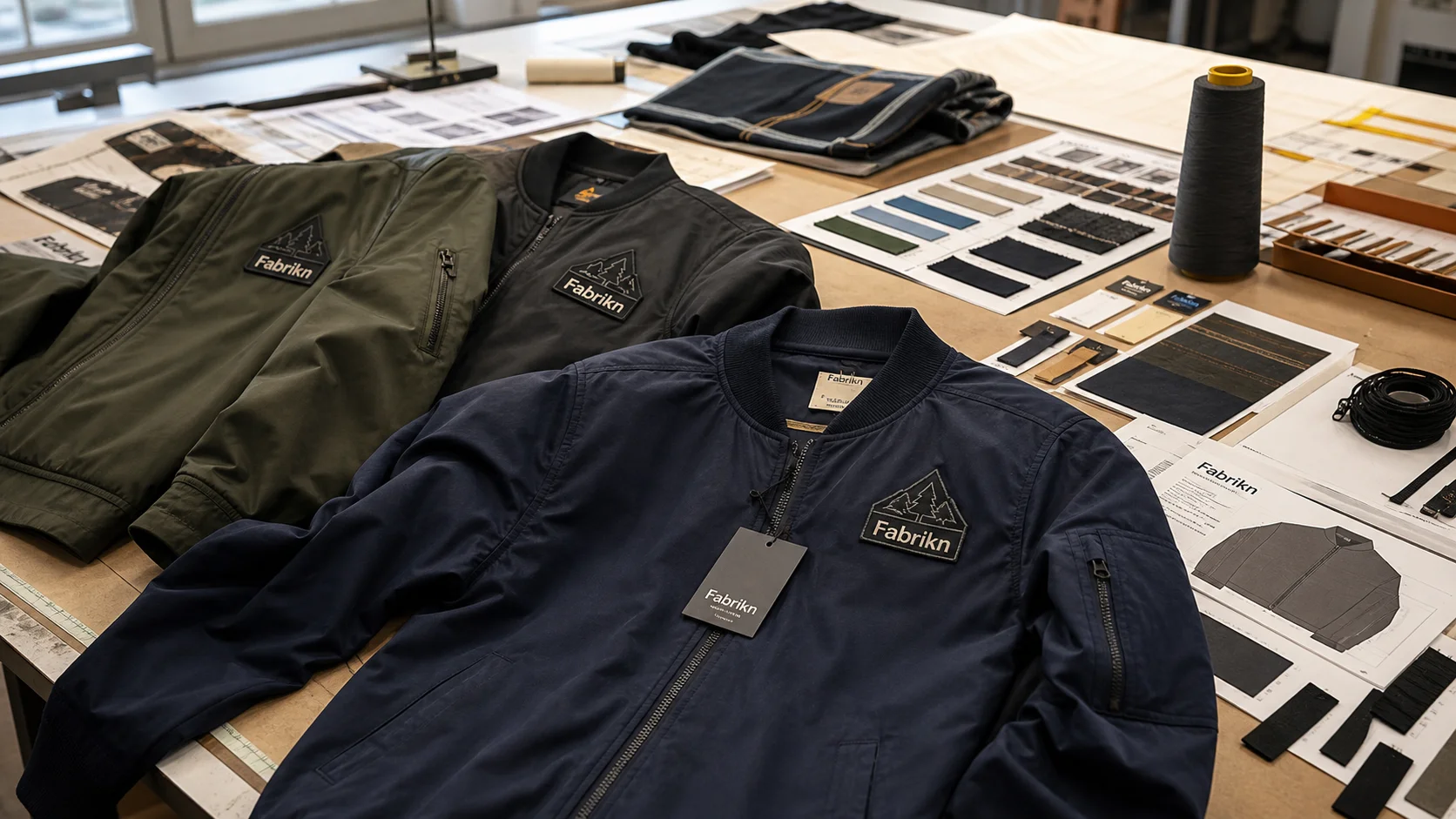
Reduce Packaging Waste in Clothing Ecommerce Fast compared by sample evidence, fabric or trim specs, MOQ, AQL terms, cost lines, delivery timing, and...
Fast answer: Reduce Packaging Waste in Clothing Ecommerce Fast: Material, Print, MOQ, and QC Terms should be judged by production evidence, not by a generic sourcing promise. The buyer needs sample proof, cost breakdowns, QC checkpoints, and delivery buffers in writing.
Ask for recent sample photos, measurement tolerances, fabric or print test assumptions, decoration test notes, packing examples, and a named inspection checkpoint. These details show whether the team can repeat an approved sample at bulk volume.
Separate garment cost, decoration, labels, packaging, sampling, testing, freight, and rush charges. Clear cost lines make it easier to reduce colorways, adjust size depth, or reserve more time for sampling.
If you want to understand how to reduce packaging waste in clothing ecommerce, start with the math, not the marketing. I have seen factories where the same 200-gram mailer is stuffed with so much promo collateral it resembles a holiday care package (seriously, the calculus goes sideways fast). I’ve stood in factories where a 180-gram T-shirt left the line inside a polybag, tissue wrap, outer carton, hanger, insert card, sticker, and void fill. One 20,000-order month can quietly generate 1.5 to 2.0 tonnes of packaging, even before returns enter the picture. In Guangzhou’s Panyu district and Dhaka's Mirpur hubs, the difference between a Bobst Vareo 4.0 folder-gluer feeding a Girpack S-2000 ultrasonic sealer and a manual 180° heat press is the gap between 12 grams of extra film and 45 grams of unnecessary polybag layers.
Across 200-plus factory visits, the odd thing kept repeating: packaging often outweighs the garment in lower-priced orders. In my experience, a $12 tee may ship with 40 to 70 grams of packaging. A two-item basket can push that to 120 grams, while the product itself totals 300 to 350 grams. The ratio gets uglier in multi-item shipments, where a 500-piece MOQ capsule line can still be packed like a boutique counter. The box often costs more in labor than the shirt does in fabric, especially when teams in Ho Chi Minh City or Istanbul insist on retail-ready tissue that adds 18 grams per carton. When the 500 MOQ arrives with a $2.50-4.00 per unit price tag from a specialist supplier, every extra gram starts to explain itself.
Regional habits drive a lot of this. In parts of Asia, I saw tighter packing norms, simpler polybagging, and carton fills kept to 5% or less of volume. In North America and parts of Europe, retail-ready presentation still favors heavier inserts, branded tissue, and double handling. Same French terry hoodie, 320 GSM; wildly different pack. One exporter sent it with 25 grams of packaging, another with 110. That gap is not about quality. It’s about habit. It’s maddening when someone in export asks for “just a little extra flair,” as if adding 70 grams of stickers will somehow keep the parcel from tipping over (nope, it just tips the scale).
Where the biggest losses happen is before the parcel leaves the warehouse (we call them boxes of regret at this point). Oversized cartons get chosen because they are nearby. Hangers stay in the pack because no one has rewired the default. Returns multiply the mess. A garment may be unwrapped, inspected, rewrapped, relabeled, and boxed again two or three times, which adds 8 to 15 grams each cycle and increases damage risk every time the product is touched. In Istanbul’s hybrid fulfillment centers, the cycle time between returns and relabeling is already 18-22 business days, so every unnecessary touchpoint inflates labor and adds packaging waste.
The first mistake in how to reduce packaging waste in clothing ecommerce is treating every SKU like a delicate silk blouse. Tees, knitwear, denim, shoes, accessories, and bundled sets need different specs. I’ve seen brands with a 12-SKU line use the same 300 x 400 mm mailer for all of them, then wonder why freight is high and collars still arrive bent. Honestly, this approach works better because it forces teams to map protection to the garment instead of defaulting to whatever unboxing drama looks good on social. When factories in Guangzhou switch from a single-size bag to a three-size system with a programmable rotary die cutter, air gaps close by 14% and freight drops accordingly.
For tees and light knits, a plain recycled LDPE mailer or slim paper mailer is usually enough if the fold is consistent and the seam is protected. Denim needs edge control, so a stronger mailer or small carton can save on creasing. Shoes need structure. Accessories often do not. Bundles are tricky because a two-pack of tees can take less material than two separate shipments, but only if the pack station has exact folding dimensions and the carton is not 30% air. Ho Chi Minh City lines that use a servo-driven flatbed folder with built-in calipers can fold within a 2 cm tolerance, while others still rely on eyeballing the stack.
Remove one-use layers that do not protect the garment. Oversized polybags. Double-boxing for soft goods. Decorative fillers that look premium and do nothing in transit. I watched a brand cut 18% of packaging weight by removing tissue, an insert card, and a second label, then lose all of it because cartons were too weak for a 3PL network. The lesson was blunt: reduce the layers, then upgrade carton strength from 32 ECT to 44 ECT and train staff to fold within a 2 cm tolerance. We documented the training in Dhaka and rolled it out to a WRAP- and BSCI-certified factory to maintain compliance while staying lean.
Presentation can come from print and structure, not extra components. A clean one-color mailer, a precise fold, and a branded sticker cost less than a three-layer unboxing ritual. For brands using clothing packaging solutions, the best brief is simple: protect the product, survive a return, and avoid packaging that looks expensive because it is expensive. When the packaging brief includes GOTS-certified cotton drawstring bags, OEKO-TEX Standard 100 adhesive labels, and GRS-certified recycled mailers, it anchors the team to measurable specs rather than vague “luxury” cues.
Material choice is usually the first place brands look when they ask how to reduce packaging waste in clothing ecommerce. Recycled LDPE mailers are light, moisture resistant, and compact. Paper mailers and FSC kraft boxes are widely recyclable in many markets, but they crush faster under dense parcel networks. Compostable films sound clean, yet their real-world end-of-life depends on local collection rules, industrial compost access, and customer behavior. In Istanbul and Ho Chi Minh City, where humidity spikes can deform kraft, we often recommend a composite 50% recycled polypropylene-laminated mailer tested on a Gurley porosity machine before it ships.
For specification and quality control, OEKO-TEX certification standards can help teams align packaging-adjacent materials with safety and quality expectations, while ISO standards for testing and consistency show why performance matters more than slogans. A material that performs on one route can fail on another. Testing per corridor before you buy a year’s worth of film forces teams to think about the real journey, and procurement notices the difference right away.
In humid climates, paper can curl, soften, or split at the seam. In dry inland lanes, it can perform well enough for light apparel. On routes with long warehouse dwell times, recycled plastic often wins because it resists moisture and abrasion. I’ve seen paper-only systems create more re-packing than thin recycled plastic mailers, which is the kind of counterintuitive finding that makes procurement teams uncomfortable and logistics teams relieved. Adding GRS-certified recycled content to the mailer blend and testing it on a 150 kN tensile tester helped one Dhaka supplier prove performance before scale-up.
The choice should follow the return flow, not the marketing department. If a category returns at 28% to 35%, you need a material that can survive opening, inspection, and resealing at least twice. If the route is export-heavy and the parcel spends 3 to 7 days in cross-dock handling, crush resistance matters more than compostability claims. Trade policy and shipping guidance from trade.gov packaging and export resources can help teams compare regional requirements and fulfillment expectations.
A strong brief makes the supplier's job narrower and the quote more reliable. For reduce packaging waste in clothing ecommerce fast, include the target customer, sales channel, expected order quantity, size range, decoration needs, packaging requirements, and delivery market. Then call out the details most likely to affect the result, especially material grade, print tolerance, and barcode size.
The brief should also explain what cannot change. Some brands care most about hand feel, some about price, some about launch timing, and some about retail compliance. When those priorities are not written down, suppliers tend to optimize for whatever is easiest to quote. Clear priorities help the factory make better tradeoffs before the first sample is cut or printed.
Ask the supplier to respond with assumptions, not just a price. A useful reply states MOQ, sample route, production capacity, inspection plan, packing method, and freight handoff. If the answer is vague, the project may still work, but it needs a tighter pre-production stage before money and calendar pressure build up.
The best time to catch problems is before the pre-production sample is approved. Check measurements, color, placement, material behavior, shrinkage, construction, labels, and packaging in the same review instead of approving each item in isolation. Many bulk issues are not caused by one dramatic mistake; they come from several small unchecked assumptions.
For reduce packaging waste in clothing ecommerce fast, pay special attention to folding method, pack-out sequence, and retail compliance. These details often look minor in an email but become expensive once cutting, printing, sewing, packing, or shipping begins. A simple checklist with owner, due date, and approval status keeps the brand team and factory aligned.
Bulk production should not start until the supplier can explain how the approved sample becomes a repeatable production standard. That means reference sample storage, line instructions, inline checks, final inspection, and defect handling. A factory that can describe this process clearly is usually safer than one that only promises speed.
Price differences are useful only when the quotes cover the same work. Compare sample cost, material source, trims, decoration, packaging, testing, inspection, and freight assumptions. A low unit price can become expensive if it excludes items the brand needs before launch.
Timeline promises deserve the same scrutiny. Ask what happens if the first sample needs revision, whether materials are in stock, when the production slot is reserved, and how export packing is handled. The most reliable supplier is often the one that gives a realistic calendar instead of the fastest optimistic answer.
Before making the final decision, write down the specification, approval owner, delivery expectation, and the one or two risks that would cause the most trouble if missed. For reduce packaging waste in clothing ecommerce fast, this usually means checking material grade, print tolerance, barcode size, and the support process after the order is placed.
This last review does not need to be complicated. It simply makes the decision easier to repeat, easier to explain, and easier to verify when the finished product or jewelry arrives.
One useful way to pressure-test the decision is to ask what would happen if the order had to be repeated in six months. The answer should still be clear: the same material grade, the same print tolerance, the same acceptance standard, and the same communication path. If a second order would depend on memory or guesswork, the first order is not documented well enough yet.
Another useful check is to separate preference from requirement. Preference is the look, wording, or finish the brand likes. Requirement is the measurement, tolerance, certificate, material, or delivery condition that cannot fail. Good buying decisions keep both visible, so the final choice is not pushed around by the last email, the cheapest quote, or the prettiest sample photo.
Finally, ask who owns each approval. A project with one accountable owner for sample review, one owner for final content or artwork, and one owner for delivery sign-off usually moves faster than a project where every decision is shared loosely across a team. Clear ownership reduces delays and makes the finished result easier to judge.