
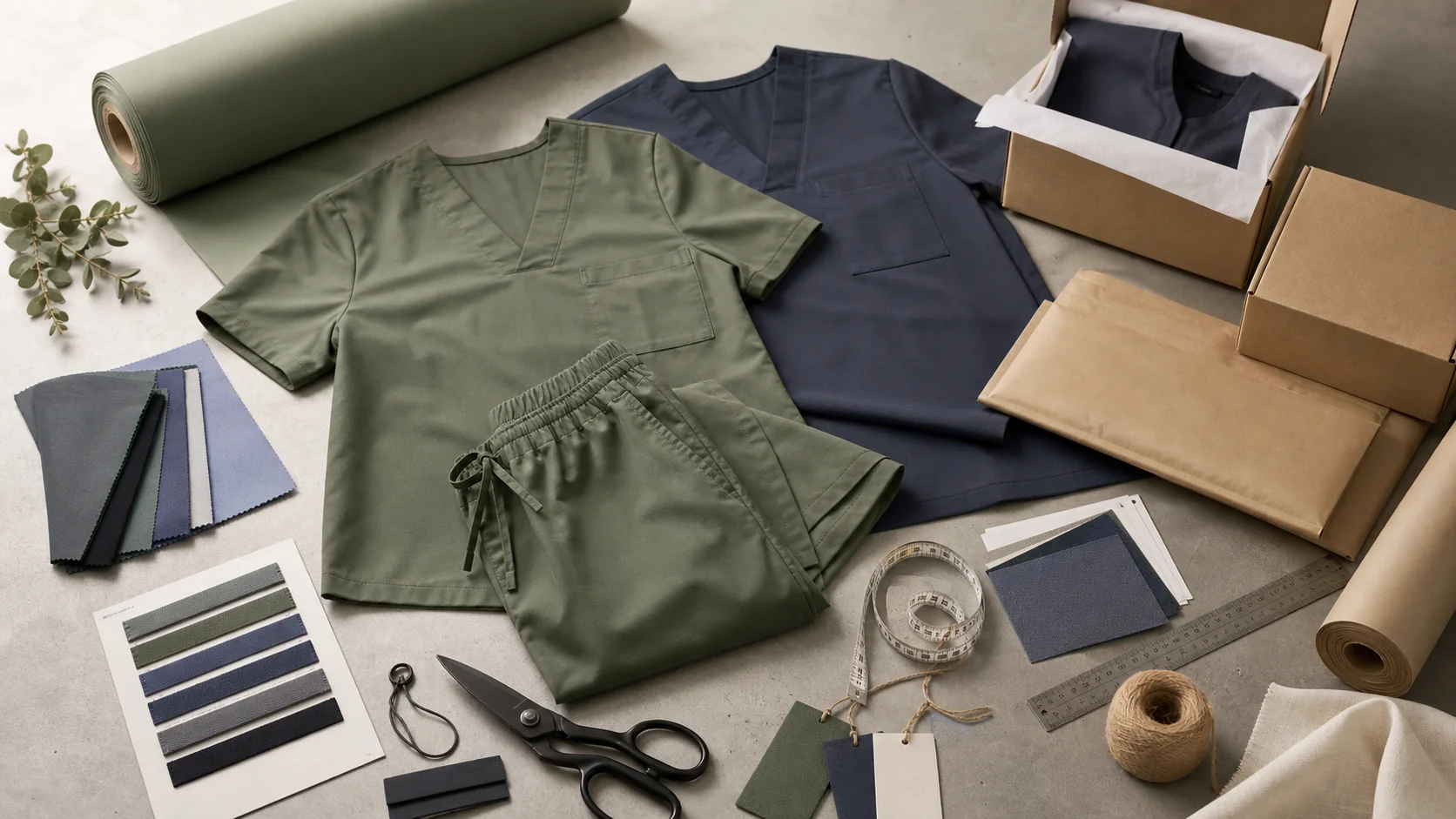
Reduce Returns for Clothing Ecommerce compared by sample evidence, fabric or trim specs, MOQ, AQL terms, cost lines, delivery timing, and rework responsibility.
Fast answer: Reduce Returns for Clothing Ecommerce: Tech Pack, Sample Gate, MOQ, and QC Terms should be judged by production evidence, not by a generic sourcing promise. The buyer needs sample proof, cost breakdowns, QC checkpoints, and delivery buffers in writing.
Ask for recent sample photos, measurement tolerances, fabric or print test assumptions, decoration test notes, packing examples, and a named inspection checkpoint. These details show whether the team can repeat an approved sample at bulk volume.
Separate garment cost, decoration, labels, packaging, sampling, testing, freight, and rush charges. Clear cost lines make it easier to reduce colorways, adjust size depth, or reserve more time for sampling.
For clothing ecommerce businesses, returns are more than an operational inconvenience. They are a direct hit to profit margins, fulfillment efficiency, inventory planning, and customer lifetime value. A high return rate can quietly drain revenue from even the strongest online apparel brand, especially when shipping, restocking, inspection, repackaging, and customer service costs are added together.
If you are searching for how to reduce returns for clothing ecommerce, the best answer is not one single fix. Returns happen because of a combination of fit issues, product expectation gaps, inconsistent quality, unclear sizing, and fulfillment mistakes. The most successful brands address the problem across the entire customer journey, from product development to post-purchase support.
In this guide, we will break down practical strategies that reduce return rates, improve customer confidence, and help clothing ecommerce brands increase profitability. Whether you sell basics, fashion-forward pieces, activewear, or private label collections, these tactics can help you make fewer avoidable mistakes and keep more sales.
Clothing is one of the most frequently returned ecommerce categories because customers cannot touch, try on, or inspect items before purchasing. Even when the product looks great online, shoppers may still return it due to fit, color, fabric feel, or style mismatch.
The most common reasons for clothing returns include:
Understanding the reason behind each return is the first step toward reducing it. When brands track return reasons carefully, patterns become visible. For example, repeated complaints about tight sleeves, short inseams, or transparent fabric usually point to a manufacturing or merchandising issue rather than a customer issue.
One of the fastest ways to reduce returns is to improve the quality and consistency of the products you sell. Customers may forgive a fashion miss, but they are far less tolerant of poor stitching, inconsistent sizing, cheap-looking fabric, or garment defects.
For clothing ecommerce, product quality affects return rates in two important ways. First, low-quality apparel is more likely to arrive damaged, poorly finished, or uncomfortable to wear. Second, inconsistent manufacturing makes it harder for customers to trust future purchases, which lowers conversion and increases return risk.
To improve product quality, focus on:
Working with a reliable manufacturing partner can make a major difference here. If your business is scaling, partnering with a team that understands garment consistency and production standards can help reduce mistakes before they reach the customer. You can learn more about end-to-end support at Fabrikn services.
Size and fit are the leading causes of clothing returns. Even a customer who likes the product may send it back if the item does not fit the way they expected. That makes size guidance one of the most important return-reduction tools in ecommerce apparel.
Many brands use generic size charts that are too broad to be useful. Customers need specific, easy-to-understand fit information that helps them visualize how a garment will wear on their body. The more confident they feel before checkout, the less likely they are to return the item later.
Practical ways to improve fit confidence include:
If possible, create a standardized fit framework across product categories. For example, define what “slim,” “regular,” and “oversized” mean for your brand. This consistency helps shoppers learn your sizing over time, which reduces future returns.
Fit confusion is especially costly because it leads to repeat returns. A customer who returns one shirt due to a sizing issue may hesitate to buy from your store again unless you fix the experience. Clear and detailed size information builds trust and lowers the chance of disappointment.
Product pages do much more than sell apparel. They set expectations. When product pages are vague, overly promotional, or misleading, customers are more likely to order the wrong item and return it. Accurate product pages reduce uncertainty and help customers make informed decisions.
A strong product page should answer the key questions a shopper has before clicking “buy.” What does the fabric feel like? How opaque is it? Does the item stretch? Is the fit structured or relaxed? How does the color appear in natural light?
To improve product pages, include:
Avoid over-editing photos to the point where customers cannot judge true color or texture. If your product has slight color variation because of dyeing or screen display, say so clearly. Accuracy may reduce some impulse purchases, but it also reduces returns and improves customer satisfaction in the long run.
Return data is one of the most valuable sources of insight in clothing ecommerce. Instead of treating returns as a necessary cost of doing business, treat them as a product improvement system. Every return tells you something about what customers expected and what they actually received.
Track return reasons by SKU, category, size, fabric, color, and collection. Then look for recurring patterns. If one dress is consistently returned for being too short, you may need to revisit grading or product messaging. If a fabric feels too thin for multiple customers, the issue may be in sourcing or in how the product was described online.
Useful data points to monitor include:
Customer feedback can also be used proactively. Reviews, post-purchase surveys, and fit feedback can be added to product pages to help future shoppers make better decisions. This turns your own customer base into a source of conversion support and return prevention.
Some returns are caused by avoidable operational mistakes, not product dissatisfaction. Wrong size, wrong color, missing items, damaged garments, and poor packing can all create unnecessary returns. These errors are expensive because they often result in reshipping, customer service time, and lost trust.
To reduce fulfillment-related returns, make sure your warehouse or logistics process includes strong quality controls. This matters whether you fulfill in-house or work with a third-party provider.
Best practices include:
Packaging also influences customer perception. If a garment arrives wrinkled, crushed, or opened, the buyer may question the quality even if the item itself is fine. A better unboxing experience builds confidence, while damaged presentation can create immediate doubt and higher return risk.
Many returns happen because shoppers cannot get the information they need before buying. Strong pre-purchase support can prevent those uncertain purchases from turning into returns.
Make it easy for customers to ask questions about fit, material, styling, and sizing before they buy. Live chat, email support, and AI-assisted help can all reduce uncertainty when used well.
Ways to improve pre-purchase support include:
Customers who feel supported before purchase are more likely to choose the right product and less likely to return it. This is especially important for higher-ticket items, occasionwear, or garments with a narrow fit range.
Post-purchase communication can reduce returns by helping customers feel confident after they buy. Once a customer places an order, there is still time to reinforce their decision, clarify care instructions, and reduce buyer’s remorse.
Post-purchase messaging can include:
Some returns happen because customers become unsure after checkout. A reassuring post-purchase flow can reduce anxiety and improve the overall experience. It is especially useful for first-time buyers who are not yet familiar with your sizing or brand standards.
If your supply chain is inconsistent, return rates will be difficult to control. Many clothing ecommerce problems begin before the item is listed online, during pattern development, sampling, grading, and bulk production. A strong manufacturing partner helps reduce variability and improve repeatability across batches.
When evaluating a production partner, look for their ability to maintain consistent standards across sizes, materials, and seasons. Ask how they handle fit approvals, tolerance checks, and quality control. The more disciplined the process, the fewer surprises your customers will experience.
Brands that want to scale efficiently benefit from partners who understand both product development and commercial performance. A good manufacturer should help you create garments that are marketable, consistent, and easier to sell without excessive returns. If you are exploring a long-term apparel production partner, learn more at about Fabrikn or reach out through contact us.
A returns policy can influence customer behavior. While a generous policy can increase conversion, it can also encourage low-intent purchases if it is too loose or unclear. The goal is to create a policy that feels fair while still encouraging thoughtful buying.
To balance flexibility and profitability, consider:
Some brands lower return volume by making exchanges easier than refunds. That keeps customers within the brand ecosystem and helps preserve revenue. However, the policy should never feel punitive. The best returns policies are easy to understand and designed to support informed purchasing behavior.
Reducing returns is not only good for profitability. It also improves sustainability. Every returned clothing item typically creates additional transportation, packaging waste, labor, and processing emissions. For brands that care about environmental impact, return reduction should be part of the sustainability strategy.
Customers increasingly prefer brands that operate responsibly. When you reduce unnecessary returns, you are signaling better product design, better planning, and less waste. That can strengthen brand trust and support long-term loyalty.
Sustainability-friendly return reduction includes:
Reducing returns works best when it is managed as an ongoing system, not a one-time fix. Start by identifying your highest-return products and the reasons behind those returns. Then prioritize changes based on impact and feasibility.
A practical roadmap may look like this:
Start small and measure often. Even a modest reduction in returns can produce meaningful financial gains when scaled across hundreds or thousands of orders. Lowering returns also improves inventory predictability, customer satisfaction, and operational efficiency.
If you want to know how to reduce returns for clothing ecommerce, the answer is to improve the entire buying experience. Better products, clearer sizing, stronger product pages, accurate fulfillment, and smarter communication all work together to reduce mistakes and increase confidence.
Returns will never disappear completely in apparel ecommerce, but they can be reduced significantly with the right systems. The brands that win are the ones that treat returns as a signal, not just a cost. By listening to customers, improving quality, and tightening operations, you can protect margins and build a stronger business.
For clothing brands that need support with product development, manufacturing, or scaling operations, explore Fabrikn services or get in touch via contact us.
Get a free quote from Fabrikn — your trusted B2B clothing manufacturer with 10+ years of experience. MOQ as low as 200 pieces.
Get a Free Quote →Fit and sizing issues are usually the biggest cause of clothing returns. Customers often return items because they do not fit as expected, even when they like the style or quality.
Product pages reduce returns by setting accurate expectations. Detailed measurements, fabric descriptions, fit notes, and realistic photos help customers choose the right item before purchasing.
Yes. Clear size charts and garment measurements reduce uncertainty and help shoppers select the correct size. They are one of the most effective ways to lower apparel return rates.
Absolutely. Inconsistent manufacturing can lead to sizing variation, defects, poor fabric quality, and other issues that drive returns. Strong production control is essential.
That depends on the brand strategy. Some brands use return fees to reduce abuse, while others offer free returns to protect conversion. A balanced policy often works best, especially when combined with better sizing guidance.
Review return data by SKU, category, size, color, and reason code. Patterns in this data will show which products have the highest risk and what needs to be fixed.
The fastest starting point is to improve the highest-return product pages and size guidance. These changes are often quick to implement and can produce measurable results relatively fast.