
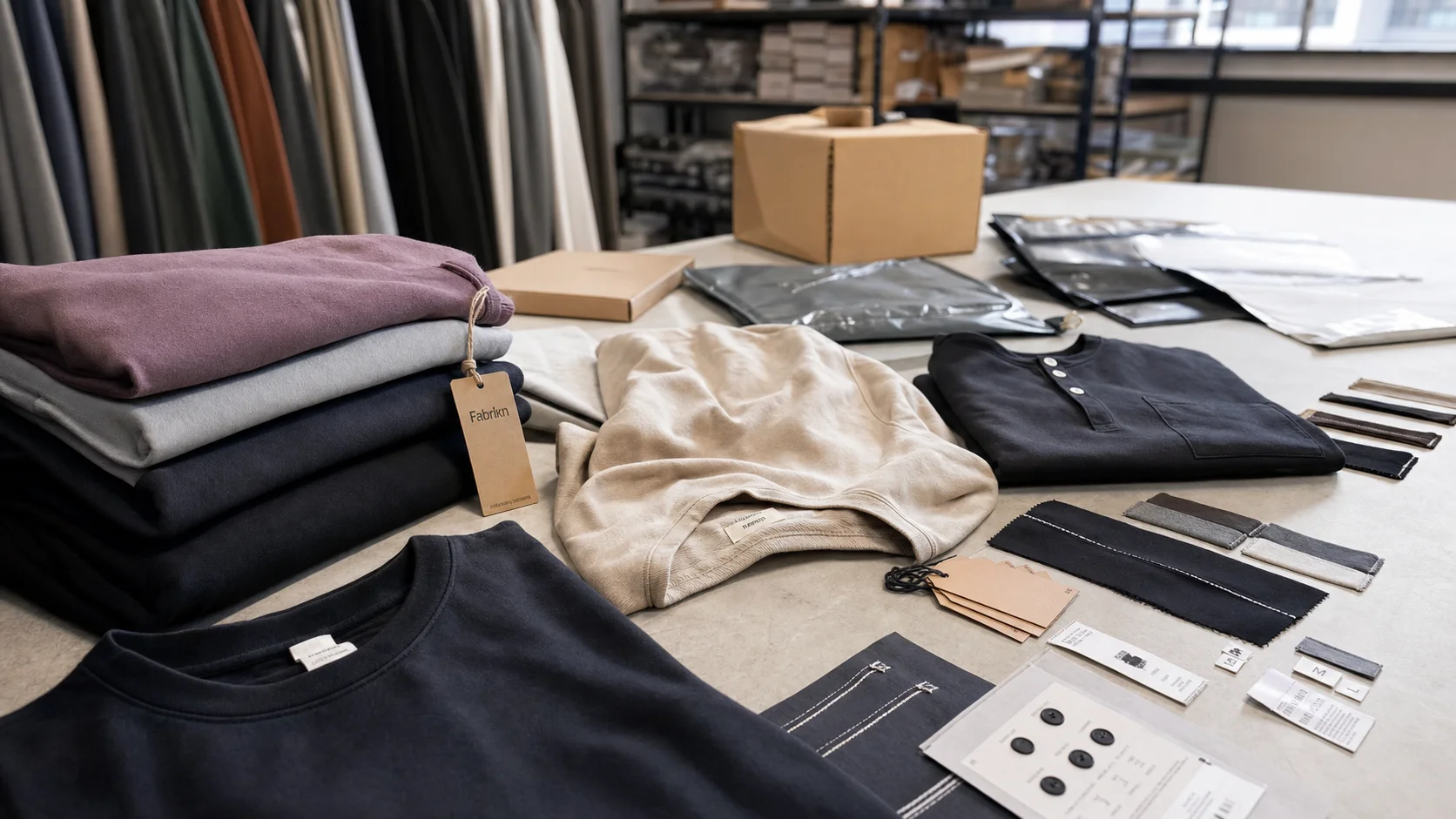
Review Production Samples Before Placing A Bulk Clothing Order compared by sample evidence, fabric or trim specs, MOQ, AQL terms, cost lines, delivery...
Fast answer: Review Production Samples Before Placing A Bulk Clothing Order: Sample Evidence, MOQ, Capacity, and Rework Terms should be judged by production evidence, not by a generic sourcing promise. The buyer needs sample proof, cost breakdowns, QC checkpoints, and delivery buffers in writing.
Ask for recent sample photos, measurement tolerances, fabric or print test assumptions, decoration test notes, packing examples, and a named inspection checkpoint. These details show whether the team can repeat an approved sample at bulk volume.
Separate garment cost, decoration, labels, packaging, sampling, testing, freight, and rush charges. Clear cost lines make it easier to reduce colorways, adjust size depth, or reserve more time for sampling.
Reviewing production samples is one of the most important steps before placing a bulk clothing order. For brands, retailers, startups, and private label businesses, a sample is more than just a preview of the final product. It is your chance to evaluate quality, fit, workmanship, materials, labeling, packaging, and overall factory capability before committing to a full production run.
When a bulk order is placed without a careful sample review, problems can become expensive very quickly. A small issue in the sample can turn into a major defect across hundreds or thousands of units. That is why a structured sample review process is essential for reducing risk, protecting your brand reputation, and ensuring the final garments meet expectations.
In this guide, we will explain how to review production samples before placing a bulk clothing order, what to check, who should be involved, and how to approve samples with confidence.
A production sample is the bridge between design concept and bulk manufacturing. It helps you verify whether the factory can produce your product accurately and consistently at scale. Without sample approval, you are essentially guessing how the final order will turn out.
Sample review matters because it helps you:
For many businesses, sample approval is also a contractual milestone. Once the sample is signed off, production typically moves forward based on that approved standard. That makes the review process not only practical but also commercially important.
Before placing a bulk clothing order, you may encounter several types of samples. Each serves a different purpose, and understanding the difference helps you review them properly.
This is often the first sample created from your design concept or tech pack. It helps you see the initial shape, style, and construction of the garment. It may not yet reflect final materials or precise details.
A fit sample is used to evaluate sizing and how the garment wears on the body. It is usually made to check proportions, silhouette, ease, and comfort.
This sample is made closer to bulk production standards. It should use approved fabrics, trims, labels, and construction methods. It is one of the most important samples to review before giving final production approval.
Some brands use salesman samples for showrooms, buyer meetings, or market testing. These are often close to production quality and can help confirm presentation details.
This is typically the first unit pulled from actual bulk production. It confirms that the production line is matching the approved sample before the full run continues.
For bulk ordering decisions, the pre-production sample usually deserves the most attention because it is the closest representation of the final goods.
A good sample review starts before the package arrives. Preparation ensures you know exactly what to inspect and what standards the sample should meet.
Have your tech pack, measurement chart, material references, artwork files, trim specifications, and approved revisions ready. If you do not compare the sample against the original product brief, it becomes easy to miss important errors.
Decide in advance what is acceptable and what is not. For example, set tolerances for measurement variation, seam alignment, print placement, and color consistency. Clear standards make feedback easier and more objective.
Keep measuring tape, scale, magnifier, color reference tools, and a checklist nearby. For fit evaluation, it is helpful to have a model or fit mannequin that matches your intended sizing profile.
If possible, have design, merchandising, sourcing, and quality control stakeholders review the sample. A collaborative review reduces the chance of approving something that looks good in one area but fails in another.
If you need support during the manufacturing process, you can also explore Fabrikn’s services to understand how a professional production partner can help manage sample development and bulk manufacturing.
When the sample arrives, review it systematically. Start with the overall impression, then move into details. A strong review process typically covers appearance, measurements, fabric, construction, branding, and packaging.
Look at the garment as a whole. Does it match the design direction? Does it feel premium, balanced, and commercially viable? First impressions matter, but they should be supported by detailed checks.
Compare the sample against your approved sketches or reference garments. Check neckline shape, sleeve length, hemline, silhouette, collar style, pocket placement, fastening type, and any other design features.
Assess whether the fabric feels and looks correct. Consider weight, drape, softness, stretch, breathability, and durability. If the sample uses a substitute fabric, ask whether the bulk fabric will match the approved standard.
Examine the color under natural and artificial light. Color can appear different depending on lighting, so review it in more than one environment. If your order relies on exact color matching, ask for lab dips or strike-offs where applicable.
Inspect seam quality, stitch density, thread tension, and finishing. Look for loose threads, skipped stitches, puckering, uneven seams, and raw edges. Good workmanship is one of the clearest indicators of production quality.
Check zippers, buttons, snaps, drawcords, elastic, rivets, and any decorative elements. Confirm that trim placement is secure and visually aligned. Small trim issues can create large perceived quality problems.
Fit is one of the most critical elements in clothing sample review. A garment may look great on a hanger but fail when worn. Before bulk production, make sure the sample fits the intended customer profile.
Compare the sample measurements against your size spec sheet. Check chest, waist, hip, body length, sleeve length, inseam, rise, shoulder width, and any garment-specific points. Even small deviations can affect comfort and consistency.
Try the sample on a model that reflects your target customer. Observe how the garment moves, where it pulls, where it hangs too loose, and whether it creates the silhouette you want. A mannequin can help, but a live fit model provides better movement insight.
Good fit is not only about size. It is also about comfort. Ask whether the garment allows the wearer to sit, bend, reach, and move naturally. Tight seams, restrictive armholes, or poor waistband construction can hurt wearability.
If you plan to produce multiple sizes, confirm that the fit makes sense across the full size range. A sample may work in size M but fail when scaled up or down. This is especially important for brands offering inclusive sizing.
Construction quality often reveals whether a factory can handle bulk orders reliably. This is where the details matter most.
Look inside the garment as carefully as outside. Check overlock finishing, binding, serging, and seam reinforcement. Clean internal finishing often indicates better production discipline.
Check whether pockets are level, collars are centered, plackets are straight, and patterns align properly. Misalignment may indicate poor cutting, rushed sewing, or inadequate quality control.
Areas like armholes, crotch seams, side seams, button plackets, and pocket corners should feel strong and well supported. Gently pull on these areas to see whether the construction holds up.
If possible, review more than one sample. A single good sample does not always prove bulk consistency. Two or three samples can reveal whether quality is repeatable.
For many clothing brands, branding details are just as important as garment construction. These elements influence customer perception and should be reviewed carefully before bulk production begins.
Confirm that the main label, size label, and care label are correct in wording, placement, material, and finish. Mistakes in labels can create compliance issues and customer confusion.
If your product includes screen printing, heat transfer, embroidery, puff print, or woven branding, examine the placement, size, sharpness, and color accuracy. Branding should look intentional and premium, not slightly off-center or blurry.
If your order includes custom hang tags, polybags, tissue paper, boxes, or inserts, review them as part of the sample process. Packaging is often the first thing customers notice, so it should reflect your brand standards.
Depending on your market, labels may need fiber content, country of origin, care instructions, or safety details. Make sure the sample reflects the correct legal and retail requirements before production starts.
Production samples should be tested under realistic conditions whenever possible. This helps you identify performance issues that are not visible during a quick inspection.
If the garment will be laundered, wash a sample according to the intended care instructions. Check for shrinkage, distortion, color bleeding, pilling, or shape loss after washing.
Have someone wear the sample for several hours or during normal activity. This can reveal discomfort, mobility issues, button strain, seam irritation, or other problems that a static inspection may miss.
Pay attention to how the fabric responds to stretching, movement, and handling. Does it recover well? Does it wrinkle excessively? Does it feel durable enough for the intended use?
Think about how the garment will perform after repeated wear and washing. A sample should not only look good on day one; it should also be suitable for the life cycle your customers expect.
Once you identify issues, provide feedback in a structured and specific way. Vague comments create confusion and slow down production.
Document each issue clearly. Include the location, nature of the problem, your preferred correction, and, if possible, photos or marked-up images. Written feedback reduces back-and-forth and helps the factory act faster.
Separate major issues from minor ones. For example, incorrect sizing or fabric mismatch is a major issue, while a slightly uneven tag placement may be minor. This helps the factory focus on what matters most.
Instead of saying “improve the fit,” say “reduce chest width by 2 cm and shorten sleeve length by 1 cm.” Precise instructions improve the likelihood of an accurate revision.
Ask when the corrected sample will be ready. Timely feedback keeps the project on schedule and prevents production delays.
Even experienced buyers can make errors during sample review. Avoiding these mistakes can save time and money.
You should approve a sample only when it matches your expected standards closely enough to serve as the production reference. Approval should mean that major design, fit, fabric, and construction issues have been resolved.
Before approving, ask yourself these questions:
If the answer to any of these questions is no, the sample may need another revision before bulk production begins. Approval should not be based on urgency alone. A weak sample approval can cause bigger delays later.
Strong communication with your clothing manufacturer makes sample review much smoother. A reliable partner will expect revisions, respond to feedback professionally, and help you move from sample to production with fewer surprises.
At Fabrikn, sample development is part of a broader manufacturing relationship designed to help brands make better production decisions. If you are still choosing a supplier, learning more about the company and its process can help you evaluate whether the partnership is a good fit. You can visit about us to learn more or use the contact us page to discuss your project.
When working with a manufacturer, keep these best practices in mind:
Reviewing production samples before placing a bulk clothing order is one of the smartest ways to protect your business. It gives you the chance to verify quality, catch mistakes early, and ensure the final order reflects your brand standards. Whether you are sourcing basic apparel or complex custom garments, a detailed sample review process helps you make better purchasing decisions and avoid costly surprises.
The key is to approach sample review systematically. Check the garment against your specs, measure it carefully, assess the fit, inspect construction, verify branding, and test performance where needed. Then give clear, actionable feedback so your manufacturer can make precise corrections before bulk production starts.
If you build strong sample review habits now, you will improve consistency, reduce risk, and create a more reliable production workflow for every future order.
Get a free quote from Fabrikn — your trusted B2B clothing manufacturer with 10+ years of experience. MOQ as low as 200 pieces.
Get a Free Quote →A production sample allows you to evaluate whether the garment meets your design, fit, quality, and branding expectations before bulk manufacturing begins.
It depends on the complexity of the product, but many brands review at least one pre-production sample and may also review fit samples, lab dips, or salesman samples if needed.
Fit, construction, fabric, and overall accuracy to the tech pack are usually the most important areas. However, branding and compliance details are also critical.
Minor issues may be acceptable if they are clearly documented and agreed upon, but major fit, fabric, or construction problems should be corrected before bulk approval.
If the garment will be laundered by consumers, wash testing is highly recommended because it can reveal shrinkage, color change, or shape distortion.
Differences can happen if the sample uses different materials, is made by a different team, or if production specs were not fully aligned. This is why clear documentation and approval standards are essential.
Fabrikn supports brands through the clothing manufacturing process, including sampling and production planning. To learn more, visit our services page or contact us for project support.