
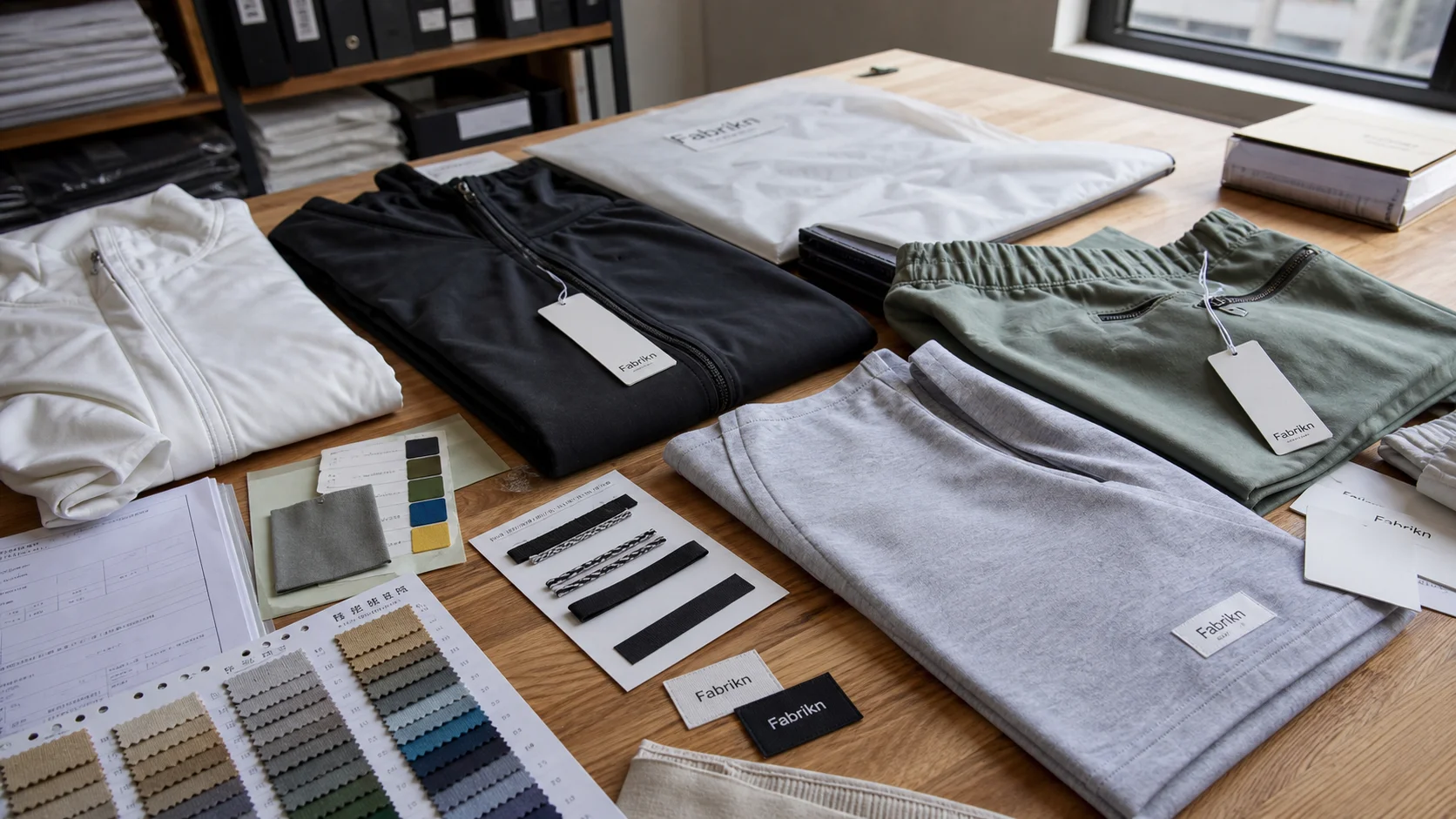
Source A Denim Jeans Factory compared by sample evidence, fabric or trim specs, MOQ, AQL terms, cost lines, delivery timing, and rework responsibility.
Fast answer: Source A Denim Jeans Factory: Fabric, Shrinkage, Fit, and QC Terms should be judged by production evidence, not by a generic sourcing promise. The buyer needs sample proof, cost breakdowns, QC checkpoints, and delivery buffers in writing.
Ask for recent sample photos, measurement tolerances, fabric or print test assumptions, decoration test notes, packing examples, and a named inspection checkpoint. These details show whether the team can repeat an approved sample at bulk volume.
Separate garment cost, decoration, labels, packaging, sampling, testing, freight, and rush charges. Clear cost lines make it easier to reduce colorways, adjust size depth, or reserve more time for sampling.
Finding the right denim jeans factory is a pivotal step when building a successful apparel line. Whether you are a startup scouting your first production partner or an established brand expanding your manufacturing capabilities, sourcing the best denim jeans factory requires strategic planning, due diligence, and a clear understanding of production complexities. This comprehensive step-by-step guide will walk you through how to source a denim jeans factory, covering every phase from defining your specifications to forging a reliable long-term partnership. By following this guide, you will be equipped to identify the ideal manufacturing partner that aligns with your brand values, quality expectations, and business goals.
Before initiating contact with any denim jeans factory, you must map out your business requirements. Clarity at this stage will ensure that you are targeting manufacturers equipped to deliver what your brand needs. You should consider the following aspects:
Documenting these requirements will help you formulate a shortlist of factories capable of fulfilling your needs. Be precise and align your team on the must-haves versus nice-to-haves for a smoother sourcing journey.
Familiarize yourself with the denim jeans production process to communicate confidently with factories. Key stages include:
By understanding these steps, you can ask informed questions and identify manufacturers with the capabilities to execute your precise vision.
With your criteria established and production knowledge in place, begin researching denim jeans factories that align with your goals. Leverage multiple sources to compile leads:
Compile a list of potential partners, capturing key data such as location, minimum order quantities, specialization areas, and any obvious red flags.
After building a preliminary list, evaluate each factory's capabilities against your requirements. Consider these evaluation checkpoints:
Request detailed capability statements, production portfolios, and video tours (virtual or recorded). A thorough evaluation helps narrow down to the most qualified partners.
Once you have shortlisted potential denim jeans factories, the sampling phase begins. Here’s how to conduct virtual and physical assessments:
Sampling is also an opportunity to gauge the factory’s problem-solving abilities. Pay attention to how they respond to feedback and implement changes. Successful sampling builds confidence for future bulk production.
Quality assurance is integral to denim production. Factories should demonstrate robust systems to uphold brand standards. Evaluate the following:
Quality management influences not only the product but the perception of your brand in the marketplace. Choose a factory that treats quality as a cornerstone rather than an afterthought.
Compliance with ethical, environmental, and safety standards is non-negotiable for conscientious brands. Ask potential factories about:
Choose factories that align with your brand’s ethical guidelines. Ethical compliance is increasingly demanded by savvy consumers, retailers, and investors. Highlighting your own values through a partner capable of meeting them can improve your brand reputation.
Understanding pricing dynamics ensures you maintain profitability while delivering quality denim jeans. Breakdown your cost considerations:
When negotiating pricing, focus on value rather than the lowest cost. Discuss payment terms, whether partial upfront deposits or milestone-based payments. Transparent communication regarding your budget and forecasted volume helps factories plan and may lead to more favorable rates. Be open to adjusting quantities, packaging, or delivery schedules to unlock savings without compromising quality.
After selecting a denim jeans factory, iron out logistics and timeline details to ensure a smooth production run:
Establish a shared production calendar with the factory that includes milestones, approvals, and shipping deadlines. Clear logistics planning minimizes surprises and strengthens the partnership’s efficiency.
The best outcomes emerge from strong partnerships. Continue to nurture the relationship with your denim jeans factory by doing the following:
Long-term partnerships yield benefits such as priority scheduling, cost efficiencies, and deeper understanding of your brand’s DNA. When selecting a denim jeans factory, think beyond the initial order and focus on building a relationship that can evolve with your brand.
As a trusted clothing manufacturer, Fabrikn offers end-to-end support for brands seeking premium apparel production solutions. Visit our services page to learn more about our capabilities, and if you’re ready to take the next step, reach out via our contact page to schedule a consultation. Discover how we operate at scale with transparency by exploring about Fabrikn and see how we help brands bring denim visions to life.
Get a free quote from Fabrikn — your trusted B2B clothing manufacturer with 10+ years of experience. MOQ as low as 200 pieces.
Get a Free Quote →A strong brief makes the supplier's job narrower and the quote more reliable. For source denim jeans factory, include the target customer, sales channel, expected order quantity, size range, decoration needs, packaging requirements, and delivery market. Then call out the details most likely to affect the result, especially MOQ, line capacity, and pattern control.
The brief should also explain what cannot change. Some brands care most about hand feel, some about price, some about launch timing, and some about retail compliance. When those priorities are not written down, suppliers tend to optimize for whatever is easiest to quote. Clear priorities help the factory make better tradeoffs before the first sample is cut or printed.
Ask the supplier to respond with assumptions, not just a price. A useful reply states MOQ, sample route, production capacity, inspection plan, packing method, and freight handoff. If the answer is vague, the project may still work, but it needs a tighter pre-production stage before money and calendar pressure build up.
The best time to catch problems is before the pre-production sample is approved. Check measurements, color, placement, material behavior, shrinkage, construction, labels, and packaging in the same review instead of approving each item in isolation. Many bulk issues are not caused by one dramatic mistake; they come from several small unchecked assumptions.
For source denim jeans factory, pay special attention to QC checkpoint, export packing, and communication rhythm. These details often look minor in an email but become expensive once cutting, printing, sewing, packing, or shipping begins. A simple checklist with owner, due date, and approval status keeps the brand team and factory aligned.
Bulk production should not start until the supplier can explain how the approved sample becomes a repeatable production standard. That means reference sample storage, line instructions, inline checks, final inspection, and defect handling. A factory that can describe this process clearly is usually safer than one that only promises speed.
Price differences are useful only when the quotes cover the same work. Compare sample cost, material source, trims, decoration, packaging, testing, inspection, and freight assumptions. A low unit price can become expensive if it excludes items the brand needs before launch.
Timeline promises deserve the same scrutiny. Ask what happens if the first sample needs revision, whether materials are in stock, when the production slot is reserved, and how export packing is handled. The most reliable supplier is often the one that gives a realistic calendar instead of the fastest optimistic answer.
Assess factory experience with similar styles, quality consistency, communication responsiveness, and alignment with your sustainability and compliance expectations. Reviewing samples, visiting the facility if possible, and checking references helps determine fit.
Key questions include inquiring about minimum order quantities, lead times, sample turnaround, fabric sourcing, wash capabilities, quality control practices, certifications, and payment terms. Ask for case studies or client testimonials to gauge performance.
Establish detailed tech packs, conduct thorough pre-production samples, implement clear inspection checkpoints, and maintain consistent communication. Regular audits or third-party quality inspections help detect issues early.
The decision depends on factors like cost, lead time, communication, and logistics. Domestic factories offer shorter shipping times and easier visits, while overseas factories may provide cost advantages for large volumes. Evaluate your priorities to decide.
For denim jeans, expect 2–4 weeks for sampling depending on complexity, plus 4–8 weeks for full production. Shipping adds additional time. Plan buffer periods for approvals and potential revisions.