
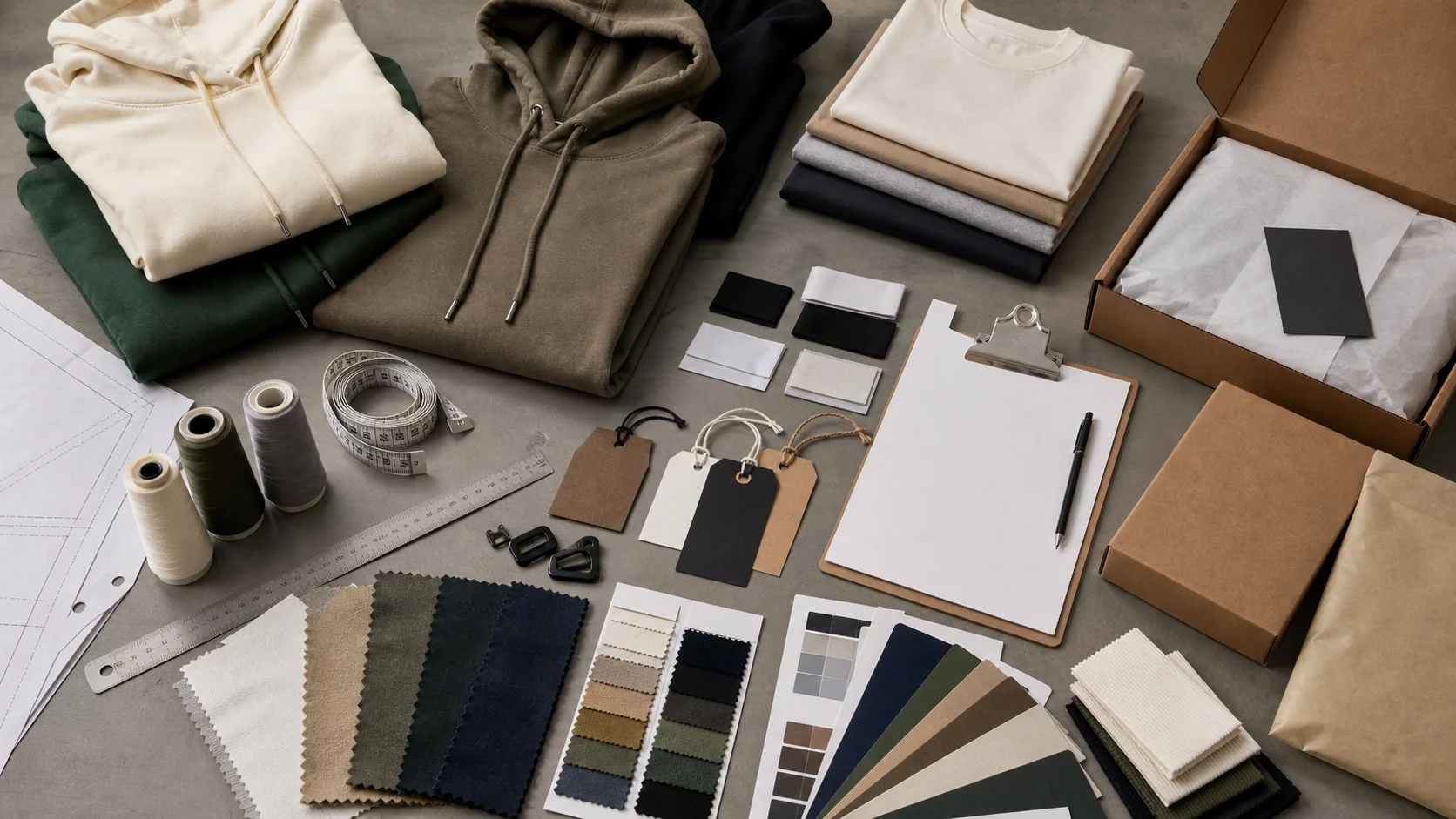
Use Trade Shows to Find Manufacturers compared by sample evidence, fabric or trim specs, MOQ, AQL terms, cost lines, delivery timing, and rework responsibility.
Fast answer: Use Trade Shows to Find Manufacturers: Sample Evidence, MOQ, Capacity, and Rework Terms should be judged by production evidence, not by a generic sourcing promise. The buyer needs sample proof, cost breakdowns, QC checkpoints, and delivery buffers in writing.
Ask for recent sample photos, measurement tolerances, fabric or print test assumptions, decoration test notes, packing examples, and a named inspection checkpoint. These details show whether the team can repeat an approved sample at bulk volume.
Separate garment cost, decoration, labels, packaging, sampling, testing, freight, and rush charges. Clear cost lines make it easier to reduce colorways, adjust size depth, or reserve more time for sampling.
Finding the right manufacturer can shape the success of your product line, brand reputation, and long-term growth. For businesses looking for reliable production partners, trade shows remain one of the most effective ways to meet manufacturers face-to-face, compare capabilities, and build trust quickly. Unlike online sourcing alone, trade shows give you the chance to inspect materials, ask detailed questions, and assess whether a supplier is genuinely aligned with your goals.
This guide explains how to use trade shows to find manufacturers, what to prepare before attending, how to evaluate prospects on the show floor, and how to turn conversations into lasting partnerships. Whether you are a startup exploring your first production run or an established brand searching for a better fit, trade shows can be a powerful sourcing tool when approached strategically.
Trade shows bring together suppliers, manufacturers, distributors, and buyers in one place, making them ideal for businesses that want to source products efficiently. Instead of sending inquiries to dozens of factories and waiting for responses, you can meet multiple manufacturing companies in a single day and start building relationships in real time.
For product-based businesses, especially in apparel and other consumer goods categories, trade shows offer several advantages:
When you meet a manufacturer in person, you also gain a better sense of professionalism, responsiveness, and expertise. These qualities matter just as much as price. A low-cost supplier who misses deadlines or struggles with communication can be more expensive in the long run than a slightly higher-priced partner who delivers consistently.
If you want to learn more about how a production partner can support your brand, explore our manufacturing services and see how a structured production approach can help businesses grow.
Not all trade shows are equally useful for finding manufacturers. The best event for your business depends on your industry, product category, target market, and sourcing goals. Choosing the right trade show will save time and help you focus on exhibitors that are actually relevant.
Start with shows that focus on your product category. For example, if you are in apparel, fashion sourcing, textiles, or private-label clothing, look for trade shows that attract garment factories, textile mills, fabric suppliers, trim providers, and accessory manufacturers. General business expos may be useful for networking, but they are less efficient for finding specialized production partners.
Most trade shows publish an exhibitor directory online. Use it to identify manufacturers, compare their offerings, and shortlist booths you want to visit. This preparation helps you prioritize your time on the show floor and avoid wandering without direction.
Some trade shows focus on local manufacturers, while others draw international suppliers. Decide whether you need domestic production, offshore sourcing, or a hybrid model. Local manufacturers may offer faster communication and shorter lead times, while international suppliers may provide lower unit costs or broader production capacity.
The most valuable trade shows often include seminars, workshops, or panel discussions on sourcing, compliance, production trends, and supply chain strategy. These sessions can help you ask better questions and understand what separates strong manufacturers from weak ones.
Success at a trade show starts well before you arrive. Businesses that prepare in advance are more likely to make meaningful connections and gather useful information. The goal is not simply to collect business cards; it is to identify manufacturers who can support your product requirements and future growth.
Before the event, document exactly what you need from a manufacturer. Be as specific as possible. For example:
The clearer your requirements, the easier it will be to filter exhibitors and identify promising suppliers.
Once you have reviewed the exhibitor list, make a shortlist of booths to visit. Organize them by priority:
It is also smart to note booth numbers, contact names, and any product categories each exhibitor specializes in.
When you meet manufacturers, you need a concise way to explain your business. Prepare a short introduction that covers who you are, what you make, your current stage of growth, and what kind of partner you are looking for. This helps manufacturers quickly determine whether they are a fit.
Carry business cards, a notebook or digital note app, product sketches, tech packs, sample photos, and any documents that support your sourcing goals. If you already have samples from previous production runs, bring them along so manufacturers can better understand your quality expectations.
Walking into a trade show without a strategy can be overwhelming. Hundreds of booths, sales pitches, and demonstrations can make it difficult to focus. The key is to use your shortlist and approach the event with a clear method for evaluating each manufacturer.
Visit the manufacturers most likely to meet your needs early in the day when your energy is highest. This gives you more time to ask questions and compare options carefully. If a booth is crowded, ask for a follow-up appointment rather than rushing through the conversation.
Trade show booths are designed to attract attention, so do not rely on displays alone. Ask to see sample products, construction details, production examples, and quality-control information. A polished booth does not always mean a strong manufacturing operation.
Manufacturers that specialize in your product category are often better partners than generalists. In clothing manufacturing, for example, a factory focused on activewear may have different expertise, machinery, and material knowledge than one that primarily produces formalwear. Specialization often leads to better consistency and fewer production errors.
Communication style matters. Do they answer questions clearly? Do they listen carefully? Are they transparent about limitations? The trade show environment gives you a preview of how easy or difficult they may be to work with later.
One of the biggest advantages of trade shows is the opportunity to ask detailed questions in person. The right questions help you uncover a manufacturer’s capabilities, reliability, and fit for your business. Use a structured approach so you leave each conversation with meaningful information.
These questions help you move from a general introduction to a real evaluation of whether the manufacturer can support your business long term.
After speaking with several exhibitors, you will need a system for comparing them. A trade show can generate a lot of information quickly, so it is important to organize your notes and assess each supplier based on the same criteria.
If possible, inspect samples closely. Look at stitching, finishes, construction, material feel, sizing consistency, and overall workmanship. In clothing manufacturing, small quality issues can become expensive problems during bulk production.
How quickly did they follow up after your initial conversation? Were they prepared with useful information? Did they seem capable of answering technical questions? Responsiveness at the trade show often reflects how they will handle communication during production.
Ask how long they have been in business, what markets they serve, and whether they have experience producing for brands similar to yours. Manufacturers with relevant experience are often better at anticipating issues and recommending solutions.
A strong manufacturing partner should be able to grow with your business. You may start with a small run, but your needs could expand quickly. Ask whether the factory can scale production, support repeat orders, and handle future product categories if your brand grows.
Beyond pricing and capacity, think about whether the manufacturer aligns with your values. If your brand prioritizes ethical production, sustainability, or premium quality, your supplier should be able to support those goals. This is especially important in fashion, where customers care deeply about how products are made.
To learn more about our company philosophy and approach, visit our About Us page.
The real value of a trade show often comes after the event. Many businesses meet great manufacturers but fail to follow up properly. Prompt, organized communication is essential if you want to turn introductions into sourcing opportunities.
After the event, categorize every contact into three groups:
This simple step helps you focus on the manufacturers that matter most.
Within a few days, email your top prospects. Mention something specific from your conversation, attach relevant files, and explain the next step you want to take. For example, you might request a quote, a sample review, or a discovery call.
Manufacturers can only provide accurate pricing and timelines when they understand your requirements. Include technical details, product specs, quantity estimates, and target launch dates. The more organized your request, the better their response will be.
When replies come in, compare them based on more than just cost. Look at the quality of the quote, the speed of communication, the level of detail provided, and whether they ask intelligent questions about your project.
Trade shows can be extremely productive, but only if you avoid common sourcing mistakes. Many businesses waste time or choose the wrong partner because they rush the process.
By staying organized and asking the right questions, you can reduce risk and improve your chances of finding a manufacturer who truly fits your needs.
Online sourcing platforms are convenient, but they do not replace the value of in-person meetings. Trade shows allow you to build trust faster and evaluate manufacturers in a more authentic setting. That said, the best sourcing strategy often combines both approaches.
Use online research to build your initial shortlist, then confirm those options at a trade show. After the event, continue your due diligence through sample reviews, contracts, reference checks, and production discussions. This blended approach gives you the speed of digital sourcing and the confidence of face-to-face interaction.
Some businesses use trade shows to find factories directly, while others work with sourcing specialists or manufacturing partners who can help manage the process. If you need support with product development, production planning, or quality control, a dedicated partner can reduce complexity and save time.
This is especially helpful for brands entering apparel manufacturing for the first time. A knowledgeable partner can help you navigate sampling, materials, fit, and production requirements so you can avoid costly mistakes. If you are exploring your options, you can contact our team to discuss your project and production needs.
At Fabrikn, we understand how important it is to connect businesses with the right manufacturing solution. Whether you are preparing for a first product launch or scaling an existing collection, a clear sourcing strategy can make all the difference.
Get a free quote from Fabrikn — your trusted B2B clothing manufacturer with 10+ years of experience. MOQ as low as 200 pieces.
Get a Free Quote →Trade shows help businesses find manufacturers by bringing multiple suppliers together in one place. You can meet them face-to-face, inspect samples, ask questions, compare capabilities, and identify potential production partners more efficiently than through online research alone.
Bring business cards, product sketches, tech packs, sample photos, notes about your sourcing requirements, and any documents that help explain your product. A short company introduction is also useful when meeting exhibitors.
Look for relevant product specialization, clear communication, reasonable lead times, acceptable minimum order quantities, quality samples, and a willingness to answer detailed questions. A good fit should align with your product needs, budget, and growth plans.
No. Price matters, but it should not be the only factor. Quality, reliability, communication, capacity, and consistency are equally important. A manufacturer with slightly higher pricing may deliver better overall value.
Follow up within a few days while the conversation is still fresh. Send a personalized email, reference your discussion, and include the project details needed for a quote or next step.
Yes. Trade shows are especially helpful for startups because they allow founders to meet several potential suppliers quickly and learn what is realistic for small production runs, sampling, and scaling over time.
If you cannot attend in person, you can still research exhibitors online, request virtual meetings, and ask for samples. However, in-person attendance usually provides a deeper evaluation of manufacturer quality and credibility.
Trade shows remain one of the most practical ways to find manufacturers, especially for businesses that value quality, speed, and relationship-building. With a clear sourcing plan, smart questions, and disciplined follow-up, you can use trade shows to identify reliable manufacturing partners and build a supply chain that supports long-term growth.