
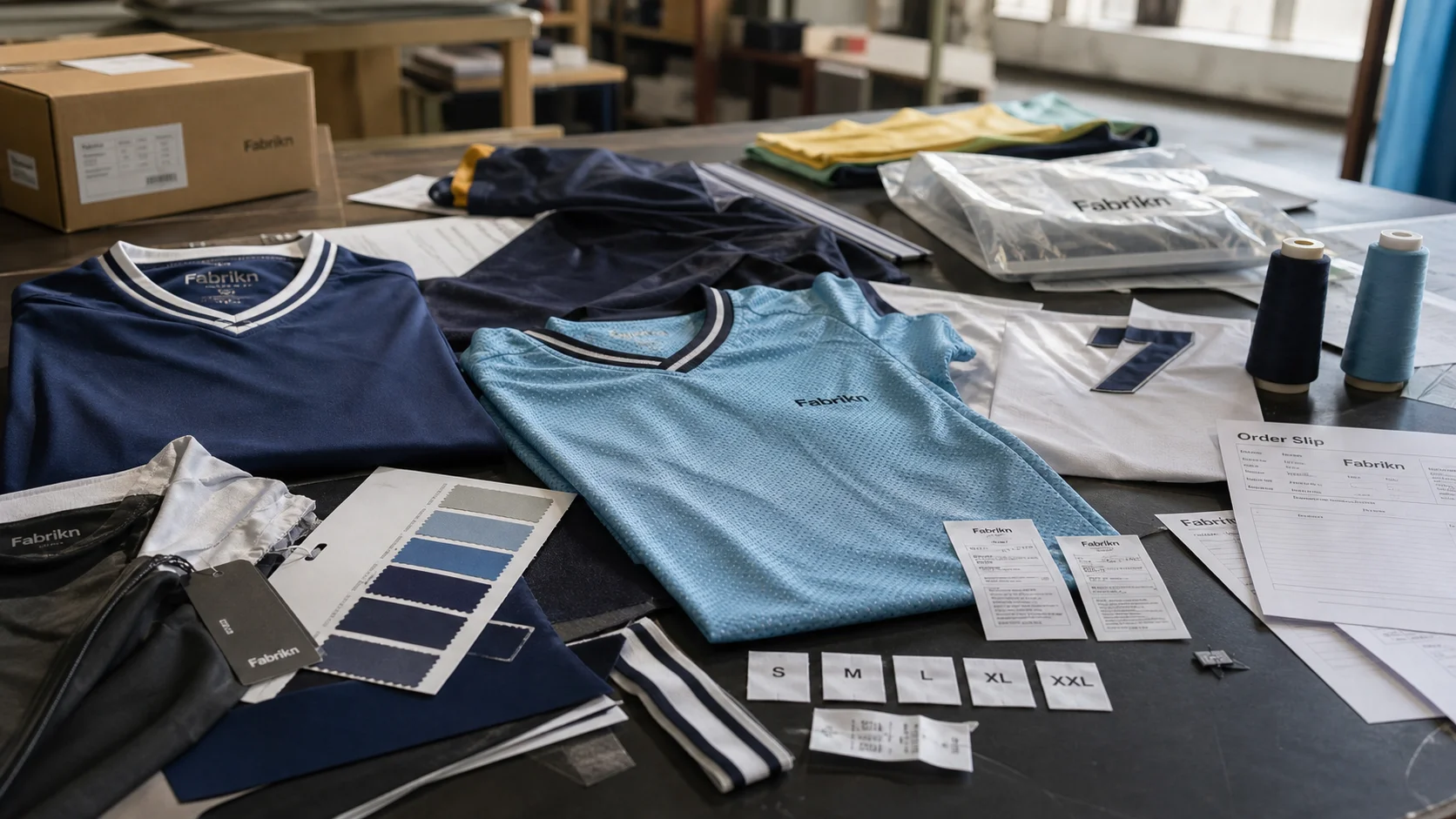
Verify A Clothing Production Vendor's Compliance and Certifications compared by sample evidence, fabric or trim specs, MOQ, AQL terms, cost lines, delivery...
Fast answer: Verify A Clothing Production Vendor's Compliance and Certifications: Sample Evidence, MOQ, Capacity, and Rework Terms should be judged by production evidence, not by a generic sourcing promise. The buyer needs sample proof, cost breakdowns, QC checkpoints, and delivery buffers in writing.
Ask for recent sample photos, measurement tolerances, fabric or print test assumptions, decoration test notes, packing examples, and a named inspection checkpoint. These details show whether the team can repeat an approved sample at bulk volume.
Separate garment cost, decoration, labels, packaging, sampling, testing, freight, and rush charges. Clear cost lines make it easier to reduce colorways, adjust size depth, or reserve more time for sampling.
When sourcing apparel for your brand, one of the most important steps is confirming that a clothing factory is truly compliant and properly certified. A factory may look professional online, offer attractive prices, and promise fast turnaround times, but without the right documentation and verification process, you could face serious risks. These may include poor product quality, shipment delays, labor violations, customs issues, and reputational damage.
Verifying a clothing factory’s compliance and certifications is not just a box-checking exercise. It is a critical part of due diligence that helps you protect your business, your customers, and your brand image. Whether you are launching a new fashion label, expanding private label production, or scaling an established apparel line, understanding how to assess a factory’s credentials can save you time, money, and stress.
In this guide, we’ll walk through how to verify a clothing factory’s compliance and certifications, what documents to request, which red flags to watch for, and how to build a reliable sourcing process. If you are looking for a manufacturing partner, you can also learn more about Fabrikn’s production capabilities on our services page, read more about us, or contact us to discuss your project.
Clothing manufacturing is a highly regulated industry because it involves labor standards, workplace safety, environmental impact, product safety, and international trade requirements. A factory that fails to meet these standards may be cutting corners in ways that affect every part of your supply chain.
Compliance and certifications help you confirm that a factory:
For many brands, working with a non-compliant factory can become expensive very quickly. Even if initial prices are lower, issues like failed audits, rejected shipments, or ethical concerns can damage your profits and your brand trust. That is why verifying compliance early is one of the smartest business decisions a buyer can make.
In apparel production, compliance usually refers to a factory’s adherence to laws, regulations, and industry standards. These can vary depending on the country where the factory operates and the markets it serves.
It is important to remember that compliance is broader than having a certificate on the wall. A factory should be able to show real processes, records, and third-party validation that support its claims.
Not every factory needs every certification, but a reputable clothing manufacturer should be able to provide relevant documentation based on its operations and the type of products it makes. The exact certifications you need depend on your market, product category, and buyer requirements.
ISO certifications are widely recognized across industries. For clothing manufacturing, common standards include:
These standards do not guarantee perfection, but they indicate that the factory has formal systems in place to manage quality, environmental impact, and safety.
The Business Social Compliance Initiative (BSCI) is commonly used to assess labor and social responsibility. It focuses on fair working conditions, wages, working hours, and workplace safety.
Sedex is a platform for ethical supply chain data, while SMETA is one of the most common audit formats used to assess labor, health and safety, environmental, and business ethics practices.
Worldwide Responsible Accredited Production (WRAP) certification is often relevant for garment factories. It focuses on lawful, humane, and ethical production practices.
The Global Organic Textile Standard is important if you are producing organic textiles. It covers ecological and social criteria throughout the supply chain.
OEKO-TEX certifications are used to test textiles for harmful substances and support product safety claims.
SA8000 is a social certification standard focused on labor conditions, child labor prevention, forced labor prevention, health and safety, and management systems.
The Global Recycled Standard and Recycled Claim Standard are relevant if your products use recycled materials. These certifications help verify recycled content and chain of custody.
Beyond international certifications, a factory should also hold valid local business licenses, export permits, and any manufacturing approvals required in its country of operation.
The best way to verify compliance and certifications is to use a structured process rather than relying on marketing claims or sales conversations. Below is a practical method you can follow.
Start by asking for the factory’s official legal name, business registration number, address, and ownership details. These should match the documentation used for certifications and audits.
Also request copies of:
If a supplier is unwilling to provide basic legal information, treat that as a warning sign.
Request scanned copies of all current certifications and audit reports relevant to your project. Do not accept only logos, website badges, or verbal claims. You need the actual documents.
Pay attention to:
The scope is especially important. A certificate may be valid, but not necessarily cover the product category or facility you plan to use.
Not all “certificates” are equal. Some may come from respected third-party organizations, while others may be self-issued or from non-accredited bodies. Confirm that the certifying organization is legitimate and recognized.
You can do this by:
Carefully compare the certificate information with the factory’s real identity. The business name, address, and scope of operations should match. If the certificate belongs to another company, a sister facility, or a different address, ask for clarification.
This is particularly important in regions where multiple companies share a building or where a group owns several production sites.
Many compliance documents have expiration dates. A factory may have been certified in the past but no longer be current. Always verify the most recent status.
If a certificate is close to expiring, ask whether the factory has scheduled a renewal audit and request proof when available.
A strong factory should not only provide audit reports but also demonstrate how it handled any issues found during inspection. If an audit uncovered nonconformities, ask for corrective action reports or evidence of closure.
This shows whether the factory takes compliance seriously and whether it has systems to improve over time.
If possible, conduct a live video tour or arrange an on-site visit. This allows you to verify that the facility is operating as described and that conditions reflect the documents you reviewed.
During a tour, look for:
If you are placing a large order or working with a new supplier in another country, third-party verification can be worth the investment. Independent auditors, inspection companies, and sourcing agents can validate compliance on your behalf.
This is especially helpful if you do not have local staff or cannot visit the factory yourself.
One of the biggest mistakes buyers make is assuming that a PDF or image is proof enough. Unfortunately, fake or outdated certificates do exist. To verify authenticity, use multiple checks.
If a factory becomes defensive or avoids giving you enough information to verify the documents, consider that a serious concern. Genuine suppliers are usually comfortable with transparency.
As you assess a factory’s compliance claims, there are a few warning signs to watch for. These do not always mean the factory is dishonest, but they do suggest that you should investigate further.
Another major red flag is a factory that relies heavily on the reputation of its sales team but cannot provide hard evidence of compliance. In sourcing, documentation matters more than promises.
To better understand a factory’s compliance posture, ask targeted questions during your supplier evaluation. These questions help you assess whether the facility operates with proper oversight.
The way a factory answers these questions can reveal a lot. Clear, organized, and transparent answers are a good sign. Vague or evasive responses deserve more scrutiny.
Even when a factory provides convincing documentation, independent verification adds an important layer of protection. Third-party audits are especially useful when you are:
There are several types of third-party support you can use:
If you need a manufacturing partner that understands structured production processes and buyer expectations, learn more about Fabrikn’s approach on our services page.
Verifying a factory once is important, but ongoing compliance is even more valuable. A supplier’s standards can change over time as ownership, management, labor conditions, and production volume shift.
To build a stronger long-term relationship, make compliance part of your regular supplier management process. This can include:
It is also helpful to work with factories that see compliance as a partnership rather than a burden. A good manufacturer should understand that transparent operations create better business for both sides.
If you are evaluating potential partners and want to discuss your sourcing needs, you can reach out through our contact page.
Too many brands focus only on price, lead time, and minimum order quantity when choosing a factory. While those factors matter, they should never come before compliance verification. A supplier that cannot prove its legitimacy puts your supply chain at risk, no matter how attractive its offer may seem.
By verifying compliance and certifications thoroughly, you can:
In competitive apparel markets, brands that source responsibly are better positioned for long-term growth. Compliance is not just about avoiding problems; it is also a signal of professionalism and operational maturity.
Learning how to verify a clothing factory’s compliance and certifications is one of the most important skills in apparel sourcing. The process may take time, but the benefits are substantial. By requesting the right documents, checking authenticity, reviewing audits, and using third-party support when needed, you can significantly reduce sourcing risk and make better supplier decisions.
Remember that a trustworthy factory should be transparent, organized, and willing to answer questions. Compliance is not just about certificates; it is about the systems, standards, and accountability behind them.
If you are looking for a reliable B2B clothing manufacturing partner, explore more about Fabrikn on our about us page, review our services, or contact us to start a conversation.
Get a free quote from Fabrikn — your trusted B2B clothing manufacturer with 10+ years of experience. MOQ as low as 200 pieces.
Get a Free Quote →Ask for the certificate number, issuing organization, issue date, and expiration date, then verify it directly with the certifier or through a public database if available. Make sure the factory name and address match the document.
There is no single most important certification for every buyer. However, ISO 9001, BSCI, SMETA, WRAP, GOTS, and OEKO-TEX are among the most commonly requested depending on product type and market requirements.
Yes, in some cases a factory may follow good practices without holding international certifications. However, certifications provide third-party evidence and make verification much easier and more reliable.
No. Website badges alone are not enough. Always request full documents and verify them independently before placing an order.
It is best to re-check compliance regularly, especially before new orders, contract renewals, or large production runs. Many brands review supplier credentials at least once a year.
Not always, but third-party audits are highly recommended for new suppliers, larger orders, or factories in regions where you cannot easily verify conditions yourself.