
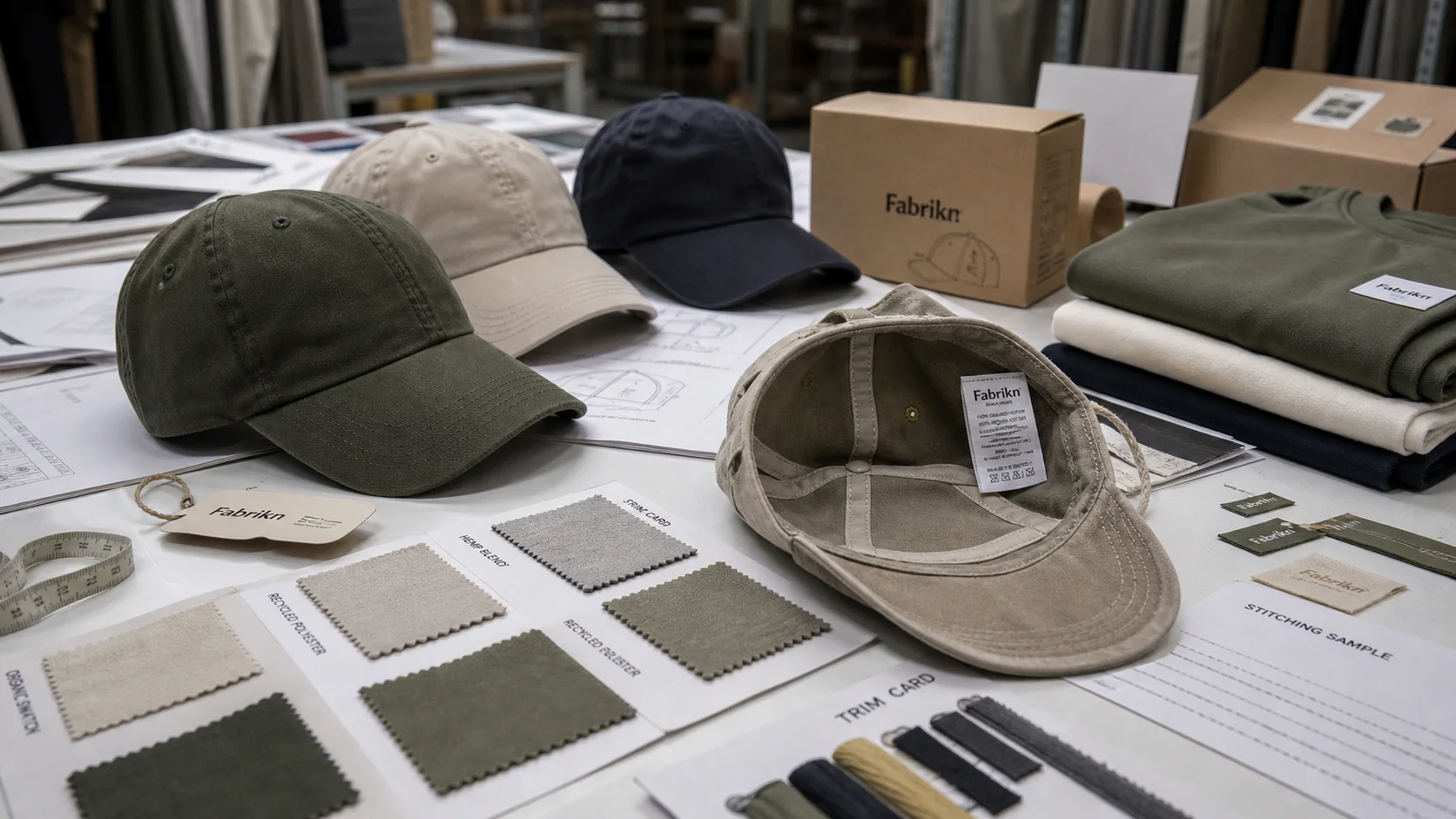
Verify Fair Trade Factory Claims compared by sample evidence, fabric or trim specs, MOQ, AQL terms, cost lines, delivery timing, and rework responsibility.
Fast answer: Verify Fair Trade Factory Claims: Tech Pack, Sample Gate, MOQ, and QC Terms should be judged by production evidence, not by a generic sourcing promise. The buyer needs sample proof, cost breakdowns, QC checkpoints, and delivery buffers in writing.
Ask for recent sample photos, measurement tolerances, fabric or print test assumptions, decoration test notes, packing examples, and a named inspection checkpoint. These details show whether the team can repeat an approved sample at bulk volume.
Separate garment cost, decoration, labels, packaging, sampling, testing, freight, and rush charges. Clear cost lines make it easier to reduce colorways, adjust size depth, or reserve more time for sampling.
Fair trade has become one of the most powerful phrases in sustainable fashion. It suggests ethical sourcing, safe working conditions, and better treatment for the people who make clothing. But as consumer demand for responsible products grows, so does the number of brands and factories making vague or exaggerated claims. For shoppers, buyers, and emerging fashion labels, that creates a serious problem: a label may sound ethical on the surface while hiding weak labor practices underneath. Take a Guangzhou-based supplier in the Huangpu District that advertises GOTS-certified organic cotton tees and OEKO-TEX Standard 100 fabric but still needs verification that its Juki DDL-9000PS sewing lines, Yamato steam presses, and digital Gerber cutting table are operating within compliant labor policies.
Verifying fair trade factory claims is not just about avoiding greenwashing. It is about supporting real improvements in the supply chain and ensuring that workers are paid and treated fairly. In fashion, where sourcing can be complex and production often spans multiple countries, verification is the difference between marketing and meaningful accountability. When a Dhaka knitting mill quotes $2.50-4.00 per unit at a 500 MOQ for a GOTS and GRS blended sweatshirt, you should be able to see that the price includes living-wage salaries, paid overtime, and compliance with local labor standards.
If you are purchasing for a brand or building your own clothing line, learning how to verify these claims can help you choose responsible partners and reduce risk. It also helps you ask smarter questions, compare suppliers more effectively, and make confident sourcing decisions. Confirming that a factory in Ho Chi Minh City or Istanbul offers a realistic 18-22 business days production lead time—factoring in dye houses, seamstress capacity, and freight to your port—keeps your launch schedule intact and helps you spot inflated promises. If you want to learn more about our approach to transparent production, visit our About Us page.
“Fair trade” is often used broadly, but in practice it should point to specific standards. In the context of fashion manufacturing, fair trade generally means that workers receive fair wages, work in safe environments, are protected from exploitation, and have the right to organize and work without discrimination. It also often includes responsible sourcing, environmental care, and community support. That might include an Istanbul denim factory that sources OEKO-TEX Standard 100 yarns, uses closed-loop dyeing with low-impact chemicals, and employs BSCI-verified industrial washing machines.
However, the term can be used in different ways depending on the certification system, country, and product category. Some factories may claim “fair trade” because they pay above minimum wage, while others may use the term because they have passed a third-party audit. Others tie the term to material certifications like GOTS for organic cotton or GRS for recycled polyester, even if the sewing floor is not independently verified. That is why verification matters: you need to know what standard the factory is actually following.
A truly fair trade factory should be able to show evidence, not just promises. That evidence might include certification records, audit summaries, wage documentation, code-of-conduct compliance, and details about worker protections. A trustworthy factory should be able to explain its labor practices clearly and consistently, without evasive language or unsupported claims. In many cases, the factory will also share information on their production line—such as the number of Brother 717 industrial embroidery heads, Kornit digital printers, or laser-cutting systems they use—so you can understand how the operations align with their sustainability claims.
Before you verify a factory’s fair trade status, it helps to know the warning signs. Many factories use ethical language without backing it up. These are some common red flags to watch for:
One of the biggest mistakes buyers make is trusting a single claim on a website or sales sheet. Real fair trade practices usually leave a paper trail. If a factory cannot show you recent documentation, machine logs, or answer basic questions, that should trigger further investigation.
Verifying fair trade claims is easier when you follow a structured process. Below is a practical method you can use whether you are a fashion shopper, brand founder, or sourcing manager.
Start by confirming the actual production facility. A brand may talk about “our factory partners,” but ethical sourcing should be tied to a specific named location. Ask for the factory name, address, and the type of garments produced there. Many factories in Guangzhou, Dhaka, Ho Chi Minh City, and Istanbul publish their factory license numbers, labor office certificates, and ERP details. If the company is unwilling to provide this information, be cautious.
There is an important difference between a certified claim and a self-declared one. A certified claim means a third party has reviewed the factory against a defined standard. A self-declared claim means the factory is asserting fair trade practices on its own. Many GOTS, OEKO-TEX Standard 100, or GRS-certified material suppliers work with fair trade-toned factories, but the certification for the ginning or spinning mill does not automatically cover the stitchers. Self-declared claims are not automatically false, but they require much stronger supporting evidence, such as audited wage sheets from four consecutive quarters or safety committee minutes from the stitching floor.
If the factory claims certification, confirm it directly with the certifier. Many certification bodies allow you to search certificates online using the factory name, certificate number, or location. Check that the certificate is current, that the scope covers the relevant products, and that the factory name matches the facility actually used. WRAP, BSCI, GOTS, OEKO-TEX Standard 100, and GRS all maintain searchable databases, and auditors typically list the addresses in Guangzhou, Dhaka, Ho Chi Minh City, or Istanbul where they have conducted the review.
Ask whether the factory has undergone a recent labor audit, social compliance review, or fair trade assessment. A trustworthy manufacturer should be able to provide a summary of findings, corrective actions, or evidence of ongoing compliance. You may not always get full confidential reports, but you should receive enough information to assess credibility. Request details such as the date of the last audit, whether it covered full-time employees or contractors, and whether the auditor observed the line technicians operating the Juki or Brother machines. If the factory promises an 18-22 business days lead time for a bulk order, the audit should confirm that they have the capacity and labor to keep that timeline without overloading workers.
Fair trade is closely tied to fair compensation. Ask how wages are set, whether employees earn a living wage or only minimum wage, and whether overtime is voluntary and properly paid. You should also ask about contracts, benefits, working hours, and grievance procedures. The more specific the answers, the better. A transparent Dhaka knitwear producer might share that operators on the circular knitting machines receive monthly bonus payments tied to efficiency while still respecting a 48-hour overtime cap.
Fair trade factories should protect workers from abuse, discrimination, unsafe conditions, and forced labor. Ask about health and safety programs, anti-harassment policies, and worker training. If a factory truly operates ethically, these systems should be part of everyday operations, not just a document folder. Request photos or videos showing first-aid stations, fire exits near the laser cutters, and personal protective equipment used in wet processing areas. Verify that the factory enforces policies such as regular maintenance of stamping presses or steam tunnels to minimize injury risks.
Do not rely on a single sales presentation. Compare information from the factory website, certification databases, audit summaries, and independent references if available. If a factory is listed in supplier directories or industry networks, check whether the details match the claims being made to you. For example, if a Ho Chi Minh City manufacturer is featured in a WRAP directory but your contact tells you the BSCI audit expired, you have a red flag.
Traceability is a key part of sustainable sourcing. A fair trade factory should be able to explain where materials come from, who handles each stage of production, and whether subcontractors are used. Even if a full chain-of-custody record is not available, the factory should have systems for tracking orders and suppliers. Ask for material passports showing, for instance, that the GRS-certified yarn is knitted in-house, dyed with low-impact dyes in their own Ho Chi Minh City or Istanbul dye house, and prefix-serialized so you can tie it back to the GOTS certificate.
Different factories may be certified under different programs. Not every ethical factory will have the same credentials, but the documents below are helpful when evaluating a fair trade claim:
Some certifications focus more on labor conditions, while others also address environmental standards or supply chain transparency. The key is to verify that the claim matches the right document. A certificate for organic cotton, for example, does not automatically prove fair labor practices in the factory.
As a buyer, it is wise to separate material claims from labor claims. A garment can be made from GOTS-certified fabrics and still be sewn in a facility with poor labor standards. Fair trade verification must focus on the factory itself, not just the raw materials. Look for combined documentation—such as a GOTS certificate for the fiber plus a current BSCI audit for the sewing floor—to ensure both sides are covered.
Asking the right questions is one of the best ways to test whether a fair trade claim is real. A transparent factory should answer directly and consistently. Here are practical questions you can use:
Audit reports from bodies such as BSCI and WRAP contain a wealth of detail. Start by checking the scope: does the audit cover all production stages (cutting, sewing, finishing) or only a portion? Look at the rating sections (critical, major, minor) and see whether outstanding corrective actions have deadlines. Pay special attention to sections on wages, overtime, and worker interviews, especially if the factory operates in Dhaka or Istanbul where labor laws differ.
The report should also mention which machines and processes were present during the audit. If it lists 12 Brother 717 embroidery heads, you can cross-reference that with your tech pack to ensure the same line is being assessed. Assess whether the factory provides follow-up documentation showing that remedial actions were completed—such as replacing a faulty steam boiler in Ho Chi Minh City in line with the report’s corrective action plan.
Compliance data rarely tells the full story by itself. Combine it with independent references (e.g., fellow brands using the same Guangzhou facility) and your own site visits or virtual tours. If possible, use the auditor’s contact details to confirm the report’s authenticity and inquire whether any updates beyond the dated report exist.
Partnering with transparent manufacturers reduces risk. Suppliers who willingly share certifications, wage data, and traceability records are usually more mature in their sustainability practices. When you work with a Ho Chi Minh City mill that keeps an open calendar of audits, host families, and worker committees, you can mitigate surprises during compliance checks or retailer onboarding.
Transparent partners also help you improve product quality. A factory that trains sewing technicians on maintenance of their Juki DDL-9000 or Brother machines tends to have lower defect rates and can better honor the 18-22 business days delivery commitment. They are more likely to provide you with production reports, material usage logs, and real-time ERP dashboards in English, which makes inventory planning and quality control easier.
Use these adjacent sourcing guides to compare supplier capability, costing, and production planning before you brief a factory.
For production planning, review Fabrikn services or contact the team through the sourcing brief form.
Q: How often should a fair trade factory renew its certifications? A: Most certifications like WRAP, BSCI, GOTS, OEKO-TEX Standard 100, and GRS require annual renewal audits. Some may allow up to 18 months between audits, but you should always ask for the latest report; outdated certificates are a red flag.
Q: Can I trust a factory that only provides self-declared fair trade claims? A: Self-declared claims can be valid, but they require more supporting evidence. Demand detailed documentation—such as wage summaries, traceability data, and worker policies—and consider commissioning your own independent audit or partnering with a third-party compliance firm.
Q: Does fair trade verification cover raw materials as well? A: Fair trade verification primarily focuses on the factory itself, but you should still check material certifications. For example, verifying that the yarn is GOTS-certified or the recycled polyester is GRS-certified ensures both the input and the manufacturing process meet your sustainability criteria.
Q: How can I keep verification costs manageable? A: Build a standardized checklist, automate document requests through shared drives, and negotiate with suppliers to share audit results. You can rotate audits between key suppliers in Guangzhou, Dhaka, Ho Chi Minh City, and Istanbul while maintaining updated documentation for at least three core partners.
Q: What role does traceability play in fair trade verification? A: Traceability proves where the materials came from and who handled them. Reliable traceability records—such as serialized dye batches, material passports, or ERP lot tracking—help you confirm that fair trade claims apply to the exact garments you are purchasing.