
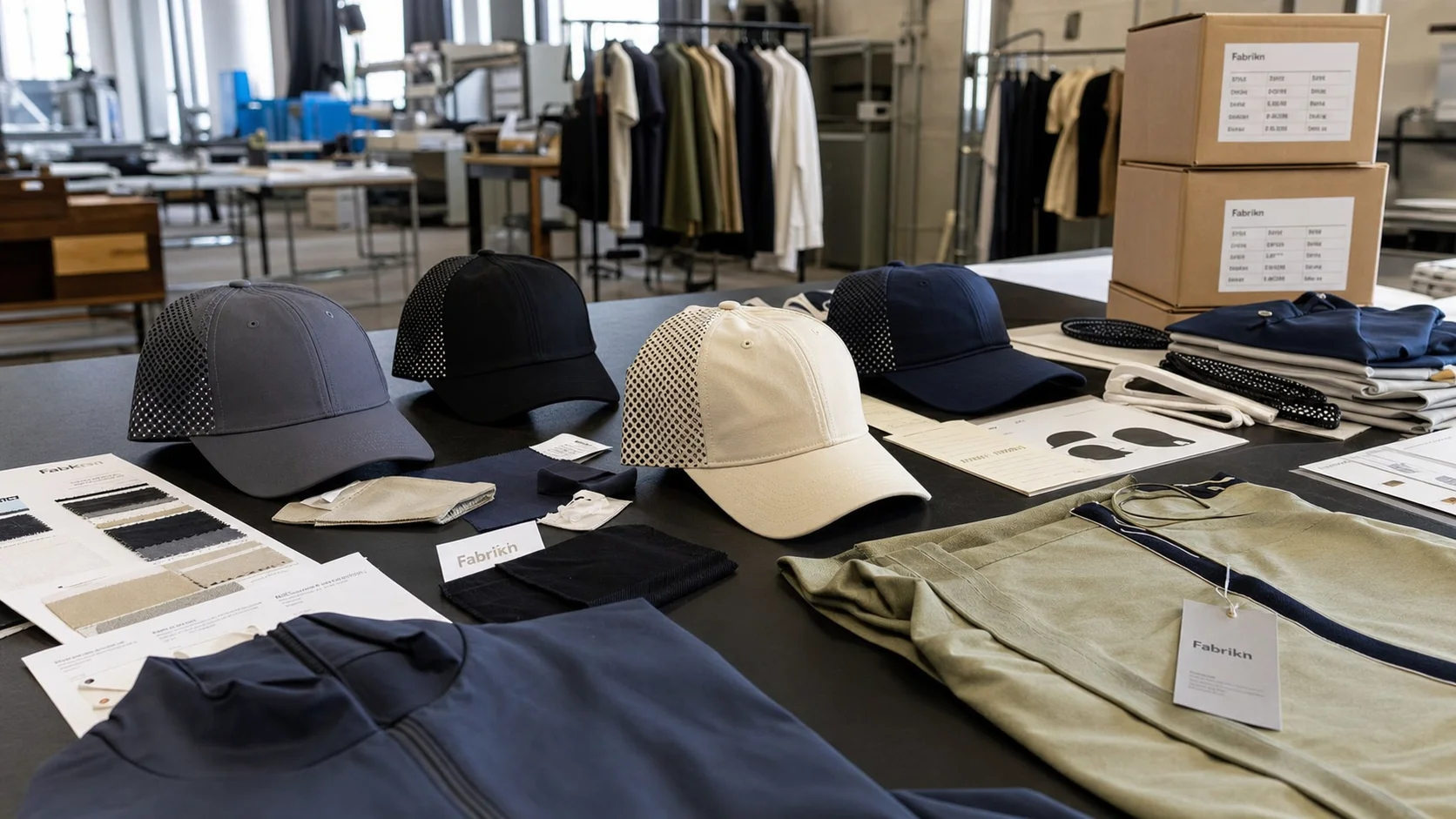
Vet Sustainable Material Suppliers for Sustainable Fashion compared by sample evidence, fabric or trim specs, MOQ, AQL terms, cost lines, delivery timing,...
Fast answer: Vet Sustainable Material Suppliers for Sustainable Fashion: Tech Pack, Sample Gate, MOQ, and QC Terms should be judged by production evidence, not by a generic sourcing promise. The buyer needs sample proof, cost breakdowns, QC checkpoints, and delivery buffers in writing.
Ask for recent sample photos, measurement tolerances, fabric or print test assumptions, decoration test notes, packing examples, and a named inspection checkpoint. These details show whether the team can repeat an approved sample at bulk volume.
Separate garment cost, decoration, labels, packaging, sampling, testing, freight, and rush charges. Clear cost lines make it easier to reduce colorways, adjust size depth, or reserve more time for sampling.
For sustainable fashion brands, choosing the right material supplier is one of the most important decisions in the product development process. The supplier you select affects not only your fabrics and trims, but also your environmental footprint, product quality, delivery timelines, compliance standards, and brand reputation. In other words, vetting sustainable material suppliers is not simply a procurement task; it is a strategic brand decision.
Many brands want to source responsibly, but the market can be confusing. Suppliers may claim to offer eco-friendly materials, recycled fibers, organic textiles, or low-impact production, yet not every claim is backed by credible evidence. Some suppliers have strong sustainability credentials but limited production capacity. Others may provide excellent quality but lack transparency. The challenge for fashion brands is finding partners that align with both ethical values and commercial requirements.
This guide explains how to vet sustainable material suppliers effectively, what red flags to avoid, what documents to request, and how to build long-term relationships with trustworthy partners. Whether you are launching a new sustainable fashion label or scaling an existing one, a rigorous supplier vetting process helps you reduce risk and create products you can stand behind.
Sustainable fashion brands face a unique balancing act. Customers expect responsible materials, but they also expect durability, comfort, fit, and consistent product quality. If a supplier’s “sustainable” fabric breaks down too quickly, varies in color, arrives late, or fails compliance checks, your brand can suffer financially and reputationally.
Vetting suppliers carefully helps you:
For many brands, sustainability is part of the brand promise. That promise must extend beyond marketing into sourcing. Suppliers should not only provide eco-friendly materials, but also operate with integrity, transparency, and accountability.
Before you begin supplier outreach, clarify what “sustainable” means for your brand. This step is essential because sustainability is broad, and suppliers often specialize in different areas. A brand focused on circular fashion may prioritize recycled fibers and take-back systems. Another may care more about organic agriculture, low-impact dyes, or local manufacturing.
You should also decide which standards are mandatory and which are preferred. For example, you may require GOTS-certified organic cotton, but accept non-certified recycled blends if documentation is strong. Having a clear framework makes supplier evaluation faster and more objective.
When evaluating a sustainable material supplier, begin with their website, product sheets, trade show materials, and company profile. Look carefully at the language they use. A legitimate supplier should be specific rather than vague. Claims like “eco-friendly,” “green,” or “sustainable” are not enough on their own.
Check whether the supplier explains how the material is produced and what makes it sustainable. For example, a recycled polyester supplier should be able to explain whether the fiber comes from post-consumer bottles, post-industrial waste, or textile-to-textile recycling. These details matter because different feedstocks have different environmental implications and traceability levels.
Certifications are one of the most effective ways to verify supplier claims. They do not guarantee perfection, but they can help you confirm that a supplier follows recognized environmental and social standards. A good supplier should be able to provide current certificates, transaction documents, or license numbers when relevant.
Be careful not to over-rely on certification logos alone. Ask for the certificate number, issuing body, expiration date, and scope of certification. A supplier may be certified for a specific facility, product line, or material category, but not for every item they sell. Verify that the certification actually applies to the material you plan to source.
Transparency is a core trait of reliable sustainable material suppliers. If a supplier cannot tell you where their raw materials come from or how the materials move through the supply chain, that is a concern. Traceability helps you verify claims, improve accountability, and respond quickly if any issue arises.
The best suppliers can explain their sourcing chain clearly and consistently. They should be able to describe who makes the material, where it is processed, and what controls are in place at each stage. If a supplier gives inconsistent answers or avoids specifics, proceed cautiously.
For brands that want deeper support on responsible production and supply chain alignment, you can explore Fabrikn’s services to understand how manufacturing partnerships can support sustainable sourcing goals.
Even the most sustainable fiber will not work for your brand if it does not meet performance standards. Before committing to a supplier, evaluate how the material behaves in real product use. Sustainability and quality should go hand in hand.
If you are sourcing for apparel, ask for technical data sheets and lab test reports. Sustainable materials can vary widely depending on fiber type, finishing, and construction. A recycled fabric may look great but lose shape quickly if not properly engineered. A natural fiber may feel excellent but require added processing to achieve the performance your customers expect.
Request samples from multiple production runs if possible. This allows you to assess consistency, which is especially important for scaling collections. A supplier that delivers quality in one sample but cannot replicate it reliably at volume can create major problems later.
A supplier’s sustainability profile should cover more than just the material itself. Responsible sourcing also includes labor conditions, factory safety, waste management, water use, and environmental controls. Strong suppliers often have documented systems in place to reduce impact and protect workers.
You can ask for audit reports, code-of-conduct documents, and environmental management policies. If the supplier works with third-party factories, ask how those partners are monitored. A sustainable material claim is only as strong as the entire production chain behind it.
A structured question list helps you compare suppliers fairly and avoid missing important details. The goal is not just to hear “yes,” but to understand how the supplier operates in practice.
The answers should be specific, confident, and supported by documents. Suppliers who are truly experienced in sustainable materials usually welcome detailed questions because transparency is part of their value proposition.
Never rely solely on brochures or website claims. Request physical samples, lab reports, and references from existing clients if available. A sample gives you a direct sense of the fabric’s look, feel, construction, and performance. Test reports help you evaluate whether it meets safety and quality standards. References provide insight into how the supplier communicates, delivers, and resolves issues.
If possible, test the material in a real product context. For example, if you produce activewear, wash and wear the sample under realistic conditions. If you produce tailored garments, evaluate structure, stitchability, and finish. Practical testing helps uncover issues that a spec sheet may not reveal.
Sustainable sourcing must be commercially viable. A supplier may offer a wonderful material, but if the price is too high or the lead time is too long, it may not work for your business model. The key is to assess the total value, not just the unit cost.
Be wary of unusually low prices. Sustainable materials can cost more because of certified inputs, responsible processing, or smaller production scales. If a price seems too good to be true, it may reflect weaker traceability, lower quality, or questionable labor conditions.
At the same time, a higher price does not automatically mean a better supplier. Look at the full picture: documentation, consistency, responsiveness, and long-term value.
One of the most useful tools for vetting sustainable material suppliers is a scorecard. This creates a consistent framework for comparing multiple vendors and reducing subjective bias. You can score each supplier across sustainability, quality, price, transparency, service, and scalability.
A scorecard helps you move beyond intuition and make decisions based on evidence. It also creates internal alignment if multiple team members are involved in sourcing decisions. This is especially helpful for growing brands that need to document supplier due diligence for future audits, investors, or retail partners.
Even after a supplier passes your initial review, it is smart to begin with a pilot order. A small production run gives you a chance to validate the supplier’s claims in a real-world setting. You can check delivery reliability, batch consistency, communication quality, and material performance at scale.
A pilot order can reveal issues that sample yardage cannot, such as dye lot variation, packing problems, customs delays, or miscommunication around specs. If the pilot is successful, you can move forward with greater confidence. If not, you can adjust your sourcing strategy before committing more resources.
There are several warning signs that should make you pause during the supplier vetting process. A supplier does not need to be perfect, but it should be honest, organized, and willing to provide evidence.
If you encounter multiple red flags, it is often best to continue your search. In sustainable fashion, the cost of working with the wrong supplier can be much higher than the cost of taking extra time to find the right one.
At Fabrikn, we understand that sustainable fashion brands need more than just production support. They need dependable partners who can help align material sourcing, manufacturing quality, and brand values. If you are building a product line with sustainability in mind, we can support your development process with practical manufacturing expertise and responsive service.
Learn more about our capabilities on our services page, or get in touch through our contact us page to discuss your project. You can also explore our about us page to learn more about our approach and values.
Vetting sustainable material suppliers is a critical part of building a credible and resilient sustainable fashion brand. The process requires more than checking for buzzwords or attractive certifications. It calls for a thoughtful combination of research, documentation review, material testing, supplier interviews, and pilot orders.
By defining your sustainability standards, asking detailed questions, verifying claims, and using a structured scorecard, you can identify suppliers that support both your ethical goals and your business needs. The result is a stronger supply chain, better products, and a more trustworthy brand story.
Sustainable fashion is built on decisions made behind the scenes. The more rigor you bring to supplier vetting, the more confidently you can deliver on the promises you make to your customers.
Get a free quote from Fabrikn — your trusted B2B clothing manufacturer with 10+ years of experience. MOQ as low as 200 pieces.
Get a Free Quote →The most important factor is credibility. A supplier should be able to prove sustainability claims with certifications, traceability documents, test reports, and clear explanations of sourcing and production methods.
Greenwashing often shows up as vague claims, lack of documentation, and overuse of generic terms like “eco-friendly” or “natural” without evidence. Ask for certifications, batch traceability, and material specifications to verify the claims.
Commonly useful certifications include GOTS, GRS, RCS, OEKO-TEX Standard 100, Bluesign, and FSC, depending on the material type and product category. Always confirm that the certification applies to the exact material you want to source.
Certified materials are often the safest choice, but not every strong supplier will have the exact certification you want. In some cases, strong documentation and traceability may be acceptable if the supplier is otherwise reliable and transparent.
It is best to compare at least three suppliers when possible. This gives you a better view of pricing, quality, sustainability standards, and service levels before making a decision.
Yes. MOQ does not determine sustainability on its own. A supplier may have a higher MOQ because of production efficiency, specialized materials, or certification requirements. The key is whether the supplier aligns with your brand’s needs and sourcing goals.
Traceability helps verify where materials come from, how they are processed, and whether sustainability claims are accurate. It is essential for transparency, compliance, and long-term brand trust.