
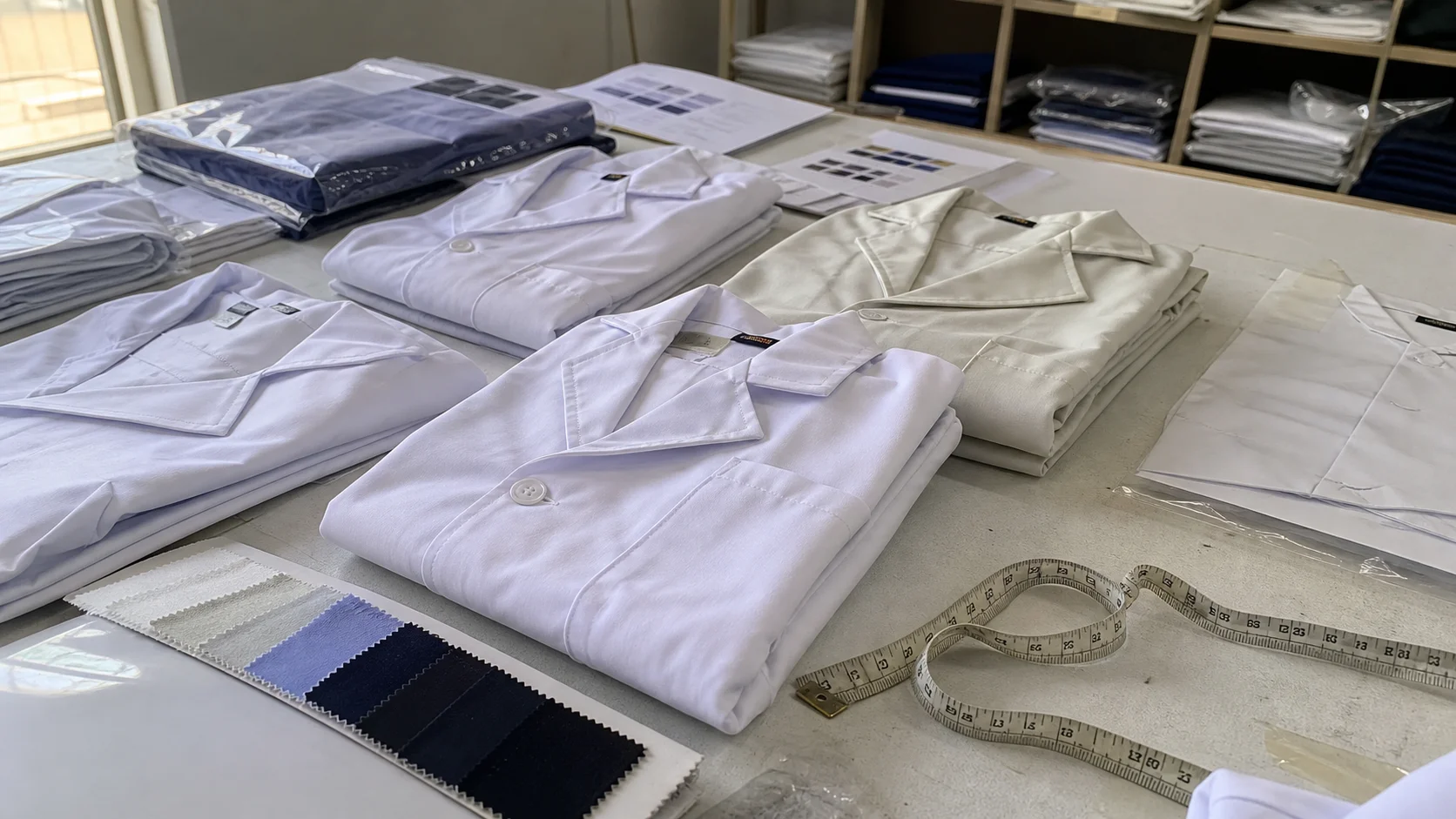
A quality and inspection outline for school operations teams reviewing lab coat reorder risks, including sizing drift, fabric consistency, labeling, pocket...
Lab Coat Reorder Risk Review for Schools - Fabrikn production reference
School lab coat programs look simple until the second or third reorder. The first production run usually gets the most attention: fabric selection, sample approval, size set review, logo placement, and delivery scheduling. Reorders often move faster, with fewer questions asked. That is where quality drift, shade mismatch, missing sizes, and late deliveries start to affect school operations.
For school operations teams, the reorder is not just a purchasing repeat. It is a controlled-risk exercise. A lab coat manufacturer may still have the same purchase order history, but fabric lots change, trims get substituted, cutting teams rotate, and embroidery files may be reloaded incorrectly. If the school has multiple campuses, staggered science terms, or annual uniform windows, a small reorder error can create a visible operational problem.
This review is written for procurement, operations, facilities, and academic support teams managing lab coat replenishment. The focus is practical: what can change between orders, what should be checked before approval, and how to reduce risk without slowing the process unnecessarily.
School lab coats carry more operational pressure than many teams expect. They are used in classrooms, science labs, medical training environments, culinary-adjacent programs, robotics workshops, and vocational courses. Students need the right sizes at the start of term. Faculty need replacements quickly. Storage teams need predictable cartons, labels, and replenishment quantities.
A late or inconsistent reorder creates several problems at once. Students may attend practical sessions without the required garment. Faculty may need to make temporary exceptions. Parents may question why a paid uniform item is unavailable. Inventory staff may spend extra time sorting, relabeling, or explaining backorders.
The manufacturing risk is also different from a fashion reorder. School lab coats need consistency. A slight style change can look like a different uniform. A fabric shade change can make returning students stand out from new students. A pocket placement change can affect logo alignment. A cheaper button or thinner fabric may not be obvious in a spreadsheet, but it will be visible in daily use.
The best purchasing judgment is to treat every lab coat reorder as a controlled repeat, not an automatic copy of the last order.
That does not mean every reorder needs a full development cycle. It does mean the school should define which elements cannot change without approval. For most programs, those elements include fabric composition, fabric weight, color, pattern, size grading, labelling, logo artwork, trim color, pocket layout, packaging, and carton marking.
The highest-risk reorder areas are usually not dramatic. They are ordinary production details that become visible only after delivery. A manufacturer may believe a substitute fabric is equivalent. A sewing line may use the previous pattern but a different seam allowance. A packing team may mix youth and adult sizes in the same carton. None of these issues are unusual in apparel production, and all of them are preventable with the right controls.
For school operations teams, the main reorder risks are:
The purchasing tradeoff is clear. A very low-cost reorder may save money on the unit price but increase staff handling time, replacement requests, and student dissatisfaction. A more controlled reorder may cost slightly more or require earlier approval, but it protects uniform consistency and term readiness.
Fabric is the first point to lock down in a lab coat reorder. Most school lab coats are made in woven cotton, polyester-cotton blends, or polyester-rich fabrics. Common constructions include plain weave and twill. Typical composition options include 100% cotton, 65/35 polyester-cotton, 80/20 polyester-cotton, or similar blends depending on durability, comfort, and laundering requirements.
For general school lab use, many buyers choose a polyester-cotton blend because it balances cost, wash performance, and wrinkle resistance. Cotton-rich coats can feel more breathable, but they may shrink more and need stronger shrinkage controls. Polyester-rich coats may dry faster and cost less, but low-quality versions can feel thin, shiny, or less comfortable in warm classrooms.
Fabric weight should be written in the purchase specification, not described casually. A typical school lab coat may fall around 160 gsm to 240 gsm, depending on use case. Lighter fabrics reduce cost and may suit short-duration classroom use. Heavier fabrics offer better opacity and perceived durability, but they increase cost and may feel warmer.
White lab coats need particular caution. “White” is not a single standard. Optical brighteners, dye lot, finishing chemistry, and base yarn color can all change the final shade. If the school has existing stock, the manufacturer should match against an approved retained sample, not only a color name.
Key fabric controls for reorder purchase orders include:
The direct purchasing judgment is this: do not approve a fabric substitution only because the supplier says it is “same quality.” Ask for composition, weight, construction, shade comparison, shrinkage data, and a physical swatch. If time is tight, approve only after a documented comparison with the previous retained sample.
Fit complaints are common in school uniform programs because students vary widely in age, body type, and growth stage. Lab coats add another layer of complexity. They are usually worn over school clothing, so chest, shoulder, sleeve, and across-back measurements matter. A coat that fits like a shirt will feel restrictive in a classroom lab.
Reorder risk often appears when the manufacturer uses the “same size chart” but not the same production pattern. The spreadsheet may be unchanged while the cutting pattern has been corrected, replaced, or graded differently. Even small changes can affect sleeve length, shoulder width, coat length, and pocket position.
School teams should maintain a technical size chart with garment measurements, not just body measurements. Important points of measure include:
Measurement tolerance should be realistic. For woven lab coats, a common tolerance may be around plus or minus 1 cm for smaller points and plus or minus 1.5 cm to 2 cm for larger body measurements. Tight tolerances can raise rejection rates and cost. Loose tolerances create fit inconsistency. The right tolerance depends on garment size, fabric behavior, and production method.
Size ratios also deserve review before each reorder. Many schools simply repeat last year’s ratio, such as equal quantities across S, M, L, and XL. That can create stockouts in high-demand sizes and dead inventory in slow sizes. A better approach is to review actual issue data, enrollment changes, grade levels, and any campus-specific requirements.
Typical school reorder quantities vary widely. A small top-up may be 100 to 300 pieces. A mid-size annual reorder may be 500 to 1,500 pieces. Larger multi-campus programs may order 2,000 to 10,000 pieces or more. Manufacturers may offer lower MOQs for stock fabrics and higher MOQs for custom fabric, custom shade, or special trims.
Trims are easy to overlook because they are low-cost components. In lab coat production, trim changes can still damage consistency. Buttons may shift from matte to glossy. Snaps may feel weaker. Thread may appear slightly blue against white fabric. Neck labels may change size or language. Wash care labels may miss required fiber content or care symbols.
School operations teams should specify trim details clearly enough that a reorder cannot be downgraded without notice. This includes button size, button color, thread color, label content, label placement, and closure type. If the coat uses snaps rather than buttons, pull strength and corrosion resistance may need closer review.
Packaging has a direct effect on school distribution. A lab coat packed by individual polybag with size sticker is easier to issue to students but increases material use and packing cost. Bulk packing by size reduces packaging but requires more sorting at the school. Campus-level carton sorting can save staff time if the manufacturer has accurate allocation data before packing.
Common packaging options include:
The tradeoff is cost versus labor. If school staff have limited time before term starts, paying for better factory-level packing may be sensible. If storage space is tight, avoid mixed cartons unless the receiving team has a strong sorting process.
Many school lab coats include embroidery, heat transfer, woven badges, or printed logos. Decoration creates reorder risk because artwork files, thread colors, placement templates, and backing materials can change between runs.
Embroidery is durable and presents well, but it can pucker lightweight fabric if backing and stitch density are not controlled. Heat transfer can be cost-effective for larger logos, but poor transfers may crack, peel, or discolor after laundering. Woven badges offer consistency but add sewing operations and inventory management.
Logo placement should be defined from fixed garment points, not estimated visually. A common placement may be left chest, measured from shoulder seam and center front, with adjustment rules for small sizes. Pocket placement matters if the logo sits above or on a chest pocket. If the pocket moves, the logo may appear wrong even when the embroidery file is correct.
Decoration specifications should include:
Do not allow decoration to proceed on the full bulk order before confirming one decorated sample or pre-production panel. This is especially important when changing fabric weight, logo vendor, or decoration method.
Minimum order quantity is one of the most common sources of reorder friction. A school may need 80 size XS coats and 40 size 3XL coats, while the manufacturer wants a minimum cut quantity per size or per color. The right negotiation depends on whether the fabric is stock-supported, custom dyed, or ordered only for the school.
Typical MOQ ranges for school lab coat manufacturing may look like this:
These ranges are not fixed rules. They vary by manufacturer, fabric source, country, season, and production capacity. Schools should ask suppliers to separate garment MOQ from fabric MOQ and trim MOQ. That makes the negotiation clearer.
Lead time also depends on the supply chain behind the coat. A repeat order using available fabric may take 30 to 60 days after approval. A custom fabric or custom dye order may require 60 to 100 days or longer. Embroidery, labelling, school packaging, quality inspection, freight method, and payment timing can all add days.
A practical reorder calendar should include:
The safest purchasing decision is to place replenishment orders before stock becomes urgent. Rush orders usually reduce inspection time and increase the chance of accepting compromises.
A reorder does not always need a full new sample set, but it does need an approval checkpoint. The sample path should match the level of change. If nothing has changed and the supplier is using retained fabric and patterns, a pre-production sample may be enough. If fabric, trim, factory line, or decoration vendor has changed, the school should request more evidence.
A practical reorder sample process includes:
Schools with recurring programs should keep a simple approval archive. This can include the approved sample, measurement chart, fabric swatch, logo file, purchase order, inspection report, and packing instruction. The archive prevents each reorder from depending on staff memory.
Useful sourcing support can also come from a structured manufacturing partner. Teams reviewing supplier capability, development control, or apparel production support may find relevant service context at Fabrikn services.
Inspection should be planned before production starts. Waiting until goods are finished limits options. The school does not need to inspect every coat in every case, but it should define what is checked, when it is checked, and what happens if goods fail.
For lab coat reorders, inspection risks commonly include:
Many apparel inspections use AQL sampling, but the selected level and defect classification should match the school’s tolerance. A minor loose thread is not the same as a wrong logo or incorrect size. Critical, major, and minor defects should be defined before inspection.
Measurement checks should cover several pieces per size. If the school has had previous fit complaints, increase measurement sampling on the affected sizes. For white coats, inspectors should review stains, shade bands, and fabric transparency under adequate lighting.
It is also sensible to inspect packing. A perfect garment packed into the wrong campus carton still creates operational failure. Carton markings should match the packing list. Size stickers should be readable. If the school uses barcodes, scan testing should be done before shipment.
Good supplier control is not about making the manufacturer fill out unnecessary forms. It is about removing ambiguity before production. A school lab coat reorder should have a concise technical pack or specification sheet attached to the purchase order. If the supplier works only from old emails, risk increases.
The purchase order should reference:
Schools should also ask the manufacturer to confirm any changes from the previous order in writing. A simple “no change declaration” is useful. If there is a change, it should be listed and approved before production.
The most important supplier question is not “Can you repeat this?” It is “What has changed since the last approved production?” That question often reveals fabric availability issues, trim substitutions, production line changes, or MOQ constraints early enough to manage them.
For teams comparing manufacturing partners or reviewing company capability, background information can be assessed through an about us page and direct supplier documentation. For project-specific discussions, schools can also use a structured inquiry route such as contact us to clarify scope, quantities, and inspection expectations.
A lab coat reorder should be reviewed through a short but disciplined checklist. The aim is not to slow down purchasing. The aim is to prevent avoidable surprises after goods arrive.
The strongest reorder programs are not the most complicated. They are consistent. The same critical details are checked every time, and the supplier understands that changes must be disclosed before production.
School purchasing teams are often under pressure to reduce unit cost. That is reasonable, but the cheapest lab coat is not always the lowest-cost program. Rework, replacements, late delivery, and staff sorting time all carry cost. A coat that saves a small amount per unit can still become expensive if it creates operational disruption.
Useful cost tradeoffs include:
The right decision depends on program size and risk tolerance. A small school ordering 150 coats may accept a simpler inspection approach. A multi-campus program ordering several thousand coats should not rely only on supplier self-checking.
Reorder control does not end at shipment. Receiving is the final opportunity to catch errors before coats are issued. The school should compare delivered cartons against the packing list and purchase order. Random cartons should be opened to verify size, label, logo, and garment condition.
If the school has retained the previous approved sample, receiving staff can compare the new goods against it. This is especially useful for shade, fabric hand feel, logo placement, and general workmanship. Any issue should be photographed and documented immediately.
Post-delivery review should include:
This data should feed the next reorder. Without it, schools repeat the same size-ratio and quality problems year after year.
A school lab coat reorder is low-risk only when the specification is stable, the supplier has retained the correct standard, and the school checks the right details before production. If any of those conditions are missing, the reorder deserves closer review.
The most important controls are simple: keep an approved sample, specify fabric and measurements clearly, confirm any changes in writing, approve a pre-production sample, and inspect before shipment. These steps protect school operations from the most common failures: late goods, wrong sizes, inconsistent appearance, and preventable quality complaints.
Operations teams should not treat lab coats as a generic commodity if they are part of a visible school program. The garment may be basic, but the operational requirement is precise. Consistency, timing, and reliable replenishment matter more than chasing the lowest quote without controls.
Get a free quote from Fabrikn — your trusted B2B clothing manufacturer with 10+ years of experience. MOQ as low as 200 pieces.
Get a Free Quote →The biggest risk is uncontrolled change. Fabric lot, shade, pattern, trim, logo placement, and packing can all shift between orders. Schools should ask the manufacturer to confirm any changes from the previous approved production before bulk work starts.
Typical MOQs may range from 100 to 300 pieces for simple stock-fabric reorders, 300 to 500 pieces for custom logo programs, and 1,000 pieces or more for custom fabric or custom-dyed production. Actual MOQ depends on the manufacturer, fabric source, trims, and size breakdown.
A repeat order using available fabric may take about 30 to 60 days after approval. Custom fabric, custom dyeing, special labels, or complex campus packing can push the timeline to 60 to 100 days or longer. Approval delays and freight method also affect the final delivery date.
Most reorders should have at least a pre-production sample. If fabric, trims, logo method, or sizing has changed, the school should request swatches, a fit sample, or a size set before approving bulk production.
Polyester-cotton blends are common because they balance durability, cost, and wash performance. Cotton-rich fabrics can feel more comfortable but may shrink more. Polyester-rich fabrics may be economical and quick drying, but poor-quality versions can look thin or feel less breathable.
Inspection should check fabric shade, workmanship, measurements, logo placement, labels, packing accuracy, and carton markings. For larger orders, AQL-based inspection or third-party inspection is often worth considering, especially when delivery timing is critical.
The specification should include fabric composition, fabric weight, color standard, size chart, measurement tolerances, trim details, label requirements, logo artwork, logo placement, quantity by size, packing method, carton labels, inspection requirements, and delivery terms.
Schools should review actual issue data by size and campus before each reorder. Repeating last year’s size ratio without checking demand often creates shortages in popular sizes and excess inventory in slow sizes.