
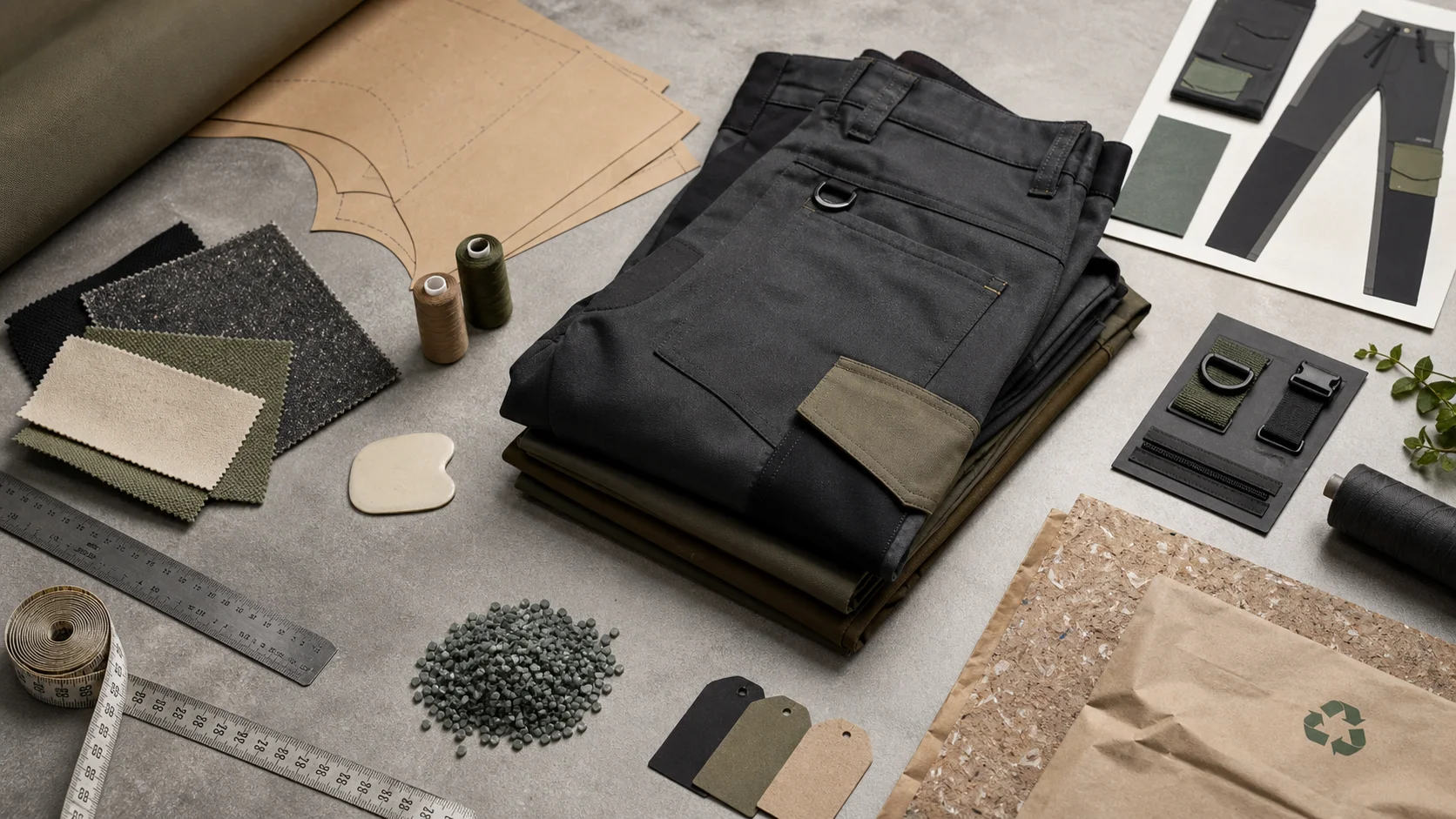
Luxury Foil Hang Tags for Apparel with checks for samples, fit, MOQ, QC evidence, pricing terms, and delivery risk.
Fast answer: Luxury Foil Hang Tags for Apparel: Foil Die, Paper, Proof, and Cost should be judged by production evidence, not by a generic sourcing promise. The buyer needs sample proof, cost breakdowns, QC checkpoints, and delivery buffers in writing.
Ask for recent sample photos, measurement tolerances, fabric or print test assumptions, decoration test notes, packing examples, and a named inspection checkpoint. These details show whether the team can repeat an approved sample at bulk volume.
Separate garment cost, decoration, labels, packaging, sampling, testing, freight, and rush charges. When every cost line is visible, it becomes easier to reduce colorways, adjust size depth, or reserve more time for sampling.
One good tag can change the way a garment feels before anyone touches the fabric. I have watched luxury foil hang tags for apparel do exactly that on racks, in fitting rooms, and on phone screens. A tag costs cents. The impression can move dollars.
In boutiques, foil catches the eye from 2 to 3 meters away. Department stores are worse: 40 other SKUs fighting for attention on one rail. Online, you get 1 or 2 seconds before the buyer scrolls away. Plain cardstock disappears in that window. Silver or copper holds the glance long enough to earn a closer look.
Factories in Vietnam, Portugal, and the United States showed me the same 350 GSM board with very different retail reactions once the finish changed. A mass-market brand selling tees at $18 to $28 used a high-contrast gold foil tag to signal polish. A premium brand at $80 to $140 went the other direction, using a tiny debossed logo and a restrained foil line. More foil is not the point. Sharper intent is.
What buyers notice first is rarely the brand story. Edge crispness. Weight. Whether the finish still looks expensive under harsh lighting. A hang tag can preview the garment before a hand ever feels the fabric. I have seen a $24 French terry hoodie with 320 GSM fabric outsell a similar $38 piece because the tag looked cleaner, heavier, and more deliberate.
Some lower-priced brands use stronger foil detailing than luxury labels. That sounds backwards, but it happens all the time. A $22 private-label line may spend $0.18 to $0.32 per tag on foil; a $240 label may spend $0.12 to $0.20 on a restrained mark. The cheaper product has to prove itself faster.
For brands building a new assortment, custom clothing packaging solutions for apparel brands should be treated as part of the product, not an afterthought. A 5,000-unit hang tag order can change how buyers judge a full line, especially when the tag echoes the fabric and trim choices used in the garment itself.
During sourcing trips through Guangzhou, Dhaka, Ho Chi Minh City, and Istanbul I counted foil lines that ran 24/7. These facilities paired 320 GSM cotton rag board with 3M 467MP double-coated adhesives that keep string knots tight on garment hooks and tested samples in ASTM D3170 abrasion rigs before shipping. Each stop confirmed that even small tweaks—like lengthening the ribbon hole to match a garment’s bias—can alter perceived value.
The production sequence looks simple on paper and brutal on press. Artwork prep, vector cleanup, trap checks, foil separation. Then plate or die creation, print, foil application, die cutting, hole punching, stringing, and final packing. A good manufacturer in a well-run factory can usually complete the job in 3 to 5 days after approval. A bad one needs two more correction rounds. Easy to say. Not easy to do.
Paper stock decides half the result. Textured cotton paper absorbs pressure beautifully and gives foil a soft, tactile edge, but dense logos can show uneven adhesion. Uncoated art paper takes foil cleanly and feels premium at 250 to 350 GSM; I prefer the 310 GSM archival-grade board from a Guangzhou mill when the line has matte lamination. Recycled board tells a sustainability story, yet the surface can be less predictable. Laminated stock resists scuffs during shipping, though it can look too glossy if the brand wants restraint. Some brands blend a thin layer of cellulose acetate string and bamboo-fiber card to echo the garment fibers.
Hot foil stamping uses heat and pressure to transfer metallic film into the paper. It is the classic choice for crisp luxury marks. Cold foil is faster on some presses and works well for larger coverage, but the shine can look flatter under certain LEDs. Embossing and debossing add depth. Spot UV creates contrast, not metal. Metallic inks are cheaper, but they rarely match the reflectivity of true foil.
Durability matters because hang tags move through packing lines, polybag inserts, carton loading, and retail handling. I have watched perfectly printed tags scuff in 20 minutes because the coating was too soft or the edge cut was rough. A tag that looks beautiful in a sample folder can fail after 50 to 100 rubs against a garment hook. Standards matter here. Data from the ASTM International testing framework is often used by mills and labs to compare abrasion and print performance.
Hot foil on uncoated board survives retail stress best. Cold foil can photograph well, especially for e-commerce, but it may show micro-cracking on folds. Soft-touch lamination feels expensive, yet it can trap fingerprints and shows wear on shipping corners. I favor the material that still looks intentional after 200 tags have been handled, not the one that wins one studio shot.
Brands that pair tags with broader private label clothing services usually get better consistency across labels, inserts, and outer packaging, because the same approval discipline applies to all components.
Most high-end shops rely on Heidelberg Speedmaster XL 75 or KBA Rapida 75 presses for the base printing, then transfer sheets to Bobst Expertcut 106 for die cutting and Zünd S3 digital cutting tables for prototypes. Foil applicators such as the M11 Danpal hot foil unit or the Gallus ECS can handle up to four colors, while in-line inspection cameras check for registration shifts down to 0.1 mm. Even stringing uses electric eye-guided knotters with waxed cotton cord to keep loops uniform.
Pricing is where romance dies and procurement starts talking. For luxury foil hang tags for apparel, a simple 1-sided tag on 350 GSM uncoated board with one foil color and one hole punch may cost $0.22 to $0.38 at 10,000 units. At 5,000 units, I usually see $0.30 to $0.52. At 1,000 units, the range often jumps to $0.68 to $1.20. At 500 units, $1.10 to $2.10 is common, especially if the tag shape is custom.
For ultra-premium finishes, a curved multi-layer tag with foiled edges, lacquered text, and woven ribbon charms hits the $2.50-4.00 per unit range at 500 MOQ because of specialized die cutting and the long setup on the Gallus press.
One die-cut shape can add $35 to $120 in tooling. Two foil colors can add 15% to 35%. Double-sided print adds 10% to 25%. Embossing plus foil often pushes the tag into a higher setup bracket because the press needs tighter alignment and more testing. Choose a special corner shape, stitched string, and soft-touch lamination all at once, and the total often rises 20% to 40%.
MOQ is not a random number. It reflects setup time, waste allowance, and machine run length. A factory that quotes 500 pieces may still be pricing as if it were 2,000, then padding elsewhere with plate fees, die fees, or shipping charges. I have seen aggressive quotes of $180 for a small run turn into $420 after tooling, export carton costs, and reprint fees were added.
The real hidden cost is rework. A color mismatch on a navy logo can ruin 300 tags. Weak adhesive on string knots can cause 5% spoilage in packing. Poor foil registration can trigger a full reprint if the brand approves a tight tolerance of 0.3 mm and the factory lands at 1 mm. Those errors cost more than upgrading the paper from 300 GSM to 350 GSM.
For brands that also need labels, inserts, and garment finishing support, cut and sew manufacturing for apparel production links packaging to production timing, which can save a week when seasonal launch dates are tight.
If a supplier offers a quote that is 25% below market, ask whether plates, tooling, shrink wrap, and export cartons are included. The cheapest number can be a mirage.
When I visited printers in Guangdong, Lombardy, and North Carolina, the strongest suppliers had three things in common: in-house prepress, finishing equipment that was actually maintained, and a QC desk with bright neutral lighting. Weak suppliers relied on screenshots, not print proofs. They also had trouble explaining why one tag looked rich and another looked dull, even when both came from the same file.
Supplier credentials should be visible, not verbal. Ask whether foil stamping, die cutting, and hole punching happen in-house or through a subcontractor. In-house prepress shortens correction cycles from 4 days to 1 or 2. In-house QC catches misregistration before cartons are sealed. Sample consistency matters too. If a sample from January differs from one in March, the process is unstable.
Check that their sustainability paperwork includes certifications such as GOTS, OEKO-TEX Standard 100, WRAP, BSCI, and GRS. Those certifications not only tell you about the chemistry of the adhesives and inks, but also whether the factory maintains the transparent labor standards demanded by most global buyers. If the supplier claims to be GOTS certified for paper, cross-check the license number against the Textile Exchange database before committing your seasonal allocation.
Ask whether the prepress team uses Pantone Live, whether foil screens run through a Heidelberg IFS pre-heater, and whether every sheet of board leaves the die-cutter on a dedicated conveyor to prevent nicking. These details mean faster approvals, fewer surprises, and a better chance of matching a premium hang tag to a premium garment.
All regions have trade-offs. Guangzhou offers affordable tooling and multiple foil suppliers with lead times under 12 business days, but the paperwork process for export cartons can add 3 days of admin. Dhaka is competitive on labor but needs 18-22 business days for sea freight to the EU or US once the boxes clear Chittagong, so buffer against rush launches. Ho Chi Minh City balances price and speed—press time can be as fast as 5 days on the Heidelberg and Bobst gear, yet customs paperwork demands precise HS coding for laminated tags. Istanbul is a strong regional option for Europe, with shorter inland trucking and Turkish REACH-compliant inks, though the per-unit cost sits at the upper end because of the higher minimum wage.
If you need samples fast, Mexico or North Carolina can ship within 5 to 7 business days by air, but the unit cost jumps and the supplier MOQ can be 2,000 pieces because of labor rates. In contrast, a Dhaka plant can support 500 to 1,500 pieces with the same tooling but requires the longer 18-22 business day window I mentioned earlier for ocean transit to New York.
Quality control changes by region. Guangzhou lines tend to run 24/7 with robust SPC data on foil density, but materials may vary across months. Ho Chi Minh City shops often use in-line spectrophotometers for color and white backing; Istanbul houses a WRAP-certified plant that injects quality gates for stringing and packaging in the final 24 hours. Choose a region that matches not only your price but also your delivery rhythm.
Luxury looks deliberate, not accidental. A clean logotype, selective foiling, thoughtful perforations, and restrained color palettes signal investment. Avoid the urge to foil every surface; instead, highlight one motif or line to create negative space that justifies the premium board. Use materials that echo your garments—if the knitwear is GOTS-certified, pair it with a GOTS-certified 300 GSM cotton board and hemp cord that matches the textile story.
Consider stacking layers: foil for the logo, blind deboss for secondary copy, and soft-touch lamination only on the front face. This layered approach still feels expensive without screaming for attention. Use a die that lets the tag hang straight without twisting; the subtle difference between a 2-point and a 4-point corner radius shows when the tag is handled.
String choice also matters. Waxed cotton or polyester-wrapped braid knotted with 3M Permanent High-Tack adhesives stays put through 50+ fitting-room pulls, while a simple nylon cord with a crimped ferrule can survive the retail jungle. The goal is to pair luxury finishes with reliable, tactile engineering.
Start with a detailed brief: material, finish, string, hole placement, packaging specs, certifications, and timing. Share Pantone references, a mock-up, and any fabric swatches. Ask for a production-ready digital mock and a physical sample. In most factories, this takes 6 to 10 business days from art approval to sample because the plate making (CNC engraving or laser-etched polymer) itself takes 48 to 72 hours on machines like the MITSUBISHI DIAMOND or the Grafityp laser engraver.
Once the sample is approved, confirm packaging and export details—do the tags ship folded, individually polybagged, or nested in paper dividers? Do all cartons have shrink wrap and barcodes printed in Guangzhou or Ho Chi Minh City? Schedule a 20-minute video inspection if your team cannot visit the factory, and insist on a pre-shipment checklist that includes foil adhesion testing and string tension checks. Keep your launch calendar flexible; even the best supplier can face a machine breakdown on a KBA Rapida, so plan a buffer of 4 to 6 business days for surprises.
Finally, sync the hang tag shipment with garment loading. If your cut-and-sew factory in Dhaka or Istanbul is set to ship containers, consolidate hang tags in the same carton or the same LCL shipment to save on freight and customs brokerage.
Q: How soon can I get a luxury foil hang tag sample? A: Expect 6 to 10 business days including plate/die setup, photography, and prepress checks. If you need faster, a digital mock can be ready in 1 to 2 days, but physical proofing still takes the same lead time due to foil testing on presses like the Heidelberg Speedmaster XL 75.
Q: What certifications should a hang tag factory provide? A: Look for GOTS, OEKO-TEX Standard 100, WRAP, BSCI, and GRS if sustainability or compliance is part of your brand promise. You might also request ISO 8,000 or ISO 9001 as evidence of consistent quality systems.
Q: How do I reduce the unit cost without losing the luxury feel? A: Keep the tag simple: one foil color, standard rounded corners, and a 300 GSM uncoated board. Maintain a higher MOQ—10,000 units on a Gutenberg machine reduces the price dramatically. Pairing foil with minimal embossing lets you keep the premium feel while staying within budget.
Q: What if my supplier delivers a batch with foil misregistration? A: Require a QC plan, include a 0.2 mm registration tolerance in your contract, and ask for spool samples with color bars. If misregistration occurs, the factory should reprint without you covering the full cost—this is why supplier selection and certification matter.
Q: Can I ship tags from the same region as the garments? A: Yes. Shipping from Guangzhou to Ho Chi Minh City, or Dhaka to Istanbul, saves on transit time and import duties. Coordinate your packaging supplier with your cut-and-sew factory to streamline the supply chain.