
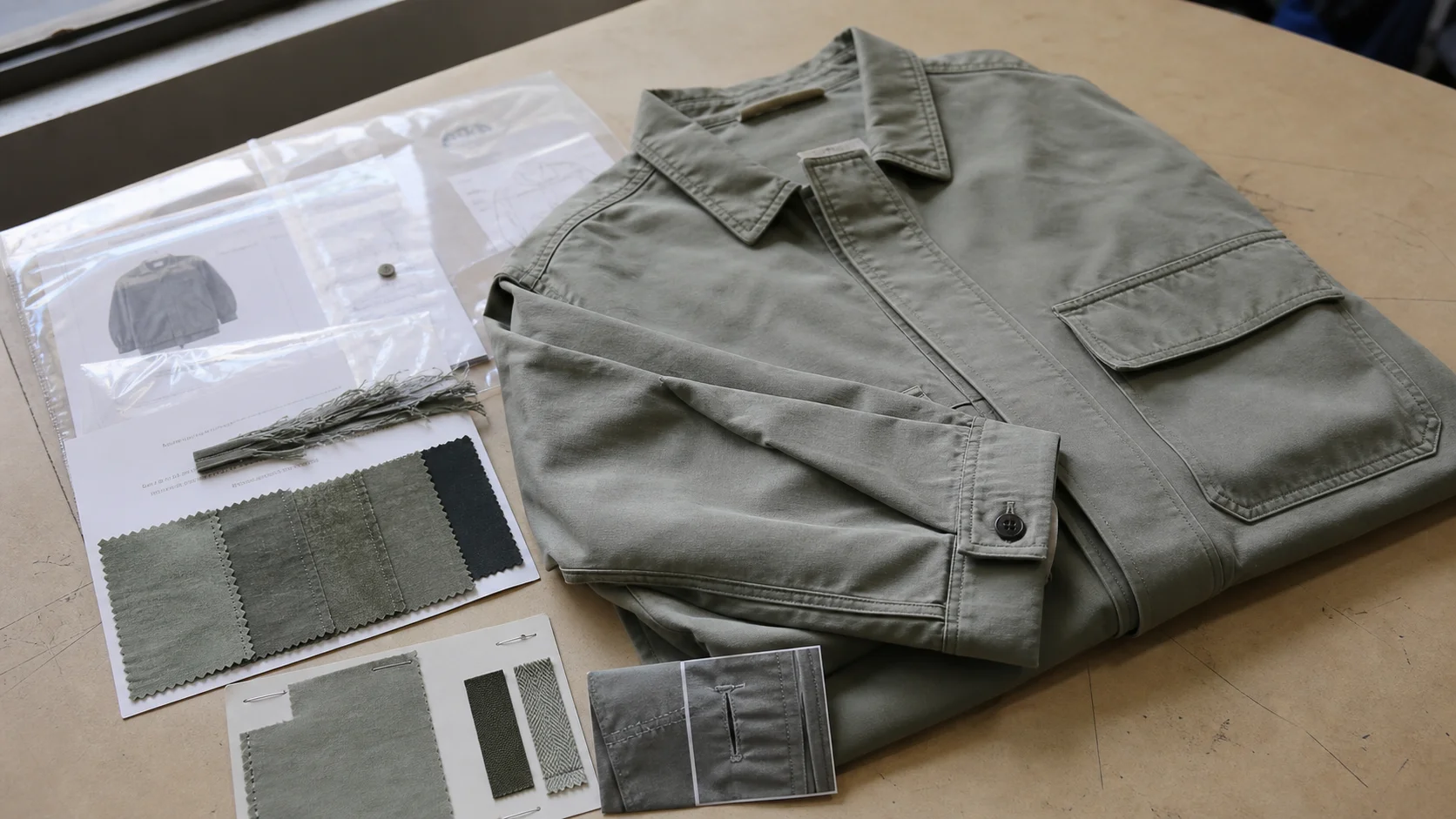
A product-specific SEO outline for restaurant groups reviewing MOQ, pricing, durability, decoration, and reorder planning for lyocell utility jacket orders.
Lyocell Utility Jacket MOQ Pricing Review - Sustainable Fashion manufacturing guide
Category: Sustainable Fashion
A lyocell utility jacket can be a strong uniform option for restaurant groups that want a softer, more sustainable layer than a standard cotton twill or polyester work jacket. The buying case is strongest when the jacket is visible to guests, used by front-of-house staff, hosts, managers, bar teams, or hospitality teams moving between indoor and outdoor zones. It is less suitable when the garment will be exposed to heavy grease, constant industrial washing, or high-abrasion kitchen work unless the fabric and finishing are specified carefully.
For restaurant groups, the key sourcing question is not simply “Can this be made?” It is whether the required order volume, size spread, color standard, branding method, and wash-care expectation support lyocell’s cost structure. Lyocell has a premium hand feel and a sustainability story, but it is sensitive to fabric weight, shrinkage control, dye consistency, seam strength, and care labeling. A low quote can become expensive if the fabric pills, fades, twists after laundering, or cannot hold embroidery cleanly.
Typical MOQs for a custom lyocell utility jacket often start around 300 to 500 pieces per color for basic production, with more realistic commercial MOQs at 600 to 1,000 pieces per color when custom dyeing, branded trims, or multiple sizes are involved. Smaller runs may be possible through stock fabric and simplified trims, but the unit price rises quickly. For multi-location restaurant groups, the best value is usually found by consolidating seasonal buys across locations and limiting colorways.
Buying judgment: lyocell is a good choice when the jacket is part of the guest-facing brand experience. It is a weaker choice when the garment is treated as disposable back-of-house workwear.
Restaurant groups reviewing a lyocell utility jacket order should request a full tech pack, pre-production sample, wash test results, fabric composition certificate where available, and a clear inspection standard. Buyers can also review support options through Fabrikn services if they need help structuring specifications, production requirements, or supplier communication.
Lyocell is a regenerated cellulosic fiber usually made from wood pulp through a controlled solvent-spinning process. In apparel sourcing, it is valued for softness, drape, breathability, and a more refined surface than many basic cotton fabrics. For restaurants, those qualities matter when uniforms need to feel comfortable through long shifts and still look elevated in a dining room.
A utility jacket made in lyocell or a lyocell blend can sit between casual workwear and polished hospitality uniform. It can carry patch pockets, snap closures, a relaxed collar, and branded details without feeling as stiff as traditional canvas. That makes it useful for modern restaurant groups that want uniforms to look intentional rather than generic.
The tradeoff is durability management. Pure lyocell can feel beautiful but may not deliver the abrasion resistance expected from hard workwear. A blend can be more practical. Many buyers should review lyocell-cotton, lyocell-polyester, lyocell-linen, or lyocell-nylon blends depending on the use case. The right answer depends on whether the jacket is mostly visual, functional, or both.
MOQ pricing for a lyocell utility jacket depends on fabric sourcing, jacket complexity, factory setup time, color count, trim customization, and branding. Restaurant groups often underestimate the impact of size spread. A 500-piece order split across eight sizes and two colors is not the same production problem as a 500-piece order in one color with four sizes.
Most manufacturers will look at the order by color, not only by total quantity. If a group orders 1,000 jackets split into black, olive, navy, and beige, that may behave like four small orders of 250 pieces. Fabric dyeing, cutting efficiency, trim allocation, and line setup all become less efficient. The result is either a higher unit cost or pressure to reduce style complexity.
For restaurant groups, a practical first-order MOQ is usually 500 to 800 pieces if custom fabric color and full size grading are required. Reorder MOQs may be lower if the fabric and trims are kept active, but this must be negotiated early. A supplier may accept a lower reorder only if leftover fabric, stocked trims, or repeat cutting markers are available.
Order Scenario Typical MOQ Range Pricing Impact Best Use Case Stock lyocell or lyocell-blend fabric, simple jacket 150-300 pieces per style Higher unit price, faster sampling Pilot program or small restaurant group Custom color, standard trims 300-600 pieces per color Moderate cost efficiency Single brand color across locations Custom fabric, branded trims, full size range 600-1,000 pieces per color Better unit economics at scale Regional or national restaurant group Multiple colorways with embroidery and labels 800-1,500 total pieces, subject to color split Cost rises if each color is too small Tiered staff roles or seasonal uniforms Fully developed premium jacket with custom dye, snaps, labels, packaging 1,000+ pieces per color Best margin control, longest setup Large multi-unit hospitality brandIndicative FOB pricing for a lyocell utility jacket can vary widely. A basic unlined jacket in a stock lyocell blend might sit in the mid-range custom uniform category. A heavier garment with enzyme wash, branded metal snaps, reinforced pocketing, embroidery, and strict shade control can move into premium pricing. Buyers should treat any quote without fabric weight, construction details, and packaging terms as incomplete.
A cautious working range for many custom lyocell utility jackets is roughly USD 18 to USD 45 FOB per piece, depending on order volume and build. That range is not a promise of final cost. It excludes duty, freight, warehousing, decoration added after import, and domestic distribution to restaurant locations. Smaller orders, custom garment dyeing, or premium trims can push the price higher.
Low MOQ production is not only about making fewer jackets. It also means fabric is purchased less efficiently, cutting waste is harder to absorb, line operators have less time to gain speed, and quality issues affect a larger share of the order. Suppliers may quote low MOQs, but the hidden tradeoff can appear in weaker trim options, limited colors, or looser tolerances.
At higher MOQs, buyers can negotiate better cost per piece, but they carry more inventory risk. Restaurant groups with high staff turnover need extra units, yet overbuying unpopular sizes can tie up cash. A sensible approach is to calculate order volume by active staff count, opening pipeline, replacement rate, and seasonal demand rather than by a generic price break.
The garment’s cost is shaped by more than the word “lyocell.” A supplier needs to know the exact fabric composition, GSM, weave, finish, pocket count, stitching standard, closure type, branding, size range, and packing requirement. Each detail changes the quote.
Fabric is usually the largest cost component. A lightweight lyocell twill may feel soft but lack body for a utility jacket. A heavier twill or canvas-like blend gives better structure but increases fabric consumption and cost. Many restaurant uniform buyers should consider fabric weights around 180 to 280 GSM for lighter indoor jackets and 280 to 360 GSM for more structured utility styling.
Pure lyocell gives a premium feel but may not be the most practical uniform choice. A lyocell-cotton blend can improve familiarity and reduce cost. A lyocell-polyester blend can help with dimensional stability and drying time, though it changes the sustainability story. A lyocell-linen blend can look attractive for hospitality concepts, but wrinkling and shrinkage must be checked carefully.
A utility jacket with two chest pockets, two lower patch pockets, adjustable cuffs, a back yoke, bar tacks, and branded snaps takes more labor than a clean overshirt. Pocket symmetry is a real inspection point. So are collar points, sleeve pitch, placket alignment, and topstitching consistency.
Restaurants often want a jacket that looks relaxed, but relaxed does not mean easy to make. Soft fabrics can shift during sewing. If the design uses large patch pockets or double-needle topstitching, the sewing line needs good handling controls. Otherwise, the jacket may look wavy or uneven after pressing.
Restaurant groups usually add logo embroidery, woven labels, heat transfers, patches, or branded hardware. Embroidery is durable and familiar, but dense stitching on lyocell can pucker. Woven patches may look premium, but they add placement and edge-stitching risk. Metal snaps can lift the garment, yet they require testing for pull strength, plating durability, and laundering performance.
If the brand identity is subtle, a tonal woven label or small sleeve embroidery may be better than a large chest logo. If staff turnover is high, permanent individual personalization should be avoided unless the group has a strong reissue process.
A reliable quote starts with a reliable specification. Buyers should avoid asking factories to quote from a mood board alone. A reference image can guide styling, but it does not control cost or quality. For a lyocell utility jacket, the tech pack should define the fabric, trims, measurements, stitching, labels, packaging, and testing expectations.
The care label deserves special attention. Restaurant uniforms are washed often, sometimes by staff at home and sometimes through laundry services. If the jacket requires delicate washing, low heat, or line drying, that may not match real operational behavior. A beautiful jacket that fails after repeated tumble drying becomes a purchasing problem, not a sustainability win.
Snaps and buttons should be easy to use but secure. Metal snaps can look better than plastic, but they must be tested for rust, plating loss, and pull strength. Buttons should be attached securely with enough thread passes. Pocket bags and reinforcements should not be too thin, especially if staff carry order pads, pens, handheld devices, keys, or radios.
Cuffs are another practical detail. Adjustable snap cuffs help staff roll sleeves, but sleeve openings must not interfere with service work. Long loose sleeves can become a safety issue near food preparation zones. A jacket intended for host stands and floor management can be more relaxed than one used near bar prep or kitchen pass areas.
Sampling is where buyers find out whether the concept can survive production. A lyocell utility jacket should not move to bulk based only on a digital mockup or fabric swatch. At minimum, restaurant groups should review a fit sample, a fabric and trim approval set, and a pre-production sample before authorizing bulk cutting.
Sample Stage Purpose Buyer Decision Common Risk Proto sample Checks silhouette and construction concept Approve direction or revise design Made in substitute fabric, so drape may not be final Fit sample Confirms measurements, mobility, and size grading basis Approve fit corrections Too slim across shoulders or restrictive sleeves Lab dip or strike-off Confirms color and fabric appearance Approve shade before bulk fabric Color looks different under restaurant lighting Decoration sample Checks logo, embroidery, patch, or label placement Approve branding method Puckering, poor contrast, or incorrect placement Pre-production sample Represents final fabric, trims, construction, and packaging Approve bulk production Rushing approval before wash testingRestaurant groups should test samples in real staff conditions when possible. That does not require a long formal wear trial for every order, but a short wear and wash review can identify problems before bulk production. Look for sleeve mobility, pocket usefulness, lint attraction, wrinkle recovery, color transfer, and how the jacket looks after laundering.
Fit should be reviewed across roles. A jacket that works for a host may not work for a bartender reaching forward all night. Managers may want a sharper look, while servers may need more movement. If one jacket must serve multiple roles, prioritize mobility and consistent appearance over overly tailored styling.
Lead time for a lyocell utility jacket is shaped by fabric availability first, then sample approvals, production capacity, decoration, inspection, and freight. Buyers often focus on sewing time, but fabric development can take longer than sewing. Custom dyed lyocell fabric requires lab dips, approval, bulk dyeing, finishing, testing, and sometimes shade correction.
A stock fabric program can sometimes move from approved sample to bulk shipment in 6 to 10 weeks, assuming trims are available and the factory has capacity. A custom fabric or custom color program is more likely to require 10 to 16 weeks after final approval. Complex orders with branded hardware, multiple colors, garment washing, or strict sustainability documentation can take longer.
The timeline can compress if the buyer uses stock fabric, standard trims, one color, and a simple logo. It expands when restaurant leadership changes design direction after sampling. Internal decision speed matters. Slow feedback on lab dips, fit corrections, or logo placement can add weeks without any factory delay.
For new restaurant openings, buyers should build a buffer. Uniforms are often needed before the launch date for training, press events, soft opening, and staff photography. A jacket arriving on the official opening week is already late from an operational point of view.
A restaurant group buying lyocell utility jackets should begin with role mapping. The same jacket does not need to serve every employee. In many cases, lyocell works best for guest-facing teams and supervisors, while back-of-house teams use more washable cotton-poly or performance fabrics.
For hosts, servers, sommeliers, and floor managers, a lyocell utility jacket can support a polished but approachable look. The fabric feels less corporate than suiting and more refined than heavy workwear. A clean chest pocket, subtle logo, and muted color can match many restaurant interiors.
The main tradeoff is maintenance. If the restaurant expects staff to keep the jacket crisp without ironing or steaming, lyocell may need a blended fabric or wrinkle-resistant finish. Buyers should not assume staff will follow ideal care instructions after long shifts.
Bar teams and patio staff may benefit from a lightweight utility jacket during cooler service periods. Pockets can be useful, but placement should not interfere with aprons, crossbody tools, or handheld POS devices. Darker colors may hide light stains better, though they can show lint and fading over time.
For outdoor use, lyocell alone does not provide weather protection. If the jacket is expected to resist drizzle or wind, buyers may need a different fabric strategy. A water-repellent finish can be explored, but it may affect hand feel, sustainability claims, and wash durability.
Managers often need a uniform layer that distinguishes them without looking too formal. A lyocell utility jacket can work well if it has cleaner lines, fewer bulky pockets, and subtle branding. The jacket should move easily during service but still look sharp during guest interaction.
For regional leaders or trainers who travel between locations, durability and wrinkle recovery matter more. A lyocell blend may be better than pure lyocell, especially if the garment is packed, transported, and worn repeatedly.
Pure lyocell utility jackets are usually not the first choice for heavy back-of-house use. Kitchen environments expose garments to heat, oil, repeated washing, and higher abrasion. A chef coat, overshirt, or work jacket made from a more robust cotton-poly blend may be more practical.
If a restaurant group still wants a sustainable material story in back-of-house uniforms, it should review blended fabrics, reinforced construction, and commercial laundry testing. The jacket must be judged by lifecycle performance, not only fiber origin.
Quality control for lyocell jackets should include fabric, measurements, workmanship, decoration, shade, and packaging. Restaurant groups often receive uniforms across multiple locations, so consistency matters. A small variation in shade or logo position becomes obvious when staff stand together.
Inspection should be based on an agreed AQL standard or another written acceptance plan. Buyers should define critical, major, and minor defects before production begins. Critical issues may include wrong fiber content, unsafe trims, incorrect labeling, severe stains, or nonfunctional closures. Major issues may include visible shade mismatch, poor logo placement, open seams, or measurements outside tolerance. Minor issues may include loose threads or slight pressing marks within agreed limits.
Wash testing is especially important. A sample should be washed according to the proposed care label and, if realistic, under harsher conditions that reflect staff behavior. Buyers should inspect color loss, shrinkage, seam twisting, pilling, and logo condition after multiple cycles. A jacket that looks good only before washing is not a workable restaurant uniform.
Restaurant group orders often require sorting by size, location, role, or opening date. Poor carton marking can create operational headaches even if the jackets themselves are acceptable. Buyers should define carton ratios, size stickers, location packing lists, and any individual staff allocation needs before final packing.
If the order ships directly to multiple restaurants, accuracy becomes more important than the lowest packaging cost. Misallocated sizes create rush replacement shipments and staff dissatisfaction. A small investment in organized packing can save time during rollout.
Lyocell utility jackets make the most sense when the restaurant group values appearance, comfort, and sustainability messaging enough to manage a more careful sourcing process. They are not the cheapest uniform jacket option, and they should not be bought as if they are basic commodity workwear.
The best buying profile is a restaurant group with stable branding, enough locations to support MOQ, and a clear uniform standard across teams. One color, one core silhouette, and controlled branding will usually deliver better value than multiple small-batch variations. Buyers should resist the urge to create too many colorways for different roles unless order volume supports it.
For smaller restaurant groups, the better route may be a stock lyocell-blend overshirt or simplified utility jacket with custom embroidery. This gives some sustainability and brand value without forcing high custom-fabric MOQs. The tradeoff is less control over fabric, color, and trims.
For larger groups, custom development is more defensible. At scale, buyers can specify fabric weight, color, pocketing, trims, and packaging with better unit economics. They can also run a proper wear trial, approve graded sizing, and hold suppliers accountable to repeatable standards.
A restaurant group that needs help turning a design idea into a production-ready brief can review Fabrikn’s apparel manufacturing services. Buyers comparing supplier options or preparing a first uniform program can also contact the team through Fabrikn contact. For background on the company and its sourcing perspective, visit Fabrikn about us.
Pricing should be reviewed through realistic restaurant operating scenarios rather than only per-piece cost. A group with 20 locations may need a different buying strategy than a group opening three flagship restaurants. Staff count, turnover, replacement policy, and brand standards all influence the final landed cost.
Restaurant Group Profile Suggested Strategy MOQ Consideration Purchasing Tradeoff Single premium restaurant Use stock fabric and local decoration if volume is low 50-150 pieces may be possible through blanks or small-batch programs Lower control, higher unit cost Small group with 3-8 locations Consolidate roles into one core jacket 150-400 pieces depending on supplier flexibility May need standard colors and trims Regional group with 10-50 locations Develop custom style with limited colorways 500-1,000 pieces is more realistic Better brand control, more inventory planning National group or franchise system Build a repeatable uniform program with replenishment terms 1,000+ pieces with reorder planning Strong unit economics, higher compliance needsBuyers should separate FOB cost from landed cost. Freight, duty, customs brokerage, insurance, domestic trucking, warehousing, decoration, repacking, and location distribution can materially change the final number. A jacket that appears cheaper at the factory gate may not be cheaper after rush air freight, rework, or poor packing accuracy.
Payment terms also matter. A typical production structure may require a deposit before materials are purchased and a balance before shipment. Larger groups may negotiate better terms, but new buyers should expect suppliers to protect themselves against custom material risk. If the fabric is custom dyed to a restaurant’s brand color, the supplier may not be able to reuse it for another customer.
Lyocell can support a sustainable fashion story, but buyers should be careful with claim language. “Sustainable,” “eco-friendly,” and “green” are broad terms. A more defensible claim might reference the fiber type, certified material where documented, reduced-impact fiber sourcing where supported, or a specific supplier certificate. Claims should match available documentation.
If a restaurant group wants to communicate the uniform story to guests or staff, it should request documentation early. Depending on the supply chain, this may include fiber certificates, fabric mill documents, transaction certificates for certified materials, restricted substance compliance, or care and durability testing. Not every supplier can provide the same paperwork, especially at low MOQ.
There is also a practical sustainability issue: garment life. A lower-impact fiber does not compensate for a jacket that fails quickly. Durability, repairability, wash performance, and reorder consistency are part of the environmental calculation. For restaurant uniforms, a slightly blended fabric that lasts longer may be a more responsible choice than a pure fiber garment with poor performance.
A lyocell utility jacket is worth reviewing for restaurant groups that want a premium, comfortable, guest-facing uniform layer with a sustainability angle. It is not a universal replacement for all work jackets. The strongest programs use controlled colors, practical blends, wash-tested samples, and clear inspection standards.
For most restaurant groups, the recommended path is to start with one core style, one or two colors, and a realistic MOQ target. Use stock fabric for pilot orders if volume is uncertain. Move into custom fabric only when the group has enough locations, enough reorder visibility, and enough internal discipline to approve specs on time.
The right purchasing question is not “What is the lowest MOQ?” It is “What MOQ gives us the best balance of price, quality, durability, and rollout control?” For lyocell utility jackets, that balance usually appears when buyers treat the garment as a brand asset rather than a basic uniform expense.
Get a free quote from Fabrikn — your trusted B2B clothing manufacturer with 10+ years of experience. MOQ as low as 200 pieces.
Get a Free Quote →Typical custom MOQs range from 300 to 500 pieces per color for simpler programs and 600 to 1,000 pieces per color for custom fabric, branded trims, and full size ranges. Lower MOQs may be possible with stock fabric, but unit cost usually increases.
Lyocell can work well for guest-facing restaurant uniforms, especially for hosts, managers, servers, and bar staff. For heavy kitchen use or commercial laundry abuse, a lyocell blend or a different workwear fabric may be more practical.
A cautious working range is roughly USD 18 to USD 45 FOB per piece for many custom programs, depending on fabric, quantity, trims, construction, branding, and finishing. Final landed cost will include freight, duty, distribution, and any additional decoration or warehousing.
Pure lyocell offers a soft hand feel and strong sustainability positioning, but blends often perform better for uniforms. Lyocell-cotton, lyocell-polyester, or lyocell-nylon blends can improve structure, durability, drying time, or shrinkage control.
Buyers should test shrinkage, colorfastness, seam strength, snap or button strength, embroidery performance, pilling, and appearance after washing. Fit and mobility should also be reviewed by staff who perform real restaurant tasks.
Stock fabric programs may take around 6 to 10 weeks after approval. Custom fabric or custom color programs often require 10 to 16 weeks after final approval, depending on lab dips, fabric production, trims, factory capacity, inspection, and shipping.
Yes, but embroidery must be tested. Dense logos can pucker soft lyocell fabrics. Buyers should approve stitch count, backing, placement, thread color, and a decoration sample before bulk production.
Black, navy, charcoal, olive, stone, and warm neutrals are common choices. Dark colors may hide some stains but can show lint or fading. Light colors can look premium but need stronger stain-management expectations.
Reduce color count, consolidate sizes, use standard trims, avoid unnecessary pockets, approve stock fabric where suitable, and place larger consolidated orders across locations. Reorder planning can also improve pricing if fabric and trims remain available.
The biggest risks are shrinkage, shade variation, poor wash performance, and decoration puckering. These can be controlled with a complete tech pack, lab dip approvals, pre-production samples, wash testing, and final inspection standards.