
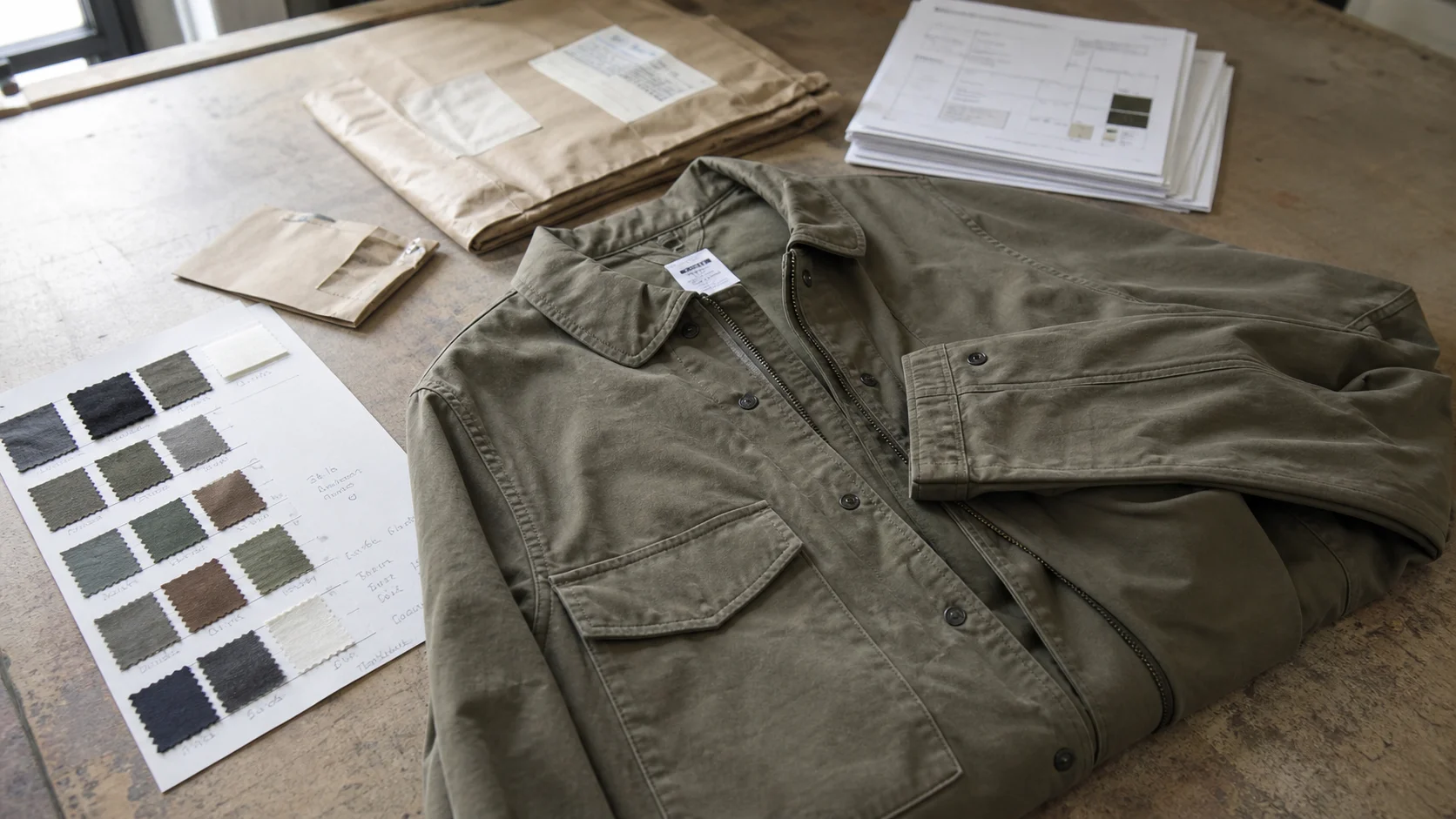
A product-specific outline for evaluating reorder risk when sourcing lyocell utility jackets for cleaning crews, with attention to fabric consistency,...
Lyocell Utility Jacket Reorder Risk Review - Sustainable Fashion manufacturing guide
For cleaning crews, a lyocell utility jacket sits in a practical middle ground: it needs to look presentable, hold up to repeated wear, and remain comfortable through long shifts. For sourcing teams, the bigger question is not whether the jacket is attractive on paper, but whether the supplier can repeat it reliably on reorder. That is where risk shows up. Fabric availability changes, trims get substituted, wash performance shifts, and color consistency can drift between lots. A reorder risk review is the right way to judge whether a lyocell utility jacket program is stable enough for ongoing replenishment.
This article breaks down the main sourcing risks for a lyocell utility jacket supplier reorder risk review for cleaning crews, with a focus on sustainable fashion requirements, production control, and the practical details that affect repeat orders. It also looks at MOQ expectations, sample approval, lead times, and inspection points that matter when a workwear-style jacket must be reordered season after season.
A reorder risk review is a sourcing check on whether a product can be made again with the same fit, appearance, performance, and margin. For a lyocell utility jacket, that means more than confirming the style number. It means reviewing fabric continuity, trim sourcing, factory process control, shrinkage behavior, and whether the supplier can reproduce the same garment without quiet substitutions.
Cleaning crews create a specific demand profile. The jacket is exposed to frequent wear, movement, laundering, and in many cases company branding requirements. Buyers often need practical pocket placement, easy care, decent abrasion resistance, and a clean look that works across a team. Reorder risk rises when the supplier treats the style like a fashion item instead of a repeatable uniform-like program.
A stable reorder program depends on whether the supplier can protect the original specification, not just produce a similar-looking replacement.
When reviewing a supplier, it is useful to separate the discussion into four buckets: fabric, construction, compliance, and replenishment discipline. Each one can fail in a different way.
Lyocell has become a strong option in sustainable fashion and practical workwear because it offers a soft hand, good drape, and a cleaner comfort profile than many synthetic-heavy alternatives. For cleaning crews, that matters. Staff members spend long shifts moving, bending, lifting, and reaching. A jacket that feels stiff or traps heat tends to get left unused. Lyocell can improve wearability, especially when blended or structured correctly.
The material also supports a more responsible brand story. Buyers looking at sustainable fashion often want lower-impact fibers, better traceability, and less dependency on conventional polyester-heavy garments. Lyocell can help with that positioning, but the sustainability case should be treated carefully. The fiber itself is only one piece of the supply chain. Dyeing, finishing, sewing efficiency, and freight choices still affect the overall footprint.
That said, lyocell is not a free pass. It can be more sensitive to creasing, dimensional change, or moisture-related handling issues than a simpler cotton twill or polyester blend. For utility jackets, the safest programs usually start with a controlled fabric spec and a fit that does not depend on aggressive chemical finishing to work.
Lyocell fabric can vary in surface smoothness, shrink behavior, and color uptake across lots if the mill or finishing route changes. Even a small change in yarn count, weave density, or dye recipe can show up after washing. For a reorder, ask whether the supplier can source the same base cloth again or whether they are proposing a near-match. Near-match is often acceptable for fashion. It is usually a problem for uniform-like cleaning crew jackets.
Cleaning crews wash garments often. If the jacket body twists, sleeves shorten too much, or pocket alignment shifts after repeated laundering, user acceptance drops quickly. Lyocell needs wash testing under the intended care method. A reliable supplier should have shrinkage results by fabric lot and a process to keep them within tolerance. Buyers should not accept vague statements like “should be fine after wash.”
Buttons, snaps, zippers, labels, and sewing thread may appear minor, but trim changes can affect both function and appearance. A metal snap that corrodes, a zipper pull that snags, or thread that breaks after heavy use can turn a repeat order into a complaint cycle. Reorder risk rises when suppliers source trims from multiple vendors without a locked spec sheet.
Color stability matters more than many buyers expect. A small difference between one production run and the next becomes obvious when jackets are worn by a team. For cleaning crews, this can make the uniform set look inconsistent and dated. The risk increases with deeper shades, specialty dyes, and small orders that do not justify strong mill-level color control. Lab dips and approved standard swatches should be kept on file.
Some suppliers update patterns subtly between orders to improve production efficiency. That can shift shoulder width, body length, or sleeve shape enough to matter. For utility jackets, the garment must allow movement without appearing oversized. Reorder review should include pattern revision control and measurement tolerances, especially for chest, hem sweep, sleeve length, and pocket placement.
For sustainable fashion programs, compliance is not just a certificate on paper. Reorder risk appears when a supplier changes raw material origin, subcontracts sewing, or moves finishing without informing the buyer. If the program needs a specific fiber claim, recycled component claim, or restricted substance requirement, that claim should be supported by current documentation for each season or reorder.
A dependable lyocell utility jacket supplier is usually the one that treats repeat business as a controlled process. That means the supplier can show how they lock specs, manage fabric reservations, and maintain consistency from sampling to bulk. It also means they are realistic about what is and is not guaranteed.
Suppliers with a habit of overpromising can be risky even when the first order looks good. Buyers should prefer clear answers over marketing language. If a supplier cannot explain what changes might occur on a reorder, that is a warning sign.
For sourcing teams that want a broader review framework, it can help to compare supplier process capability against the company’s own needs. Fabrikn’s services page is a sensible starting point for understanding what a structured sourcing support model can look like. If a supplier conversation needs to be escalated quickly, the contact page can be used to request follow-up. Background on company approach is also available on the about us page.
The strongest reorder programs rely on a spec sheet that leaves little room for interpretation. With lyocell utility jackets, buyers should pay special attention to the following points.
Pure lyocell may feel excellent, but blended fabrics are often more practical for workwear. A lyocell-cotton blend can improve structure and durability. A small amount of elastane may improve movement, but it also changes shrink behavior and recovery. For cleaning crews, the best choice usually depends on wear frequency and laundering method. There is no universal answer, and it is unwise to choose a blend without confirming the end-use.
Utility jackets typically sit in a midweight range. Too light, and the garment may look flimsy or lose structure. Too heavy, and the jacket becomes warm and slow to dry. Buyers should define a target grams-per-square-meter range instead of asking for “a durable fabric.” That wording is too open. The right weight also affects pocket sag and seam performance.
Reinforced seams at stress points, bar tacks at pocket openings, and dependable topstitching are basic requirements. If the jacket includes a drawcord, belt, or hidden snaps, those details should be fully described. The more complex the design, the more likely a reorder drifts from the approved sample.
Care labeling should match the intended use. A jacket meant for cleaning crews should ideally tolerate repeated laundering without requiring special handling. If the product needs low-temperature washing, line drying, or limited tumble drying, that should be disclosed early because it affects user compliance and total ownership cost.
Spec Area What to Lock Reorder Risk if Vague Fabric Fiber blend, weight, weave, finish Lot variation, handfeel changes Fit Measurement table, tolerance, sample reference Inconsistent sizing, poor crew acceptance Trims Exact type, source, color, finish Substitution, breakage, look mismatch Care Wash method, drying limits, shrink tolerance Premature damage, customer complaints Compliance Test reports, claim documentation Label risk, claim disputesMOQ is one of the first places where reorder risk becomes visible. For a lyocell utility jacket, typical MOQ ranges can vary widely by supplier, fabric availability, and whether the style uses custom-dyed cloth or stock materials. A small-scale supplier may ask for 300 to 500 pieces per color, while more structured factories may prefer 800 to 1,500 pieces or more, especially if a custom fabric is involved. The real number depends on the production method and whether trims are held in inventory.
Buyers should be cautious when a supplier offers a very low MOQ but cannot explain how they will protect consistency on the next order. Low MOQ can be useful for pilot launches, but it can also indicate that the factory is piecing together materials from whatever is available. That is not ideal for repeatable workwear.
Sampling should follow a disciplined path:
For reorder planning, the pre-production sample matters more than many teams realize. If the new run uses a different dye lot or an updated trim supplier, the buyer should compare it directly with the last approved bulk sample. That is the most practical way to catch drift before quantity is committed.
Lead time for a lyocell utility jacket is not fixed. It depends on fiber availability, mill capacity, fabric dyeing, trim lead time, pattern revisions, and the factory’s sewing line schedule. A straightforward reorder from approved stock materials may move faster. A custom fabric run can add several weeks before sewing even begins.
Typical lead times might range from 30 to 60 days for simpler repeats using available materials, and 60 to 90 days or more for custom materials, busy seasons, or more complex construction. Those ranges are only directional. Buyers should avoid treating any quoted lead time as guaranteed unless the supplier has already reserved fabric and trims.
Important dependencies include:
Lead time risk is often underestimated when a company reorders late. For cleaning crews, that can become a service problem if uniforms run out. A good reorder plan keeps a buffer and tracks consumption by region, team size, or contract cycle. The point is not to overbuy. The point is to avoid emergency replenishment, which usually forces compromises on fabric or factory choice.
Inspection should not stop at basic appearance. A lyocell utility jacket intended for repeated use needs a more thorough check. The most common misses are not obvious at first glance.
Jackets can pass visual inspection and still fail in use if seam allowance is too narrow or thread tension is poor. Armholes, shoulder seams, and pocket stress points deserve attention. Cleaning crews move constantly, and these areas wear fastest.
Lyocell can show shine, seam impressions, or pressing variation if finishing is rushed. Buyers should inspect under normal lighting and after a light disturbance, not only on a perfectly pressed top sample.
Small deviations become more noticeable in teamwear. If the grading is off, the same size may feel very different across batches. Inspection should include a size-run check, not just one sample size.
If the jacket includes logos, placement needs to be locked. Cleaning crews often wear jackets in a way that causes visual wear around chest and sleeve branding. A misplaced logo can also create inconsistent presentation across the team.
Workwear sometimes ships compressed or folded too tightly. Lyocell can crease, and heavy folding can create presentation issues upon unpacking. Packaging should protect appearance without adding unnecessary plastic. This is one of the small decisions that affects both sustainability and user satisfaction.
From a purchasing standpoint, the best lyocell utility jacket supplier is not always the cheapest supplier. The better choice is the one that can repeat the approved product with minimal ambiguity. For cleaning crew programs, three priorities generally matter most: consistency, serviceability, and replenishment reliability.
Consistency means the jacket looks and fits the same from one batch to the next. Serviceability means the jacket holds up to laundering and daily movement. Replenishment reliability means the supplier can confirm future availability without last-minute substitutions. If a supplier is weak in any one of these areas, reorder risk increases.
Buyers should also decide where flexibility is acceptable. Color tolerance might be tight. Minor packaging changes may be acceptable. A slightly different button finish may not be. This judgment should be made before the order, not after production begins. Clear tradeoffs save time.
The safest reorder strategy is usually to standardize the fabric and trims first, then simplify the construction wherever the design allows.
A practical sourcing team will also keep an eye on total cost of ownership. A jacket that costs slightly more but lasts longer and reorders cleanly may be a better buy than a cheaper item that creates returns, complaints, or emergency re-sourcing.
If a buying team is reviewing a lyocell utility jacket program, it helps to work with a sourcing partner that understands both product development and repeat-order discipline. The goal is not simply to get a sample approved. The goal is to turn that approval into a stable production standard that can be repeated without hidden changes.
Fabrikn’s services page outlines the kind of support buyers may want when reviewing fabric options, production flow, or supplier communication. For teams still comparing vendors or needing a structured follow-up, the contact us page is the direct route. Buyers who want more context on the company’s approach can review the about us page before starting a sourcing discussion.
In a reorder-focused program, the value is not only in finding a capable supplier. It is in keeping the program controlled over time. That means documentation, sample retention, change management, and clear approval records should all be part of the sourcing process.
A lyocell utility jacket can be a strong sustainable fashion choice for cleaning crews, but only if the reorder process is controlled carefully. The main risks are predictable: fabric variation, trim substitution, wash performance issues, fit drift, and weak communication on repeat orders. None of these are unusual. They are routine sourcing problems that become expensive when ignored.
The best purchasing approach is straightforward. Lock the specification, test the fabric under real care conditions, approve samples in a disciplined sequence, and treat every reorder as a controlled check rather than a routine restock. If the supplier can support that process, the jacket is much more likely to perform as a repeatable program item rather than a one-time success.
Get a free quote from Fabrikn — your trusted B2B clothing manufacturer with 10+ years of experience. MOQ as low as 200 pieces.
Get a Free Quote →Reorder risk is the chance that a second or third production run will differ from the approved sample in fabric, fit, color, trims, or performance. For workwear-style jackets, that risk matters because teams expect consistency.
Lyocell can be a strong choice because it feels comfortable and supports a more sustainable fabric story. The fabric still needs careful spec control, especially if the jacket will be washed frequently or worn in demanding conditions.
Typical MOQ ranges may run from 300 to 500 pieces for some suppliers and 800 to 1,500 pieces or more for others, especially when custom fabric or special trims are involved. The exact MOQ depends on material setup and factory structure.
The key stages are proto sample, fit sample, review sample, pre-production sample, and top-of-production comparison. The pre-production sample is especially important for reorder control because it confirms the actual materials before bulk.
The most common problems are fabric lot changes, trim substitution, shrinkage after washing, color drift, and silent pattern updates. These issues often show up when the supplier does not maintain a strong spec-lock process.
Buyers can reduce risk by locking the spec sheet, approving a reference sample, requesting test data, confirming trim sources, and asking how the supplier manages repeat orders. If possible, keep the same fabric and trim package across reorders.
That depends on the usage and care method. Pure lyocell may feel softer, while blends can improve structure and durability. The right choice is the one that matches laundering frequency, durability needs, and desired appearance.