
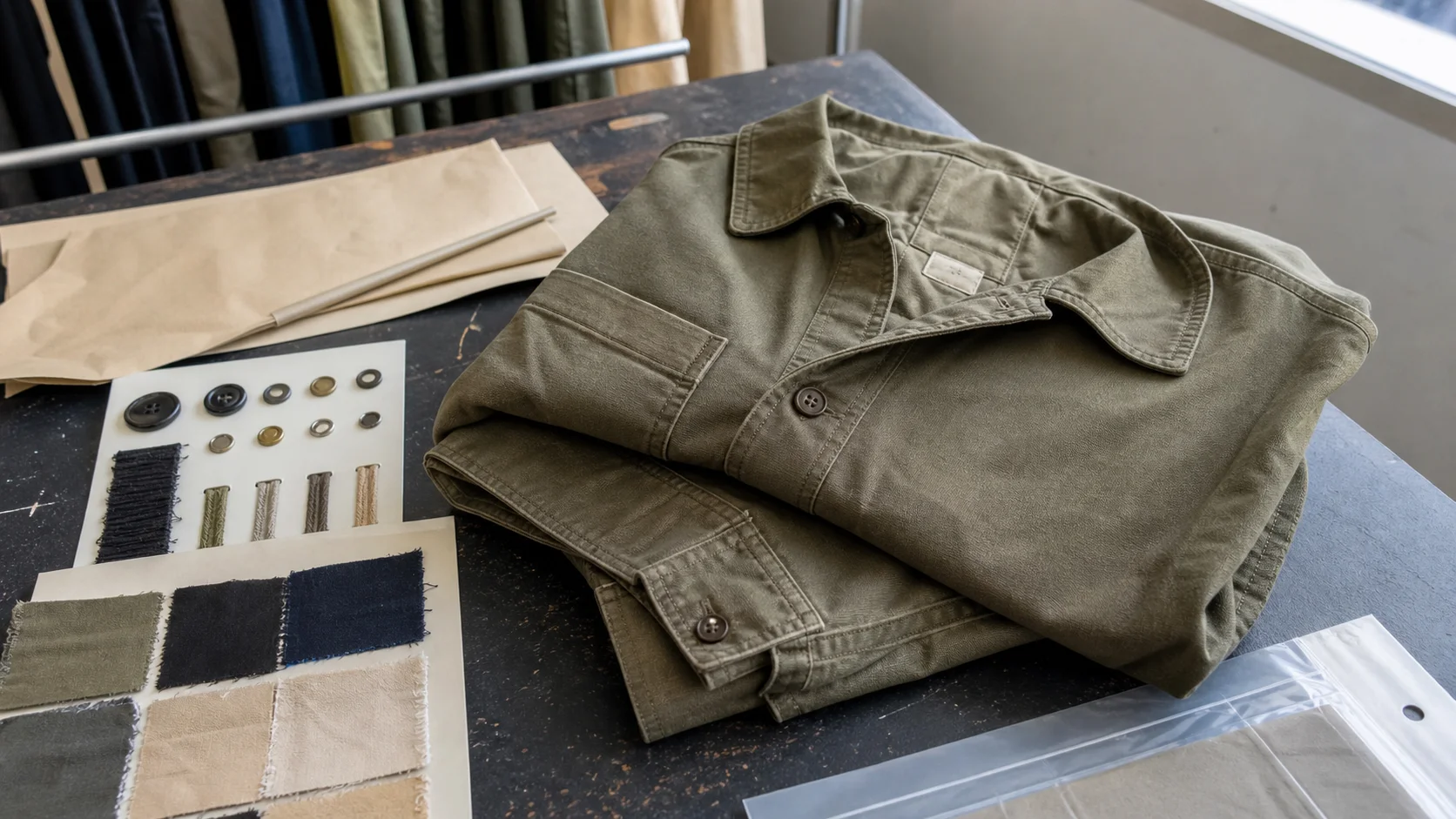
A distributor-focused outline for evaluating lyocell utility jacket trims, from sustainable hardware and labels to wash compatibility, testing, costing,...
Lyocell Utility Jacket Trim Sourcing Review - Sustainable Fashion manufacturing guide
Category: Sustainable Fashion
Lyocell utility jackets sit in a demanding product lane. Buyers expect a sustainable fabric story, soft hand feel, practical pocketing, durable closures, and a retail appearance that does not look overly casual or underbuilt. The fabric often gets most of the attention, but trim sourcing decides whether the jacket feels commercially credible after sampling, bulk production, packing, and first wear.
For distributor buyers, trim sourcing is not a small purchasing detail. It affects margin, delivery timing, claim risk, private-label consistency, and replenishment control. A lyocell utility jacket can use biodegradable or lower-impact fiber content, yet still fail a sustainability review if the buttons, labels, packaging, drawcords, and metal hardware are poorly specified or impossible to trace.
The practical issue is balance. Utility jackets need structure and function. Lyocell gives drape, softness, and a clean sustainable positioning, but it is not always forgiving with heavy trims. Oversized metal snaps, thick zippers, rigid patches, and dense woven labels can distort the garment if the base fabric is light or enzyme-washed. A trim package that works on cotton twill may not transfer cleanly to lyocell or lyocell-blend fabric.
Buyers reviewing lyocell utility jacket trim should ask one simple question first: does every trim support the product promise? If the jacket is sold as sustainable, modern, and practical, the trims must be durable enough for utility styling, soft enough for lyocell fabric behavior, and documented enough for wholesale or brand compliance. Anything else becomes a risk hidden inside a low unit cost.
Distributor buyers usually work under different pressure from single-brand development teams. They may need one jacket program to serve several retailers, promotional channels, or regional accounts. This creates a sourcing problem: trims must be flexible enough for branding changes, but stable enough for repeat production.
The highest-risk areas are not always obvious at quotation stage. A factory may quote a low price using local stock buttons, generic labels, standard polyester sewing thread, and low-cost metal snaps. That can be acceptable for some programs, but it is weak for a sustainable fashion product if the distributor later needs recycled-content documentation, nickel testing, logo consistency, or replacement trim availability for repeat orders.
Distributor buyers should control the following details before confirming the purchase order:
A distributor does not need to over-engineer every trim. A basic utility jacket can use factory-sourced stock trims if the price point is sharp and the sustainability claim is modest. Premium or branded programs need tighter control. The mistake is mixing premium claims with commodity trim discipline.
For buyers setting up a new sourcing program, it is useful to align garment development, costing, compliance, and production planning early. Fabrikn’s broader manufacturing support can be reviewed through its services page, especially when a trim package needs to be coordinated with fabric development, sampling, and bulk production.
Lyocell fabric has strong appeal because it is soft, breathable, and often positioned as a lower-impact alternative to conventional fiber options. In utility jackets, it is commonly used as 100% lyocell twill, lyocell-cotton blend, lyocell-linen blend, or lyocell with a small percentage of elastane. Each option changes trim behavior.
A 100% lyocell twill may have fluid drape and a smooth surface. It can look elevated, but heavy hardware may pull on pocket flaps or create puckering around plackets. Lyocell-cotton blends usually provide more body and better utility structure. Lyocell-linen blends offer texture but may wrinkle more, making trim placement and seam engineering more visible. Stretch lyocell blends need careful zipper, thread, and reinforcement choices to avoid stress at pocket openings and sleeve seams.
Fabric weight matters. Many lyocell utility jackets fall in the approximate 180–280 gsm range, though heavier twills and blends are possible. Lightweight versions need flatter trims, lighter buttons, and softer interlinings. Midweight versions can carry metal snaps, chest pocket hardware, and adjustable tabs more convincingly. Heavy versions need stronger sewing thread and reinforced attachment points, particularly where snaps, buckles, or drawcord channels are used.
Fabric Type Trim Implication Buyer Judgment 100% lyocell twill Soft drape, smooth hand, possible sensitivity to heavy trims Use lighter hardware and test puckering after wash Lyocell-cotton blend Better structure and utility appearance Good commercial option for distributor programs Lyocell-linen blend Textured, relaxed, more wrinkle-prone Keep trims simple and avoid overly technical hardware Lyocell-elastane blend Comfort stretch but more tension management needed Check seam recovery, zipper stability, and pocket stressThe best trim package starts with the fabric standard. Buyers should not approve trims in isolation. Every zipper tape, button, snap, label, and drawcord should be reviewed against lab dips, strike-offs, wash trials, and garment samples. This is especially important when the jacket will be garment-washed, enzyme-washed, pigment-dyed, or softener-finished.
Utility jackets often use buttons, snaps, or a combination of both. Natural corozo, recycled polyester, bio-resin, metal, and horn-effect buttons are common options. Snaps may be brass, alloy, stainless steel, or plated metal, depending on cost and performance requirements.
Buttons give a softer, more casual look and may suit sustainable positioning better than shiny hardware. Corozo is a strong choice for premium natural styling, though MOQ and color consistency must be checked. Recycled polyester buttons can support sustainability messaging, but buyers should request documentation if the claim appears on hangtags or product pages. Metal snaps feel functional and clean, yet they need pull testing and plating review.
Typical MOQ for stock buttons can be low, sometimes a few hundred to a few thousand pieces depending on supplier and size. Custom logo buttons or special colors may require 5,000–20,000 pieces or more. Custom snap caps and branded metal hardware can push MOQ higher, especially if tooling is required.
A utility jacket may use a front zipper, concealed zipper, two-way zipper, pocket zippers, or no zipper at all. For lyocell jackets, zipper weight is critical. A large molded zipper may overwhelm a soft fabric, while a lightweight coil zipper can look too casual unless the garment is intentionally relaxed.
Recycled polyester zipper tape is available from many trim suppliers, but not every supplier can provide credible documentation. Buyers should confirm whether the recycled claim applies to tape only, slider components, or full zipper assembly. Metal zippers provide strong utility styling but can create weight, wash abrasion, and corrosion concerns. Coil zippers are lighter and smoother, but they may not deliver the rugged look expected in utility outerwear.
For distributor buyers, stock zipper colors reduce lead time. Custom tape dyeing gives better color matching but adds MOQ, lab dip approval, and bulk shade risk. Zipper length tolerance should be defined clearly, particularly for front plackets where a short or long zipper causes visible sewing defects.
Labels carry branding, compliance, size, care, fiber content, country of origin, and sometimes sustainability messaging. A lyocell utility jacket may include a main woven label, size tab, care label, hangtag, barcode sticker, and optional exterior patch.
Woven labels are durable and premium, but recycled yarn or organic cotton labels may require longer sourcing. Printed cotton labels are softer and can support sustainable positioning, though print durability must be checked after washing. TPU or synthetic patches may conflict with a natural sustainable story unless the design direction is technical.
Care labels must be accurate. If the jacket includes lyocell, recycled trims, coated snaps, special dyes, or garment wash, the care instructions need to reflect actual test results. Distributor buyers should avoid generic care labels until shrinkage, colorfastness, and hardware performance are confirmed.
Many utility jackets include waist drawcords, hem adjusters, sleeve tabs, epaulettes, or internal hanger loops. These details define the utility look but can create quality claims if poorly executed.
Cotton cord gives a natural look, but it may shrink, fray, or absorb dye differently from lyocell fabric. Recycled polyester cord is stable and easy to source, yet it may feel less aligned with a soft natural jacket unless the styling is modern. Organic cotton tape, recycled polyester tape, and lyocell-blend tape are all possible, but availability depends on supplier network and volume.
Stoppers should be tested for grip and cracking. Low-cost plastic stoppers can look cheap beside premium lyocell fabric. Metal stoppers add weight and cost. A practical compromise is to use concealed internal drawcords or tonal cords with simple bartack reinforcement, especially for mid-market distributor orders.
Sewing thread is often overlooked because it disappears into the garment. It should not be. Thread affects seam strength, wash appearance, and color consistency. Polyester thread remains the most common because it is strong and stable. Recycled polyester thread can support a stronger sustainability story, but supply, shade availability, and certification documentation must be checked.
Cotton thread may sound more natural, but it is usually less practical for outerwear seams that need strength and abrasion resistance. For lyocell utility jackets, recycled polyester thread is often the best commercial compromise when available in the right shade and ticket size.
Interlining should be matched to fabric weight and garment finish. Too-stiff interlining makes collars, cuffs, and pocket flaps look unnatural on soft lyocell. Too-soft interlining causes collapse and weak edge definition. Buyers should review fused panels after washing, steaming, and hanging because delamination or bubbling can appear late in the approval process.
Sustainable trim sourcing is not just a checklist of better materials. Every choice has cost, MOQ, documentation, and performance implications. A trim can be lower-impact but still unsuitable if it fails wash testing or forces excess inventory.
Trim Option Sustainability Benefit Tradeoff Corozo buttons Natural material, premium hand feel Color variation and higher MOQ for custom shades Recycled polyester buttons Supports recycled-content claims Documentation quality varies by supplier Recycled zipper tape Useful for sustainability messaging Slider and teeth may not be recycled Organic cotton labels Soft, natural, strong brand alignment Print durability and shrinkage need testing Recycled polyester thread Strong and more responsible than virgin polyester Shade card may be narrower Paper-based hangtags Easy to align with FSC or recycled claims Still requires responsible packaging controlBuyers should be careful with broad claims such as “eco trims” or “sustainable hardware.” These phrases are weak unless tied to a specific material, certification, or measurable attribute. A better purchase specification would state “recycled polyester sewing thread with supplier declaration,” “FSC-certified paper hangtag,” or “corozo four-hole button, matte finish, color matched to approved standard.”
Not every trim needs a sustainability claim. In many cases, the smarter approach is to prioritize the main fabric, use recycled or certified options where documentation is reliable, and avoid unsupported claims on minor trims. Overclaiming creates compliance risk and customer distrust. Under-specifying creates production risk. The buyer’s job is to land between those two mistakes.
Purchasing judgment: for most distributor lyocell utility jacket programs, prioritize recycled polyester thread, responsibly sourced paper trims, documented buttons, and low-risk stock zipper options before chasing fully customized sustainable hardware.
Trim MOQ can quietly distort the jacket cost. Garment MOQ and trim MOQ are often different. A factory may accept 300 jackets, but a button supplier may require 10,000 custom pieces. A zipper supplier may accept low quantity in black or antique brass stock, but require higher MOQ for custom tape dyeing or branded pullers.
Typical garment MOQ for lyocell utility jackets may range from roughly 300–800 pieces per color for smaller runs, 800–1,500 pieces for more stable factory pricing, and 2,000 pieces or more for stronger trim leverage and automated production planning. These ranges vary by factory, fabric source, customization level, and season. Trim MOQs can be lower for stock items and much higher for custom-developed components.
Distributor buyers should separate four types of MOQ exposure:
Costing should include waste and overage. Buttons, snaps, and labels are usually ordered with extra quantity to cover production loss and replacements. Zippers and custom trims may need tighter order planning because unused inventory is harder to repurpose. A low unit price can become expensive if the buyer must hold leftover custom trim after a small production run.
The cleanest commercial route is to build a trim library for distributor programs. Use approved stock buttons, zipper qualities, threads, label bases, and packaging formats across multiple jacket colors or related styles. This reduces development time and improves reorder control. Customization can then be limited to visible brand elements rather than every trim component.
Buyers reviewing supplier capability or planning a sourcing conversation can use Fabrikn’s contact page to discuss program details such as target MOQ, jacket construction, trim documentation, and production timeline.
A disciplined sample process prevents most trim issues from reaching bulk production. The process should not stop at fit approval. Lyocell utility jackets need trim approval through fabric testing, wash testing, construction review, and production-ready sealing.
A practical approval path includes these steps:
The trim card is especially important for distributor buyers. It should show exact supplier references, sizes, colors, finishes, placement, and approval dates. If the factory changes a trim after approval, the buyer needs a clear substitution approval process. A “similar” button or zipper can change the entire jacket appearance.
Pre-production samples should use actual bulk trims whenever possible. Substituted trims in PP samples are a warning sign. If bulk trims are not ready, buyers should require a written list of pending items and block production start until critical trims are approved. Critical trims include front closures, visible buttons, snaps, zippers, branded labels, exterior patches, and any component affecting safety or function.
For lyocell fabric, the sample should be reviewed after hanging for at least a reasonable period because soft fabrics can relax. Pocket flaps may droop, plackets may twist, and drawcord channels may ripple. These issues are easier to correct before bulk cutting than after sewing has started.
Lead time for lyocell utility jackets depends on fabric sourcing, trim availability, sample approvals, lab testing, and factory capacity. Trim delays often look minor until they block pre-production approval or packing.
Stock trims may be available within days or one to two weeks, depending on location and supplier workload. Custom buttons, dyed zipper tape, logo snaps, woven labels, and special packaging may take two to six weeks or longer. Tooling, certification review, plating approval, or repeated lab dips can extend the timeline.
Stage Typical Timing Main Dependency Trim sourcing and quotation 3–10 days Completeness of tech pack and reference samples Lab dips and trim color approval 1–3 weeks Color complexity and supplier responsiveness Custom trim production 2–6 weeks MOQ, tooling, dyeing, plating, branding PP sample 1–2 weeks after materials ready Bulk fabric and trim availability Bulk garment production 4–8 weeks Order size, complexity, factory capacityThese are typical planning ranges, not fixed promises. Peak season, fabric shortages, compliance testing, buyer revisions, and payment timing can shift the schedule. A buyer who needs a reliable delivery window should freeze trim decisions early and avoid late changes to zipper color, snap finish, label artwork, or packaging format.
Late trim changes are expensive because they affect multiple departments. The merchandising team updates costing. The sample room remakes garments. The purchasing team reopens supplier negotiations. The production team waits for approvals. The inspection team needs revised standards. A small aesthetic change can become a delivery problem.
Inspection for lyocell utility jackets should focus on both appearance and function. The soft nature of lyocell makes some defects more visible. Puckering, twisted plackets, uneven pocket flaps, seam distortion, and label bubbling can be more obvious than on rigid cotton canvas.
Key trim-related inspection risks include:
Pull testing should be used for buttons, snaps, and functional adjusters. The exact test method depends on buyer standards and market requirements, but the principle is simple: closures must not detach under normal use. This is especially important for children’s products, though adult utility jackets also need secure attachment to avoid claims.
Metal trims need review for corrosion, sharp edges, plating consistency, and nickel compliance where relevant. Garment-washed jackets need extra attention because wash processes can dull, scratch, loosen, or stain trims. Antique finishes can look attractive, but inconsistent plating may read as defective rather than intentional.
Colorfastness is another common risk. Drawcords, pocket bags, labels, zipper tape, and thread can bleed or change shade differently from lyocell fabric. Tonal garments are not automatically easy. A beige jacket with beige thread, beige zipper tape, beige cord, and beige labels can show five different tones if color standards are weak.
Inspection should compare bulk garments to the sealed sample and approved trim card. If the trim card is missing, vague, or outdated, inspection becomes subjective. That weakens the buyer’s position during claims. Distributor buyers should make trim documentation part of the purchase order file, not just a sampling conversation.
For most distributor buyers, the strongest sourcing strategy is not maximum customization. It is controlled standardization. Lyocell utility jackets already carry fabric cost, shrinkage management, and finishing sensitivity. Adding custom hardware to every component can create MOQ pressure and delay without enough retail benefit.
A commercially sound trim package may look like this:
This package gives buyers a credible sustainable fashion position while keeping production manageable. Premium programs can add branded snaps, custom zipper pulls, organic cotton labels, or certified recycled trim packages. Entry-level programs should keep trims simple, avoid unsupported sustainability language, and spend more attention on fit, wash, and construction quality.
The main tradeoff is between sustainability proof and operational simplicity. Fully documented trims support stronger brand claims but may require higher MOQ, longer approval time, and more supplier management. Stock trims reduce risk on delivery and cost, but they may weaken product differentiation. The right answer depends on channel, margin, order size, and customer expectation.
Buyers should also check whether the supplier can manage trim substitutions responsibly. In real production, a zipper shade may be unavailable, a button supplier may miss timing, or a label artwork update may arrive late. The supplier’s response matters. A good supplier requests approval before substitution and provides photos, specs, and samples where needed. A weak supplier swaps trims quietly and leaves the buyer to discover the problem during inspection.
For buyers evaluating longer-term manufacturing partners, company background and operating approach matter as much as one quotation. Fabrikn provides more context on its sourcing and production perspective through its about us page.
Before placing a lyocell utility jacket order, buyers should confirm the following points in writing:
This checklist is not bureaucracy. It protects margin and delivery. Trim issues are easy to dismiss at development stage because each item seems small. Once bulk production starts, those small items become carton-level defects, shipment delays, or customer claims.
Lyocell utility jacket trim sourcing is a high-leverage buying decision. The garment’s sustainable value depends on more than fiber content. Trims influence durability, appearance, compliance, comfort, and the credibility of the product story.
Distributor buyers should avoid two extremes. The first is buying the cheapest available trim package and hoping the lyocell fabric carries the product. The second is over-customizing every component until the order becomes slow, expensive, and difficult to repeat. The best route is a disciplined trim system: documented where claims matter, standardized where volume is limited, tested where function is critical, and approved before production pressure starts.
A well-sourced lyocell utility jacket should feel soft but not flimsy, functional but not overloaded, sustainable but not overclaimed. Trims make that balance visible. Buyers who control trim specifications early will usually get cleaner samples, fewer production surprises, and a stronger wholesale product.
Get a free quote from Fabrikn — your trusted B2B clothing manufacturer with 10+ years of experience. MOQ as low as 200 pieces.
Get a Free Quote →The most important trims are buttons or snaps, zippers, sewing thread, labels, drawcords, stoppers, interlining, and packaging. Front closures, pocket trims, and labels deserve the most control because they affect appearance, function, compliance, and customer perception.
Typical garment MOQ may range from about 300–800 pieces per color for smaller programs, 800–1,500 pieces for more stable pricing, and 2,000 pieces or more for better trim leverage. Actual MOQ depends on fabric source, trim customization, factory capacity, and buyer requirements.
Recycled trims can strengthen a sustainability story, but only when documentation, performance, and availability are reliable. A recycled trim that fails wash testing or causes long delays may not be the best purchasing choice. Buyers should balance sustainability claims with quality and delivery risk.
Custom hardware is useful for premium or brand-sensitive programs, but it increases MOQ, cost, tooling time, and approval workload. For smaller distributor orders, stock or semi-custom trims often provide a better balance of price, speed, and reliability.
A pre-production sample using actual bulk fabric and trims should be approved before production starts. Buyers should also approve a trim card, lab dips, wash trial, fit sample, and sealed sample. Production should not begin if critical trims are still substituted or pending approval.
Main risks include loose buttons, weak snaps, zipper defects, thread shade mismatch, puckering, label errors, drawcord fraying, corrosion, plating inconsistency, and unsupported sustainability claims on hangtags or packaging. Inspection should compare bulk goods against the sealed sample and approved trim card.
Yes, but the fabric weight and finish must support them. Heavy metal trims can distort soft lyocell fabrics or cause wash abrasion. Buyers should test pull strength, corrosion, puckering, and post-wash appearance before approving metal hardware for bulk production.
Buyers can reduce risk by using a clear trim card, limiting unnecessary customization, confirming MOQ early, approving lab dips and samples before production, testing functional trims, and requiring written approval for substitutions. A standardized trim library also helps distributor programs control cost and repeat orders.