
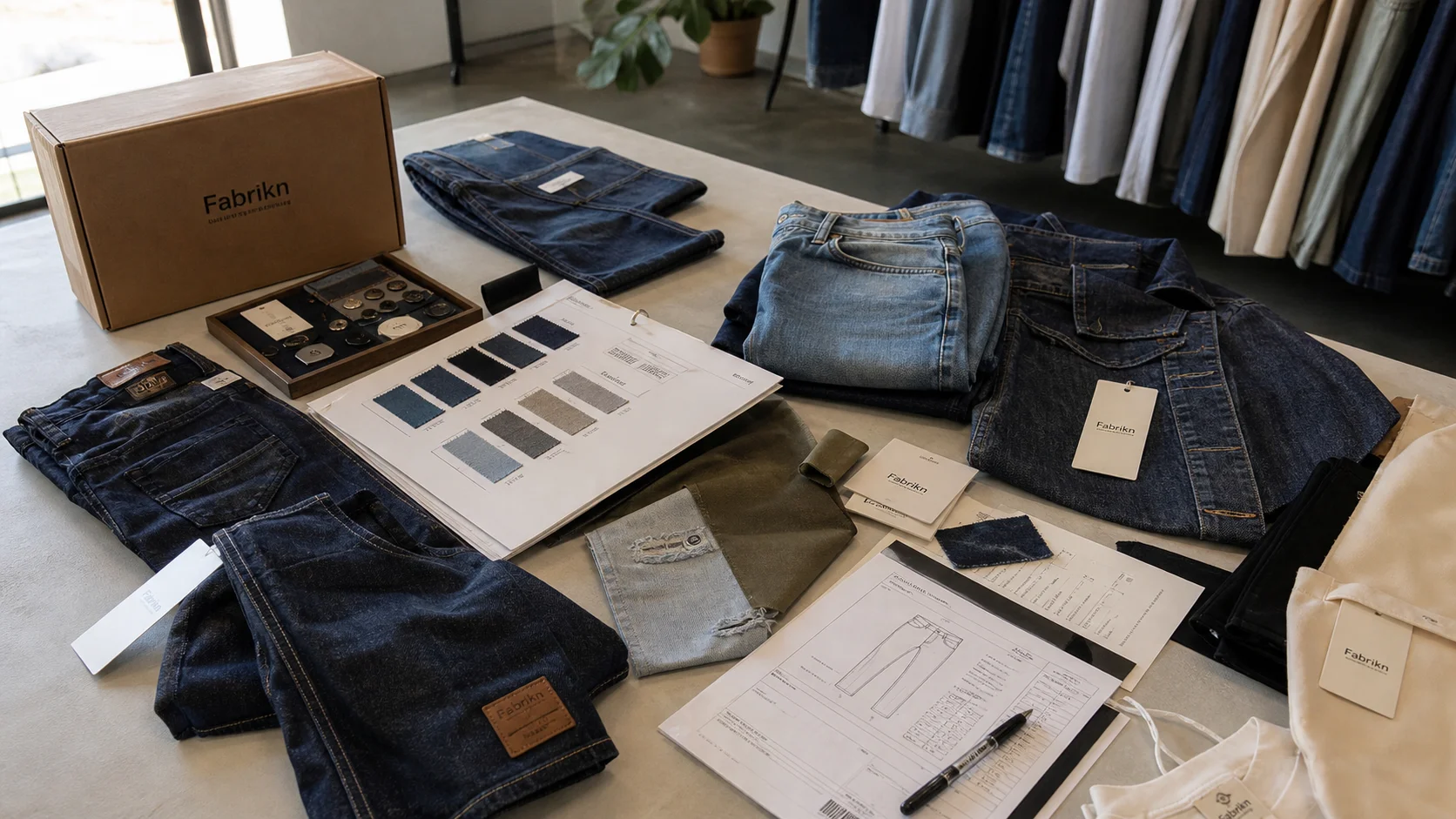
Manage Size Runs in Wholesale Apparel Manufacturing compared by sample evidence, fabric or trim specs, MOQ, AQL terms, cost lines, delivery timing, and...
Fast answer: Manage Size Runs in Wholesale Apparel Manufacturing: Tech Pack, Sample Gate, MOQ, and QC Terms should be judged by production evidence, not by a generic sourcing promise. The buyer needs sample proof, cost breakdowns, QC checkpoints, and delivery buffers in writing.
Ask for recent sample photos, measurement tolerances, fabric or print test assumptions, decoration test notes, packing examples, and a named inspection checkpoint. These details show whether the team can repeat an approved sample at bulk volume.
Separate garment cost, decoration, labels, packaging, sampling, testing, freight, and rush charges. Clear cost lines make it easier to reduce colorways, adjust size depth, or reserve more time for sampling.
Managing size runs in wholesale apparel manufacturing is one of the most important parts of producing apparel that fits well, sells efficiently, and minimizes costly returns or production errors. Whether you manufacture basics, fashion-forward collections, uniforms, or private-label garments, your size run strategy affects everything from fabric consumption and cutting accuracy to inventory planning and customer satisfaction. A well-managed size run helps brands reduce waste, improve consistency, and deliver products that match real market demand.
In wholesale apparel, a size run refers to the full range of sizes produced for a style, often distributed in pre-set quantities based on expected demand. Some brands use standard size ratios such as 1-2-2-1 or 1-1-1-1 across small through extra-large, while others customize their runs based on customer data, market region, or garment type. Managing these size runs effectively requires strong planning, communication, and quality control across the entire manufacturing process.
At Fabrikn, we understand that size run management is not just a production detail; it is a business strategy. It impacts sampling, grading, inventory, and profitability. If you want to build a more efficient wholesale apparel operation, this guide will walk you through the core steps, common challenges, and best practices for managing size runs successfully.
A size run is the full set of sizes offered for a specific garment style. For example, a T-shirt might be produced in sizes XS, S, M, L, XL, and XXL. In wholesale manufacturing, these sizes are often packed or ordered in pre-determined ratios to reflect anticipated customer demand. Size runs can vary by product category, target audience, and market segment.
Unlike custom one-off garments, wholesale apparel is usually made in larger quantities. That means manufacturers must decide not only which sizes to include, but also how many units of each size to produce. These decisions influence cost, production efficiency, and sell-through performance. The more accurate the size run, the less likely a brand is to end up with excess inventory in slow-moving sizes or shortages in high-demand sizes.
Size run management is essential because sizing has a direct effect on both the customer experience and the manufacturing bottom line. When size ratios are wrong, brands may face stock imbalances, missed sales opportunities, higher markdowns, and more returns. Poor size management can also cause problems in production if the cut order does not align with material usage or if size specifications are inconsistent.
For brands selling wholesale apparel, a strong size run strategy supports:
If your brand works with a manufacturing partner, clear size run management also improves communication between your design, production, and sales teams. To learn more about how a professional manufacturing partner can support your process, visit our services page.
Effective size run planning starts long before production begins. It requires analyzing customer demand, understanding garment fit, and building a production plan that matches your sales goals. The best size run strategy is data-driven, not based on guesswork.
Look at past order history, sell-through rates, and return data to determine which sizes move fastest. For example, if medium and large consistently account for the majority of orders, your size ratio should reflect that. If certain sizes frequently remain unsold, you may need to adjust your run for future orders.
A size run for streetwear may differ from a size run for workwear, maternity apparel, or children’s clothing. Understand your target demographic, regional market, and customer preferences. Different markets often have different size expectations, and your run should reflect those realities.
Not every garment needs the same size distribution. A fitted women’s blouse may require a different ratio than an oversized hoodie. Stretch fabrics, relaxed silhouettes, and unisex styles all influence how customers choose sizes.
Are you producing for wholesale distribution, retail, private label, or promotional use? Your goal affects how many sizes you should include and how deeply you should stock each one. For example, a wholesale order for a retail chain may require a broader size spread than a promotional run for a single event.
Size grading is the process of increasing or decreasing a base pattern to create different sizes within a style. This is one of the most critical technical steps in managing a size run. If grading is inaccurate, the garment may fit well in one size but poorly in others.
Spec development, or spec sheet creation, documents the exact measurements for each size. This includes chest width, body length, sleeve length, waist, hip, inseam, and other garment-specific points of measurement. A detailed spec sheet helps ensure that the full size run stays consistent throughout production.
Even small grading mistakes can create major problems. If the jump between sizes is too large or too small, customers may find the fit uncomfortable or inconsistent. In wholesale apparel, where buyers expect reliable sizing across the line, these errors can damage brand trust.
If you are developing a new collection and need guidance on fit, grading, or production readiness, you can also contact our team for support.
The size ratio determines how many pieces of each size should be produced in a run. This is one of the most strategic decisions in wholesale manufacturing. The ideal ratio depends on customer demand, style, fit, and the season.
Common ratio examples include:
For example, a basic unisex sweatshirt may require more medium and large units because customers often prefer a relaxed fit. A tailored women’s top may need a more balanced distribution across smaller and medium sizes. The right ratio helps reduce overproduction of low-demand sizes and prevents stock shortages in high-demand ones.
Fabric type and garment construction have a major impact on size run planning. Stretch fabrics, woven fabrics, heavyweight knits, and lightweight materials all behave differently. Style details such as oversized shapes, slim fits, and layered garments also influence how customers choose sizes.
Garments made from stretch fabrics may allow for more flexible sizing. For example, a ribbed knit tee may fit a broader range of body types than a rigid woven shirt. In these cases, size runs may be adjusted to reduce the number of sizes or shift ratios toward the most common fit preferences.
Oversized styles often have a wider acceptable fit range, which can simplify size planning. Meanwhile, slim-fit or tailored styles require tighter control over grading and may need more careful size distribution to ensure accurate fit.
Manufacturers must account for shrinkage during washing, dyeing, and finishing. If a fabric shrinks after production, the size run must be adjusted so the final garment still falls within acceptable measurements. Pre-shrinking tests and wash trials are important parts of this process.
Sampling is one of the most important stages in size run management. Before bulk production begins, brands should review fit samples, size set samples, and pre-production samples to confirm that the garment performs correctly across the size range.
The fit sample is usually made in the base size and used to evaluate style, proportions, and comfort. This sample establishes the foundation for grading and production.
A size set sample includes multiple sizes from the run, allowing the team to check how the grading performs across the full range. This is the best way to identify issues before bulk production begins.
The pre-production sample reflects the final materials, trims, construction methods, and measurements that will be used in bulk. It serves as the last approval point before manufacturing starts.
During sample review, look closely at:
Clear sample approval helps prevent expensive rework and size issues later in production.
Once the size run is approved, production planning must translate that plan into efficient cutting and sewing operations. This is where the technical and logistical sides of size management come together.
Marker making arranges pattern pieces on fabric to maximize material use. A well-designed marker helps reduce waste, especially when working with multiple sizes in one lay. Proper marker planning is essential for keeping costs under control.
The cut order should reflect the final size ratio. If medium and large are in higher demand, they should be prioritized in the cutting layout accordingly. The production team must also ensure that all sizes are cut from the correct fabric batch to avoid shade variation or inconsistencies.
In the sewing stage, pieces are often bundled by size and style. A structured workflow helps operators keep sizes organized and prevents mix-ups. Accurate bundling is especially important when handling multiple size runs in the same production line.
Quality control plays a key role in size run management. Even when patterns and specs are correct, manufacturing issues can still lead to measurement deviations. A strong QC process ensures that garments meet the approved size standards before shipment.
In-line inspections help identify issues during production rather than after the batch is completed. This makes it easier to correct measurement problems quickly.
Finished garments should be measured against the approved spec sheet. Inspectors should check key points of measurement for each size to verify consistency.
It is essential to confirm that all garments are labeled correctly. A size tag mismatch can cause customer complaints, returns, and retailer chargebacks. Correct labeling is especially important in wholesale orders where quantities are high and mistakes are expensive.
Every manufacturer should establish acceptable measurement tolerances. These define how much a garment can vary from the spec while still being approved. Tolerance standards should be documented clearly and shared with all production stakeholders.
Once the size run is produced, inventory management determines how well those sizes move into the market. Wholesale apparel businesses must balance holding enough stock with avoiding overproduction.
Forecasting helps predict which sizes will sell and in what quantity. By combining historical sales data with current order trends, brands can better align future size runs with real demand.
Monitor which sizes sell first and which remain in stock. This data is useful for adjusting future runs, improving ratios, and reducing excess inventory.
If a style performs well, reorders should reflect the actual size demand rather than repeating the original distribution automatically. A strong reorder strategy prevents shortages in popular sizes and reduces the risk of accumulating slow-moving stock.
Many wholesale apparel brands make avoidable mistakes when managing size runs. Understanding these pitfalls can save time, money, and production headaches.
Size run mistakes often come from rushing the planning stage. Investing time in fit, data review, and communication early in the process leads to better results later.
To manage size runs successfully, wholesale apparel manufacturers should build a repeatable process that combines technical accuracy with business insight. The following best practices can improve your operation significantly.
In other words, size run management should be treated as a cycle: plan, test, produce, measure, analyze, and improve. Brands that adopt this approach become more efficient over time and build stronger customer trust.
Managing size runs is easier when you work with a manufacturing partner that understands the complexities of wholesale apparel. Fabrikn helps brands move from concept to production with support across sizing, sampling, quality control, and bulk manufacturing. We work with clients to ensure their size runs are aligned with product goals, market needs, and production realities.
Whether you need help developing a new style, refining your size specs, or planning a larger wholesale order, our team can help. Learn more about our capabilities on the services page, explore our company background on the about us page, or contact us to discuss your next project.
Managing size runs in wholesale apparel manufacturing requires a careful blend of data analysis, technical knowledge, and production discipline. From size grading and sampling to ratio planning and final quality control, each step influences the fit, cost, and commercial success of your products. Brands that approach size run management strategically are better positioned to reduce waste, improve customer satisfaction, and strengthen profitability.
If you want to improve your wholesale production process, start by reviewing your current size data, tightening your specs, and working closely with a reliable manufacturing partner. The more precise your size run strategy, the more efficient and scalable your apparel business will become.
A size run is the full range of sizes produced for a garment style, often in specific ratios based on expected demand. It helps manufacturers plan production and inventory more effectively.
The right ratio depends on historical sales data, target market, garment type, and fit. Brands should use demand trends rather than relying on a generic ratio for every product.
Grading is the process of scaling a base pattern into multiple sizes. Sizing refers to the actual size labels and measurements assigned to garments. Grading ensures the fit remains consistent across the size range.
Size set samples allow manufacturers to test how a design fits across multiple sizes before bulk production. This helps identify grading or proportion issues early.
Use accurate specs, test fit samples, maintain consistent grading, and review customer feedback. Better size run planning and quality control can significantly reduce returns.
Yes. Fabrikn supports wholesale apparel brands with manufacturing services, planning support, and production guidance. You can learn more on our services page or contact us directly.
Get a free quote from Fabrikn — your trusted B2B clothing manufacturer with 10+ years of experience. MOQ as low as 200 pieces.
Get a Free Quote →