
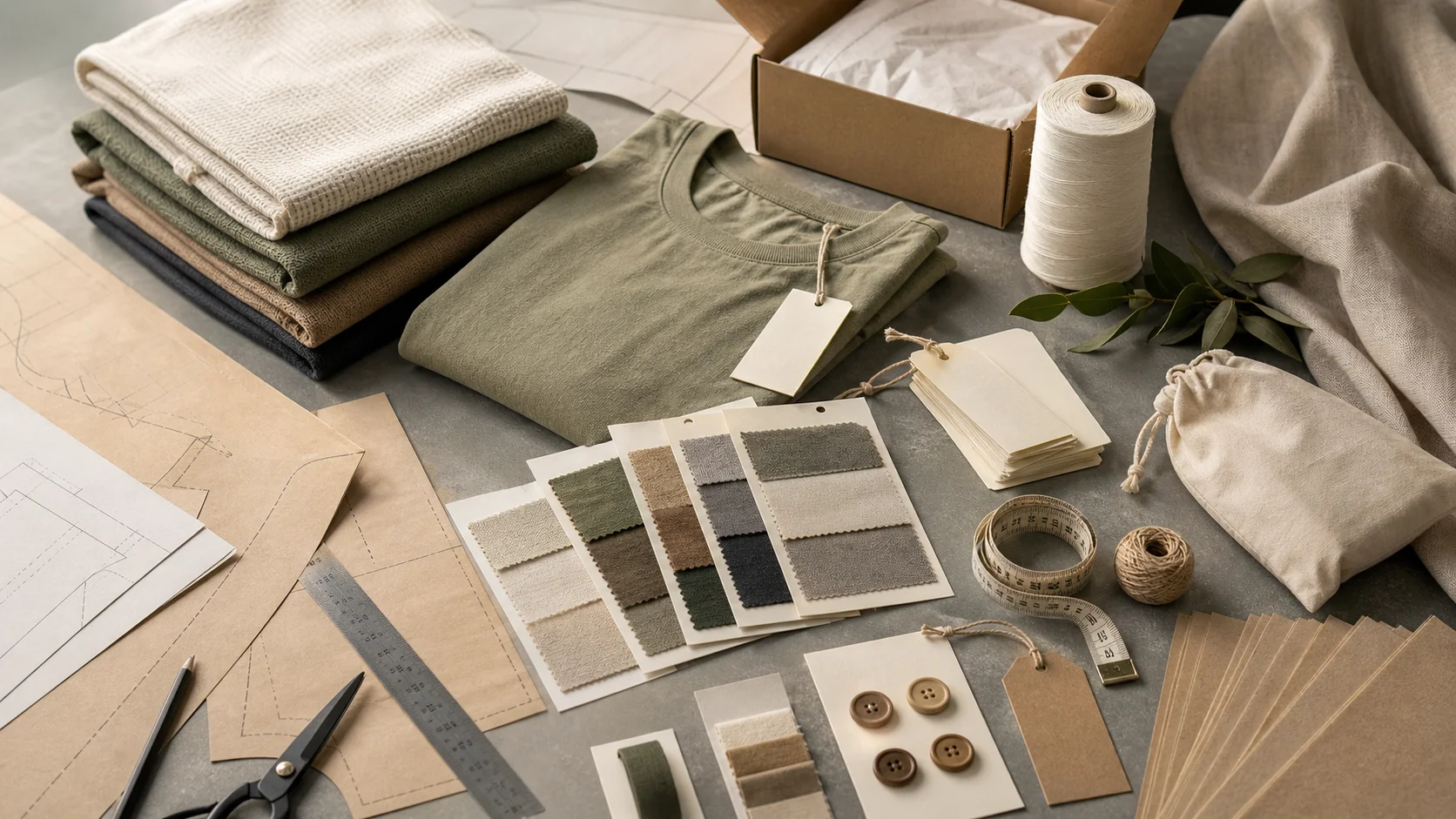
Marker Making Service with checks for samples, fit, MOQ, QC evidence, pricing terms, and delivery risk.
Fast answer: Marker Making Service: Nesting Efficiency, Fabric Waste, and Turnaround should be judged by production evidence, not by a generic sourcing promise. The buyer needs sample proof, cost breakdowns, QC checkpoints, and delivery buffers in writing.
Ask for recent sample photos, measurement tolerances, fabric or print test assumptions, decoration test notes, packing examples, and a named inspection checkpoint. These details show whether the team can repeat an approved sample at bulk volume.
Separate garment cost, decoration, labels, packaging, sampling, testing, freight, and rush charges. When every cost line is visible, it becomes easier to reduce colorways, adjust size depth, or reserve more time for sampling.
On a cutting floor moving 12,000 units a month, one sloppy marker can quietly cost more than a small department’s wage bill. I’ve watched a basic tee program lose 2.3% utilization on 180 GSM jersey, and that looked harmless right up until the fabric bill crossed $31,000. Hidden inside the roll. That’s where the pain lives.
The marker sits between pattern and cutting. No poetry, just arithmetic. Miss by 1.5% on a low-margin tee, fleece hoodie, or rib tank and the cut room either wastes fabric or burns time fixing layout problems. With 8,000 pieces and fabric at $3.20 a yard, a 2% shift can erase $900 to $1,500 before sewing starts. I’ve seen factories blame sewing while the damage began in marker planning.
Higher labor-cost factories, like many in Vietnam or Turkey, often chase speed because cutter hours are expensive and floor space is tight. Export-heavy factories in Bangladesh or southern China usually obsess over fabric utilization because the orders are larger, the margins are thinner, and a few centimeters per marker add up fast over 20,000 pieces. Same job. Different pain.
The ugly part? A cheaper provider can cost more when the layout creates re-cuts, shade-band mismatches, or extra spread length. I’ve paid $40 less per style and then watched the factory lose $600 in end-loss fabric because the marker ignored width fluctuation between rolls. Not savings. Expensive optimism.
According to ISO standards guidance on process control, variation compounds downstream because small errors repeat across production. Textile and apparel buyers who treat cutting as a controlled process usually see waste reduction in the 1% to 5% range on repeat programs, and on some basic knits I’ve seen 6% after the team cleaned up size ratios and fabric-width planning. Boring numbers. Real money. They can also push delivery by 3 days or save enough material to cover freight.
When a manufacturer treats marker planning as part of production, the factory gets fewer surprises and better bulk control. Bottom line: marker making service for apparel factory work is not clerical. It changes margin, delivery dates, and how much chaos the cutting floor has to absorb. Miss the marker, and the rest of the line pays for it.
A proper marker making service for apparel factory does four jobs. It digitizes patterns, nests sizes into the most efficient layout, plans the ply stack for the cutting room, and exports a cut-ready file the factory can actually use without guessing. If the provider only “arranges pieces,” you’re paying for someone to drag rectangles around on a screen. Lovely.
What the factory should receive is practical: marker files, utilization reports, fabric width plans, size-ratio layouts, revision notes. On better programs, I also ask for a marker summary showing width assumptions at 54 inches, 58 inches, or whatever the actual mill roll gives us, because a 1.25-inch drift in roll width changes the whole calculation. That matters on 320 GSM French terry and lightweight woven shirts alike.
Basic nesting is not enough for anything tricky. A higher-skill team accounts for nap direction on brushed fleece, stripe matching on polos, plaid alignment on woven shirts, and mirror placement on lingerie or swim. I once saw a striped poplin shirt program where the “cheap” marker ignored stripe repeat and the factory had to re-cut 1,200 pieces. Extra labor cost: $870. Marker fee saved: about $120.
Category changes the method. Knits can usually nest tighter because shapes are more forgiving, but they still suffer if the operator ignores stretch recovery. Denim needs grain discipline and shrinkage assumptions, especially after enzyme wash. Tailoring asks for cleaner balance and seam matching. Lingerie and technical wear add another layer because narrow pieces, elastic, and bonded seams punish sloppy setup.
Software helps. I’ve used CAD systems that spit out decent first passes in under 10 minutes. Still, the operator decides whether a 2-piece sleeve, a curved hem, or a waistband needs a different ratio to protect utilization. On a 1,000-piece test run, a good operator can squeeze out 1.5% more yield than a rushed one. Not software magic. Judgment.
If you already know your product range, you can pair marker making service with private label clothing services or a tighter cut and sew manufacturing workflow so the pattern, marker, and factory floor stop arguing with each other.
I’ve visited factories in Bangladesh, Vietnam, China, Turkey, and nearshore shops in Mexico and Central America. Once you’ve seen enough cutting tables, the pattern is obvious. Regions with massive export volumes usually optimize for consistency and fabric usage. Nearshore factories often chase faster turnaround, smaller batches, fewer pattern revisions. Different economics. Same headaches.
Knits generally deliver better utilization than plaids or engineered wovens. A simple tee in 180 GSM jersey might hit 84% to 88% if the size curve is sane and the width is stable. A plaid woven shirt can fall to 72% to 78% because matching eats space. Add directional print, and the marker starts looking like a bad parking job.
And knits are not automatically safer. They distort. A 320 GSM French terry hoodie with spandex ribbing can grow or curl if the marker ignores relaxation time after spreading. I’ve seen a nearshore factory rush a 6,000-piece hoodie run and lose 1.8% from distortion alone. Not huge until you remember the fabric bill was $48,000.
Turnaround expectations shift by region too. In Guangzhou, a solid CAD team can often turn a simple marker in 24 hours and a multi-size repeat in 48. In Bangladesh, bulk programs may prioritize review discipline over speed, so 2 to 4 days is normal if the order is large and the fabric lot is still being confirmed. Turkey and nearshore shops can move fast on rush repeats, sometimes under 24 hours, but the price per marker is usually higher because labor is dearer and batch sizes are smaller.
Here’s what most people miss: some mid-tier factories beat premium suppliers on simple markers because their SKU mix is repetitive. When you cut the same tee body, the same jogger, and the same sweatshirt every month, the operator learns the fabric behavior, width quirks, and size curves. Fancy supplier. Same old t-shirt. The mid-tier shop sometimes wins by being boring and paying attention.
Data from Trade.gov apparel trade resources shows apparel production is highly sensitive to lead times and input costs, which is why a 2-day delay in marker approval can snowball into a missed vessel booking. That’s why marker making service for apparel factory choices are never just about labor savings. They’re about how fast the floor can keep moving without making stupid fabric decisions.
Let’s talk money. An in-house CAD operator in China or Vietnam might cost $700 to $1,400 a month, depending on experience. Add software licensing at $150 to $500 monthly per seat, plus training, backups, and the time lost when your only good operator takes leave. A decent team of two can process 25 to 40 styles a week if the work is simple. If the orders are complicated, throughput drops fast.
Outsourced marker pricing usually runs $8 to $35 per style for basic work and can go higher for plaids, nesting-heavy women’s wear, or technical garments with multiple fabric zones. Rush markers may cost 1.5x to 2x normal. A 24-hour turnaround is possible on simple tees, but if you want stripe matching, fabric-direction rules, and revision control, give it 2 to 3 days or accept mess. Cheap and fast is a myth people keep funding.
Utilization gains of 3% to 8% can outrun service fees on high-volume orders. On a 25,000-piece order with fabric at $4.10 per yard, even a 4% gain can save $2,000 to $5,000 depending on garment size and width. That swallows a $250 outsourced marker bill without blinking. I once helped a brand save $6,800 on one hoodie program just by fixing size ratio logic and removing a useless blank space at the marker edge. The provider fee was $180.
The hidden costs are the real killer. Re-cutting costs labor. End-loss fabric becomes dead stock. Delay penalties can hit $500 to $2,000 per late PO depending on the buyer. Shade sorting mistakes create floor chaos because bundles get split and sewing loses sequence. If your marker work makes the spread wider by just 0.5 inch across 40 lays, you can lose enough cloth to matter on every single roll.
My decision rule is ugly but practical. Use in-house staff if you have more than 30 styles a month, repeat bodies, and enough volume to justify a full CAD seat. Use outsourced support if your styles are seasonal, technical, or low-volume, or if you need extra capacity during peak sampling. Hybrid works well for factories doing 10 to 20 styles a month, because the internal team handles repeat markers and the external service handles rushes, odd fabrics, and hard layouts.
If you need a quick way to test economics, ask for a free apparel marker quote response on three styles and compare utilization, turnaround, and revision count before you spend another month pretending spreadsheets are strategy.
The buyer checklist is not glamorous. Good. Glamour gets expensive. I ask seven things: Can they handle your fabric width range? Do they understand shrinkage after wash? Can they provide editable files? How fast do they respond on revisions? Do they know knit, woven, and striped goods? Can they show utilization history? Can they support repeats without starting over each time?
Look closely at sample markers. A decent sample should show the assumed fabric width, the utilization rate, the grainline direction, and the shrinkage allowance. If the marker claims 87% utilization on a 58-inch jersey but the layout assumes 60 inches, the math is fake. If the grainline on a twill pant is off by even 2 degrees, the cutting room will hate you later, quietly and with good reason.
Red flags are easy to spot. Vague claims like “high efficiency” without numbers. No audit trail on revisions. A provider who cannot handle repeats of the same style in different size curves. Weak communication when the client changes sleeve length, hem shape, or print placement. I’ve seen marker teams lose a whole day because no one saved version 4. Amateur hour.
The thing nobody tells you: the best marker team is usually the one that asks annoying questions about fabric width, shrinkage, and size distribution before they touch the file. The annoying team saves the most money.
Test with two or three pilot styles before giving away the full program. Use one easy tee, one harder woven, and one style with print or stripe issues if you want to see real skill. Compare providers on numbers, not promises. A team that delivers 1.5% better utilization and two fewer revisions is better than the one with a slick sales deck and a fancy lunch.
For a broader product range, you can also browse our custom apparel product catalog and compare which styles need real marker expertise versus which ones are basic enough for a standard CAD pass.
Start with a 30-day pilot. Pick 3 styles. One simple knit. One woven. One difficult style with stripes, print, or narrow components. Define the fabric widths up front: 54 inches, 58 inches, maybe 62 inches if that is your mill reality. Set a target utilization, and make it specific. I like 84% minimum for basic tees, 78% for woven shirts, and 80% for repeat joggers, though your actual numbers will vary by size curve and fabric hand.
Assign QA checkpoints on day one. First checkpoint: pattern version approval. Second: marker audit against width and shrinkage. Third: cutting-room verification on the first lay. Fourth: post-cut waste review. Skip these, and you’re not piloting. You’re donating money to confusion.
Build a scorecard with five numbers: utilization, turnaround, error rate, revision count, first-pass approval rate. Track them by style, not by feeling. A provider who averages 86% on tees but only 74% on woven shirts is telling you something useful. So is a team that needs 4 revisions on every stripe style. That pattern matters more than a polished email.
Write SOPs for version control, approval flow, and cut-room feedback. The pattern file number should match the marker file number. The marker approval should be timestamped. The cutting supervisor should report width issues and fabric defects within the same shift, not three days later when everyone has conveniently forgotten their own mistakes.
Use the pilot to negotiate. If the provider saves you 2.5% on fabric across 5,000 pieces, ask for a lower per-marker price on repeats or a fixed SLA for 48-hour turnaround. If they miss target utilization by 1% and need endless revisions, you already have the evidence to cut them loose. Performance data is far more persuasive than opinions, and it travels better across departments.
If you need a clean starting point, our team usually asks factories to document style count, fabric widths, monthly volume, MOQ, custom requirements, and wholesale or bulk needs before quoting marker making service work. Keeps the conversation grounded in math, not theater.
The best partnerships stop behaving like transactions. They turn into memory: shared style libraries, recurring fabric specs, faster approvals on repeat orders, fewer “please resend the pattern” emails at 10:40 p.m. I’ve worked with factories where the marker team knew the tee block, the jogger block, and the hoodie block so well that repeat approvals dropped from 3 days to 6 hours.
Good providers also get better at forecasting. They look at old markers, width usage, and size-curve history, then tell you which styles are likely to waste cloth if you change the proportion of small to large sizes. On one denim program, historical markers showed the size 30 and size 32 pieces were consistently causing dead space. Adjusting the ratio saved 1.7% on fabric and cut 2 revision cycles out of the process.
That kind of relationship reduces friction: fewer revision cycles, fewer cut-room arguments, fewer “who changed the sleeve?” moments. Better handoff from merchandising to CAD to cutting. The real value is not just fabric saved. It is fewer mistakes, fewer delays, cleaner production decisions.
I’ve seen factories treat marker work like admin. That mindset costs money. Marker planning is manufacturing discipline. It affects how much cloth gets ordered, how many pieces fit on the table, and how quickly the line can start sewing without chaos. Ignore it, and you pay twice.
Strong providers bring data back to the factory instead of just files. They flag width drift by mill lot, note recurring shrinkage patterns after enzyme wash or stone wash, and suggest when a style should move from manual handling to CAD-driven repeat logic. Not fancy. Practical. The factory that uses that information gets steadier output and fewer surprises on bulk.
For brands sourcing from a supplier in China or anywhere else, that feedback loop also supports better quality control. My advice is plain: build the relationship like you would build a production system. Keep records. Review numbers every month. Reward the provider who saves you 1% and catches the mistake before the marker hits the table. Then keep the one who helps your floor run cleaner, not louder.
It usually includes pattern digitizing, size nesting, fabric width planning, marker file output, and a utilization report. Some providers also handle stripe matching, nap direction, and shrinkage allowances. For simple tees, the turnaround can be 24 to 48 hours. Harder woven styles may take 2 to 4 days.
Basic marker work often costs $8 to $35 per style. Rush work, plaid matching, or complex technical garments can cost more, sometimes 1.5x to 2x normal pricing. In-house CAD can look cheaper on paper, but once you add software, salary, and training, the real monthly cost often runs $1,000 to $2,000 per operator.
Simple styles can be turned around in 24 hours if the provider already has the pattern and fabric-width data. More complex orders with stripes, repeats, or multiple size curves usually need 2 to 3 days. If someone promises same-day plaid alignment, they are either very good or lying.
Review the utilization rate, fabric width assumption, grainline alignment, and shrinkage allowance on the sample marker. Compare the layout against the actual roll width, not the guessed width. Ask for revision history too. If the provider cannot explain why a marker changed from version 2 to version 3, that is a problem.
Yes. On repeat styles, a good provider can reuse past width data, size curves, and marker layouts to improve utilization by 1% to 5%, sometimes more on basic knits. Repeats also cut revision time, which helps the cutting room start sooner and reduces spread mistakes.