
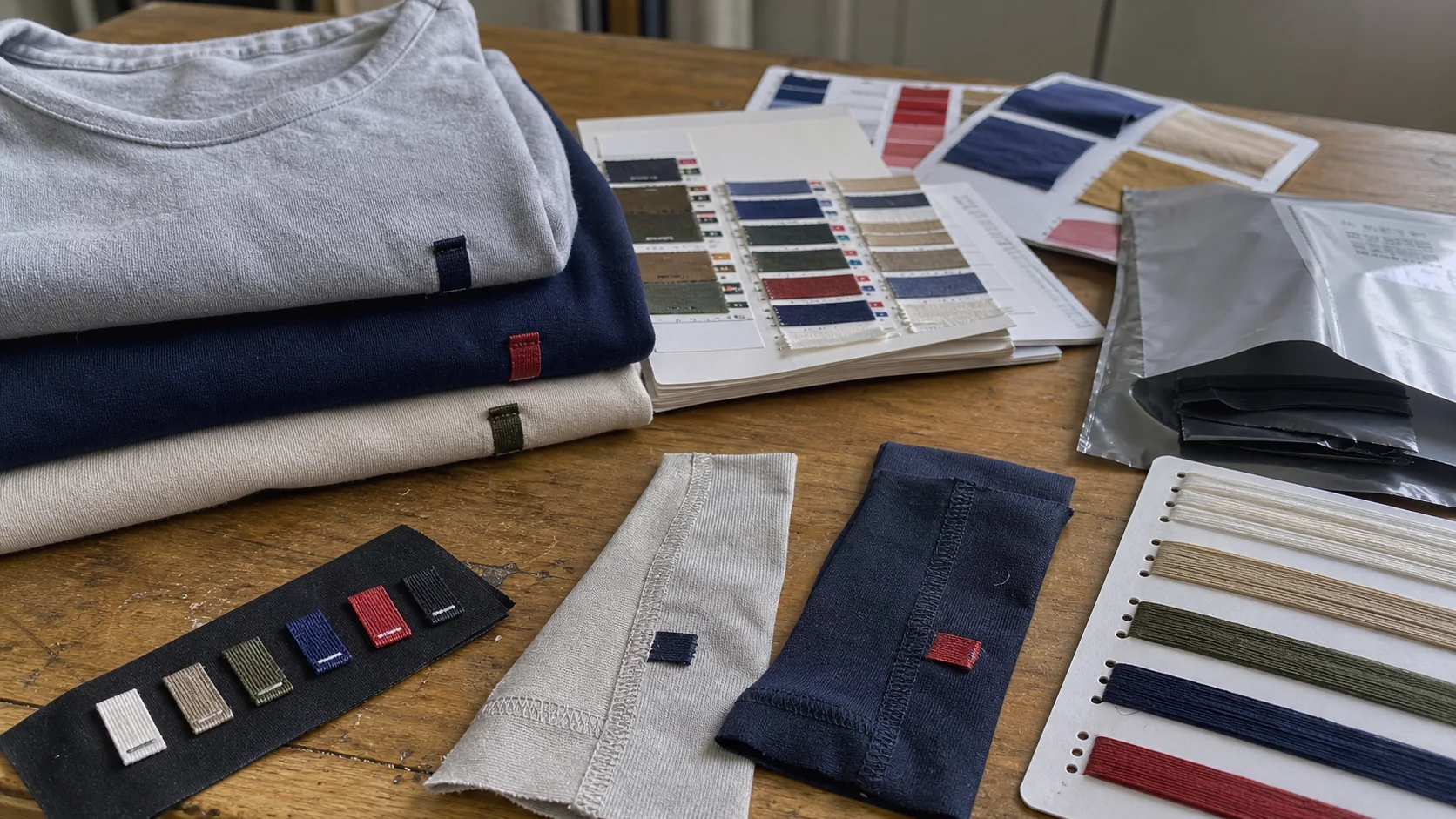
A practical SEO outline for outdoor school buyers auditing micro embroidery tabs, needle policies, stitch safety, backing choices, and production records...
Micro Embroidery Tabs: Needle Policy Audit for Schools - Fabrikn production reference
Micro embroidery tabs are small branded labels, badges, or fabric tabs decorated with compact embroidery and attached to garments, bags, caps, fleece, softshell jackets, school outdoor uniforms, and activity apparel. They can look premium without dominating the garment. For outdoor school buyers, they also create a practical branding option where large chest embroidery may be too formal, too expensive, or unsuitable for technical fabrics.
The detail that often gets missed is needle control. Any sewn decoration introduces a needle process. That means a real audit question: can the supplier prove that broken needles, needle fragments, loose sharps, and metal contamination are controlled from sampling through bulk packing?
For school buyers, this is not a theoretical compliance issue. Products are used by children and teenagers in active environments: climbing, camping, hiking, field trips, sports days, forest school programs, and residential outdoor education. Apparel and accessories may be pulled, rubbed, washed heavily, and used in muddy or wet conditions. If a micro tab has weak stitching, fraying edges, or undetected needle contamination, the risk travels directly to the school, distributor, or uniform program owner.
This article is written for procurement teams, schoolwear distributors, outdoor education buyers, and product managers sourcing decorated garments. It focuses on micro embroidery tab needle policy audit requirements, practical specifications, supplier questions, typical MOQ ranges, lead-time dependencies, and inspection risks. It sits within the broader Decoration & Printing category, but the same controls apply whether the tab is produced in-house by the garment factory or by a nominated decoration supplier.
Buyer judgment: A micro embroidery tab is a small component, but it should not be treated as a casual add-on. If the tab is sewn, the needle policy must be part of the sourcing file, not a verbal assurance after production starts.
A micro embroidery tab is typically a small woven, twill, felt, canvas, or synthetic fabric component with an embroidered logo, initials, school mark, outdoor program symbol, house color, or activity identifier. It may be folded into a seam, topstitched onto a garment surface, inserted near a hem, or attached to accessories such as backpacks, beanies, neck warmers, and kit bags.
Common placements include:
The main appeal is controlled branding. A school may want garments that look coordinated without the high visual impact of large embroidery. Outdoor programs also prefer small identifiers because bulky embroidery can reduce comfort, create stiffness, or interfere with layering.
Micro tabs can be produced as separate components and then sewn to the garment, or they can be embroidered directly onto a small fabric strip that is cut, folded, and attached during garment assembly. In both cases, the production route matters. More handling steps mean more control points: embroidery needle control, cutting accuracy, edge finishing, thread trimming, attachment stitching, and final inspection.
A woven label is created on a loom using yarns to form the design. A micro embroidery tab uses embroidery stitches applied to a base fabric. Woven labels can achieve very fine detail, especially for text, but they may look flatter. Embroidered tabs have raised texture and a more tactile appearance, but small lettering can close up if the design is not digitized properly.
For schools, the choice is usually about brand feel, durability, cost, and compliance. If the tab must show tiny motto text, a woven label may be more legible. If the tab needs a rugged outdoor look, micro embroidery can be stronger visually. The audit burden is not removed either way, because the tab still needs to be attached to the garment by sewing unless an adhesive or heat-transfer solution is used.
A needle policy audit checks whether the supplier has documented and practical controls for all needle and sharp tool use. In decoration and printing programs, buyers sometimes focus heavily on ink, color fastness, print cracking, and logo position. For embroidered tabs, the sharper question is whether every needle entering the production area is accounted for and whether broken parts are recorded, contained, and reconciled.
A workable audit scope should include:
The audit should cover the embroidery process and the garment attachment process. A common gap appears when a supplier says the embroidered tab is made by a subcontractor. In that situation, the needle policy must apply to the subcontractor as well. If the main garment factory attaches the tab after receiving it, the main factory also needs needle control records for that operation.
Outdoor school buyers should avoid vague wording such as “factory follows needle control.” Better wording is: “Supplier must maintain a written needle and sharp tool control procedure, record needle issue and breakage, recover all broken fragments, segregate affected goods until reconciliation is complete, and provide records upon request.”
A practical needle log does not need to be elaborate, but it must be complete enough to prove control. It normally records machine number, operator name or ID, needle size, date and time of issue, reason for replacement, broken needle incident details, recovered fragment confirmation, supervisor sign-off, and affected bundle or lot number.
For micro embroidery tabs, records should also connect to the decoration lot. If tabs are produced in batches before garment sewing, the audit trail should identify which tab batch was used for which garment purchase order. This traceability becomes important if a school reports a problem after delivery.
Audit Area What the Buyer Should Request Red Flag Needle Issue Controlled issue from supervisor or tool room, with machine/operator records Operators keep loose spare needles in drawers or personal boxes Broken Needle Handling Written procedure requiring production stop, fragment recovery, and documentation Broken needles are discarded without evidence of full recovery Subcontracted Embroidery Confirmation that the same needle policy applies to the embroidery supplier Main supplier cannot provide records from the decoration unit Metal Detection Policy based on product risk, buyer requirement, and end-use Metal detection promised but not performed or not recorded Sharp Tool Control Inventory records for scissors, snips, blades, and pins Open blades or pins present near packed goodsMicro embroidery tabs look simple, but the risk profile is wider than decoration appearance. The main risk is sharp contamination from broken needles or uncontrolled tools. Secondary risks include poor tab attachment, loose thread loops, fraying base fabric, color bleeding, skin irritation, and inconsistent logo presentation across schoolwear sizes.
Children’s and school products often receive closer scrutiny because of the end user. Even when a product is for teenagers, schools and parents expect a higher standard of safety. A small metal fragment trapped under a tab, inside a seam, or in a pocket area can create a serious complaint. One incident can outweigh any savings gained by selecting a low-cost decoration route.
Embroidery machines run at speed and use needles repeatedly through dense stitch areas. Micro designs can be deceptively demanding because the needle penetrations are concentrated in a small space. Dense fill stitches, tight borders, and small lettering increase the chance of thread breaks, needle deflection, puckering, and needle stress.
Attachment sewing adds another needle process. If the tab is thick, folded, or placed over a seam intersection, the attachment needle may strike dense layers. This is especially relevant on softshells, quilted items, heavy fleece, canvas bags, and webbing-based accessories.
A buyer should ask how the supplier selects needle type and size for the base fabric and tab. A needle that is too fine may break more easily on heavy layers. A needle that is too large may damage technical fabric, create visible holes, or weaken waterproof coatings.
Micro embroidery often uses small satin stitches and compact borders. If thread trimming is poor, loose ends may appear around the tab. On outdoor garments, loose threads can catch on zips, hook-and-loop fasteners, backpack straps, and rough surfaces.
The inspection standard should define acceptable thread tails. Many buyers use a practical limit such as no loose thread tails longer than 3 mm to 5 mm on visible areas, with no unsecured loops. The exact tolerance depends on product type and brand standard, but it should be written before production.
A needle incident is not just a quality claim. It can become a safety escalation involving schools, parents, distributors, insurers, and retailers. If the supplier cannot show needle control records, the buyer has limited defense. The cost of investigation, withdrawal, replacement, and communication can be far higher than the cost of running a proper audit.
Procurement teams should treat needle policy as part of supplier qualification, especially for repeat outdoor school programs. A one-time email confirmation is weak protection. A documented procedure, recent records, sample lot traceability, and final inspection evidence provide a more reliable base.
A strong specification helps the factory quote correctly and reduces rework. It should cover artwork, tab construction, embroidery detail, attachment method, packaging, compliance, and inspection criteria. Small components cause delays when buyers approve only the logo image but leave material, stitch density, backing, and attachment unclear.
A useful micro embroidery tab specification should include the following points:
Embroidery is not a direct copy of a digital logo. The artwork must be digitized into stitch instructions. For micro tabs, this step is critical. Thin lines, small serif lettering, gradients, and detailed crests may not translate well at a small scale.
Buyers should request a digitized embroidery proof or stitch simulation, but that is not enough. A physical strike-off is more reliable because fabric, thread, backing, and machine settings affect the result. Fine lettering under about 4 mm to 5 mm high often becomes difficult to read, depending on font and thread thickness. Very small school crests may need simplification.
The purchasing decision is straightforward: if exact crest detail is mandatory, a woven label or printed transfer may be better. If tactile branding and outdoor texture are more important, micro embroidery is a good option, provided the artwork is simplified intelligently.
Outdoor school apparel is exposed to washing, rain, abrasion, storage in kit bags, and contact with mud or sunscreen. The tab material should not bleed color, curl badly, shrink at a different rate from the garment, or create discomfort against the skin.
For fleece and softshell, polyester twill tabs with polyester embroidery thread are common. For heritage-style sweatshirts or cotton-rich garments, cotton twill may look natural but may shrink more and fade differently. For bags and equipment pouches, nylon or polyester webbing-style tabs may be more durable.
Component Practical Specification Point Buyer Tradeoff Base Fabric Polyester twill, cotton twill, felt, canvas, nylon, or recycled polyester Polyester is stable and practical; cotton may suit casual uniforms but can shrink or fade more Thread Colorfast polyester embroidery thread for outdoor garments Rayon has sheen, but polyester usually performs better under frequent washing Backing Chosen to stabilize the tab without adding scratchy bulk More backing improves embroidery stability but may reduce softness Edge Folded, heat cut, laser cut, or stitched border Heat-cut edges can be clean on synthetics; folded edges feel more premium but add thickness Attachment Stitch Consistent topstitch or seam insertion with secure backtack Topstitching is visible and inspectable; seam insertion looks cleaner but is harder to repairSupplier qualification should be practical. The goal is not to create paperwork for its own sake, but to confirm that the supplier can control a small sewn decoration safely and consistently. Ask direct questions and request evidence where the product risk justifies it.
Buyers developing decorated schoolwear ranges can review broader manufacturing support through Fabrikn services. For supplier discussion, artwork review, or production planning, the contact page is the right place to start a project-specific inquiry.
Sampling should confirm appearance, durability, and process control. A micro embroidery tab may look acceptable in a flat photo but perform poorly after wash or when sewn onto the real garment. Outdoor school buyers should avoid approving from artwork alone.
A sensible approval route includes:
The strike-off should be reviewed in normal light and under close inspection. Check whether the school logo is legible, whether small letters have filled in, whether the border is clean, and whether the tab lies flat. Measure the finished tab size. Look for stitch gaps, needle damage, thread loops, rough edges, and backing residue.
If the tab is going onto a softshell, fleece, or technical jacket, assess the hand feel. A stiff tab in a high-friction area can irritate the wearer or become a snag point. A tab placed under a backpack strap may abrade faster than expected.
School orders often include a wide size range. A tab that looks balanced on an adult medium may look oversized on a youth small or too subtle on a larger jacket. Placement also shifts when garment panels change by size. The spec should state whether the tab position is fixed from a seam, hem, or reference point.
For example, “tab centered 20 mm above left hem” is more useful than “tab near bottom.” If attached into a side seam, the spec should define height from hem or relation to pocket opening. Clear placement rules reduce inconsistent branding across the order.
MOQ varies by supplier, fabric, decoration process, and whether the tabs are made separately or as part of a garment order. As a cautious guide, micro embroidery tab MOQs often sit around 100 to 300 pieces for sampling or small school runs, 300 to 500 pieces for more efficient small-batch production, and 500 to 1,000 pieces or more for better unit pricing. Custom base fabrics, dyed-to-match materials, special threads, recycled trims, or complex edge finishing can push MOQ higher.
Garment MOQ is a separate issue. A supplier may accept 300 embroidered tabs, but the garment factory may require 500 garments per style or color. If the buyer needs several school colors, house colors, or year-group variations, the total order can become fragmented. That is where tab standardization helps. A single tab design used across multiple garment colors may reduce cost and simplify control.
Typical lead times depend on artwork readiness, sample rounds, material availability, factory capacity, transport, and inspection requirements. A simple micro tab on available base fabric may sample quickly. A complex crest, special thread color, or custom-dyed tab fabric may require extra time.
For planning purposes, buyers should allow time for:
A practical schedule may require 1 to 2 weeks for artwork, digitizing, and strike-off on straightforward projects, then additional time for garment sampling and bulk production. Full garment programs often run several weeks or longer depending on fabric sourcing, order size, production season, and shipping method. Tight school launch dates should be discussed early. Late approval of a small tab can delay the entire garment shipment.
Micro embroidery tab costs are affected by stitch count, number of colors, base fabric, edge finish, backing, size, attachment method, and inspection requirements. Dense embroidery costs more because it uses more machine time and thread. A folded tab may require extra handling. A seam-inserted tab may be cheaper during garment assembly but harder to add after garments are finished.
Buyers often ask for the smallest possible tab with the most detailed possible logo. That usually creates a poor cost-to-quality ratio. A slightly larger tab with simplified artwork can look better and reduce rework. The cheapest quote is not attractive if the tab fails inspection or if the supplier cannot support needle control records.
Inspection should cover both the tab as a component and the finished garment after attachment. For school buyers, inspection standards should be written into the purchase order or quality manual. A generic “good quality” instruction is not enough.
Outdoor garments are often made from brushed fleece, laminated softshell, coated woven fabric, ripstop, or quilted materials. Each fabric reacts differently to embroidery tab attachment. Fleece can hide poor trimming but may also shed fibers around the tab. Softshell can show needle holes and puckering. Coated fabrics may be weakened by repeated needle penetration. Quilted items can shift during attachment unless properly handled.
Inspection should also consider real use. A tab placed near a pocket may be rubbed by hands. A tab near a backpack strap can abrade. A tab on a beanie cuff may stretch repeatedly. A tab on a waterproof outer layer may compromise water resistance if attached through a critical panel. In many cases, a small tab near a seam is safer and cleaner than a large embroidered logo in the middle of a technical panel.
Defect Likely Cause Buyer Action Unreadable text Artwork too small, poor digitizing, dense stitches Simplify logo, increase size, or switch to woven/printed label Puckering around tab High stitch density, wrong backing, unstable base fabric Adjust digitizing, backing, tension, or fabric choice Visible needle holes Wrong needle size or unsuitable technical fabric Test needle type and reconsider placement or decoration method Loose tab edge Poor attachment stitch or insufficient backtack Revise stitch spec and strengthen inspection standard Missing needle records Weak supplier controls or undocumented subcontracting Hold shipment review until records or corrective evidence are providedMicro embroidery tabs are a strong choice when a school wants durable, understated branding with a premium hand feel. They work well on fleece, sweatshirts, beanies, bags, and casual outdoor layers. They can also create a consistent identity across multiple product types without using large, expensive embroidery placements.
They are less suitable when the school crest is highly detailed, when very small text must remain readable, or when the garment fabric cannot tolerate needle penetration. Lightweight waterproof shells, highly elastic base layers, and delicate coated fabrics may need alternative decoration methods.
The main purchasing tradeoff is between appearance, safety control, and operational complexity. A micro embroidery tab adds component sourcing, embroidery, attachment sewing, and inspection. That complexity is justified when the branding value is high and the supplier can document needle policy compliance. It is not justified if the buyer only needs a low-cost identifier and would accept a printed heat transfer or woven label.
For buyers comparing decoration routes, it can be useful to assess supplier capability, brand needs, and production risk together rather than treating the tab as a separate trim. Information about company background and sourcing approach can be reviewed at Fabrikn’s about page.
Clear purchase order language reduces disputes. The wording does not need to be legalistic, but it should be specific enough that the supplier knows what evidence is expected. Buyers can adapt the following structure to their internal quality manual.
All micro embroidery tabs and attached garments must be produced under a documented needle and sharp tool control procedure. Supplier must maintain records for needle issue, replacement, breakage, fragment recovery, affected product quarantine, and supervisor release. The policy must apply to subcontracted embroidery and all garment attachment operations. Records must be available for buyer review upon request. Goods must be free from broken needle fragments, pins, staples, blades, and uncontrolled sharp objects.
That clause should sit beside the tab specification, artwork approval reference, inspection standard, and packaging requirements. If metal detection is mandatory, state it directly and define whether 100% of units or selected lots must pass through the detector. Do not assume the supplier will apply metal detection unless the purchase order requires it and the quote allows for it.
A good sourcing file helps if questions arise after delivery. It should include approved artwork, digitizing proof, tab strike-off, garment pre-production sample approval, purchase order specification, supplier needle policy, recent needle records where required, inspection report, and final packing details.
For repeat school programs, keep the approved physical sample and digital spec together. Schoolwear reorders often happen months later, and small trims are easily changed by mistake. A supplier may substitute a similar thread, alter backing, or shift tab placement unless the original standard is clear.
Consistency matters in school supply. Parents notice if one year group receives a different tab shade or if replacement garments do not match the original uniform. A well-kept spec reduces unnecessary argument and keeps reorder production efficient.
Micro embroidery tabs can be an excellent decoration choice for outdoor school buyers when they are specified and audited properly. They offer durable, controlled branding and can work across jackets, fleece, sweatshirts, hats, and bags. The small size should not lead to relaxed controls.
The needle policy audit is the key discipline. Buyers should confirm written procedures, broken needle records, subcontractor controls, attachment sewing controls, and final inspection standards before bulk production. Sampling should prove that the logo is legible, the tab lies flat, the attachment is secure, and the garment remains comfortable and fit for outdoor use.
The best purchasing decision is not always the most decorative option. It is the option that balances brand presentation, child safety expectations, production reliability, and total landed cost. A well-made micro embroidery tab can support that balance. A poorly controlled tab can create a risk that is disproportionate to its size.
Get a free quote from Fabrikn — your trusted B2B clothing manufacturer with 10+ years of experience. MOQ as low as 200 pieces.
Get a Free Quote →A micro embroidery tab is a small fabric tab or label decorated with embroidery and attached to a garment, hat, bag, or accessory. Schools use them for subtle branding, outdoor program identification, house colors, or activity apparel.
Micro embroidery tabs involve needle-based production during embroidery and often during garment attachment. A needle policy helps control broken needles, needle fragments, pins, blades, and other sharp objects so they do not end up in school garments or accessories.
Buyers should ask for a written needle and sharp tool control policy, broken needle procedure, subcontractor control process, sample approval route, thread and base fabric specifications, attachment method, inspection standard, and lead-time confirmation.
Typical MOQs may range from about 100 to 300 pieces for small runs or sampling, 300 to 500 pieces for more efficient school orders, and 500 to 1,000 pieces or more for better unit pricing. The final MOQ depends on fabric, artwork, edge finish, thread colors, and supplier setup.
They can be used, but buyers must be careful. Sewing through waterproof or coated fabric can create needle holes and may affect performance. Placement near seams or on non-critical panels may be more practical, and testing should be completed before bulk approval.
Polyester embroidery thread is commonly preferred for outdoor school garments because it generally offers good colorfastness, wash resistance, and abrasion performance. The exact thread should be confirmed against the approved sample and end-use requirements.
Some crest details may need simplification. Very small lettering, thin lines, and complex motifs can become unclear at micro scale. A physical strike-off is the safest way to judge legibility before bulk production.
Metal detection depends on product risk, buyer policy, end user, and supplier capability. For children’s or school products, many buyers treat it as a valuable control, especially when multiple sewing or embroidery operations are involved. If required, it must be stated clearly in the purchase order.
Common defects include unreadable text, puckering, loose threads, fraying edges, poor color matching, backing residue, crooked attachment, visible needle holes, and inconsistent placement across sizes.
The physical pre-production sample is the key approval step. It should show the actual tab on the actual garment or a production-equivalent garment, with confirmed placement, stitch quality, hand feel, and appearance after basic review or testing.