
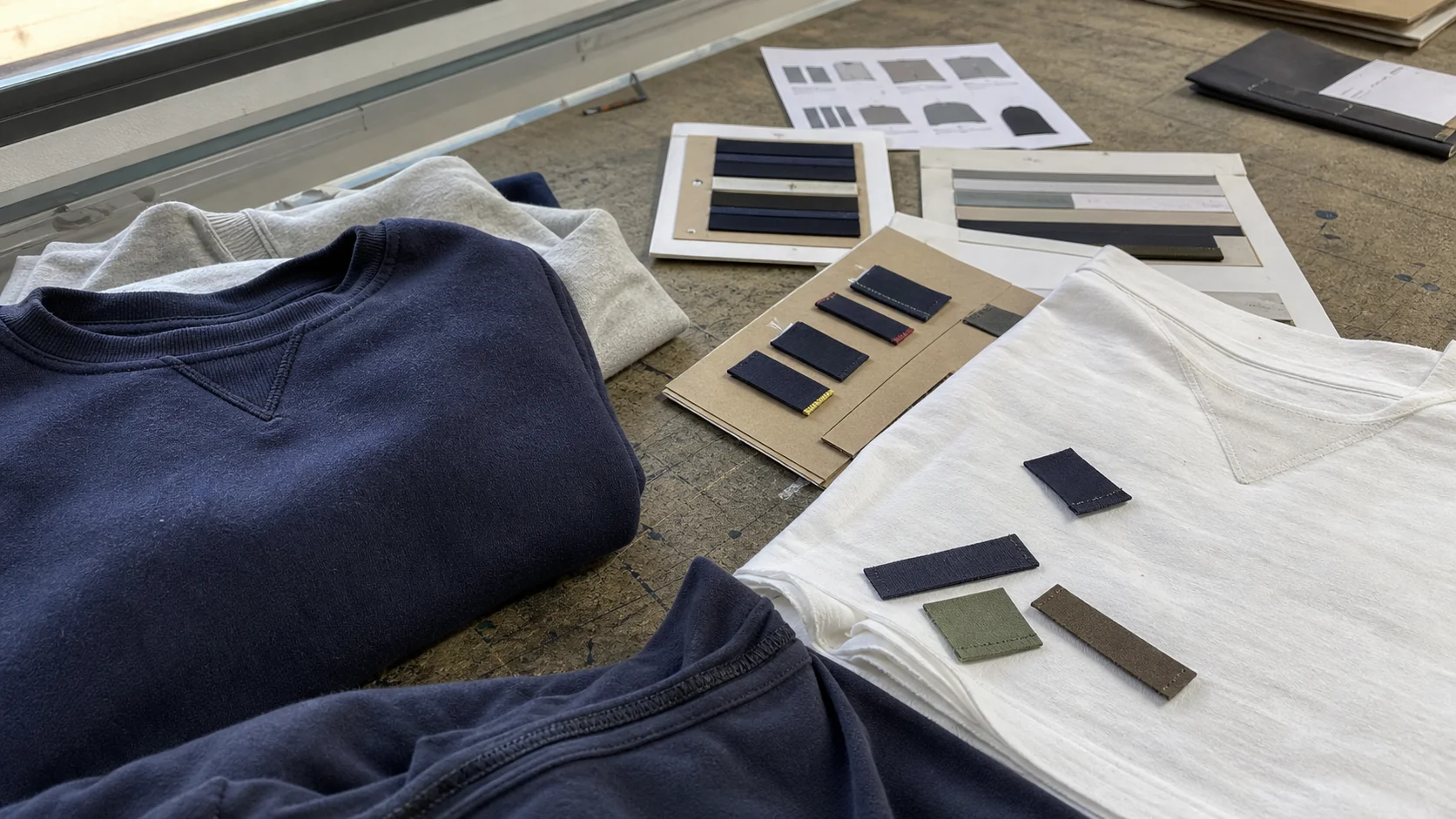
A 2500-word SEO outline for buyers evaluating suppliers for micro embroidery tab orders used on cleaning crew uniforms, with scorecard criteria tied to...
Micro Embroidery Tabs: Supplier Scorecard for Crews - Decoration & Printing manufacturing guide
Micro embroidery tabs look simple on a cleaning uniform, but they can expose weak suppliers quickly. A small tab may carry a crew name, service tier, property code, shift group, safety color, or brand mark. Because the decoration area is tight, every decision matters: thread density, letter height, backing, edge finish, tab placement, and attachment method. For cleaning crews, the tab also has to survive heat, detergent, disinfectant residue, abrasion, and frequent industrial laundering.
This article gives procurement teams a practical supplier scorecard for micro embroidery tab orders. It is written for buyers sourcing tabs for janitorial teams, housekeeping crews, building maintenance staff, commercial cleaners, healthcare cleaning contractors, hospitality cleaning teams, and outsourced facility service providers. The goal is not to make embroidery sound complicated. The goal is to prevent expensive small mistakes from becoming a reorder problem across hundreds or thousands of uniforms.
Category: Decoration & Printing
Micro embroidery tabs are small textile labels or tabs decorated with embroidery. They are usually sewn onto uniforms, work shirts, aprons, jackets, utility vests, pants, caps, sleeve openings, chest pockets, shoulder seams, or tool pouches. In cleaning crew uniforms, they often serve a functional branding or identification purpose rather than a fashion-only purpose.
A typical micro tab may measure 20 mm to 60 mm wide, with a short text line, initials, icon, or color-coded symbol. Some buyers use tabs to identify crew roles: supervisor, sanitation, floor care, restroom team, night shift, hospitality, or hazardous area cleaning. Others use the tab as a discreet branding detail when a large chest logo is not wanted on every garment.
Compared with woven labels or printed heat-transfer labels, embroidery gives a raised thread texture. It can feel more durable and premium, especially on heavier uniforms. The limitation is detail. Small lettering, thin lines, gradients, and complex logos are harder to reproduce cleanly in thread. That is why supplier selection matters. A factory that can embroider a 90 mm chest logo well may still struggle with a 25 mm micro tab.
For cleaning crews, durability is the main commercial issue. Uniforms may be washed after nearly every shift. They may be exposed to bleach alternatives, quat disinfectants, peroxide-based cleaners, alkaline detergents, degreasers, and high tumble-dry temperatures. A weak tab can pucker, fray, curl, bleed color, shrink differently from the garment, or lose legibility after a few cycles.
A supplier scorecard is useful because micro embroidery tab sourcing involves several small variables that interact with each other. The buyer is not only choosing a decoration vendor. The buyer is choosing an execution system: digitizing, thread selection, tab fabric, cutting, folding, sewing, packing, labeling, inspection, and reorder control.
Cleaning crew buyers usually need consistency more than novelty. If a property management contractor has 800 crew members across different sites, the tab must look the same across replenishment orders. A slight shade mismatch may not matter for a single promotional order, but it can look careless on uniforms worn by customer-facing cleaners in hotels, offices, hospitals, universities, and retail spaces.
A scorecard also helps compare suppliers that quote in different ways. One supplier may quote the tab only. Another may include digitizing. A third may include attachment to garments. A fourth may quote low unit cost but require a large MOQ. Without a structured scorecard, the cheapest offer can look attractive until sampling reveals poor stitch clarity, slow response time, or unclear reorder control.
For cleaning crew programs, the best supplier is usually not the lowest tab price. It is the supplier that can hold legibility, wash durability, color consistency, and reorder discipline at the quantity your program actually needs.
The scorecard also reduces internal disagreement. Operations may care about speed. Marketing may care about logo appearance. Finance may care about MOQ. HR may care about role identification. The uniform manager may care about laundry durability. A shared scorecard gives each stakeholder a practical framework for approval.
Legibility is the first pass-or-fail issue. Micro embroidery does not behave like digital printing. Thread has thickness. Stitches need room. Very small text can close up, especially after washing. As a cautious rule, buyers should challenge any supplier promising crisp embroidery below 4 mm letter height without a test sew-out. Some block fonts can work at smaller sizes, but script fonts, thin serif fonts, and tight spacing are risky.
Ask the supplier to show actual-size sew-outs, not only digital mockups. A computer rendering can make tiny letters look cleaner than they will be in thread. For cleaning crews, use readable marks over decorative marks. If the tab is used for safety or role identification, decoration clarity is not optional.
The tab base fabric should be compatible with the uniform fabric and laundering method. Common tab materials include polyester twill, poly-cotton twill, woven label tape, canvas, ripstop, felt, and synthetic webbing. Polyester is often preferred for repeated washing because it has better dimensional stability than cotton-rich bases. Cotton can look softer but may shrink or distort more.
Backing is equally important. Tear-away backing may be acceptable for some decorative tabs, but cut-away backing often gives better stability on small dense embroidery. Heat-seal backing can help with edge control or temporary placement, but it must be tested against laundering and attachment method. If the tab is sewn onto a garment, the supplier should define whether the backing remains, is trimmed, or is removed.
Polyester embroidery thread is usually the safer choice for cleaning uniforms because it handles washing, abrasion, and chemical exposure better than rayon. Rayon can have a softer sheen, but it is not always the best pick for heavy-use workwear. Ask for thread brand or at least thread type, denier, color code, and colorfastness expectations.
Color selection should not rely on screen visuals. Use physical thread cards or approved lab dips where possible. If a cleaning contractor needs brand colors, define the acceptable shade tolerance. For small tabs, contrast often matters more than exact brand color. White thread on navy tabs, black thread on light gray tabs, or high-contrast role colors usually perform better than subtle tonal embroidery.
Micro tabs can be laser cut, hot cut, merrowed, folded, satin stitched, or sewn into seams. Each edge finish has a tradeoff. Laser cutting gives a clean edge on synthetic materials but can feel stiff or show slight darkening on certain colors. Hot cutting can seal polyester webbing but may leave a hard edge. Merrowed edges add durability but may be too bulky on very small tabs. Folded tabs look clean but require accurate folding and sewing.
For cleaning uniforms, edge durability is more important than a delicate edge. Tabs that fray after laundering will make uniforms look older than they are. If the supplier proposes a raw edge, the buyer should require wash testing before approval.
The supplier may deliver loose tabs, pre-attached tabs, or complete decorated uniforms. Loose tabs give the buyer flexibility but create a second quality-control point when another sewing facility attaches them. Pre-attached tabs reduce coordination risk, provided the supplier controls both decoration and sewing placement.
Common attachment methods include straight stitch, box stitch, bartack, seam insertion, edge stitch, or heat application with stitch reinforcement. For active cleaning crews, stitched attachment is usually safer than heat-only application. Heat adhesives can fail under industrial laundry conditions, especially when exposed to high heat, chemicals, and mechanical agitation.
A good supplier must control repeat orders. That means keeping the approved digitizing file, tab dimensions, thread colors, base fabric code, backing, stitch count, edge finish, placement guide, and packing method. Reorder problems often happen when a supplier treats the second order as a fresh job instead of a controlled repeat.
For larger programs, buyers should request a technical file after approval. The file does not need to reveal proprietary machine settings, but it should define enough information to hold the supplier accountable. If the order supports multiple sites or crew roles, each variation should have a unique SKU or reference code.
The table below can be used as a practical scoring model. Adjust the weighting based on whether the program is brand-sensitive, safety-sensitive, budget-driven, or time-sensitive.
Scorecard Area What to Check Suggested Weight Buyer Judgment Micro Detail Capability Actual-size sew-outs, minimum readable letter height, clean edges, no thread crowding 20% Reject suppliers that rely only on digital mockups for tiny text. Wash Durability Thread colorfastness, tab shrinkage, backing stability, edge fray, post-wash legibility 20% Essential for cleaning crews; do not skip wash testing on high-volume programs. Material Control Base fabric code, thread type, backing type, edge finish, trim consistency 15% Strong material control reduces shade drift and reorder issues. MOQ and Price Fit MOQ by design, MOQ by color, setup fees, digitizing fees, tier pricing 15% Low unit cost is less useful if the MOQ creates dead inventory. Sampling Discipline Artwork review, digitizing proof, physical sample, wash sample, pre-production sample 10% Good suppliers push for approval steps instead of rushing straight to bulk. Lead-Time Reliability Sample timing, bulk timing, fabric availability, machine capacity, attachment schedule 10% Ask what can delay the order before issuing the purchase order. Inspection and Packing Counting method, shade segregation, defect criteria, bundle labels, role or site sorting 5% Packing accuracy matters when uniforms ship to multiple crew locations. Communication Quality Fast responses, clear limitations, written specs, change confirmation 5% Suppliers who admit limits early are often safer than suppliers who agree to everything.A supplier scoring below 70 out of 100 should not be used for a large crew rollout unless the weaknesses are minor and correctable. A supplier scoring 80 or higher may be suitable for repeat programs if the sample passes wash and attachment testing. A supplier scoring 90 or higher is worth keeping in the vendor base, especially if they control both embroidery and garment attachment.
Micro embroidery tabs need a written specification before the sample is made. Loose instructions like “small embroidered tab on sleeve” create disputes later. A supplier cannot manage quality if the buyer has not defined what success looks like.
For cleaning uniforms, the specification should also define whether the tab must withstand domestic washing or industrial laundering. These are not the same. Industrial laundry can be harsher, with stronger chemistry, larger load abrasion, higher extraction force, and higher drying temperatures. If uniforms are sent to a commercial laundry, sample testing should reflect that environment as closely as possible.
Artwork should be simplified for micro embroidery. Thin outlines, tiny negative spaces, gradients, and multiple thread colors inside a very small area create production risk. If the mark must be tiny, simplify the design before digitizing. A supplier may need to remove details that look good on a PDF but cannot be stitched cleanly.
Ask for the digitizing proof and stitch count, but do not approve based only on the proof. A proof shows planned stitch direction and sequence. It does not show how the thread behaves on the selected tab material. Physical sew-out approval is still necessary.
Density should be balanced. Too little density can look weak. Too much density can cause puckering, stiffness, thread breaks, and distortion. Micro tabs are especially vulnerable because a high stitch count is concentrated in a small area. The correct supplier will adjust the design for the fabric rather than forcing the artwork into the same stitch file used for a larger logo.
Micro embroidery tab MOQs vary widely. A domestic or local decoration supplier may accept 50 to 100 pieces per design, especially if the tab is simple and materials are stocked. A specialized label or trim supplier may start around 300 to 500 pieces per design. Overseas bulk suppliers may prefer 1,000 to 3,000 pieces per design or per colorway, especially when custom base fabric, dyeing, or special cutting is involved.
For cleaning crew programs, a practical MOQ range is often 100 to 500 pieces for pilot orders and 500 to 2,000 pieces for bulk replenishment. If there are many role variations, such as restroom team, floor team, supervisor, day shift, and night shift, the MOQ per variation becomes more important than the total order quantity.
Order Type Typical MOQ Range Best Use Case Risk to Watch Pilot order 50-150 pieces Testing design, placement, wash durability, and crew feedback Higher unit cost and limited supplier interest Small replenishment 100-300 pieces Adding new hires or replacing damaged uniforms Shade mismatch against earlier lots Standard crew rollout 500-2,000 pieces Multi-site cleaning teams with repeat uniform needs Incorrect role sorting or attachment placement errors Large program order 2,000-10,000 pieces National or regional uniform programs Bulk defects if pre-production approval is weakPrice is usually driven by stitch count, number of colors, tab material, edge finish, backing, order quantity, attachment labor, inspection requirements, and packing complexity. Digitizing may be charged as a one-time setup fee or built into the unit cost. For small orders, setup fees can matter more than the unit price. For bulk orders, stitch efficiency and attachment labor become more important.
Do not compare quotes until the scope is equal. One quote may include loose tabs only. Another may include sewing onto garments. One may include wash testing, packing by site, and barcoded polybags. Another may ship bulk loose pieces in one carton. The cheapest quote may still cost more once sorting, rework, and delays are included.
For buyers setting up a complete uniform program, it is useful to align decoration requirements with broader apparel production planning. Fabrikn’s services page is a suitable starting point for reviewing manufacturing and sourcing support options before locking the decoration route.
A disciplined sample process is the best protection against bulk disappointment. Micro tabs are too small to approve casually. A buyer should see the exact size, fabric, thread, backing, edge finish, and attachment method before production.
For a low-risk small order, some buyers may combine steps. For example, the first sew-out and attachment sample may be reviewed together. For a high-volume cleaning crew program, skipping the pre-production sample is not recommended. A single error in tab placement or thread color can multiply across hundreds of uniforms.
Approval should be given under normal viewing conditions. A tab may look acceptable in a close-up photo but unreadable on the sleeve from a normal distance. Photos are useful for quick communication, but they do not replace physical review when the order is large or brand-sensitive.
Wash testing should be simple but specific. The buyer can request 5, 10, or 25 wash cycles depending on order size and expected garment life. A pilot program may start with 5 cycles to catch obvious issues. A major rollout should test more aggressively, especially if garments will be commercially laundered.
After washing, inspect the tab for the following:
Cleaning crew uniforms often age quickly because they are washed frequently. A tab that looks perfect before washing but poor after five cycles is not suitable for a serious workwear program.
Lead time for micro embroidery tabs depends on material availability, artwork readiness, digitizing complexity, sample revisions, order quantity, attachment method, and packing requirements. A simple loose-tab order using stocked fabric may move quickly. A custom tab attached to finished uniforms and sorted by site can take much longer.
Typical timing may look like this:
Stage Typical Time Range What Can Delay It Artwork review 1-3 business days Unclear logo files, missing Pantone or thread references, too many versions Digitizing 2-5 business days Complex small details, repeated revisions, unclear size target Physical sample 5-10 business days Material sourcing, machine queue, trim color matching Wash testing 3-14 business days Number of cycles, external laundry testing, drying method Bulk production 10-30 business days Order quantity, stitch count, attachment labor, quality control Packing and dispatch 2-7 business days Site sorting, size breakdowns, carton labeling, shipment consolidationFor a normal crew rollout, buyers should budget three to six weeks after artwork approval if sampling is required. Faster timing may be possible, but rush production increases the risk of skipped checks. If the tabs are part of a larger garment order, the critical path may be the uniform production schedule rather than the tab itself.
Lead time also depends on how many variations are involved. One tab design in one color is straightforward. Ten role tabs in four colors create more setup, more approval points, and more risk of packing errors. If the cleaning program has many sites, create a master matrix before production begins.
Buyers needing to discuss order timing, artwork, or a multi-site crew program can use Fabrikn’s contact page to start a specification review.
Micro embroidery tabs should be inspected both as loose trims and as attached garment components. Many defects are easy to miss when tabs are small and packed in bulk. Inspection must be practical, not cosmetic perfectionism. The goal is to catch defects that affect appearance, durability, comfort, identification, or customer perception.
Define acceptable tolerance before inspection. For example, placement tolerance may be plus or minus 3 mm for a small sleeve tab, but a larger tolerance may be necessary on stretch fabrics or curved seams. Letter clarity should be judged against the approved sample, not against a digital logo file.
Inspection level depends on order size and risk. For a small order, a 100% visual check may be realistic. For a large order, use sampling by carton and role variation, with 100% checks for critical items such as role labels, safety color tabs, or customer-facing supervisor uniforms. If the tab identifies cleaning zones or safety responsibilities, the wrong tab is not just a cosmetic defect.
Strong purchasing decisions come from knowing which tradeoffs are acceptable. Micro embroidery tabs are not one-size-fits-all. The best choice depends on program size, uniform fabric, laundry method, branding needs, and replenishment pattern.
Embroidery gives texture and a more dimensional look. It can work well for simple icons, initials, short words, and color-coded identifiers. Woven tabs usually handle tiny detail better because the design is built into the weave rather than stitched on top. If the tab needs very small text, a woven label may be a better technical solution.
Choose embroidery when the design is simple, the brand wants texture, and the tab is part of a workwear look. Choose woven when the design has tiny letters, multiple fine lines, or needs a flatter hand feel. A buyer should not force embroidery onto artwork that is better suited for weaving or printing.
Printed heat transfers can reproduce small details and gradients more easily. They are useful for complex logos. Their weakness is durability under harsh laundering, depending on transfer quality and application controls. For cleaning crews, heat transfers need careful testing because detergents, disinfectants, and high heat can reduce life.
Embroidery is often more durable visually, but it can snag or feel bulky if placed poorly. Printed decoration is flatter and lighter, but it may crack, peel, or fade. The right answer depends on the uniform fabric and laundering method.
Loose tabs can reduce the initial supplier scope and give the buyer flexibility. They are useful when garments are sourced separately or when a local sewing team handles customization. The downside is coordination risk. If the sewing contractor places tabs inconsistently, the embroidery supplier may not be responsible for the finished uniform defect.
Supplier-attached tabs are cleaner for accountability. One supplier controls the tab and placement, or at least coordinates the process. The unit cost is higher, but the total risk may be lower. For multi-site cleaning crew programs, supplier-attached tabs often make better sense if the supplier can also pack by size, role, and destination.
Low MOQ is attractive for pilots, new accounts, or seasonal teams. It prevents dead stock when crew count changes. The tradeoff is higher unit cost and possible shade variation between small reorders. Lower unit cost usually requires larger quantities, but inventory risk increases if staff turnover, client contracts, or role structures change.
A sensible buying pattern is to run a pilot MOQ first, then place a larger controlled order after the tab passes wash and field review. For a stable cleaning contract, a larger buy can be justified. For a new contract with uncertain staffing, keep the first order conservative.
Start with suppliers who understand workwear, not only promotional decoration. Cleaning crew uniforms are functional garments. They are worn, washed, and replaced on a practical cycle. A supplier used to event merchandise may deliver good-looking samples but miss durability requirements.
When shortlisting suppliers, ask for the following:
Responses will reveal supplier discipline. A strong supplier will ask questions about fabric, washing, tab size, and placement. A weak supplier may quote quickly without clarifying any risk. Fast quotes are useful, but fast quoting without technical review can lead to slow corrections later.
Buyers evaluating manufacturing partners can also review Fabrikn’s about page to understand the company’s sourcing approach and production focus before opening a detailed decoration inquiry.
After receiving quotes and samples, score suppliers against actual evidence. Do not give high scores for promises. Give high scores for clear samples, written specs, honest limitations, and consistent communication.
Score Supplier Performance Action 90-100 Strong sample, clear specs, good wash result, realistic lead time, clean communication Approve for bulk or controlled rollout 80-89 Good sample with minor issues, supplier can correct details before production Approve after revised pre-production sample 70-79 Usable but risky; unclear specs, weak packing plan, or limited wash evidence Use only for low-risk or small orders 60-69 Sample or communication gaps create bulk risk Hold or request major correction Below 60 Poor clarity, weak durability, unclear pricing, or unreliable response Remove from shortlistOne important point: a supplier can be good but still wrong for the order. A high-end embroidery shop may do beautiful work but refuse low-cost replenishment. A mass trim supplier may offer excellent pricing but require MOQs too high for a local cleaning team. Score for fit, not reputation alone.
The following example shows how a buyer might define a simple micro embroidery tab for a cleaning crew uniform. It is not a universal spec, but it shows the level of detail that prevents confusion.
Field Example Specification Tab size 40 mm wide x 15 mm high, tolerance plus or minus 1 mm Base fabric Polyester twill, navy, medium weight Embroidery White polyester thread, block text, minimum 4 mm letter height Text “CREW” or role code by purchase order line Backing Cut-away backing trimmed cleanly, no scratchy exposed edges Edge Folded short ends, top and bottom edge stitch Attachment Sewn to left sleeve, 20 mm above cuff seam, straight and centered Wash requirement No major fray, bleed, shrinkage, or loss of legibility after 10 wash cycles Packing Bundled by size and crew role, carton labels showing PO, role, color, and quantityThis level of detail may look excessive for a small trim, but it is usually less expensive than rework. Uniform problems become visible at the crew level. If every cleaner on a site has a slightly different tab placement, the program looks unmanaged.
Some supplier warnings are obvious. Others are subtle. Buyers should be cautious when a supplier avoids physical samples, refuses to define materials, or promises perfect results with tiny artwork. Micro embroidery has limits, and a reliable supplier will discuss those limits early.
One red flag does not always mean the supplier is unusable. It may mean the buyer needs to tighten the specification. Several red flags together suggest a high probability of delay, rework, or inconsistent bulk output.
Cleaning crew uniform programs often need ongoing replenishment. New hires, damaged garments, seasonal contracts, and site expansions all create repeat demand. Reorder control should be built into the first order, not solved later.
Create a reorder file that includes the approved physical sample, digital artwork, digitizing reference, thread colors, base fabric, tab dimensions, placement measurements, attachment method, packaging instructions, and last production date. If multiple suppliers are involved, define which supplier controls each step.
Keep some buffer inventory if the crew program is stable. For example, a buyer may hold extra loose tabs or finished uniforms for common sizes and roles. Be careful with excessive inventory if branding, client contracts, or role names may change. Dead inventory is common when buyers over-order custom trims before the program is proven.
Ask the supplier how long they retain digitizing files and whether repeat orders require a new setup fee. Some suppliers waive repeat digitizing fees if the design is unchanged. Others charge if the file must be recreated or if the order is below a minimum threshold.
Micro embroidery tabs can be a smart decoration choice for cleaning crews when the design is simple, the supplier can handle small-scale stitching, and the specification is controlled. They are not the best option for every logo. Very small text, fine details, and high-variation programs may be better served by woven labels, printed transfers, or simplified role-color systems.
For most cleaning crew buyers, the safest route is to shortlist two or three suppliers, request actual-size sew-outs, test the preferred sample through washing, and approve a pre-production sample before bulk. Give the highest score to the supplier that is honest about embroidery limits, documents the specification, and shows consistency between sample and bulk.
The right supplier scorecard will not make the tab itself expensive or complicated. It will make the buying decision clearer. In a uniform program, small trims carry visible responsibility. A clean, durable, readable micro embroidery tab helps the crew look organized and helps the buyer avoid preventable decoration problems.
Get a free quote from Fabrikn — your trusted B2B clothing manufacturer with 10+ years of experience. MOQ as low as 200 pieces.
Get a Free Quote →A micro embroidery tab is a small fabric tab or label decorated with embroidery. It is usually sewn onto a uniform, sleeve, pocket, apron, cap, or workwear item. For cleaning crews, it may show a role, crew code, service level, brand mark, or color identifier.
Typical MOQs range from 50 to 150 pieces for pilot orders, 100 to 500 pieces for small production, and 500 to 2,000 pieces or more for bulk programs. Overseas or custom-material orders may require 1,000 to 3,000 pieces per design or colorway.
Embroidery can be durable if the supplier uses suitable polyester thread, stable base fabric, proper backing, and a secure stitched attachment. Wash testing is important because cleaning uniforms may face frequent laundering, detergent exposure, disinfectant residue, abrasion, and high drying temperatures.
A cautious starting point is around 4 mm letter height for simple block fonts, but the actual limit depends on the font, fabric, thread, stitch density, and machine setup. Buyers should approve an actual sew-out instead of relying on a digital mockup.
Embroidery works well for simple, durable, textured marks. Woven tabs are often better for tiny detail and small text. Printed heat transfers can handle complex graphics but need careful wash testing for cleaning uniforms. The best option depends on artwork complexity, laundry conditions, and budget.
A useful scorecard should rate micro detail capability, wash durability, material control, MOQ and price fit, sampling discipline, lead-time reliability, inspection process, packing accuracy, and communication quality. Weight wash durability and legibility heavily for cleaning crew programs.
At minimum, approve an actual embroidery sew-out and a final pre-production sample. For larger programs, also approve an attached garment sample and conduct wash testing. Keep one sealed physical approval sample for comparison during bulk inspection.
The most common risks are poor letter clarity, thread color mismatch, frayed edges, puckering, inconsistent tab size, slanted placement, weak attachment stitching, and incorrect packing by crew role or site. Role-code mistakes can be more serious than cosmetic defects if the tab supports operations or safety identification.
A simple order may take two to four weeks after artwork approval. A sampled, wash-tested, attached, and site-sorted crew uniform order may take three to six weeks or longer. Timing depends on material availability, digitizing revisions, approval speed, bulk quantity, and attachment labor.
Start with a pilot order, test wash durability, confirm placement on actual uniforms, then move to a larger controlled order. Avoid overbuying before the role structure, crew count, and client branding requirements are stable.