
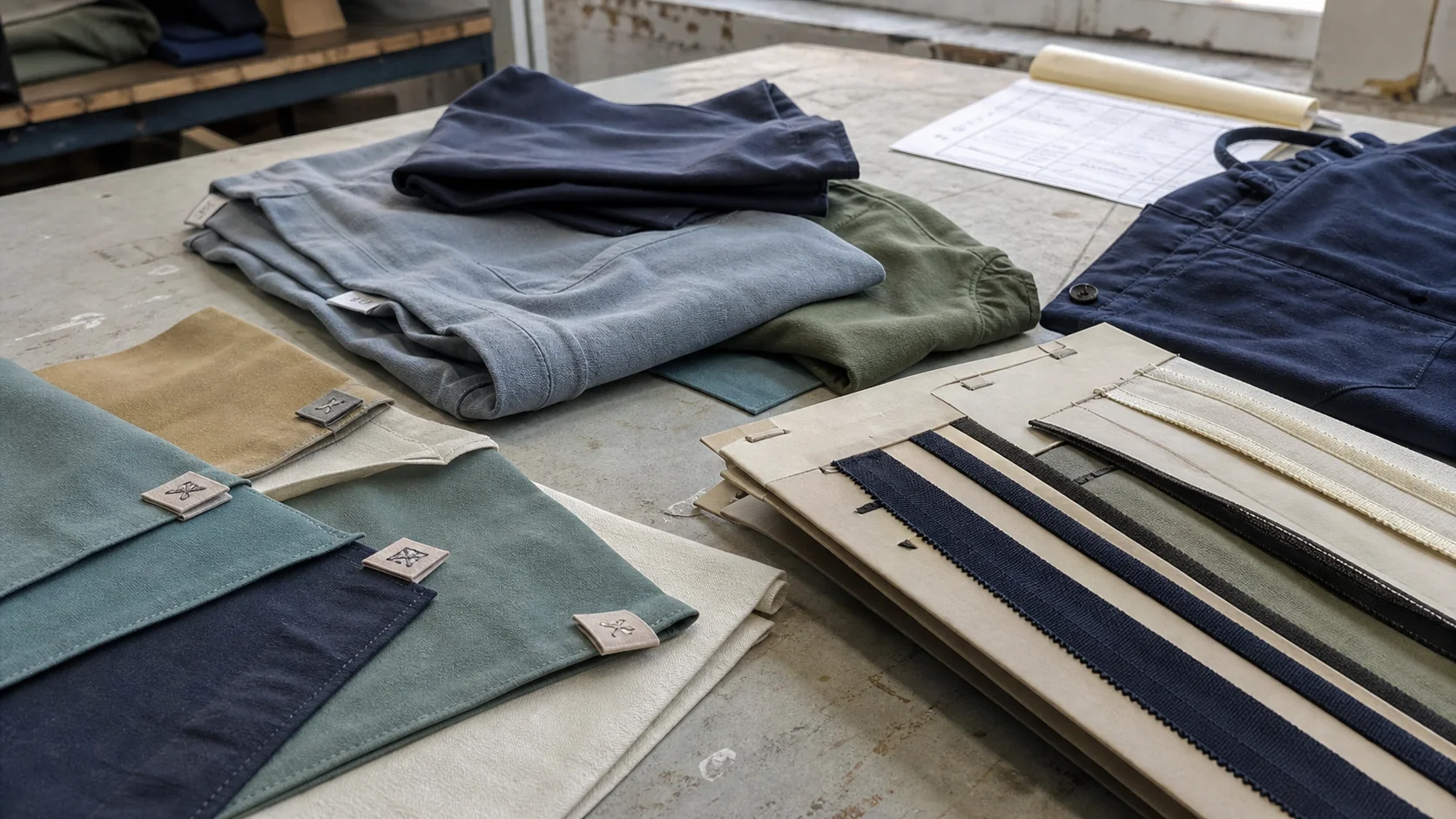
A facilities-focused durability review of micro embroidery tab prints, covering abrasion, laundering, legibility, placement, compliance use cases, and...
Micro Embroidery Tabs Durability Review for Buyers - Decoration & Printing manufacturing guide
Micro embroidery tabs sit in a difficult corner of decoration and printing: they are small, highly visible, and often expected to survive heavy use without the benefit of large stitch areas or forgiving artwork. For facilities managers buying uniforms, access-control apparel, service vests, maintenance jackets, cleaning team polos, or branded workwear, the question is not whether a micro tab looks sharp in a supplier photo. The real question is whether it stays readable, attached, and acceptable after laundering, abrasion, sweat exposure, locker-room handling, and repeated wear.
This durability review is written for buyers who need practical purchasing judgment before approving micro embroidery tabs for facility teams. The focus is on micro embroidered tab labels, small embroidered badge tabs, woven-look embroidery tabs, and hybrid tab decorations that may be attached to garments, cuffs, sleeves, plackets, pockets, hems, chest panels, tool loops, or uniform accessories.
Micro embroidery can be a strong choice when the design is simple, the base fabric is stable, and the supplier controls thread tension, backing, trim, and attachment quality. It becomes risky when buyers force tiny lettering, high stitch density, thin fabrics, aggressive wash programs, or low-cost production shortcuts into a decoration that has limited room for error.
Micro embroidery tabs are small decorative or functional fabric pieces carrying embroidered branding, symbols, department identifiers, role markers, safety labels, or simple text. They are usually produced as a separate trim component and then sewn, heat-applied, bar-tacked, inserted into a seam, or attached to a garment panel.
In facilities management uniforms, common placements include sleeve edges, chest pockets, lower plackets, side seams, collar stands, back yokes, apron corners, zipper pulls, radio loops, and hem labels. The tab may be purely decorative, but it often supports quick identification. A cleaning supervisor, security contractor, engineering technician, or reception team member may need a small but consistent mark across multiple garment types.
The term “micro” is not a universal technical standard. In sourcing discussions, it usually means a tab small enough that normal embroidery limitations become more severe. A tab may measure 15 mm by 40 mm, 20 mm by 50 mm, 25 mm by 60 mm, or similar. The smaller the tab, the less tolerance there is for letter spacing, thread bulk, edge fraying, puckering, and misalignment.
Buyers should treat micro embroidery tabs as a trim engineering item, not only a branding item. The tab has its own base material, stitch program, thread selection, backing, edge finish, attachment method, color tolerance, and wash behavior. Every one of those variables affects durability.
Facilities managers often prefer micro tabs because they create a controlled, consistent brand detail without turning every garment into a large logo piece. This matters when uniforms need to look professional but not over-decorated. A small tab can carry a facilities brand, department mark, building team identifier, or contractor logo in a restrained way.
Micro tabs also help when teams wear different garment categories. A facilities department may need polos, softshell jackets, hi-vis vests, aprons, trousers, fleece layers, and waterproof outerwear. Large embroidery may not work equally well on all of those fabrics. A standardized tab can be applied across more styles, provided the attachment method is suitable for each garment.
Another reason is replaceability. In some programs, the tab can be updated more easily than a fully embroidered garment panel. This is useful when a contractor changes branding, a building changes ownership, or role categories are updated. It does not mean tabs are always cheap to replace, but they can reduce the need for large-scale garment redesign.
Purchasing judgment: micro embroidery tabs are best when the buyer wants low-profile identification, consistent branding across garment types, and better perceived quality than a basic printed label. They are not ideal for tiny text, complex logos, or harsh industrial laundering unless tested carefully.
For buyers reviewing decoration options, it is worth comparing micro embroidery tabs against direct embroidery, woven labels, heat transfers, silicone patches, PVC patches, and screen-printed tabs. A supplier with broad decoration capability can advise which method fits the uniform program. Buyers can review service scope through Fabrikn’s services page when planning a wider apparel sourcing project.
Durability is not a single pass-or-fail feature. A micro embroidery tab may fail by fraying at the edge, losing legibility, curling, shrinking, color bleeding, detaching from the garment, puckering the garment fabric, or becoming uncomfortable for the wearer. Each failure mode has a different cause.
Micro embroidery is constrained by thread thickness and needle movement. Fine text that looks clean on a digital mockup may close up when stitched. Thin strokes can disappear, small counters inside letters can fill, and curved logo details can distort. This is especially common when buyers ask for full company names, taglines, or detailed icons on a tab that is only a few centimeters wide.
For durable results, simplify the artwork. Use initials, symbols, short department codes, or bold lettering. Avoid fine outlines, gradients, shadows, tiny registered marks, and excessive color changes. A tab with fewer stitch transitions usually washes better because there are fewer loose ends and tension changes.
Stitch density must be balanced. Too low and the design looks sparse. Too high and the tab becomes stiff, puckered, and more likely to curl after washing. On small tabs, excess density can also cut into the base fabric over time. This is one of the most common hidden risks in micro embroidery production.
Polyester embroidery thread is usually preferred for workwear and uniform applications because it generally has better resistance to laundering, abrasion, and color loss than rayon thread. Rayon can offer a soft sheen and attractive finish, but it is often less suitable for repeated commercial washing or heavy-duty use.
Facilities managers should ask the supplier to specify thread type, thread count or size where relevant, color standard, and whether the thread has been selected for wash resistance. Metallic and specialty threads should be avoided for hard-use uniform tabs unless there is a clear reason and tested approval. They may look distinctive, but they often bring durability tradeoffs.
The tab base fabric carries the embroidery and must remain stable. Common options include polyester twill, cotton twill, poly-cotton, canvas, woven label base, felt-like substrates, ripstop, and small woven tapes. Polyester-heavy bases tend to perform better in color retention and shrinkage control, while cotton-rich bases can feel more natural but may shrink or fade more noticeably.
The base should be tight enough to hold stitches without distortion. Loose weaves may snag or fray. Very thick bases may make tiny tabs bulky and uncomfortable, especially on cuffs or collars. Very thin bases may pucker under dense stitching or tear near the attachment seam.
Backing is often invisible to buyers, but it matters. Cutaway backing, tearaway backing, water-soluble stabilizer, or heat-seal backing may be used depending on the tab construction. For small tabs, the wrong backing can create stiffness, scratchiness, or poor wash behavior.
For uniforms, backing should support the stitch without creating hard edges against the wearer. If the tab is sewn into a seam, bulk must be controlled. If the tab is applied to a lightweight polo or performance shirt, backing stiffness can make the decoration feel heavy and cause the fabric to ripple.
Edge durability is a major inspection point. A micro tab can be beautifully embroidered but still fail if its edges fray. Options may include folded edges, merrow-style edging, laser cutting, hot cutting, satin stitch borders, ultrasonic cutting, or woven selvedge edges.
Laser-cut and hot-cut polyester edges can reduce fraying, but they may feel sharp if not controlled. Folded edges look clean but add bulk. Satin stitch borders can protect the tab edge, though on very small pieces they may consume too much visual space. Merrow-style edging can be durable, but it may be too bulky for a micro tab depending on placement.
The tab is only as durable as its attachment. Common attachment methods include lockstitch sewing, bartack reinforcement, seam insertion, perimeter stitching, heat bonding, hook-and-loop integration, snap attachment, or a combination of sewing and adhesive.
For facility uniforms, sewn attachment is usually the safer default. Heat bonding can be useful on some fabrics, but it needs compatibility testing. Bond failure can occur after repeated washing, exposure to body heat, tumble drying, cleaning chemicals, or flexing. Adhesive-only attachment is rarely the best choice for long-life workwear unless the use case is light and testing supports it.
The keyword question for many buyers is “micro embroidery tab print durability review,” because purchasing teams often compare embroidered tabs with printed tabs. The right answer depends on artwork, budget, garment use, and laundering conditions.
Decoration Type Strengths Durability Risks Best Use Case Micro embroidery tab Premium texture, strong perceived quality, good wash potential with polyester thread Small text may lose clarity, dense stitching can pucker, edge fray risk Simple logos, initials, role tabs, durable uniform branding Printed fabric tab Better for fine detail, gradients, small type, lighter feel Print cracking, fading, dye migration, edge wear depending on method Detailed artwork, compliance text, low-bulk labels Woven tab Good for small branding, clean repeatability, lower bulk than embroidery Limited color blending, potential edge curl, minimum order constraints Brand labels, consistent multi-style uniform programs Heat transfer tab Clean graphics, flexible placement, low profile Peeling, cracking, adhesive failure, poor performance on incompatible fabrics Performance fabrics and short-to-medium life programs after testingEmbroidery usually wins on tactile quality and long-term appearance when the artwork is simple. Printing wins when the artwork is detailed or the tab must remain very thin. A woven tab often sits between the two: cleaner than micro embroidery for tiny details, more durable-looking than many printed options, and less bulky than embroidery.
Facilities buyers should not treat embroidery as automatically more durable than print. Poor embroidery on the wrong substrate can fail faster than a properly specified printed or woven tab. The decoration method must match the operating environment.
A purchase order or tech pack should describe the tab clearly. Vague instructions such as “small embroidered logo tab” create room for inconsistent production. The supplier needs measurable specifications.
For facilities uniforms, the tab specification should also consider wearer comfort. A scratchy tab at the neck, cuff, or sleeve edge will generate complaints even if it survives washing. Comfort is part of durability in a practical sense because uncomfortable trims lead to garment rejection.
Color tolerance should be controlled realistically. Embroidery thread, base fabric, and garment fabric may not match perfectly even when using the same color name. Buyers should approve a physical shade band or reference sample where color consistency matters. For repeat orders, keep an approved standard sample and compare new batches against it.
Micro tabs behave differently on different garments. A sturdy cotton-poly work jacket can hold a sewn tab with little issue. A lightweight stretch polo may show puckering if the tab is too rigid or the sewing tension is too high. A waterproof shell may require seam sealing considerations if the tab is stitched through a protected panel. A hi-vis vest may have compliance-related placement restrictions, depending on the garment standard and market requirements.
Facilities managers should ask the supplier to sample the tab on each major garment category, not only on a loose tab swatch. A tab that looks good on a table can perform poorly when attached to a curved sleeve, stretch panel, or pocket flap.
Facilities teams often expose uniforms to a harder life than office apparel. Garments may be washed frequently, stored in lockers, rubbed against tool belts, exposed to cleaning agents, worn under outer layers, or handled by commercial laundry services. Micro tabs must be reviewed against these conditions.
Domestic laundering is usually less aggressive than industrial laundering. If garments will be commercially laundered, buyers should tell the supplier before sampling. Heat, alkalinity, mechanical action, and tumble drying can all affect embroidery tabs. Polyester thread may hold color well, but the base fabric, backing, edge seal, and attachment stitching still need validation.
Typical buyer-side wash testing may include 5, 10, or 20 wash cycles depending on order value and risk. For critical uniform programs, more cycles may be justified before full approval. The exact test should reflect the expected care label and laundry process. A low-temperature domestic wash test does not prove durability for an industrial laundry route.
Micro tabs placed on sleeves, pockets, cuffs, and side seams are exposed to rubbing. A sleeve tab may scrape against door frames, desks, carts, cleaning equipment, lift controls, tool bags, and outerwear layers. Raised embroidery threads can snag if the design includes long satin stitches or loose thread ends.
Shorter stitch lengths, secure trims, proper tension, and lower-profile artwork can reduce snagging. Placement also matters. A tab located away from high-friction zones will usually last longer. Buyers should not approve a placement only because it looks good in a presentation layout.
Facilities staff may encounter disinfectants, degreasers, diluted bleach, solvents, floor-care chemicals, or maintenance fluids. No micro embroidery tab should be assumed resistant to all chemical exposure. If exposure is likely, test the actual tab and garment combination. Focus on color change, adhesive breakdown if bonded, edge weakening, thread fuzzing, and base fabric staining.
Bleach exposure is especially risky for colored embroidery and tab bases. If the laundry program uses bleach or strong oxidizing agents, ask for specific thread and fabric guidance before approval.
Tabs used as pull points should be engineered as pull points. Many micro embroidery tabs are decorative only. If workers grab the tab to open a pocket, pull a zipper area, clip a badge, or hang an item, the attachment must be reinforced. Bartacks, stronger base fabric, wider seam insertion, or alternate trim design may be needed.
Purchasing judgment: if the tab is placed where a worker’s hand naturally pulls, treat it as functional trim. If the supplier prices it as decoration only, the durability expectation is probably mismatched.
A controlled sample approval process prevents most avoidable failures. Micro tabs are too small to rely on artwork approval alone. Buyers need physical samples and garment-mounted samples.
Start with the logo or text. Ask the supplier whether the artwork is suitable for the proposed tab size. A good supplier may recommend removing fine text, increasing tab dimensions, changing thread color contrast, or switching from embroidery to woven or print. This is not a downgrade; it is often the difference between a durable product and a weak one.
The stitch proof should show thread direction, color breaks, border, and approximate density. Digital proofing is useful, but it should not be the final approval for micro work. It cannot fully show thread bulk, pucker, hand feel, or edge behavior.
A loose tab sample lets the buyer check size, legibility, color, edge finish, backing, and hand feel. This is the right stage to reject small text, poor contrast, messy trims, or excessive stiffness.
The tab should be attached to the actual garment fabric or a representative pre-production garment. Check placement, seam tension, comfort, puckering, and visibility while worn. If the uniform program includes multiple garment styles, test the highest-risk fabrics first: lightweight stretch, waterproof shells, fleece, or hi-vis materials.
Wash the mounted sample according to the expected care route. After washing, inspect for curling, edge fray, thread fuzzing, color change, backing exposure, seam loosening, and garment distortion. If possible, include a short wear trial with the relevant team type before bulk approval.
The final pre-production sample should match the approved tab construction, not only the appearance. Record base fabric, thread type, tab size, edge finish, backing, attachment method, placement, and approved tolerance. This gives the inspector something specific to verify during production.
Buyers planning a new uniform program can use the Fabrikn contact page to discuss specification requirements, decoration method selection, and sampling expectations before production is locked.
MOQ and lead time depend on tab complexity, supplier setup, fabric availability, artwork colors, attachment method, and whether the tab is produced domestically or offshore. Buyers should treat any fixed number as a starting point, not a guarantee.
Program Type Typical MOQ Range Typical Sampling Time Typical Bulk Lead Time Simple embroidered tab, existing base fabric 100 to 300 pieces 5 to 10 working days 2 to 4 weeks after approval Custom tab with special edge finish 300 to 1,000 pieces 7 to 15 working days 3 to 6 weeks after approval Multi-color micro embroidery with garment attachment 500 to 1,500 pieces 10 to 20 working days 4 to 8 weeks after approval Custom uniform program with multiple garment styles Often 500+ pieces per style or combined order 2 to 4 weeks depending on garments 6 to 12 weeks depending on materials and production routeSmall orders may be possible, but the unit cost can be high because embroidery setup, digitizing, sampling, trim cutting, and attachment labor are spread across fewer pieces. For facilities managers ordering for one building, it may be more economical to use a simpler decoration. For multi-site programs, a micro embroidered tab can become more cost-effective because the same tab can be used across several garment categories.
Lead time is affected by sample revisions. A first strike-off may expose artwork problems. A second sample may be needed after increasing tab size or simplifying the logo. A third review may be required if the attachment causes garment puckering. Buyers should budget time for these revisions rather than forcing bulk production from a weak first sample.
Trim supply also matters. If the base tape, thread color, or edge process is not standard, delays can occur. Repeat orders are usually faster when the supplier keeps a production record and approved standard, but buyers should still confirm component availability before promising delivery dates to internal teams.
Inspection should cover the loose tab and the attached garment. Small trims can be missed during normal garment inspection unless the checklist calls them out.
AQL inspection can be used for bulk orders, but buyers should define what counts as a major or minor defect. For example, a detached tab, wrong color, unreadable logo, or sharp edge may be major. A slightly long thread tail may be minor if it can be trimmed without affecting the product. The classification should match the uniform program’s quality expectations.
Facilities managers should also inspect consistency across sizes. A tab on a small polo may look proportionally different from the same tab on a 4XL jacket. Placement grading needs attention, especially on sleeves and chest areas. The same measurement from a seam may not always create the same visual result across sizes, so the supplier should clarify placement rules.
Micro embroidery tabs are a good purchasing choice for facilities managers when the decoration is simple, the order has enough volume to justify proper setup, and the uniforms require a polished but restrained brand detail. They are especially useful for team identity across mixed garment categories. A small tab can unify polos, jackets, aprons, vests, and outerwear without forcing the same large decoration onto every fabric.
The main tradeoff is detail versus durability. The smaller the tab, the less information it should carry. Buyers who need tiny lettering, long names, certification text, or detailed icons may get better results from woven or printed tabs. Buyers who want a premium, tactile mark and can simplify artwork will usually be better served by embroidery.
The safest buying route is to approve a physical strike-off, test the tab on the actual garment, wash it, inspect it, and document the approved construction. Skipping those steps may save one or two weeks at the start, but it increases the risk of bulk rejection, team complaints, or early uniform replacement.
For facilities uniforms, the best micro embroidery tab is not the most intricate one. It is the one that stays attached, stays readable, does not irritate the wearer, and supports the brand quietly through the garment’s service life.
Company background and sourcing approach can also influence trim decisions. Buyers assessing supplier fit may find it useful to review Fabrikn’s about page alongside decoration and uniform program requirements.
Get a free quote from Fabrikn — your trusted B2B clothing manufacturer with 10+ years of experience. MOQ as low as 200 pieces.
Get a Free Quote →Yes, they can be durable enough when the artwork is simple, the thread is suitable, the base fabric is stable, and the tab is securely sewn or otherwise tested for the garment. They are risky when used for tiny text, complex logos, high-friction placements, or harsh laundry programs without testing.
Not always. Embroidery can be more durable for simple marks and premium uniform branding, but printed tabs can perform better for fine detail and low-bulk applications. Poorly digitized micro embroidery may become unreadable or stiff. A properly tested print may outperform it in some use cases.
Typical MOQ ranges may start around 100 to 300 pieces for simple tabs, 300 to 1,000 pieces for more customized trims, and 500 or more pieces when garment attachment and multi-style uniform production are included. Exact MOQ depends on supplier setup, materials, artwork, and production route.
Simple tab sampling may take 5 to 10 working days. More complex tabs or garment-mounted samples may take 10 to 20 working days or longer. Revisions to artwork, edge finish, attachment, or garment placement can extend the timeline.
Common causes include excessive stitch density, weak base fabric, poor edge finishing, loose thread trims, incorrect backing, bad placement, incompatible heat bonding, harsh laundering, and abrasion from worksite use. Detachment and fraying are the most obvious failures, but loss of legibility is also important.
No. A loose tab sample is useful, but it does not show how the tab behaves on the garment. Buyers should approve a garment-mounted sample, then wash and inspect it before bulk production.
The specification should include tab size, base fabric, thread type, color references, backing, edge finish, attachment method, placement, tolerance, wash-care requirements, and approved sample reference. This reduces disputes and helps inspection teams identify defects.
Lower-friction areas usually perform better. Side seams, pocket edges, and sleeve areas can work if reinforced and tested, but high-rub zones increase snagging and wear. Placement should balance visibility, comfort, compliance needs, and abrasion risk.
They can be used, but stitching through waterproof fabric may compromise water resistance unless the construction is planned carefully. Buyers should ask about seam sealing, placement, and whether an alternate attachment method is more suitable.
Use micro embroidery tabs for simple, premium, durable identification. Choose woven or printed tabs when the artwork is too detailed, the tab must be very thin, or the fabric cannot support embroidery well. Always confirm with physical samples and wash testing before bulk approval.