
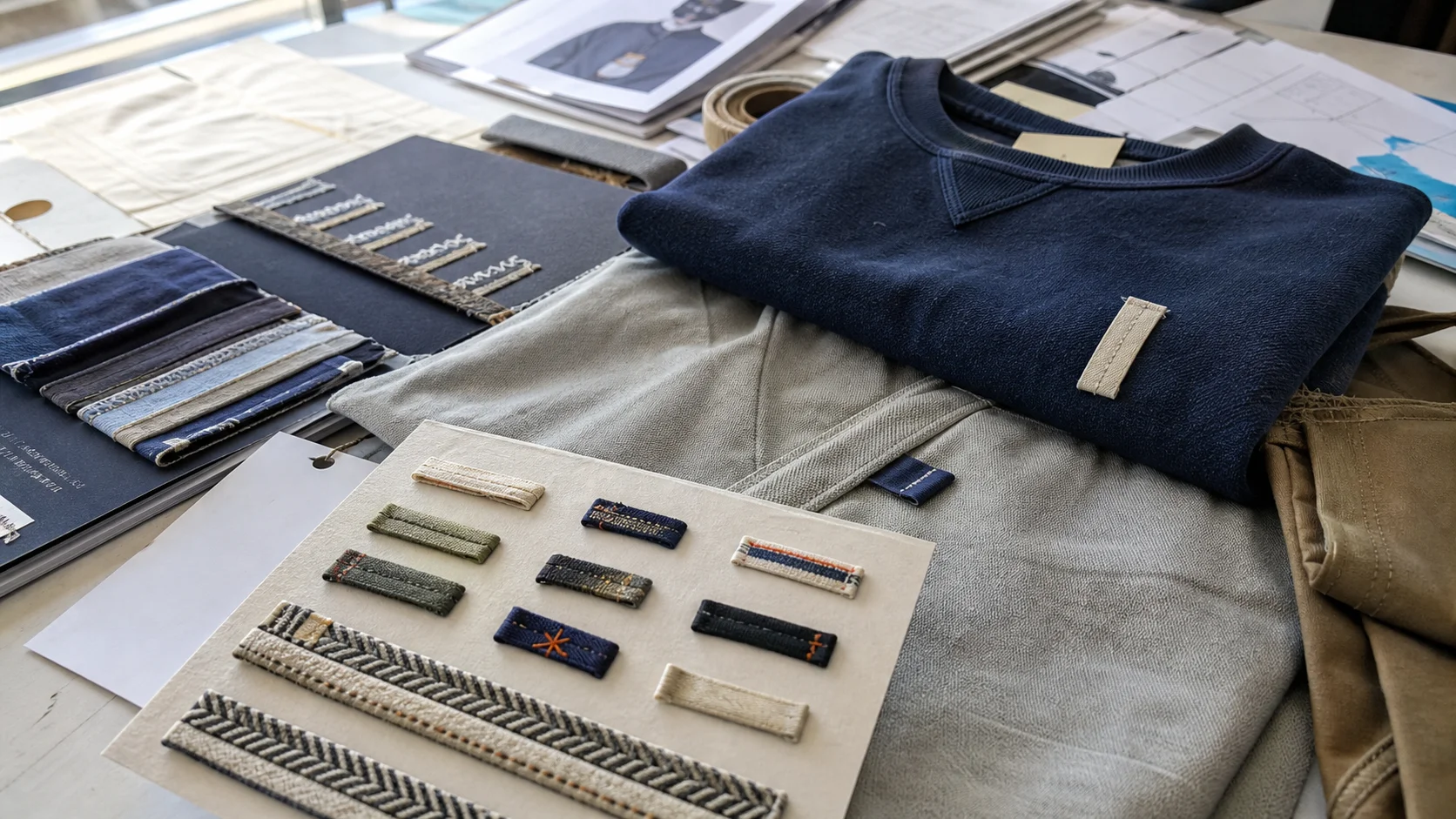
A practical review of how micro embroidery tab dimensions grade across sizes, with fit, placement, stitch density, and production control considerations...
Micro Embroidery Tab Size Grading Review - Fabrikn production reference
Facilities managers rarely buy decoration in isolation. A micro embroidery tab is usually one small line item inside a larger uniform, workwear, hospitality, or promotional apparel program, and the real question is not just how it looks on a sample card. The practical question is whether the tab can be graded cleanly across sizes, stay legible on different garments, hold up through laundering, and fit the production schedule without creating avoidable rework.
This review looks at micro embroidery tab size grading from a sourcing and operations point of view. The focus is on what facilities managers need to check before approving production: placement, scale, stitch density, fabric behavior, trimming, and the tradeoffs between appearance and manufacturability. It also covers the approval steps that usually reduce risk in decoration and printing programs, especially when the same decoration must work across multiple garment sizes.
A micro embroidery tab is a small embroidered element, often used as a brand marker, size indicator, functional label, or subtle decorative accent. It may appear on a chest pocket edge, sleeve, collar, placket, hem, bag loop, or inside neck area depending on the garment program. In many cases, it replaces a printed label or supports a woven patch or heat-transfer graphic with a more premium texture.
The “micro” part matters. Small embroidery is less forgiving than larger motifs because the stitch paths are compressed into a limited area. Fine text can fill in, borders can distort, and thin lines can break up if the digitizing is not disciplined. That is why a tab that looks acceptable at one garment size may not scale neatly across a full size run.
For facilities managers, micro embroidery tabs are usually judged on three practical criteria: legibility, consistency, and durability. A good result should remain readable after repeated wear and washing, should not distort the garment shape, and should not slow production with unnecessary corrections.
Size grading is the process of adjusting the decoration or placement so it works across different garment sizes. With a micro embroidery tab, grading can mean changing the tab dimensions, shifting the placement slightly, or adjusting stitch density and underlay to preserve visual balance.
This matters because a tab that looks proportionate on a medium shirt can appear too large on an extra-small or too small on an extra-large. In workwear and facilities uniforms, visual uniformity across the size range is usually more important than making every tab identical in absolute dimensions.
There are also operational reasons to pay attention. If the decoration causes puckering on lighter fabrics, interferes with pocket access, or creates discomfort in high-contact areas, the garment may be rejected by end users even if it passes a basic visual inspection. For that reason, a grading review should be treated as part of the garment engineering process, not as an afterthought.
Practical rule: if a micro embroidery tab cannot be clearly read, securely sewn, and comfortably worn across the full size set, the decoration spec is too ambitious for the garment.
Micro embroidery tabs are often sized in the range of roughly 10 mm to 40 mm on the short side, depending on placement and logo complexity. That is only a working range, not a universal standard. The correct size depends on the fabric weight, the available flat area, and the density of the design.
Very small text should be treated with caution. Letters that are too fine often lose definition once stitched. In many programs, a slightly simplified brand mark performs better than a literal reproduction of a detailed logo. This is especially true when the decoration is being placed on stretch fabrics, lightweight shirting, or textured knits.
High stitch density can make a logo look fuller, but it also increases stiffness and puckering risk. Low density can reduce distortion, but thin coverage may reveal the base fabric, especially on dark or contrasting grounds. The right balance depends on thread type, backing, and fabric stability.
For purchasing teams, the important point is to ask for the embroidery digitizing plan, not just the artwork. The digitized file determines how the machine will actually build the tab. A strong visual concept can still fail if the stitch order is poorly planned.
Polyester embroidery thread is common for utility garments because it tends to handle laundering better than many alternatives. Rayon may provide a softer sheen, but it is not always the better choice for industrial use. Thread color should be approved against a physical standard under the lighting conditions used in receiving and inspection, not just on screen.
Color variation is a real risk when tabs are added in multiple production lots. If the tab is meant to align with a corporate brand shade, ask for a thread reference and retain approved sealed samples. That small step can prevent costly rework when different dye lots or thread cones are used across shipments.
A micro embroidery tab may be stitched directly to the garment, applied as a patch, or integrated into a seam. Each method has tradeoffs. Direct embroidery can look cleaner, but it may cause fabric distortion on light bases. A patch can improve stability, though it adds thickness and edge bulk. Seam insertion offers good control but can require more precise garment construction.
Backing choice is critical. Without suitable stabilizer, the embroidery may pull the fabric and create a wavy appearance. The supplier should specify whether cutaway, tear-away, or another stabilizer is used, and the decision should reflect the base fabric’s behavior rather than convenience.
There are several ways to grade a micro embroidery tab, and the right approach depends on the garment range and brand requirements.
In many sourcing programs, the best outcome is not full geometric scaling. A controlled grading plan usually works better. That means defining which sizes get a true scaled version and which sizes get a simplified or stabilized version. This is especially important for ranges that include both very small and very large garments.
Facilities managers should also check whether the garment itself changes shape across sizes. A larger shirt may have a broader chest, longer placket, or different pocket position. If the tab is placed close to an edge or seam, the size grading must reflect those construction changes or the visual alignment will drift.
A solid approval process is more valuable than a rushed production go-ahead. For decoration and printing programs, sample approval should happen in stages.
Review the vector artwork, thread colors, sizing table, and digitized stitch file if available. This is the stage to catch problems such as overly fine lettering, weak borders, or crowding inside the tab. If the supplier cannot provide clear technical detail at this point, that is a warning sign.
A physical sample is necessary. Screen color, monitor renderings, and flat artwork do not show how embroidery behaves on actual fabric. The strike-off should be made on the real base fabric or a very close substitute. If the program uses multiple base fabrics, request a review on each key fabric type.
For size grading review, a single sample is not enough. At minimum, ask for the smallest and largest relevant garment size, or the sizes where the tab is most likely to fail visually. This is where the grading plan becomes obvious. A tab that looks balanced on the medium may not hold the same proportion on the edges of the range.
If the garment will be laundered, the sample should be reviewed after wash and dry cycles that resemble actual use as closely as possible. Look for shrinkage, edge curl, puckering, and thread lift. A decoration can pass initial visual inspection and still fail after laundering.
Approval should be based on the real use case, not just the best-looking sample. A decoration that only looks good before washing is a weak spec.
Puckering is one of the most common issues in small embroidery. It happens when stitch tension, backing, or fabric stability are not balanced correctly. Light knits, fine shirting, and stretch blends are especially vulnerable. The risk increases when the tab sits near a seam or curved edge.
Micro text can close up if the stitch density is too heavy or the letters are too small. A logo that reads well in artwork form may become hard to identify after stitching. This is a major concern when the tab is supposed to function as a brand cue or compliance marker.
Even if the artwork is accurate, the placement may appear off-center or too close to an edge on certain sizes. This often happens when the grading chart is built from a single base size without adjusting for garment pattern changes. The fix is to map decoration placement against the pattern set, not just the finished spec sheet.
Different thread cones, different stabilizers, or uneven machine setup can create visible variation within the same order. This risk is higher when production is split across multiple lines or when there is a fast turnaround. Keep the approved material references visible at the line level if possible.
Small embroidery tabs can hide flaws that are easy to miss from a distance. Broken threads, loose tails, uneven satin columns, and partial registration shifts may only show up under close inspection. That is why a good inspection plan should include both line review and packed-goods review.
Micro embroidery tabs often sit within a wider decoration order, so minimum order quantities can vary widely. As a practical guide, a small custom embroidery tab program may be available at low hundreds of units per design, while more complex branded programs can require higher MOQs depending on thread colors, digitizing setup, fabric type, and machine efficiency. Exact numbers depend on the supplier’s production method and whether the tab is a standalone trim or part of a full garment order.
Lead time also depends on several linked factors:
If the tab uses a specialty thread, unusual backing, or a custom woven base before embroidery, the schedule usually stretches. That is why facilities managers should avoid locking a launch date before sample approval is complete. A decoration program that looks simple on paper can still lose time in digitizing corrections and strike-off iterations.
There is a tradeoff between low MOQ and stable production. Small runs are useful for pilots, departmental rollouts, or seasonal testing, but the unit cost usually rises. Larger orders may improve efficiency and price, yet they demand tighter forecasting and more confidence in the approved spec.
If you are comparing decoration options or planning a broader uniform program, it may help to review the supplier’s capability range at fabrikn.com/services/ and use the contact page for quoting questions at fabrikn.com/contact-us/.
Inspection should not stop at the decoration itself. Review the garment around the tab. If the fabric has been pulled, wrinkled, or marked by the embroidery process, the decoration has created a quality issue even if the logo is technically correct.
Facilities managers who want a broader supplier profile, company background, or operational overview can also review fabrikn.com/about-us/.
A micro embroidery tab is a strong choice when the program needs a premium feel, modest branding, and long-term durability. It often works well on polos, overshirts, aprons, caps, softshell layers, and some bags or accessories. It can also be useful when printing would look too flat or too promotional.
The decoration is less suitable when the base fabric is extremely lightweight, highly elastic, or rough enough to make close detail unreadable. It may also be the wrong choice when the brand mark includes tiny letters or thin graphic lines that cannot be preserved cleanly at the required size.
For facilities and procurement teams, the right decision is usually based on use case. A subtle embroidered tab can be ideal for a service uniform program where restraint and durability matter. It may be less effective for a fast-turn promotional item where print speed and low cost are the main drivers.
Good decoration suppliers do more than run embroidery machines. They should understand garment construction, size grading, trim sourcing, and the interaction between fabric behavior and stitch structure. In practice, that means they can advise when a tab should be simplified, when placement should shift, and when a different decoration method may be the safer choice.
Ask direct questions early:
The best sourcing outcome usually comes from a supplier who is willing to narrow the spec when needed. That is not a loss of quality. It is often the difference between a decoration that survives bulk production and one that creates repeated exceptions.
A micro embroidery tab can be a small detail with a large impact. For facilities managers, the real challenge is not whether the tab looks attractive in isolation, but whether it can be graded across sizes, produced consistently, and maintained through laundering and wear. That requires disciplined artwork approval, realistic placement planning, fabric-aware digitizing, and a sample process that includes the smallest and largest sizes in the range.
The best purchasing judgment is usually conservative. Keep the design legible, keep the stitch structure stable, and avoid overcomplicating the spec. Small embroidery works best when the decoration is built for production, not just for presentation.
Get a free quote from Fabrikn — your trusted B2B clothing manufacturer with 10+ years of experience. MOQ as low as 200 pieces.
Get a Free Quote →The main issue is keeping the tab legible and balanced across multiple garment sizes without causing puckering, distortion, or placement drift.
Not always. In some programs, a fixed-size tab is more practical. In others, a controlled proportional grade works better. The right choice depends on fabric, placement, and logo detail.
Lightweight shirting, stretchy knits, and delicate or coated fabrics usually carry more risk because they are more likely to pucker or show stitch marks.
It varies by supplier and spec complexity, but many programs start at low hundreds of units per design and can increase depending on setup, thread colors, and garment type.
Artwork, digitizing details, thread references, placement measurements, strike-off samples, and at least the key size samples should be approved before bulk production starts.
Wash tests show whether the embroidery remains flat, readable, and secure after real use. A tab that looks good before laundering can still fail afterward.