
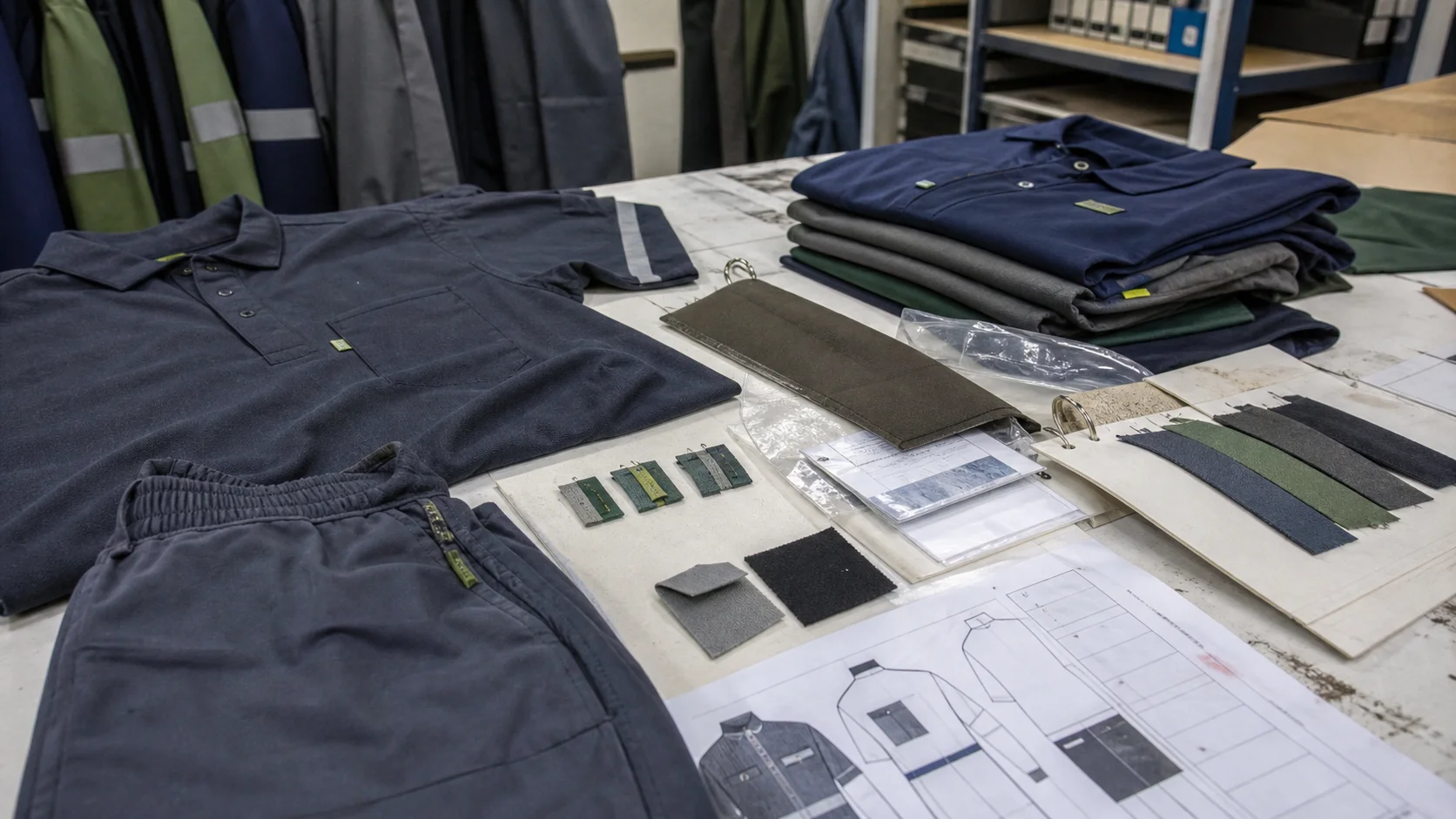
A buyer-focused audit outline for sourcing custom micro embroidery tabs for cleaning crew uniforms, covering stitch quality, fabric compatibility, wash...
Micro Embroidery Tab Vendor Audit for Cleaning Crews - Decoration & Printing manufacturing guide
Micro embroidery tabs are small, but they can create large sourcing problems if the vendor is not checked properly. For cleaning crew uniforms, the tab may sit on a sleeve, placket, chest pocket, hem, cap edge, apron loop, or side seam. It may carry a logo mark, role identifier, color code, department tag, property name, or safety-related label. The decoration area is limited, the garment is washed frequently, and the wearer works in conditions that test thread, backing, stitching, and attachment strength.
This audit brief is written for buyers, uniform program managers, procurement teams, and decoration sourcing staff who need to qualify a custom micro embroidery tab vendor for cleaning crews. The goal is not to make the tab look good only on a showroom sample. The goal is to make it repeatable, washable, legible, safe, and commercially manageable across real uniform orders.
For a broader view of apparel development and production support, review Fabrikn’s services. If the tab project is already specified and ready for supplier discussion, the contact page is the better next step.
A micro embroidery tab is easy to underestimate because the piece is physically small. That is the wrong way to source it. A failed tab can make a cleaning uniform look cheap, create brand inconsistency, irritate the wearer, or cause rework on finished garments. If the tab is sewn onto completed uniforms, a late defect may require unpicking, replacement, pressing, and repacking. That is expensive compared with auditing the vendor before production.
Cleaning crews also put uniforms through harsher use than many front-office teams. Garments may be exposed to detergent, disinfectant residue, bleach splashes, perspiration, friction from carts and equipment straps, and frequent industrial or semi-industrial laundering. Tabs need to survive more than a gentle domestic wash. The audit should confirm that the vendor understands real service wear, not only decorative embroidery.
The smallest details matter. A 1 mm shift in placement can be visible when the tab is designed as a neat brand marker. A thread color that looks correct under office lighting may appear wrong under cool facility lighting. A backing that feels acceptable on a counter sample may scratch the wearer after a full shift. Good vendors anticipate these issues. Weak vendors wait for the buyer to complain.
In this context, a micro embroidery tab is a small fabric or woven base with embroidered detail, normally used as a branded or functional trim on a garment or accessory. The tab may be rectangular, folded, flag-style, looped, or heat-cut. Typical finished sizes range from about 10 mm to 40 mm in width and 8 mm to 25 mm in height, though exact sizing depends on the garment and logo artwork.
Micro tabs differ from standard patches. The decoration area is smaller, stitch density is more sensitive, and edge finishing becomes more important. A logo that works at 70 mm wide on a chest embroidery may not work at 18 mm wide on a tab. Small lettering is a common failure point. Buyers should expect the vendor to recommend simplification when artwork is too detailed.
Common tab formats include:
For cleaning crew uniforms, the best tab is usually simple. A sharp icon, abbreviated brand mark, or color system often performs better than tiny full-name embroidery. Buyers should treat legibility as a production requirement, not a design preference.
A cleaning crew tab should be audited against the environment where it will be used. Housekeeping, janitorial, facility maintenance, hospitality cleaning, medical cleaning, education facility cleaning, and commercial office cleaning all place different demands on uniforms. A tab used on an apron for a hospitality cleaning team may have a different durability requirement from one used on a polo shirt for a light office cleaning team.
Key use-case questions include:
The vendor does not need to know every operational detail, but the buyer should provide enough context to prevent unsuitable recommendations. If the vendor offers the same thread, same backing, and same tab construction for every use case, treat that as a caution sign.
Purchasing judgment: for cleaning crew uniforms, durability and wash behavior should carry more weight than decorative complexity. A simpler tab that survives laundering is better than a detailed tab that looks impressive for the first week only.
The vendor audit should cover capability, process control, material control, sampling discipline, production consistency, inspection standards, packing, and communication. It does not need to be as broad as a full factory social or compliance audit unless the vendor is also manufacturing garments. The focus is the micro embroidery tab process and its integration into uniform production.
Start with capability. Ask what minimum text height they can embroider cleanly, what base fabrics they recommend, what thread types they stock, and whether they can make folded or seam-inserted tabs consistently. Request photos of similar small-format embroidery, but do not rely on photos alone. A sample on your artwork is still required.
Next, check process control. The vendor should be able to explain digitizing, thread selection, backing choice, cutting method, folding tolerance, edge finishing, color matching, and final inspection. If the explanation is vague, the production may also be vague.
Commercial discipline matters too. Some suppliers accept small orders but treat them as low priority. Others are strong in bulk but weak in sampling communication. A suitable vendor for cleaning crew programs should be able to support repeat orders, replenishments, and controlled color standards over time.
A vendor that cannot provide formal documents may still be usable for a small local order, but the buyer takes more risk. For multi-site cleaning crew programs or repeat uniform replenishment, documentation is not optional.
Digitizing is the stage where many micro tab projects succeed or fail. Small embroidery is not just a scaled-down version of large embroidery. Stitch type, stitch direction, pull compensation, underlay, density, and thread weight must be adjusted for the tab size and base material.
The vendor should review the logo before quoting final production. If the artwork contains fine lines, gradients, thin text, outlines, or tiny registered symbols, expect changes. Embroidery cannot reproduce every graphic detail at micro scale. Buyers should ask for a digitized proof and a physical stitch-out, not only a digital mockup.
For cleaning crew tabs, practical design rules include:
A common buying mistake is approving a design that looks acceptable in a digital rendering but fails on thread. A digital file has perfect edges. Embroidery has thread thickness, stitch pull, texture, and fabric movement. The audit should confirm that the vendor’s approval process is built around real stitched samples.
File control is especially important for uniform programs. If a vendor re-digitizes the same logo each season, the tab may shift slightly in appearance. Keep an approved file name, date, stitch count, thread colors, tab dimensions, and sample photo in the technical record.
The tab base fabric should match the expected performance of the garment. Cotton twill may look traditional, but it can shrink or fade depending on laundering. Polyester twill is often more stable and more colorfast, though it may look slightly more synthetic. Woven label base, grosgrain, canvas, ripstop, and narrow woven tape can also be used depending on the desired look and strength.
Thread choice is another audit point. Polyester embroidery thread is usually the safer choice for cleaning crew uniforms because it tends to resist laundering, abrasion, and chemical exposure better than rayon. Rayon can provide a soft sheen, but it is usually less suitable where bleach or aggressive wash chemistry may be present. Metallic thread is not recommended for most cleaning crew tabs because it can be scratchy, fragile, and harder to launder.
Backing and stabilizer should not be chosen only for machine convenience. They affect hand feel, edge behavior, and wearer comfort. A thick backing can make a small tab stiff. A weak backing can allow distortion. If the tab is attached near skin contact, the reverse side should be reviewed for rough thread ends, scratchy stabilizer, and heat-cut edges.
For industrial or high-frequency laundering, ask the vendor whether they have tested similar tabs through repeated wash cycles. Be cautious with broad claims such as “washable” unless the test conditions are clear. A domestic 30°C wash is not the same as repeated commercial laundering.
Component Preferred Direction for Cleaning Crew Use Audit Risk Base Fabric Stable polyester twill, woven tape, or approved performance fabric Shrinkage, curling, dye bleed, poor color match Embroidery Thread Polyester thread for better wash and chemical resistance Fading, fraying, shade variation, poor contrast Backing Balanced stabilizer that supports detail without excessive stiffness Scratchiness, distortion, bulk, loose trimming Edge Finish Clean cut, folded, or seam-inserted based on garment design Fraying, sharp edges, inconsistent size Attachment Secure lockstitch or specified seam insertion Loose tabs, skewed placement, puckeringA disciplined sample process reduces production surprises. For micro embroidery tabs, the approval path should be physical and staged. Do not jump from artwork to bulk production, even if the order is urgent.
A typical approval sequence is:
The attachment sample is often skipped, but it should not be. A tab that looks good loose may pucker the garment once sewn on. Folded flag tabs can twist in the seam if fold depth is inconsistent. Sleeve tabs can look crooked if placed on a curved seam or stretch fabric. A real garment sample reveals these problems before bulk cutting and sewing.
For approval standards, use measurable tolerances. Examples include finished tab width tolerance, visible fold allowance, embroidery placement tolerance, color reference, and acceptable skew. The exact tolerance depends on tab size and vendor capability, but smaller tabs need tighter control because small deviations are visually obvious.
Purchasing judgment: approve the worst acceptable sample, not the best sample. If the best stitch-out is barely acceptable, bulk production will likely create defects.
Micro embroidery tab MOQ depends on the supplier type, construction, number of colors, attachment requirements, and whether the vendor is producing loose tabs or finished decorated garments. For loose custom tabs, typical MOQs may range from 100 to 500 pieces for simpler designs, while more specialized materials or custom-dyed base fabric may push MOQ to 1,000 pieces or more. If the vendor must attach tabs to garments, garment MOQ and decoration MOQ may both apply.
Small orders can be possible, but unit cost will rise because digitizing, machine setup, thread changes, sampling, and handling are spread over fewer pieces. A cleaning contractor ordering uniforms for one small team may prefer a stock color tab with simplified embroidery. A national or multi-location cleaning program should negotiate repeat-order consistency, not only the first order price.
Common price drivers include:
Buyers should separate one-time charges from unit cost. Digitizing may be charged once, revised, or waived above a certain order value. Sampling may be free after bulk confirmation or billed upfront. Ask whether the vendor keeps the digitized file for repeat orders and whether reorders carry a lower setup cost.
Order Type Typical MOQ Range Buying Note Simple loose micro tabs 100 to 500 pieces Good for pilot programs, but unit cost may be higher. Multi-color detailed tabs 300 to 1,000 pieces Watch stitch density and legibility at small size. Custom base fabric or dyed tape 500 to 2,000 pieces Material MOQ may control the project more than embroidery MOQ. Tabs attached to uniforms Often tied to garment MOQ Confirm whether decoration and garment production are scheduled together. Repeat replenishment orders Negotiable, often lower Best handled with retained color standards and approved digitizing files.These ranges are practical planning figures, not guaranteed supplier commitments. The audit should confirm the vendor’s true minimums, including whether small runs are produced in-house or subcontracted.
Lead time for micro embroidery tabs depends on artwork readiness, sample rounds, material availability, machine capacity, order quantity, attachment requirements, and inspection workload. A simple repeat order using approved materials may move quickly. A new tab with custom base fabric, detailed artwork, and garment attachment will take longer.
A cautious planning range for new custom micro embroidery tabs is often two to six weeks from approved artwork to finished production, depending on complexity and sourcing location. Sampling may take several business days to two weeks. Revisions add time. If tabs are being attached to garments, the decoration schedule must align with garment cutting, sewing, finishing, and packing.
Lead-time questions for the vendor include:
Rush orders create tradeoffs. They may reduce sampling time, limit material options, and weaken inspection. If the cleaning crew launch date is fixed, lock the tab design early and avoid late logo revisions. Late artwork changes are one of the most common causes of missed delivery dates in decoration projects.
Inspection for micro embroidery tabs must be stricter than casual visual checking. Because the item is small, defects can be subtle but still visible in use. The vendor should define what counts as a major or minor defect before production. The buyer should not wait until cartons arrive to decide what is acceptable.
Common quality risks include:
Inspection should include both loose tab review and attached garment review if the vendor handles attachment. For loose tabs, check size, embroidery placement, thread quality, edge condition, color, and packing count. For attached garments, check placement against the spec sheet, stitch security, garment puckering, reverse-side cleanliness, and wearer comfort.
Cleaning crew uniforms should receive at least a basic wash review before full rollout. The buyer can specify a small number of wash cycles for approval, then stronger testing for larger programs. Watch for thread fading, fabric shrinkage, tab curling, edge fray, backing separation, and color bleed. A tab that curls after washing may catch on equipment or look unprofessional.
If uniforms may contact bleach or disinfectant, ask the vendor about thread and base fabric resistance. Full chemical resistance is not always realistic, especially with uncontrolled exposure, but the vendor should be transparent about limitations. Avoid decorative materials that cannot tolerate the expected cleaning environment.
The right vendor is not always the cheapest embroidery shop. A small tab requires control. If the order is for a one-time local crew uniform, a basic supplier may be acceptable if the design is simple and the buyer inspects carefully. If the order supports multiple cleaning sites, seasonal replenishment, or client-facing uniforms, choose a vendor with stronger documentation and repeatability.
There are clear tradeoffs:
For cleaning crew uniforms, the best sourcing decision usually favors controlled simplicity. Use the fewest design elements needed to communicate the brand or operational code. Specify washable materials. Approve a real stitched sample. Confirm attachment on the actual garment. Keep a retained sample and technical record for reorders.
If the project is part of a wider uniform sourcing program, it may be useful to align the tab audit with garment development, sizing, fabric selection, and decoration planning. Fabrikn’s company background explains the broader sourcing context, while the services page outlines support areas relevant to apparel manufacturing and production coordination.
A clear audit brief prevents vague quoting and weak samples. The brief should be short enough for suppliers to use, but detailed enough to control risk. Include the following sections when requesting a quote or sample:
The brief should also state what the buyer will not accept. For example, no illegible text, no unapproved thread substitution, no rough backing on skin-contact areas, no mixed logo versions, and no production before signed sample approval. Clear rejection standards are not aggressive; they protect both sides.
Some warning signs appear early. A vendor who promises that every logo can be embroidered at any size is not being careful. A vendor who refuses to produce a physical stitch-out before bulk production is shifting risk to the buyer. A vendor who cannot identify thread type or backing material may not have enough process control for repeat programs.
Red flags include:
A vendor does not need elaborate marketing language. The more useful sign is practical control: they can explain what will work, what will not work, what needs sampling, and what tolerance they can hold in production.
A custom micro embroidery tab for cleaning crews is a trim item with operational consequences. It carries brand presentation, garment durability, and wearer comfort in a very small space. The audit should treat it as a controlled component, not an afterthought.
Buyers should specify the tab clearly, approve it physically, test it realistically, and document it for reorder consistency. If the supplier pushes for bulk approval based only on a digital mockup, slow the process down. A few extra days in sampling can prevent weeks of rework.
The strongest purchasing approach is straightforward: keep the design simple, choose materials that suit cleaning work, check the vendor’s small-format embroidery capability, and inspect both loose tabs and attached garments. That is the difference between a decorative idea and a production-ready uniform detail.
Get a free quote from Fabrikn — your trusted B2B clothing manufacturer with 10+ years of experience. MOQ as low as 200 pieces.
Get a Free Quote →A micro embroidery tab is a small embroidered fabric trim used on a uniform for branding, identification, or color coding. For cleaning crews, it may be placed on a sleeve, pocket, side seam, apron, cap, or hem. It must be durable enough for frequent wear and washing.
Typical MOQs often range from 100 to 500 pieces for simple loose tabs. More complex tabs, custom materials, or custom-dyed base fabrics may require 500 to 2,000 pieces or more. If the tabs are attached to garments, the MOQ may also depend on the garment order quantity.
Polyester embroidery thread is usually the safer option because it generally offers better resistance to laundering, abrasion, and cleaning-related exposure than rayon. The final choice should be tested against the garment care method and expected working environment.
Some small text can be embroidered, but there is a practical limit. Letter height, font weight, stitch density, thread thickness, and base fabric all affect legibility. A physical stitch-out should be approved before production, especially when the design includes small lettering.
Yes. The buyer should approve a real stitched sample, review attachment on the actual garment, and perform at least a basic wash check. For larger programs or industrial laundering, stronger wash and durability testing is advisable.
The main risks are illegible embroidery, shade variation, loose threads, distorted stitching, fraying edges, rough backing, skewed placement, puckering after attachment, and mixed logo versions. These should be listed in the inspection standard before production begins.
Neither is automatically better. A folded flag tab looks integrated when inserted into a seam, but it requires accurate sewing and orientation control. A flat sewn tab is easier to place after garment assembly, but it may be more visible and can pucker if not attached correctly.
For a new custom micro embroidery tab, a cautious planning range is often two to six weeks after artwork is ready, depending on sampling, revisions, material availability, order quantity, and garment attachment. Repeat orders using approved materials may be faster.
The brief should include tab size, artwork, thread colors, base fabric, backing, edge finish, attachment method, laundering expectations, MOQ target, sample approval steps, lead-time needs, inspection criteria, and packing instructions.
A buyer should be cautious if the vendor cannot provide a physical stitch-out, cannot explain digitizing limits, does not specify thread or backing materials, avoids wash-performance discussion, or has no inspection standard. For repeat cleaning crew programs, those gaps create avoidable risk.