
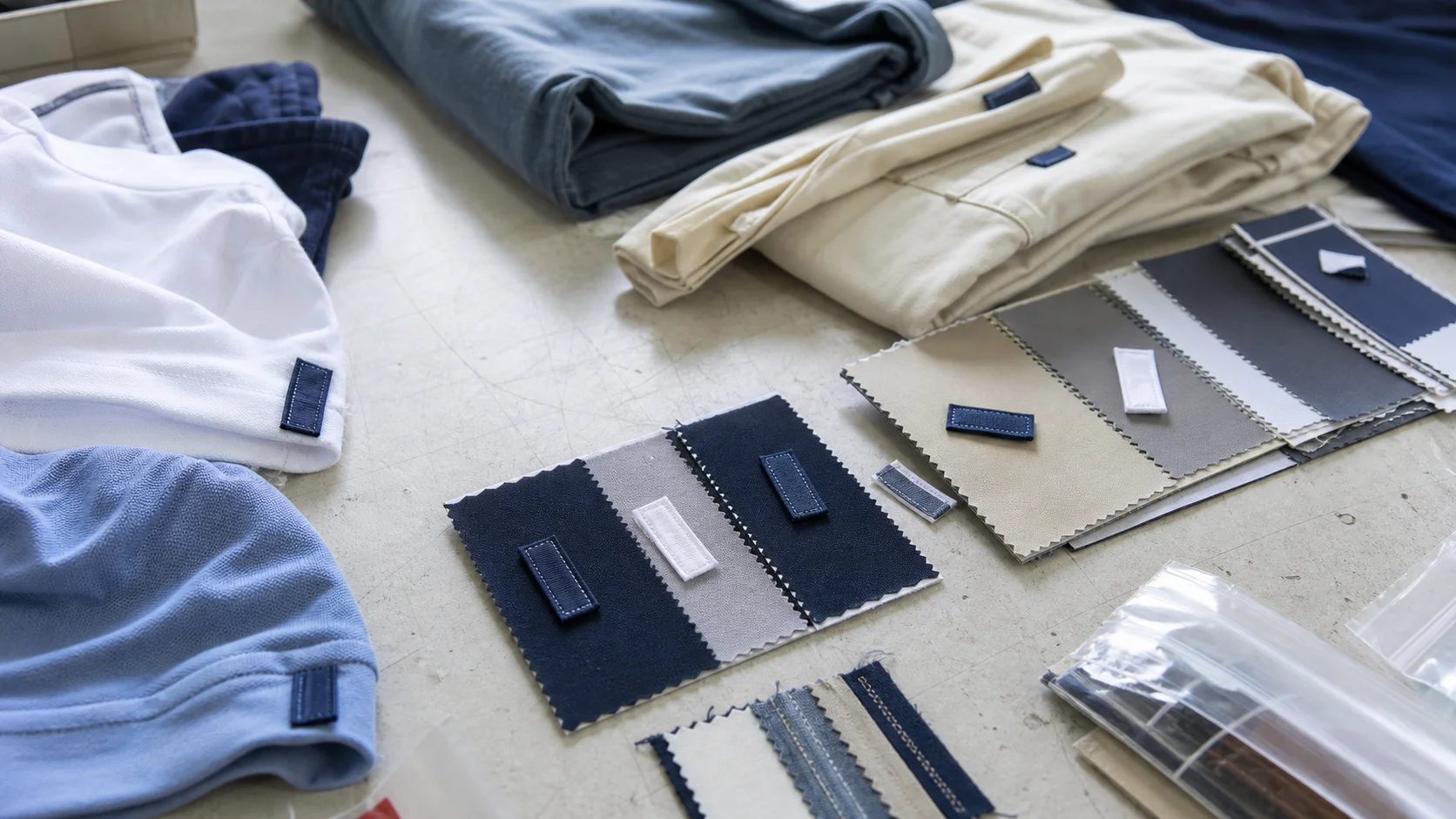
A practical SEO outline for marina operators auditing custom micro embroidery tabs for saltwater, UV, chlorine, detergent, and abrasion colorfastness...
Micro Embroidery Tabs Colorfastness Audit for Marinas - Decoration & Printing manufacturing guide
Custom micro embroidery tab colorfastness audit for marina operators is a narrow topic, but it sits at the point where branding, guest safety, saltwater exposure, and repeat purchasing all meet. A marina may use small embroidered tabs on staff uniforms, dock crew shirts, towels, boat covers, welcome kits, safety vests, launch bags, cap backs, wet-weather jackets, or merchandise sold in the chandlery. The tab looks minor on a purchase order. In use, it takes heavy punishment.
Sun, salt, sunscreen, fuel residue, detergent, sweat, abrasion, humidity, and storage in damp lockers can all change the color of embroidery thread and tab fabric. If the tab bleeds onto a white polo, fades from navy to purple, or transfers dye onto guest towels, the issue becomes visible fast. For marina operators, the practical question is not whether a tab looks good on a showroom sample. The question is whether the decoration holds color through the actual marina environment.
Marina apparel and textile programs operate in a tougher environment than standard corporate uniforms. A dockhand shirt may be worn under direct sun, splashed with brackish water, washed frequently, and dried quickly before the next shift. Guest towels and bags may sit on wet decks. Retail caps may be exposed to UV light in a marina shop window. A small embroidered tab attached to any of these products must be assessed as part of the full product, not as a decorative afterthought.
Colorfastness failures usually show up in three ways. The first is fading, where the tab loses depth and looks older than the garment. The second is bleeding, where dye from the tab fabric or thread migrates during washing or soaking. The third is staining or crocking, where color rubs off onto adjacent fabric, skin, boat upholstery, or packaging.
For marina operators, the financial issue is not just the replacement cost of the tab. It is the cost of replacing finished goods, handling guest complaints, managing staff uniform shortages, and reordering under time pressure before peak season. A tab that costs little per piece can create a costly quality problem if it is not specified and tested correctly.
Purchasing judgment: treat micro embroidery tabs as a performance trim, not only a branding detail. If the tab touches light-colored fabric or will be exposed to saltwater and UV, colorfastness testing should be part of the approval path before bulk production.
Micro embroidery tabs are small textile labels or fabric tabs decorated with compact embroidery. They may be sewn into a side seam, folded over a sleeve edge, attached to a towel hem, placed on a cap closure, or used as a small brand marker on bags and outerwear. For marina operators, they often carry a logo mark, berth club name, dock team identifier, yacht club partner branding, or guest program symbol.
The word “micro” matters. Small tab dimensions create production limits. A logo that works on a signboard may not translate cleanly into a 20 mm woven or embroidered area. Thin lettering, tight rope icons, compass details, small anchor shapes, and gradients need simplification. Embroidery thread has physical thickness. Stitch density can distort the tab, especially if the base fabric is light or narrow.
Common tab formats include straight-cut tabs, folded end tabs, loop tabs, heat-cut synthetic tabs, cotton twill tabs, polyester grosgrain tabs, and woven base tabs with added embroidery. Each format creates different colorfastness risks. Cotton tabs may feel premium but can absorb dye, moisture, and contaminants differently from polyester. Polyester tabs usually offer better resistance to shrinkage and faster drying, but low-quality dyeing can still fail under rubbing, washing, or sunlight.
The closer the tab sits to white, cream, pastel, or high-value fabric, the stricter the audit should be. Dark navy tabs on white towels are a classic risk combination. Red, black, royal blue, and deep green trims also deserve extra attention because strong shades can be more prone to visible staining when dye fixation is weak.
A useful colorfastness audit is more than a lab report filed after sampling. It starts with the product brief and continues through material selection, strike-off approval, wash testing, bulk inspection, and complaint tracking. The goal is to reduce predictable failures before the marina receives finished goods.
The audit should define the expected exposure conditions. A marina in a high-UV coastal environment needs stronger performance standards than an indoor corporate apparel program. Products used around pools, saltwater, fuel docks, cleaning chemicals, and sunscreen need a different risk profile from souvenir caps that will be worn occasionally.
Buyers should ask whether the supplier is testing the tab alone, the garment alone, or the full finished product. Testing the tab in isolation can miss migration issues caused by contact with the main fabric. Testing only the blank garment misses trim bleeding. For marina orders, finished-product testing is usually the better control point, especially for light-colored apparel and towels.
For broader decoration and garment production planning, buyers can review the decoration capabilities described on Fabrikn’s services page. A practical sourcing decision often depends on matching the decoration method to the end-use conditions rather than choosing by appearance alone.
A custom micro embroidery tab colorfastness audit for marina operators should be built around clear specifications. Vague instructions such as “navy tab with white logo” are not enough. The purchase file should identify the target color, acceptable tolerance, materials, performance requirements, and inspection method.
Polyester twill, polyester grosgrain, nylon, cotton twill, recycled polyester, and blended fabrics are all possible tab bases. Polyester is often the practical choice for marina use because it dries quickly, resists shrinkage, and can perform well in wash and rub testing when properly dyed. Nylon can be strong but may react differently to UV and certain chemicals. Cotton can look natural and premium, but it may be less forgiving in repeated wet-dry cycles unless the dyeing and finishing are controlled.
Recommended specification points include fiber content, weight, weave, width, dye method, color reference, finish, and shrinkage tolerance. If the tab is folded, the supplier should confirm whether the fold edge exposes undyed yarns or creates a bulky seam. Heat-cut edges on synthetic tabs can reduce fraying, but they may feel sharp if poorly finished.
Polyester embroidery thread is usually preferred for marine-adjacent products because it tends to offer better resistance to bleach splash, sunlight, and repeated washing than rayon thread. Rayon has an attractive sheen but may be less suitable for hard-use marina uniforms and towels. Metallic thread should be treated cautiously; it can irritate skin, snag, tarnish, or fail abrasion checks if used in small, high-contact tabs.
Thread size matters on micro designs. A very small logo may need thinner thread and simplified art. Dense stitches can make a tab stiff, curl the edge, or trap moisture. White thread on dark tab fabric needs close bleeding checks because any dye migration will be easy to see.
Backing material is often overlooked. Tear-away, cut-away, water-soluble, or heat-applied backings can affect hand feel, shrinkage, and washing performance. Adhesive residues may yellow or attract dirt. Sewing thread used to attach the tab should also be checked for shade match and colorfastness. A tab can pass testing while the attachment thread fails.
Component Preferred Detail to Specify Marina-Specific Risk Tab base Polyester twill or grosgrain, confirmed color standard, controlled shrinkage Bleeding onto towels or pale uniforms after wet storage Embroidery thread Solution-dyed or high-quality dyed polyester where available Fading from UV, staining from perspiration or saltwater Backing Stable backing compatible with washing and drying Residue, stiffness, puckering, or yellowing Attachment thread Colorfast polyester sewing thread Contrast staining or seam discoloration Packaging Dry packing with color-transfer controls Dye migration during humid shipping or storageTesting requirements should be proportionate to order value, product risk, and brand exposure. A marina ordering a small batch of dark caps may not need the same test package as a resort marina ordering thousands of white towels with dark embroidered tabs. Still, some basic checks are worth requiring for most custom tab programs.
Wash testing evaluates whether the tab or thread changes shade or stains adjacent fabric during laundering. This is important for staff uniforms, guest towels, robes, and any item washed commercially. The test should use a multifiber adjacent fabric or a fabric comparable to the actual garment. A white cotton or polyester adjacent panel often reveals problems quickly.
Specify the wash temperature, detergent type, number of cycles, drying method, and grading scale. A single mild wash may not represent marina use. For uniforms and towels, buyers often request testing over multiple wash cycles during development, even if formal lab testing uses standard procedures.
Rub testing checks whether color transfers when the tab is rubbed dry or wet. Wet rubbing is especially relevant for marinas because garments and accessories are often damp. Dark tabs attached to light fabrics should be checked carefully. Poor wet crocking can stain white towel hems, light cap panels, seat cushions, and bag linings.
Dock staff uniforms and hats are exposed to sweat and sunscreen. Perspiration testing helps identify dye migration under acidic or alkaline conditions. This matters for neck tabs, sleeve tabs, cap tabs, and any decoration touching skin. Sunscreen and insect repellent can complicate performance, so high-risk products may need additional in-house compatibility checks using common consumer products.
UV exposure is one of the biggest marina risks. Sunlight can fade embroidery thread and tab fabric unevenly. A navy tab may shift toward purple, black may brown out, and red may lose brightness. Lightfastness testing should be considered for retail caps, outdoor cushions, boat covers, flags, and any item displayed near windows or used outdoors for long periods.
Saltwater exposure is obvious for marinas, but it is not always included in standard apparel testing packages unless requested. Seawater testing checks whether color changes or stains adjacent material after exposure to saline solution. Chlorinated water testing may be relevant for marina resorts, pool clubs, and guest towel programs. Chlorine can be harsh on some dyes and threads, so claims of “marine suitable” should be backed by test data or controlled sampling.
Test Area When to Prioritize Purchasing Judgment Washing Uniforms, towels, robes, washable bags Essential for repeat-use textile programs Wet rubbing Dark tabs on light fabrics High priority for marina conditions Perspiration Caps, polos, neck or sleeve tabs Important for staff apparel Lightfastness Outdoor gear and retail display items Worth the cost for premium programs Seawater Dockside textiles and boat accessories Often missed unless specifiedGood sample approval prevents expensive rework. The workflow should move from artwork review to material confirmation, then to physical testing. For micro embroidery tabs, digital mockups are useful but limited. They cannot show thread sheen, puckering, stitch density, edge finish, or color migration.
The first approval step is deciding what the tab can realistically display. Small text, thin outlines, and detailed crests may need simplification. A marina logo with rope borders, waves, flags, or a compass mark may require fewer colors and cleaner shapes. If brand rules require exact details, the buyer may need a larger tab or a woven label instead of embroidery.
Before making a full sample, the supplier should provide tab fabric color references and thread shade options. Pantone references can help communication, but textile color should be approved on the actual material under controlled lighting. Screen color is not reliable. For repeat programs, keep an approved physical standard from the first order and use it for future comparisons.
A strike-off is the first physical version of the embroidered tab. It should be reviewed for logo clarity, color, stitch quality, density, reverse-side neatness, edge finish, and hand feel. Buyers should check whether the tab curls, puckers, feels scratchy, or shows needle damage. For folded tabs, check both sides and the fold line.
The tab should then be attached to the actual garment or textile. This is where many problems become visible. A tab that looks clean on its own may be too stiff on a lightweight polo or too small on a towel hem. Attachment stitching can also distort the tab or create color contrast problems.
Before bulk approval, run a practical wash and exposure trial. At minimum, test the finished sample through the expected wash process and check for shade change, staining, shrinkage, edge fray, and seam twisting. For outdoor marina products, add sunlight exposure where feasible. Lab testing is stronger than informal testing, but a controlled in-house wash check can still catch obvious problems before production.
The pre-production sample should use bulk materials, bulk thread, bulk backing, and the final attachment method. This is the sample to approve before cutting or decorating the full order. If any component changes after approval, the colorfastness risk changes too.
Do not approve bulk production from a digital image alone. For micro embroidery tabs, the physical sample is the decision point because color, stitch density, and fabric behavior cannot be judged accurately on screen.
MOQ for custom micro embroidery tabs varies by supplier, material, color, and whether the tab is produced as a standalone trim or attached to finished goods. Buyers should expect different MOQ layers: one for the tab, one for embroidery setup, one for the garment or textile, and one for any custom dyeing.
Typical MOQ ranges for stock-color embroidered tabs may start around 300 to 500 pieces for simple programs, although many production suppliers prefer 1,000 pieces or more for efficient pricing. Custom dyed tab fabric may require 1,000 to 3,000 pieces or higher, depending on mill requirements. If the tab is part of a full custom apparel order, garment MOQ may control the order more than the tab itself.
Small marina operators often face a tradeoff. Low MOQ orders are easier on budget and storage, but unit costs are higher and color consistency across repeat orders may be weaker. Larger runs improve price and consistency, but they create inventory risk if staff counts, branding, or sponsor logos change.
Order Type Typical MOQ Range Lead-Time Consideration Stock-color tab with simple embroidery 300 to 1,000 pieces Usually faster if thread and base fabric are available Custom dyed tab fabric 1,000 to 3,000+ pieces Longer due to dyeing, lab dip approval, and testing Attached to stock apparel Often 100 to 500 garments, depending on supplier Depends on garment availability and decoration capacity Attached to custom apparel or towels Often 300 to 1,000+ units per style/color Depends on fabric sourcing, cutting, sewing, decoration, and inspectionLead times depend on artwork complexity, sample rounds, material availability, lab testing, factory loading, shipping method, and seasonal demand. A realistic development path can take two to four weeks for artwork, strike-offs, and sample approval when materials are available. Bulk production may take three to eight weeks after approval, with longer timelines for custom dyed trims, imported garments, or peak-season order congestion.
Marina operators planning for spring and summer should not leave tab testing until final production. The best practice is to approve decoration and colorfastness before the season’s uniform and merchandise calendar becomes urgent. Rush orders reduce the chance to test properly and usually increase the risk of accepting a marginal trim.
Inspection should verify both appearance and performance-related details. AQL inspection can catch visible defects, but it will not replace colorfastness testing. The final inspection checklist should include tab placement, shade consistency, stitch quality, attachment strength, loose threads, frayed edges, puckering, staining, and packaging condition.
Packing checks are especially important for marina programs. If dark tabs are pressed directly against white fabric in a humid carton, dye migration can occur before the product is even used. Polybags, tissue barriers, dry cartons, and controlled storage help reduce this risk. Products should be fully dry before packing.
For towels and robes, inspectors should check whether the tab remains flat after wash simulation. For caps, check whether the tab irritates the wearer or distorts the closure. For bags, check whether the tab rubs against pale linings or webbing. For outerwear, check whether waterproof coatings, seam tapes, or heat processes affect tab color.
Inspection plans should also define acceptance limits. A minor loose thread may be repairable. A shade mismatch across all units is a commercial decision. A color transfer failure on light fabric is usually a serious defect because it may worsen in use and affect customer perception quickly.
The right supplier conversation is specific. General assurances such as “the color is stable” or “this thread is good quality” are not enough for a marina environment. Buyers should ask for documented specifications, realistic testing options, and clear responsibility if materials change.
Buyers who need help scoping a custom program can start through Fabrikn’s contact page. For qualification, it is useful to share the product type, expected usage, target quantity, logo artwork, color references, wash expectations, and shipping deadline. Clear input reduces guesswork and avoids overbuilding a product that only needs moderate performance.
Micro embroidery is not always the best choice. It gives texture, depth, and a premium feel, but it has limits on fine detail and can become stiff at small sizes. Woven labels often handle tiny text and detailed logos better because the design is built into the weave. Printed tabs can reproduce gradients and small marks, but print durability depends heavily on ink system, fabric, curing, and washing exposure.
For marina operators, the best method depends on the product. A staff polo sleeve tab may work well with micro embroidery if the logo is simple. A tiny sponsor crest on a cap may be cleaner as a woven label. A multicolor guest event logo may be better as a printed tab for a short-use program. Premium retail bags may justify embroidered tabs if texture supports the brand position and testing confirms color stability.
Decoration Method Strength Tradeoff Micro embroidery Premium texture and strong brand feel Limited detail and possible stiffness on small tabs Woven label Better for small text and clean details Less raised texture than embroidery Printed tab Good for gradients, fine graphics, and short runs Print durability must be tested carefullyThe purchasing decision should be based on end use, not only brand preference. If the product will be washed heavily, exposed to saltwater, and placed against white textiles, performance should override decorative ambition. A simpler logo in a more stable method is usually better than a detailed tab that fails after a few washes.
Repeatability matters. Marina operators often reorder uniforms, towels, and merchandise seasonally. If the first order performs well, the purchasing file should preserve every approved detail. That includes artwork files, tab dimensions, stitch count, thread shade, base fabric, color standard, backing, attachment location, seam allowance, test results, packing method, and approved sample photos.
A physical approved sample is still important. Photos can support communication, but they cannot replace a retained standard. Store the approved tab and finished product sample away from sunlight and moisture. Label it with the order date, supplier reference, color code, and version number.
If a supplier substitutes thread, changes backing, shifts tab base fabric, or moves production to another line, the buyer should request a new approval sample. Small component changes can alter colorfastness. Reorders should not be treated as automatic if the environment is demanding or the product sits next to pale textiles.
Operators that want to understand production capability and business fit can also review Fabrikn’s about page. Supplier fit is not only about price; it is about whether the production route matches the product’s operational use.
Colorfastness auditing adds cost, but skipping it can cost more when goods fail. The key is to match control level to risk. Not every order needs a full lab package. A dark tab on a dark canvas bag may need simpler checks than a navy tab on a white guest towel. A premium retail program or staff uniform rollout deserves more control because visible failure affects brand presentation and replacement planning.
The wrong saving is accepting untested dark trims on light goods. Another poor saving is approving a sample made from substitute materials because the final bulk components are “similar.” Similar is not a specification. For colorfastness, the actual material combination is what matters.
A marina-focused audit should be written into the buying process. The checklist below can be adapted by product type and budget.
Stage Audit Action Pass Criteria RFQ Define product use, exposure, wash method, and target colors Supplier quotes against real conditions, not generic decoration Material selection Confirm tab fabric, thread, backing, and attachment thread All components documented before sampling Strike-off Review embroidery clarity, shade, density, edge, and hand feel Matches approved artwork and physical color standard Finished sample Attach tab to actual product and review placement No distortion, staining, discomfort, or scale issue Testing Run wash, rub, perspiration, light, seawater, or chlorine tests as needed No unacceptable shade change or staining Pre-production Approve sample made with bulk materials No unapproved component changes Final inspection Check shade, placement, stitch quality, loose threads, and packing Goods meet agreed AQL and no visible transfer riskMicro embroidery tabs can give marina apparel and textile programs a clean, premium detail. They work best when the design is simplified, materials are stable, and the approval process tests the finished product under realistic conditions. The main mistake is treating the tab as too small to matter. In a saltwater, sun-heavy, wash-intensive environment, small trims often reveal weak specifications first.
For marina operators, the strongest buying position is clear and practical: define the use case, choose the right tab construction, approve physical samples, test for the most likely exposures, and inspect before shipment. A controlled tab program supports staff presentation, retail quality, and guest-facing brand consistency without creating avoidable replacement costs.
Get a free quote from Fabrikn — your trusted B2B clothing manufacturer with 10+ years of experience. MOQ as low as 200 pieces.
Get a Free Quote →A micro embroidery tab is a small fabric label or trim decorated with compact embroidery. It is often sewn onto apparel, towels, caps, bags, or marine accessories as a subtle branding detail.
Marina textiles face saltwater, sunlight, sweat, sunscreen, detergent, humidity, and frequent washing. Poor colorfastness can cause fading, bleeding, or staining on uniforms, towels, bags, and guest-facing merchandise.
Polyester embroidery thread is usually the practical choice for marina conditions because it generally performs better than rayon in repeated washing, sunlight exposure, and damp environments. The final decision should still be supported by sample testing.
Typical MOQs may start around 300 to 500 pieces for simple stock-color tabs, while custom dyed tab fabric often requires 1,000 to 3,000 pieces or more. Full garment or towel MOQ may be higher depending on the product and supplier.
When materials are available, artwork review, strike-offs, and sample approval may take two to four weeks. Custom dyed trims, lab testing, multiple sample rounds, or peak-season production schedules can extend the timeline.
Finished-product testing is usually safer for marina programs because it shows how the tab interacts with the actual garment, towel, cap, or bag. Testing the tab alone may miss staining or migration onto adjacent materials.
Washing, wet rubbing, perspiration, lightfastness, seawater, and chlorinated water testing are the most relevant. The exact package should match the product’s use, color risk, and order value.
Woven labels may be better for tiny text, detailed logos, or very small tabs. Micro embroidery is stronger when a raised, premium texture is important and the artwork is simple enough to stitch cleanly.
The biggest risk is dye transfer onto light-colored fabric during washing, wet rubbing, pressing, packing, or humid storage. Dark navy, black, red, royal blue, and deep green trims should be checked carefully on white or pale products.
Keep approved physical samples, document thread shades and tab fabric specifications, require supplier confirmation before substitutions, and request a new sample whenever materials or production methods change.